
.png?width=48&height=48&name=Group%201%20(3).png)























8 January, 2026

Speech Pathology: Supporting Social Communication Skills

Introduction
Effective communication is the cornerstone of building meaningful relationships. However, many people face communication challenges that can make daily interactions difficult. This is where speech pathology comes in. A speech pathologist is a trained professional who helps individuals overcome a wide range of communication disorders. They provide the tools and support needed to improve speech, language, and social skills, helping you connect more confidently with the world around you. If you are interested in pursuing a career in this field, there are university courses available for studying speech pathology in Australia. These programs provide the necessary education and practical experience to become a qualified speech pathologist.
Key Highlights
-
A speech pathologist helps people of all ages with communication, from speaking and listening to developing social skills.
-
They diagnose and treat various communication and language disorders, including issues related to stroke, autism, and hearing loss.
-
Speech therapy involves personalized exercises and strategies to improve specific communication challenges. You typically don't need a doctor's referral to see a speech pathologist, but it may help with insurance coverage. To become a speech pathologist, you generally need a master's degree in speech-language pathology, completion of supervised clinical experience, and state licensure. Professional certification may also be required depending on where you plan to practice.
-
You typically don't need a doctor's referral to see a speech pathologist, but it may help with insurance coverage.
-
These healthcare professionals work in many settings, including schools, hospitals, and private practices.
Understanding Social Communication in Speech Pathology
Social communication is about more than just words; it's how we use language in social situations. It involves understanding social rules, interpreting body language, and adapting your speech and language to different contexts. For individuals with communication disorders, navigating these social nuances can be a significant hurdle.
In speech pathology, focusing on social communication is vital because it directly impacts your ability to form friendships, succeed at school or work, and participate in your community. A speech pathologist can help you develop these crucial social skills. Let's explore what these skills are and why they matter so much in daily life.
Defining Social Communication Skills
What exactly are social communication skills? They encompass the verbal and nonverbal rules that guide our interactions. This includes knowing how to start and end a conversation, taking turns while speaking, and staying on topic. It’s about understanding the unspoken parts of a discussion.
A huge part of this is nonverbal communication. Think about eye contact, facial expressions, and body posture. These cues often say more than words and are essential for interpreting how someone else is feeling. Someone might say they are fine, but their expression tells a different story.
These social skills are fundamental to our daily lives. We use them when ordering coffee, collaborating with coworkers, or simply chatting with a friend. When these communication skills are underdeveloped, they can lead to misunderstandings and social isolation, which is why they are a key focus in speech pathology.
The Role of Social Communication in Everyday Life
Strong social skills are the foundation of effective communication and are directly linked to your overall quality of life. The ability to express your thoughts, understand others, and build relationships is essential for personal happiness and professional success. When you can communicate effectively, you feel more connected and understood.
For children, these skills are especially critical for language development and making friends. Communication challenges can make it hard for a child to participate in playground games or classroom activities, impacting their social and emotional growth. Speech pathology can provide targeted support to help children navigate these social landscapes.
Ultimately, social communication is woven into every aspect of our lives. From simple greetings to complex negotiations, these social skills allow us to connect with others, share experiences, and build a supportive community around us, making everyday interactions smoother and more rewarding.
What Does a Speech Pathologist Do?
A speech pathologist, also known as a speech therapist, is an allied health professional who specializes in communication. These healthcare professionals are trained to diagnose and treat a wide array of communication disorders, including issues with speaking, listening, reading, writing, and even swallowing.
They work in a variety of settings, from schools and hospitals to private clinics, to help people improve their ability to communicate. To understand their impact fully, it's helpful to look at their specific responsibilities and the diverse group of people they support.
Core Responsibilities in Supporting Speech and Language
A speech pathologist's primary responsibility is to assess, diagnose, and treat speech disorders and language disorders. During an initial appointment, they will ask questions about your health and the specific communication problems you're experiencing to understand your unique situation.
Based on this assessment, they develop personalized therapy services. This might involve exercises to improve articulation, strategies to manage stuttering, or activities to enhance language comprehension. The goal is to provide practical tools that you can use in your everyday life to communicate more effectively.
Beyond just speaking, their work covers all forms of communication. They help with social skills, reading, and writing, and also support individuals who have difficulty swallowing. Their therapy services are designed to address the root of the communication problem and improve your overall quality of life.
Who Can Benefit from Speech Pathology Services?
Speech pathology services are for people of all ages, from young children to older adults. Language therapists are equipped to help anyone facing challenges with communication or swallowing, regardless of the cause.
Many different conditions can lead to communication disorders. A speech pathologist can provide essential support for individuals with:
-
Autism spectrum disorder
-
Stroke or other brain injury
-
Hearing loss
-
Developmental delays in children
Whether the issue stems from a developmental condition like cerebral palsy, a neurological event, or an intellectual disability, a speech pathologist can help. They work to regain lost skills or develop new ways to communicate, making a significant difference in a person's ability to interact with the world.
How Speech Therapy Enhances Social Communication
Speech therapy offers a structured and supportive environment to build and practice crucial social skills. By focusing on the practical aspects of interaction, therapy helps improve not just how you speak, but how you connect with others. For children, early intervention can be especially powerful in supporting language development.
Therapy sessions are designed to break down complex social rules into manageable steps. This process empowers you to build confidence in your communication skills, one conversation at a time. Let's look at the individualized approaches and specific strategies used in speech therapy.
Individualized Therapy Approaches
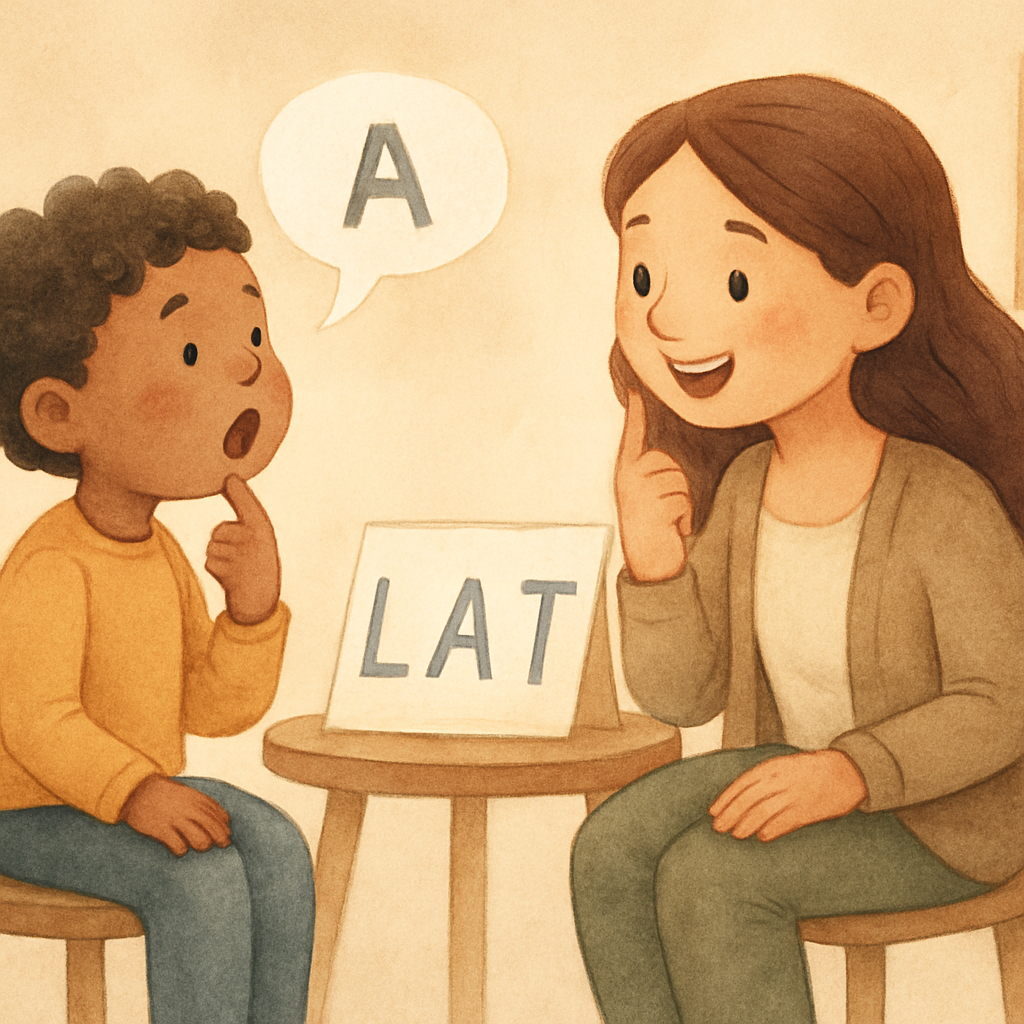
There is no one-size-fits-all solution in speech pathology. All person's communication challenges are unique, which is why individualized therapy is so important. A speech pathologist will create a treatment plan tailored specifically to your needs, goals, and lifestyle.
The therapy services you receive will target your specific areas of difficulty. For example, if you struggle with language comprehension, sessions might focus on understanding instructions and conversations. If expressive language is the challenge, activities may center on helping you articulate your thoughts and feelings clearly.
This personalized approach ensures that the therapy is relevant and effective. By addressing your specific needs, the speech pathologist can help you make meaningful progress and gain confidence in your ability to communicate in different social settings.
Strategies to Improve Social Skills through Speech Pathology
Speech therapy uses various strategies to build practical skills for social interaction. These methods are designed to be engaging and directly applicable to real-world situations. Often, a speech pathologist may collaborate with occupational therapists to provide comprehensive support.
Some common strategies used to address communication difficulties include:
-
Role-playing conversations to practice turn-taking and staying on topic.
-
Using picture cards or stories to interpret facial expressions and body language.
-
Playing games that require cooperation and communication with others.
-
Practicing asking and answering questions in a structured way.
These activities help demystify social rules and make them easier to understand and use. Through guided practice in speech therapy, you can learn how to navigate social scenarios with greater ease and confidence, turning learned skills into natural habits.
The Speech Therapy Process: What to Expect
Starting the speech therapy process can feel like a big step, but knowing what to expect can make it easier. The journey typically begins with a thorough assessment to understand your needs, followed by structured therapy sessions designed to help you make steady progress.
Your speech pathologist will guide you through each stage, from setting initial goals to celebrating your achievements. The process is collaborative and focused on your success. Here’s a closer look at what happens during the initial assessment and ongoing sessions.
Initial Assessment and Setting Goals
Your first appointment with a speech pathologist is all about assessment. They will talk with you about your communication challenges and may conduct some simple tests or observations. This helps them get a complete picture of your strengths and areas for improvement.
From there, you and your speech pathologist will work together to set clear and achievable therapy goals. These goals will guide your therapy and give you a benchmark for measuring progress. Having specific targets ensures that your sessions are focused and productive.
For example, your assessment might identify difficulties in specific areas, leading to targeted goals.
|
Assessment Area |
Example Therapy Goal |
|---|---|
|
Social Interaction |
Initiate a conversation with a peer twice a week. |
|
Language Comprehension |
Follow three-step directions without needing repetition. |
|
Speech Clarity |
Use a specific speech sound correctly in 80% of words. |
Activities and Progress Tracking During Sessions
During your therapy sessions, you will engage in a variety of activities designed to address your specific goals. These aren't just drills; they are often fun and interactive exercises that make learning feel natural. For children with developmental delays, therapy might involve games and play-based learning.
A speech pathologist uses these activities to target the underlying causes of communication disorders. For example, you might practice conversations, read stories aloud, or use special tools and apps to work on speech sounds. Sessions can be one-on-one or in a group, depending on what works best for you.
Progress tracking is a key part of the process. Your speech pathologist will regularly monitor your improvements and adjust the activities as needed. This ensures you are always being challenged appropriately and are steadily moving toward your communication goals.
Conclusion
In conclusion, speech pathology is key to improving social communication skills for everyday interactions. Working with a qualified speech pathologist provides personalized support to address individual challenges and goals. Effective therapy boosts confidence and social connection.
Seeking help empowers your communication—contact us for a consultation or call daar at 02 9133 2500 to discover how speech pathology can benefit you or your loved ones.
Frequently Asked Questions
What is the difference between speech therapy and speech pathology?
The terms are often used interchangeably. Speech pathology is the field of study focused on diagnosing and treating communication disorders. Speech therapy refers to the treatment services provided by speech therapists (or speech pathologists) to address language disorders and other communication challenges.
When should parents consider seeing a speech pathologist for their child?
Parents should consider seeing a speech pathologist if they notice their child has communication difficulties or significant delays in language development. For young children, early intervention is key. A professional can assess the issue and provide support to help your child get back on track.
How do you find a qualified speech pathologist in Australia?
To find a qualified speech pathologist in Australia, you can use the "Find a Speech Pathologist" service on the Speech Pathology Australia website. This directory lists members who are Certified Practising Speech Pathologists. You can also find them in hospitals, community health centers, and private practices.
.svg)




.svg)