
.png?width=48&height=48&name=Group%201%20(3).png)
























17 April, 2026

Benefits of Two-Hour Screen Cutoff Kids for Health

Do you limit screen time for your children?
Yes, limiting screen time for children to a two-hour cutoff promotes healthier habits. This approach encourages physical activity, enhances social interactions, and improves sleep patterns. By setting boundaries, parents can foster creativity and ensure kids engage in diverse activities beyond screens, contributing to their overall well-being and development.
Bedtime in the modern household often comes with a familiar set of challenges: endless negotiations for "five more minutes" of a video game, the hypnotic allure of a final cartoon loop, or a teenager endlessly scrolling through social media. While screens have become an undeniable staple of daily life, their presence in the evening is wreaking quiet havoc on our children’s health. Setting screen time limits can be especially important for managing children’s use of social media; by restricting evening access, parents can help reduce the amount of time kids spend scrolling, lower their exposure to potentially stimulating or stressful content before bed, and encourage healthier nighttime routines.
While many parents aim for a 30-minute buffer before bed, pediatricians, sleep scientists, and child development experts are increasingly pointing to a much more effective gold standard: the two-hour screen cutoff.
Implementing a strict two-hour screen-free window before bedtime is a profoundly powerful habit that can significantly improve a child’s sleep quality, physical health, and overall well-being. This generous 120-minute buffer provides the developing brain with the exact amount of time it biologically needs to decompress from digital overstimulation, lower stress hormones, and smoothly initiate the natural sleep cycle.
In this comprehensive guide, we will explore the science behind why a full two hours is necessary, how this digital detox actively supports brain development and emotional regulation, and step-by-step strategies to help your family implement this new routine without nightly battles.
The Science: Why Two Hours?
You might be wondering, is a full two hours really necessary? Isn't 30 minutes enough? The answer lies in your child’s biological chemistry.
Human sleep is governed by melatonin, often called the "sleep hormone." When the sun goes down and natural light fades, the brain’s pineal gland begins to produce melatonin, slowly making us feel drowsy and ready for rest. However, the artificial blue light emitted by smartphones, tablets, televisions, and even e-readers perfectly mimics bright midday sunlight. When a child stares at a screen, this light travels through their optic nerve and completely halts melatonin production.
Here is the crucial part: once a screen is finally turned off, it takes the brain an average of 90 to 120 minutes to naturally ramp melatonin production back up to the levels required for deep sleep.
If a child turns off a tablet and gets into bed 15 minutes later, their brain is still chemically wide awake. This leads to prolonged tossing and turning, bedtime anxiety, and delayed sleep onset. A two-hour cutoff perfectly aligns with the body's natural physiological timeline, ensuring the sleep hormones peak right as your child’s head hits the pillow.
Why a Two-Hour Screen Cutoff Matters for Kids
Enforcing a 120-minute digital curfew provides a massive cascade of benefits that impact everything from classroom performance to physical growth. Here is an in-depth breakdown of how this rule transforms a child's health:
1. Radically Improves Sleep Quality
Beyond just helping kids fall asleep faster, the two-hour screen cutoff severely impacts the quality of the sleep they get. When a child falls asleep with artificially suppressed melatonin, they tend to spend more time in light, easily disrupted sleep stages. They are more prone to middle-of-the-night awakenings and night terrors. By allowing the brain two full hours to dim the lights neurologically, you ensure your child enters deep, slow-wave sleep faster. Deep sleep is the phase where the body repairs tissue, releases physical growth hormones, and drastically boosts the immune system. While official guidelines such as those from the American Academy of Pediatrics do recommend limiting overall daily screen time for children, many experts specifically suggest a two-hour screen cutoff before bedtime to maximize melatonin production and improve sleep quality. However, the exact timing may vary depending on individual needs, so it's always best to consult your pediatrician for tailored advice.
2. Extensively Supports Brain Development
A child’s brain is not resting while they sleep; it is incredibly busy. Sleep is the precise time when the brain consolidates memories from the day, processes new academic concepts, and builds fresh neural pathways. When screens disrupt sleep quality, this vital cognitive maintenance is cut short. Banning screens two hours before bed guarantees that the brain transitions from a state of "constant digital input" to a state of "rest and process." Better sleep directly translates to vastly improved memory retention, sharper learning capabilities, and a higher capacity for complex cognitive functions in the classroom. This is one reason the government is considering a two-hour screen time limit and curfews for children: to support healthy brain development and ensure that young people get the high-quality sleep necessary for learning and growth.
3. Enhances Daily Emotional Regulation
If you have a child who frequently wakes up cranky, exhibits explosive tantrums over minor issues, or struggles with profound mood swings, their evening screen habits may be the hidden culprit. Poor sleep effectively shuts down the prefrontal cortex—the part of the brain responsible for logic and impulse control—leaving the emotional center (the amygdala) entirely in charge. Children who benefit from the two-hour screen cutoff get the deeply restorative rest their nervous system requires. They wake up with a "full battery" of emotional resilience, allowing them to manage frustration, interact positively with peers, and navigate the day with notable emotional balance. When it comes to recommended screen time limits, younger children (ages 2 to 5) are generally advised by health experts to have no more than one hour per day of high-quality programming, while older children and teens (ages 6 and up) may have more flexible limits but benefit from consistent guidelines and a strong emphasis on balancing screen use with sleep, school, and physical activity. Teens, for example, might safely use screens for homework and socializing but should ideally still follow a two-hour cutoff before bedtime to protect sleep quality and emotional health.
4. Dramatically Reduces Neurological Overstimulation
It isn't just the blue light that damages sleep; it is the content itself. Fast-paced video games, rapid-fire social media videos, and suspenseful movies are deliberately designed to trigger massive dopamine releases and mild adrenaline spikes. This puts a child's brain in a state of hyper-arousal and "fight-or-flight" excitement. If a child engages in high-stimulation media right before bed, their heart rate is elevated, their mind is racing, and cortisol (the stress hormone) is pumping through their veins. The two-hour cutoff gives the body ample time to metabolize these stress hormones, naturally lowering the heart rate and physically relaxing the muscles before sleep.
The Hidden Costs of Late-Night Screen Time
Failing to implement an adequate screen buffer can result in compounding health issues that masquerade as other problems. Chronic exposure to screens directly before bed is heavily linked to:
- Symptoms Mimicking ADHD: Chronic sleep deprivation caused by screen use severely reduces a child's attention span and impulse control, often leading to behaviors that closely mimic Attention Deficit Hyperactivity Disorder (ADHD), such as extreme fidgeting, inability to focus, and hyperactive behavior.
- Physical Ailments: Staring at screens late into the evening causes severe digital eye strain, chronic tension headaches, and poor posture (often referred to as "tech neck"), all of which make relaxing in bed physically uncomfortable.
- The "Sleep Debt" Cycle: Losing just 30 to 45 minutes of sleep a night due to delayed sleep onset quickly creates a massive "sleep debt." By Friday, a child might be operating on several hours of lost sleep, leading to weekend exhaustion and deeply erratic behavior.
Healthy Alternatives During the Two-Hour Screen-Free Window
One of the biggest mistakes parents make when implementing a digital curfew is simply taking the screen away and expecting the child to figure out what to do. You must replace the high-stimulation device with highly engaging, low-tech alternatives.
Here are excellent, calming activities to fill that two-hour decompession window for different age groups:
Reading Books or Storytelling
The ultimate brain-calming activity. Reading physical, printed books (not e-readers) actively lowers the resting heart rate and distracts the mind from the anxieties of the day. For toddlers, read picture books aloud. For older kids, establish a "family reading hour" where everyone reads their own book in the living room.
Family Conversations and Bonding Time
Use this tech-free window to reconnect. Have a dedicated time for talking about the day. A popular method is the "Rose, Bud, and Thorn" exercise, where each family member shares the best part of their day (rose), something they are looking forward to (bud), and a challenge they faced (thorn). This allows children to verbally process their emotions so they don't carry daily anxieties into bed.
Drawing, Coloring, or Quiet Play
Tactile, hands-on activities are incredibly grounding. Keep a basket of screen-free quiet bins available. This can include intricate coloring books, building with Legos, doing jigsaw puzzles, or playing with kinetic sand. These activities engage the brain's focus without the rapid-fire dopamine hits of a video game.
Light Physical Activity or Stretching
Help your child physically release the tension built up throughout the day. Ten to fifteen minutes of gentle child-friendly yoga, deep stretching on the living room floor, or practicing mindful deep breathing exercises naturally cues the parasympathetic nervous system to initiate relaxation.
Listening to Calming Music or Audiobooks
If your child craves entertainment, switch from visual stimulation to auditory stimulation. Audiobooks, kid-friendly podcasts, or playlists featuring classical music, nature sounds, or binaural beats are fantastic ways to keep a child engaged without exposing them to blue light.
5 Expert Tips to Implement a Two-Hour Screen Cutoff
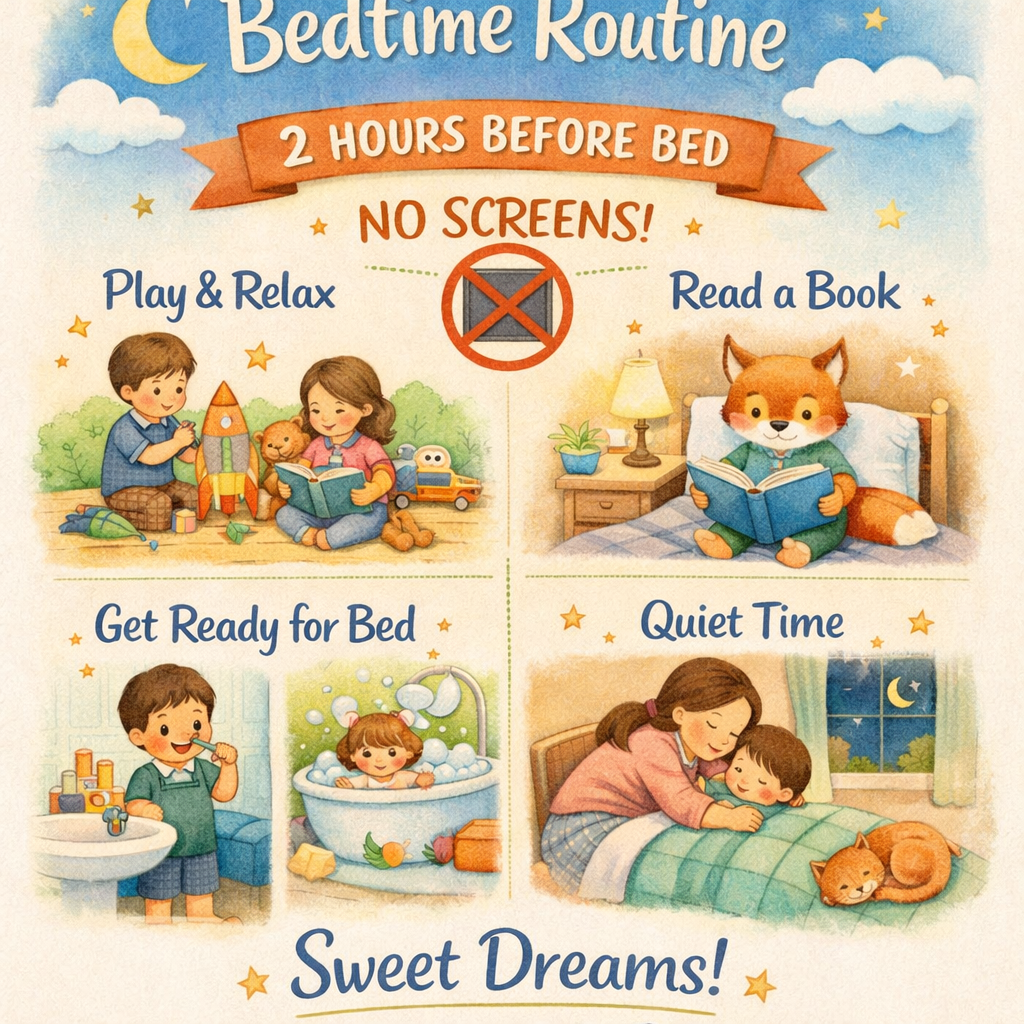
Transitioning from "screens until bedtime" to a two-hour cutoff can initially spark resistance. Here is how to implement the change peacefully and successfully:
1. Set a Fixed Daily “Screen-Off” Schedule
Consistency is your greatest ally. Decide on the exact time the screens must go off and stick to it fiercely, even on weekends. If bedtime is 8:30 PM, the digital curfew is identically 6:30 PM every night. Use a physical alarm clock in the house to signal "screen-off time" so the clock is the enforcer, not the parent.
2. Phase It In Gradually
If your child is used to watching an iPad until their eyes close, jumping straight to a two-hour cutoff might cause a massive meltdown. Phase it in. Start with 30 minutes for a few days, then move to 60 minutes, then 90, until you reach the full two-hour goal.
3. Keep Devices Firmly Outside the Bedroom
Your child's bedroom must be a sanctuary optimized strictly for sleep and quiet play. Never allow televisions, gaming consoles, smartphones, or tablets in the bedroom. Establish a "digital parking lot" or charging station in the kitchen where all family devices are securely placed at the two-hour cutoff mark.
4. Use Parental Controls or Timers
Take advantage of modern technology to enforce your rules. Use router-level controls, Apple Screen Time, or Google Family Link to automatically disable internet access or lock specific apps on your child’s devices exactly two hours before bedtime. This removes the temptation entirely.
5. Be Consistent and Lead by Example
The two-hour cutoff will instantly fail if parents do not participate. You cannot expect a child to quietly read a book if you are scrolling through social media or watching real-crime documentaries on the couch. Modeling healthy digital boundaries is the most effective way to help your child accept the new routine. Join them in the digital detox!
Upgrade your child's health
You have the power to instantly upgrade your child's health by making one simple, profound scheduling change. Start building a vastly healthier nighttime routine today by proudly introducing a two-hour screen cutoff in your home. Help your child naturally fall asleep faster, think much more clearly in the classroom, and grow healthier every single day.
Are you looking for more actionable advice to help your family thrive in a fast-paced digital world? Subscribe to our community today for weekly expert parenting tips, child wellness insights, and proven strategies to promote holistic, lifelong family health! Many families express mixed reactions to proposed two-hour screen time policies for kids—while some welcome the structure as a way to encourage balance and healthier habits, others worry about managing enforcement and the practicality within busy family schedules.
Reach out for a consultation or call daar at 02 9133 2500 to explore different approaches and find support from others navigating these challenges.
Frequently Asked Questions (FAQs)
1. Why is a full two-hour screen cutoff so important for kids?
A full two hours is biologically necessary because it takes the brain's pineal gland roughly 90 to 120 minutes to naturally ramp up melatonin (the sleep hormone) after artificial blue light exposure has ended. This timeframe also allows the nervous system to metabolize stress hormones caused by fast-paced videos and games, ensuring the brain is truly relaxed and chemically prepared for deep sleep.
2. What actually happens in the brain if kids use screens right before bed?
When kids use screens right before bed, the blue light completely suppresses their melatonin production, leaving them chemically wide awake. Simultaneously, the interactive nature of the content hyper-stimulates their nervous system, spiking adrenaline and cortisol. This deadly combination profoundly delays sleep onset, ruins the quality of their deep sleep cycles, and frequently leads to severe crankiness, brain fog, and behavioral issues the next day.
3. How can busy parents realistically enforce a screen cutoff routine?
Parents can successfully enforce this routine by making it predictable and non-negotiable. Set a daily recurring alarm to signal "screen-off time," utilize automated parental controls to lock devices, and immediately plunge the family into a structured, low-tech replacement routine (like bath time followed by family reading). Most importantly, parents must consistently model the behavior by putting their own personal devices away during this critical two-hour window.
.svg)




.svg)