
.png?width=48&height=48&name=Group%201%20(3).png)























16 April, 2026

How Many Hours of Sleep Does a School-Aged Child Need?
Sleep is very important for kids’ bodies, feelings, and schoolwork. But at night, homework, sports, video games, and being with family all want time. Because of this, going to bed can feel like a back-and-forth talk every day, leading to potential behavior problems.
Many parents want to know this: How many hours of sleep do school-aged kids need?
Understanding how much rest your child needs can help them stay focused, feel energized, and be healthy during the school year. Here, we will look at what experts say about sleep, talk about some things that might cause your child to lose sleep, and find easy ways you can help your child get good sleep and create a good bedtime routine.
How Many Hours of Sleep Does a School-Aged Child Need?
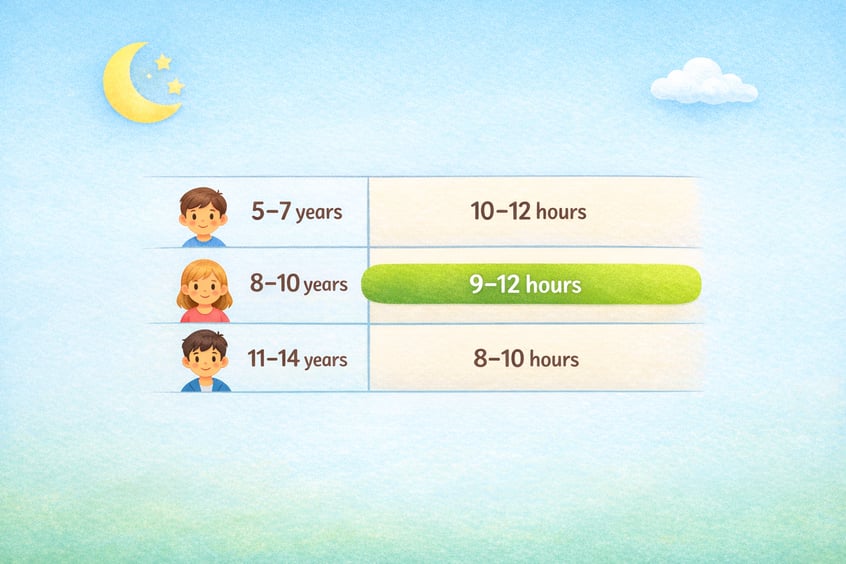
For kids in elementary and middle school, sleep is a must for their minds and bodies to grow, contributing significantly to children’s health. Many child health experts say that school-aged kids, who are about 6 to 12 years old, should get 9 to 12 hours of sleep each night. Getting the right hours of sleep is very important for them. Experts say this helps kids be healthy and feel good.
This 9-to-12-hour sleep range is important, as highlighted in the consensus statement. It is not just advice. It helps with the development of the brain. It also helps improve memory and helps the body grow. When kids get this much sleep every night, they have the energy they need. This lets them handle everything that comes with a busy day at school, both in their bodies and minds.
Does the Requirement Change as They Grow?
Yes, a little bit! A 6-year-old who is just beginning first grade will likely need around 11 or 12 hours of sleep. This is because they are going through big changes in learning and thinking at school. At the same time, an 11- or 12-year-old who is starting middle school might feel fine with 9 or 10 hours. Most important thing is for you to watch your child during the day. This way, you can find out how much sleep is best for them.
Why Sleep Is Important for Children
Why is getting 9 to 12 hours of sleep so important? Sleep is not just when you are resting. It is a time when the body does a lot of work. When younger children get enough sleep, it can help them in many ways:
- Improve concentration and learning: During REM (Rapid Eye Movement) sleep, the brain puts together and saves things you learned that day, which ultimately contributes to the overall quality of life. This helps you to focus better, work on math, and take in new reading skills while in class.
- Strengthen their immune system: Sleep helps the body make proteins called cytokines that fight off germs. Insufficient sleep means your child may not stay safe from colds, stomach bugs, and the flu at school.
- Maintain a healthy mood: A brain that gets the right amount of sleep can help control the amygdala, which is part of the brain for emotions. This means your child may have fewer meltdowns or feel less worried, and feel happier and get along with others more often.
- Support physical growth and development: Most of a child’s human growth hormone (HGH) is given out during slow-wave, deep sleep. This helps with fixing body tissues, growing bones, and the body growing stronger, which is essential for participating in extracurricular activities.
- Boost athletic performance: Kids who are active need rest because lack of sleep affects their ability to perform well. Deep sleep is the time muscles use to get stronger. When kids get the sleep they need, their hands and eyes work better together, they react faster, and they have a lower chance of getting hurt while playing sports.
Signs Your Child May Not Be Getting Enough Sleep
Sometimes, it can be hard to see if your child is tired, because many kids do not look sleepy when they need sleep. A lot of the time, overtired children may act full of energy instead of slowing down, which can also be a sign of underlying sleep disorders. Look out for these signs of mild to moderate sleep deprivation:
- Difficulty waking up in the morning: If you find that it takes several alarms, much pushing, or even pulling to get them out of bed, the bedtime might be too late, which can be indicative of underlying behavioural sleep problems.
- Irritability or mood swings: If they feel upset for no clear reason, get angry about small things like socks, or show big changes in mood out of the blue due to mental health concerns.
- Trouble focusing in school: A teacher may say they daydream, forget things, not show much drive, or even act out in class.
- Frequent daytime sleepiness: If they fall asleep on short drives, yawn a lot in the late day, or suddenly feel they need extra naps on weekends.
- Craving unhealthy foods: A tired body often wants fast energy. So, kids who lack sleep may ask for sweet foods or want a lot of simple carbs.
Sample Sleep Schedules for School-Aged Kids
To make sure your child gets enough sleep and develops healthy sleep habits, start by checking what time their morning alarm rings. Then, count back the hours they need to sleep. A healthy sleep schedule depends on your child's age.
Schedule for an Early Elementary Student (Ages 6-8 | Needs ~11 Hours):
- 6:30 AM: Get up for school
- 6:45 PM: Start getting ready to sleep on school nights. Turn off TVs and tablets.
- 7:00 PM: Do the bedtime routine. This can be a bath, brushing teeth, and reading a story for better disease control.
- 7:30 PM: Turn off the lights and go to sleep
Schedule for an Upper Elementary/Middle Schooler (Ages 9-12 | Needs ~9.5 Hours):
- 6:30 AM: Wake up for school, especially with early school start times.
- 8:00 PM: Time to start winding down for the night. Finish any homework and put away screens.
- 8:30 PM: Start your bedtime routine. Take a shower, read, or write in your journal.
- 9:00 PM: Turn off the lights and go to sleep.
Tips to Help Your Child Get Enough Sleep
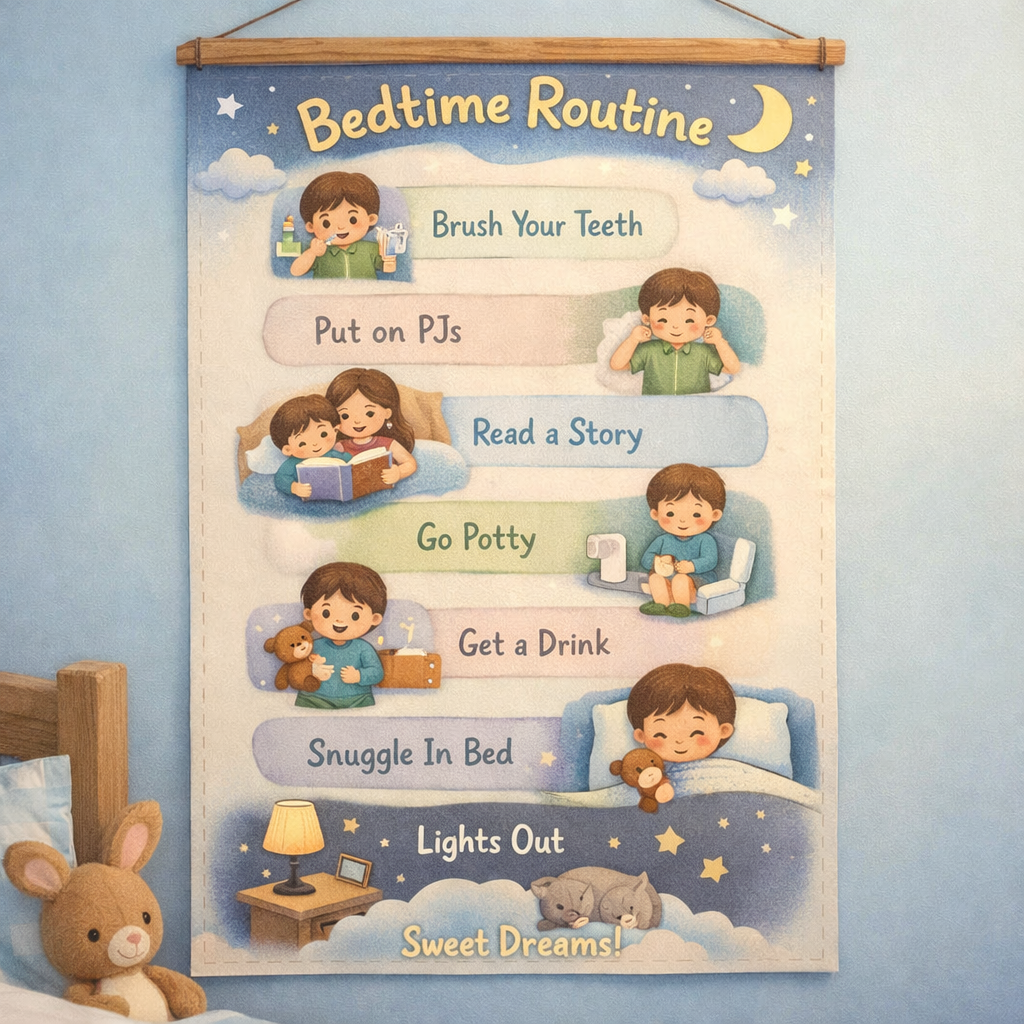
If your child is not getting enough sleep right now, don't feel bad. You can help them sleep better at night by trying these simple tips:
- Set a consistent bedtime and wake-up time: Make sure you keep the same sleep and wake times every day. This is very important.
- Avoid the "Weekend Trap": You might feel like letting kids stay up late on Fridays or sleep in on Saturdays. This can feel nice, but it is not good for the kids’ body clock. By Sunday night, their sleep schedule will be all mixed up. Then it is hard to fall asleep before school on Monday. Make sure weekend wake-up times are no more than one hour different from school days.
- Create a relaxing bedtime routine: A calm bedtime routine that lasts for about 30 minutes helps a lot. Try things like reading, taking a warm bath, or listening to soft music. A routine like this lets the body know it is time to sleep.
- Limit screen time before bed: A lot of screen time at night can hurt sleep. Stop using the TV, tablet, phone, or games at least an hour before bedtime. The blue light from these things makes it harder for kids’ brains to feel sleepy. Action-packed games before bed also make it tough to feel calm. This is one of the most important parts of a good bedtime routine.
- Watch for hidden caffeine and heavy dinners: Check for caffeine in sodas, iced tea, and chocolate in the late afternoon. A big, spicy, or greasy dinner can make it hard for your child to feel comfortable and ready for sleep.
- Don’t try to move your child’s bedtime up by two hours in one go. If you do this, they may just feel upset while lying in bed awake. A better way is to make bedtime a little earlier each night, about 15 to 30 minutes at a time. Keep doing this until you get to the bedtime you want. To help this, start a calm bedtime routine so your child can relax. Make sure screens are off at least an hour before bed. In the morning, let your child see bright daylight right away, as this can help reset their sleep clock.
Ready for Better Mornings?
Want to help your child have better sleep? Start with a set bedtime routine tonight to establish a regular sleep schedule. A good bedtime routine can make a big difference in their mood, health, and performance in class. Just a few small changes at night can help them feel better the next day.
For more parenting tips, guides about how kids grow, and ways to keep your family healthy so your child does well, reach out for a consultation or call daar at 02 9133 2500 for expert guidance tailored to your child’s needs.
Frequently Asked Questions (FAQs)
1. What time should a school-aged child go to bed?
The best bedtime for a school-aged child depends on when they need to wake up in the morning. A child needs 9 to 12 hours of sleep each night to feel good. So, most kids should go to bed between 7:30 PM and 9:00 PM. You can find the right bedtime by counting back from the time they need to get up. This helps make sure your child gets enough hours of sleep.
2. Is 8 hours of sleep enough for a child?
No, 8 hours of sleep is not enough for this age group. Kids who are between 6 and 12 years old need more. They should get at least 9 hours each night, especially considering that some might rely on caffeine and energy drinks, which can disrupt their sleep. This helps with their health, gives a boost to their immune system, and supports fast brain development. For this age group, it is important to get the right hours of sleep.
3. How can I fix my child’s sleep schedule if they are used to staying up late?
Do not try to change their bedtime by two hours all at once; it will only lead to frustration as they stare at the ceiling. Instead, gradually adjust their bedtime earlier by 15–30 minutes each night until you reach the target time. Pair this slow shift with establishing a calming pre-bed routine, strictly limiting screen exposure an hour before lights out, and exposing them to bright natural sunlight first thing in the morning to reset their internal clock.
.svg)




.svg)