
.png?width=48&height=48&name=Group%201%20(3).png)
























16 April, 2026

Discover No Screens Before Bed Benefits for Better Sleep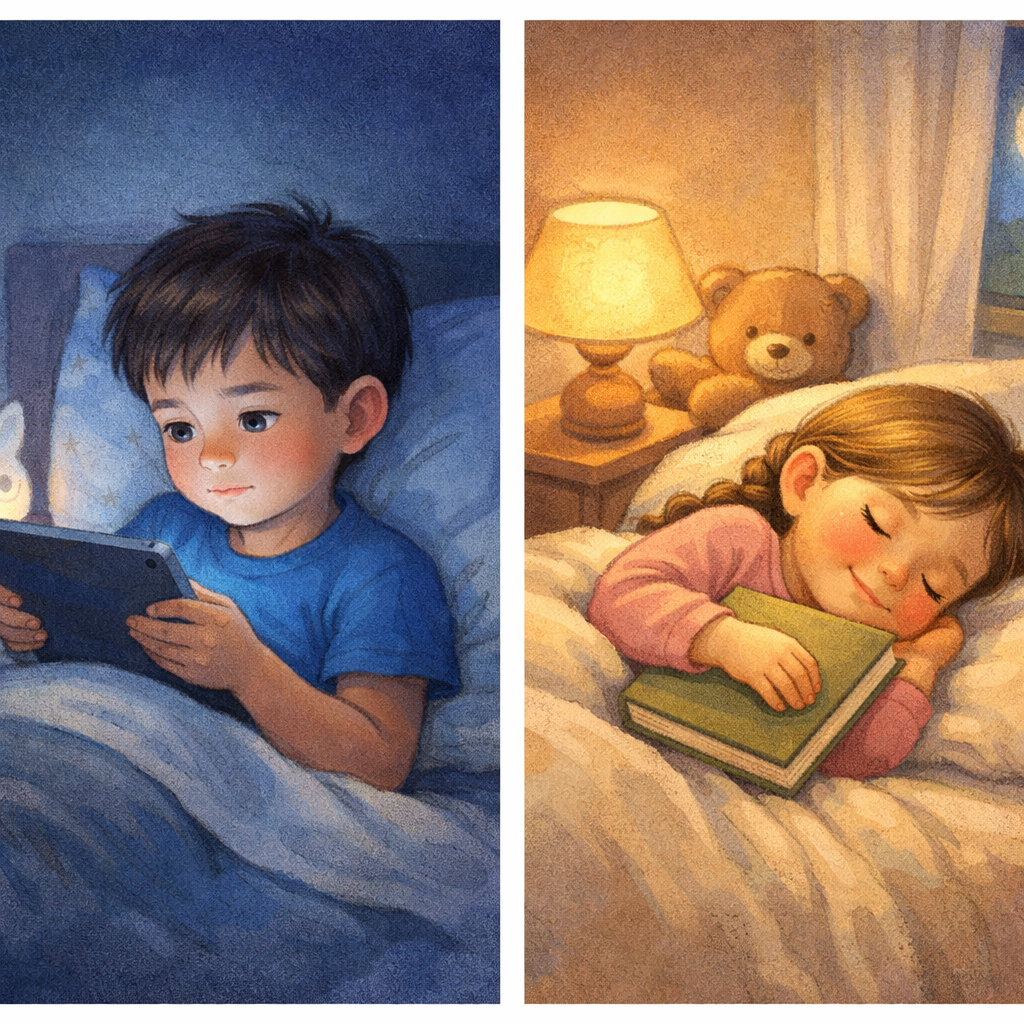
In today’s fast-paced, hyper-connected digital world, screens are absolutely everywhere. From the smartphones in our pockets and the tablets on our kitchen counters to the laptops we use for homework and the flat-screen TVs in our living rooms, technology is deeply woven into our daily lives. Numerous studies have shown that avoiding screen time before bed, especially in dim light, can be beneficial for sleep quality and overall health. Research suggests that the blue light emitted from screens can interfere with the body’s ability to produce melatonin, making it harder to fall asleep and potentially disrupting natural sleep cycles.
For many families, winding down at the end of the day usually involves mindlessly scrolling through social media, watching a few episodes of a favorite show, or playing a highly stimulating video game. However, a growing mountain of scientific research highlights a critical truth: using screens before bed can severely and negatively affect sleep quality, especially for developing children and teenagers, potentially increasing their risk of issues like sleep apnea. and prolonging sleep onset.
Implementing a "no screens before bed" rule isn't just an old-fashioned parenting tactic; it is a biological necessity. According to the National Sleep Foundation, establishing a screen-free bedtime routine helps the brain relax naturally, unplugs the nervous system, and perfectly prepares the physical body for deep, restorative sleep, reducing the amount of time it takes to fall asleep.
Does the "no screens before bed" really work?
Yes, avoiding screens before bed significantly improves sleep quality. The blue light emitted by devices disrupts melatonin production, making it harder to fall asleep. By eliminating screens, you can enhance relaxation and promote better sleep cycles, leading to more restful nights and improved overall well-being.
In this comprehensive guide, we will explore the science behind why screens ruin our sleep and contribute to poorer sleep quality, including how they lead to shorter sleep duration, detail the life-changing benefits of disconnecting, and provide practical, parent-tested tips to help your family transition to a healthier, screen-free evening.
The Science: Why No Screens Before Bed Is Important
To understand why a screen-free bedtime is so crucial, we need to look at how the human body’s internal clock—the circadian rhythm—actually works. Before the invention of electricity and digital screens, our bodies relied entirely on the sun and electronic devices to tell us when to be awake and when to sleep, impacting how we feel the next day.
When the sun goes down, and our environment gets dark, a tiny gland in the brain called the pineal gland begins to secrete melatonin, the hormone responsible for making us naturally feel sleepy, potentially reducing daytime sleepiness, and triggering the release of melatonin.
The Blue Light Problem
Enter the digital screen. The LED screens on our phones, tablets, laptops, and televisions emit a concentrated amount of "blue light." To the human brain, this artificial blue light mimics the brightness of the midday sun. Constant exposure to blue light in the evening actively suppresses and delays the body's natural production of melatonin, which is crucial for melatonin production and increases sleep latency. This chemical disruption makes it drastically harder to fall asleep, causes frequent nighttime awakenings, and completely throws off the natural sleep cycle.
The Overstimulation Problem
It isn't just the light from the screen that causes sleep issues; it is also the content on the screen. Video games require rapid-fire hand-eye coordination. Social media apps trigger feelings of anxiety or "FOMO" (Fear Of Missing Out). Action movies spike adrenaline. This creates a state of "cognitive hyperarousal," meaning the brain's fight-or-flight system is highly activated exactly when it should be shutting down for the night, which can lead to health issues such as heart disease and poorer sleep quality.
Over time, daily screen use before bed leads to chronic sleep debt, poor overall sleep quality, morning irritability, and heavily reduced cognitive focus during the day.
4 Life-Changing Benefits of a Screen-Free Bedtime
Breaking the digital habit can be challenging at first, but the rewards are immediate and profoundly impactful for both children and adults.
1. Improves Sleep Quality and Duration
The most direct benefit of putting the devices away is significantly better sleep. By removing artificial blue light and other forms of artificial light, you allow the body to naturally produce a heavy, healthy dose of melatonin. This helps children and adults fall asleep faster instead of tossing and turning for hours. Furthermore, without the lingering adrenaline from digital stimulation, the body can easily slip into the deepest, most restorative stages of sleep (slow-wave and REM sleep), ensuring you actually wake up feeling refreshed after getting enough sleep.
2. Supports Mental Health and Lowers Anxiety
Nighttime should be a peaceful transition, but being in front of a screen often invites the stress of the outside world into the bedroom. For teenagers, late-night scrolling through social media first thing is heavily linked to increased rates of anxiety, depression, and poor self-esteem. A screen-free routine forces a physical and mental disconnect from the digital world. This quiet time dramatically reduces sensory overstimulation, helps the mind relax, and significantly lowers nighttime anxiety levels before bed.
3. Enhances Next-Day Focus and Energy
Sleep is the time when the brain categorizes everything it learned during the day and clears out cellular waste. When healthy sleep is cut short by late-night screen use, the brain cannot complete this vital maintenance. By adopting a screen-free bedtime, you guarantee the quality sleep and high-quality rest needed to improve next-day concentration, sharpen memory retention, and boost overall physical energy levels for school, work, and sports.
4. Strengthens Family Connection
When everyone in the house retreats to their own corner to stare at a glowing rectangle, natural family bonding disappears. Replacing isolated screen time with shared, screen-free activities helps reduce exposure to blue wavelengths and brings the family together. Whether it is reading a chapter book out loud together, talking about the best parts of the day, or doing a calming puzzle, a tech-free hour encourages meaningful bonding, establishes much healthier nighttime habits for the whole household, and helps alleviate sleep problems associated with excessive screen time.
Practical Tips for Creating a Screen-Free Bedtime Routine

Transitioning away from evening screens and adjusting your screen brightness requires a bit of planning and a lot of consistency, as minimizing exposure to sources of blue light is essential. Here is how you can successfully implement a screen-free routine in your home without endless arguments:
- Turn off all screens at least 1 hour before bed: Make this a hard, non-negotiable household rule. If your child's bedtime is 8:30 PM, all devices—including the family television—must be turned off and put away by 7:30 PM. This routine can greatly influence your child's sleep patterns. Set a daily "tech alarm" to remind everyone in Australia it is time to unplug.
- Keep devices entirely out of the bedroom: The bedroom should be a sleep sanctuary, not an entertainment center, as smartphone use can lead to an increased heart rate and other negative effects on heart health. Create a centralized "charging station" in the kitchen or living room where all phones and tablets sleep for the night. If your child uses their phone as an alarm, buy a basic, inexpensive digital alarm clock to remove the excuse.
- Replace phone screen time with calming, tangible activities: You cannot simply take away a device and expect a child to stare at a wall. Proactively replace phone screen time with highly engaging but low-stimulation activities. Reading physical books, storytelling, journaling, drawing, or building with Lego are fantastic alternatives to social media use before sleep.
- Use 'Night Mode' only in emergencies, not as a habit: Many devices have a "night shift" or warm-light filter designed to block blue light and come equipped with a blue light filter option, and they may also offer a dark mode feature. While these are slightly better than full blue light, they do not solve the problem of cognitive overstimulation (like the excitement of a video game). Use these filters sparingly for late-night homework emergencies, but do not rely on them as an excuse to allow recreational screen time before bed.
- Create a calming sensory bedtime routine: Establish a predictable wind-down sequence. After the screens go off, move through a calming routine: take a warm bath, dim the overhead household lights to reduce light exposure, play soft ambient music, practice light stretching or deep breathing, and get into bed. Practicing good sleep hygiene helps the nervous system naturally downshift.
Start Your Screen-Free Journey Tonight!
Give your child—and yourself—the foundation needed to grow, learn, and thrive. Start building healthier sleep habits confidently tonight, as good sleep is essential for disease control and overall health. Switch to a screen-free bedtime routine and experience the incredible difference better sleep makes in your family's mood, as it helps promote the melatonin surge needed for quality rest, within just a few days.
Want more actionable advice to help your household unplug? Reach out for a consultation or call daar at 02 9133 2500 for more expert parenting guidance, wellness tips, and strategies to support your family’s physical and mental health!
Frequently Asked Questions (FAQs)
1. Why should kids avoid screens before bed?
Screens emit a concentrated, artificial blue light of any kind that is part of the spectrum of bright light, and it directly interferes with the brain's natural production of melatonin (the sleep hormone). By tricking the brain into thinking it is still daytime, screens make it significantly harder for children to naturally fall asleep. Screens also provide intense cognitive and emotional stimulation, keeping a child's nervous system activated and anxious when it should be calming down.
2. How long before bed should screens be turned off?
Leading sleep experts and paediatricians strongly recommend turning off all screens—including phones, tablets, laptops, and televisions—at least 1 full hour before your intended sleep time to ensure you get enough hours of sleep. This provides the brain with a sufficient buffer window to start producing melatonin and allows the nervous system to transition out of its "hyper-alert" digital state, as screens can be the main culprit for sleep disturbances.
3. What can replace screen time before bed?
To prevent boredom and frustration when screens are turned off, offer engaging but relaxing tactile activities and different activities. Reading physical books or magazines, using dim red light while listening to a quiet audiobook or storytelling podcast, journaling about the day, coloring, doing jigsaw puzzles, or listening to calm instrumental music are all excellent, brain-soothing alternatives to screen use before sleep.
.svg)




.svg)