Understanding the Role of a Behaviour Support Practitioner
The Australian disability support sector is currently undergoing a period of unprecedented, historic transformation. Driven largely by the continued evolution and maturation of the National Disability Insurance Scheme (NDIS) , there is a unified, nationwide push toward establishing higher standards of care, demanding greater autonomy for participants, and fiercely dedicating resources to the protection of fundamental human rights. At the very forefront of this systemic shift is a highly specialized, deeply compassionate, and analytically rigorous professional known as a Behaviour Support Practitioner, alongside essential services like speech pathology.
But what exactly does this vital, life-changing role entail? How does it differ from traditional psychology, social work, or general disability support? And if you are passionate about advocating for individuals with complex needs, how do you navigate the educational landscape to become one? Specifically, how do specialized postgraduate programs—like the Master of Applied Behaviour Analysis at Monash University—prepare you for the realities of this job?
Whether you are looking to understand the modern disability sector, searching for support for a loved one, or contemplating a pivotal and deeply rewarding career change, you need a complete, unvarnished picture of this profession. This comprehensive, 2000-word guide will explore the true definition of a Behaviour Support Practitioner, the critical NDIS funding framework they operate within, and the precise educational pathways you must take, including exactly what questions you should ask when investigating courses like Behaviour Analysis at Monash University.
Part 1: Defining the Role — What is a Behaviour Support Practitioner?
To get a crystal clear and accurate understanding of the profession, we must first look to the peak industry bodies guiding the sector. According to Behaviour Support Practitioners Australia (BSPA), Behaviour Support Practitioners are dedicated professionals who work alongside individuals with disabilities who exhibit "behaviours of concern."
A behaviour of concern is formally defined as any action that puts the individual’s physical safety at risk, endangers the safety of those around them, or significantly limits their ability to participate in their community and live a full, rewarding life, reflecting a person’s behaviour. This can range from physical aggression and self-injury to severe withdrawal, absconding (running away), or property damage. If you are interested in learning more or advancing your knowledge, you can find resources and webinars about behaviour support practice through professional associations, organizations specializing in disability services, and government health departments. Many of these groups offer online training, recorded webinars, and practical guides to support practitioners at all levels.
The Great Shift: Positive Behaviour Support (PBS)
The most important thing to know about this role is the underlying philosophy it operates upon. In decades past, the disability and education sectors sometimes relied on punitive measures—punishing or simply trying to forcefully stop "bad" behaviour. Modern practitioners reject this entirely. Instead, they use an evidence-based, human-rights-focused framework known as Positive Behaviour Support (PBS).
The core tenet of Positive Behaviour Support is the understanding that all behaviour is a form of communication.
When a person with a complex disability lashes out, withdraws, or engages in unsafe actions, the practitioner assumes they are trying to communicate an unmet need. They might be experiencing undiagnosed physical pain, navigating a sensory environment that is far too loud or brightly lit, or they simply lack the communication tools (like sign language, picture boards, or digital speech devices) to tell someone they are frustrated or need a break.
The Day-to-Day Responsibilities
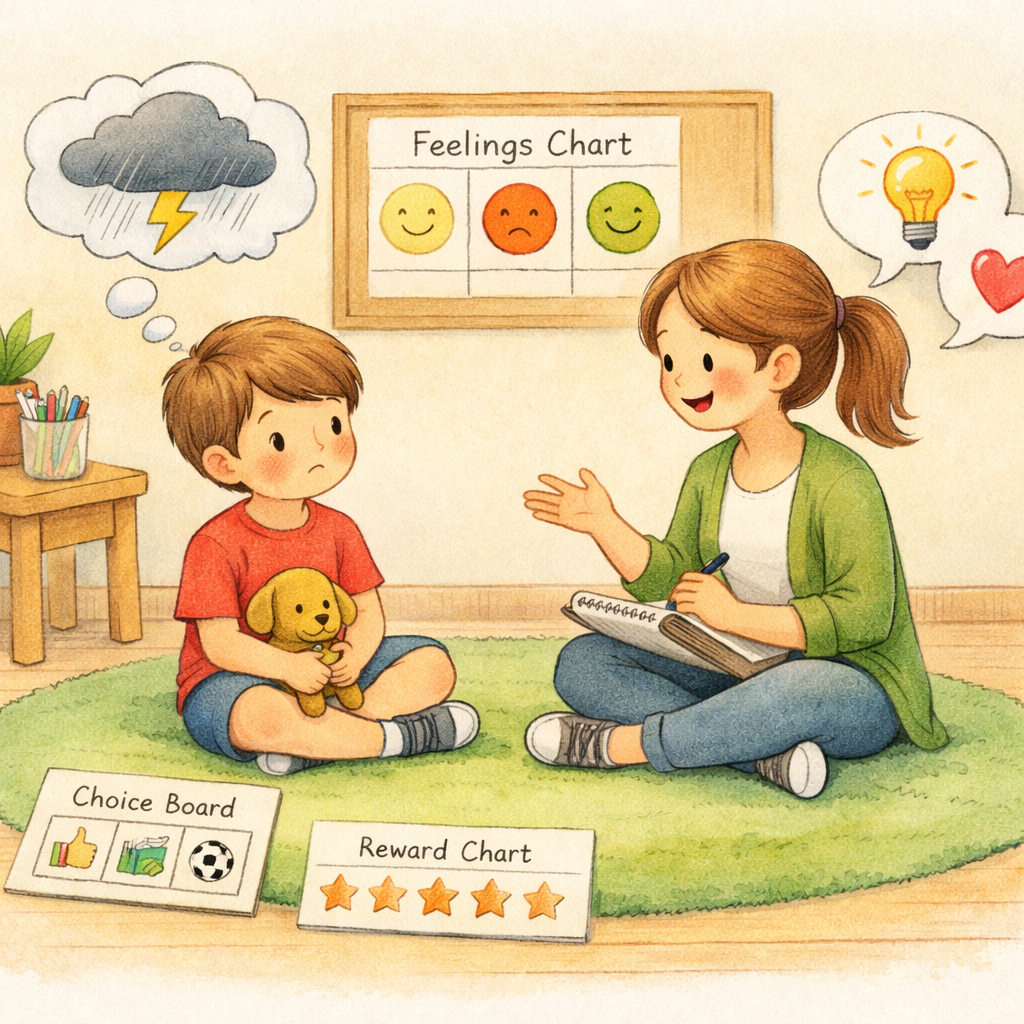
According to the BSPA, the primary job of a practitioner is to act as a behavioural detective. Their work typically falls into three massive, interconnected phases:
- The Functional Behaviour Assessment (FBA): The practitioner does not guess why a behaviour is happening. They gather empirical data. This involves spending hours observing the individual in their natural environments, such as their home, a specialized day program, or a classroom. The practitioner interviews parents, teachers, and support workers to identify the antecedents (exactly what triggers the behaviour) and the consequences (what happens after the behaviour that might accidentally be encouraging it).
- Developing the Behaviour Support Plan (BSP): Once the practitioner understands exactly why the behaviour is occurring, they create a comprehensive, individualized Behaviour Support Plan. This is a step-by-step roadmap. It focuses heavily on proactive strategies—changing the specific environment to better suit the individual, rather than forcing the individual to cope with an unsupportive environment. It also incorporates reactive strategies—how to keep everyone safe if the behaviour does occur.
- Skill Building and Capability Training: A plan is useless if no one knows how to read or implement it. Practitioners spend a vast majority of their time teaching. They identify new, safe replacement skills the participant needs to learn to communicate their needs. Then, they rigorously train the participant's support network (parents, teachers, and support workers) to implement the plan consistently.
Part 2: The NDIS Landscape and the Defense of Human Rights
To fully comprehend the gravity of an NDIS Behaviour Support Practitioner's role, you must understand the severe regulatory landscape they inhabit: the NDIS Quality and Safeguards Commission. Under the Commission, behaviour support services are recognized as a high-risk, high-skill area of practice. Practitioners are not just helpful clinicians making kindly suggestions; they are officially regulated frontline defenders of human rights.
This human rights focus becomes incredibly clear, and highly urgent, when we discuss the topic of "restrictive practices."
The Battle Against Restrictive Practices
Historically, the disability sector sometimes relied on restrictive measures to manage challenging and dangerous behaviours. These practices are profound infringements on personal freedom and human dignity. They include:
- Physical Restraint: Using bodily force to hold a person down to restrict their movement.
- Chemical Restraint: Providing heavy medication (like sedatives or antipsychotics) solely for the purpose of controlling a person's behaviour, rather than treating an underlying, diagnosed medical or psychiatric condition.
- Environmental Restraint: Locking doors, securing cupboards, or using coded locks on refrigerators to deny a person access to their own living space.
- Seclusion: Placing a person alone in a room or outdoor area from which they cannot freely exit.
- Mechanical Restraint: Using devices, straps, or specialized clothing to prevent a person's movement.
Today, the NDIS Commission strictly mandates that any use of a regulated restrictive practice must be viewed as an absolute last resort. They can only be used to keep the person and the community safe in dire emergencies, and they must be authorized.
Most importantly, any restrictive practice must be legally documented in a formal Behaviour Support Plan developed by a registered practitioner. It is the practitioner's ultimate ethical and legal responsibility to design creative, effective alternative strategies so that these restrictive practices can be reduced and, eventually, eliminated entirely. The practitioner's ultimate goal is to work themselves out of a job by restoring the participant's full freedom, dignity, and autonomy.
The Capability Framework
Because the human rights stakes are so extraordinarily high, the NDIS Commission holds practitioners, including a registered provider, to rigorous standards. You cannot simply decide to start writing Behaviour Support Plans. To be registered under the NDIS, you must be assessed against the formal NDIS Positive Behaviour Support Capability Framework.
This framework evaluates your knowledge through a portfolio of your actual work, tiering you from a "Core" practitioner up to a "Proficient," "Advanced," or "Specialist" practitioner based on your proven ability to conduct ethical assessments, develop person-centred plans, and successfully fade out restrictive practices. This stringent capability framework is exactly why higher education is becoming a non-negotiable step for future practitioners.
Part 3: The Educational Pathway and Applied Behaviour Analysis
Who actually becomes a Behaviour Support Practitioner? The BSPA notes that practitioners come from a wide, beautiful variety of professional backgrounds. Many are allied health professionals, such as occupational therapists, speech pathologists, and registered psychologists. However, an equally large number are former special education teachers, social workers, or highly experienced disability support workers who have decided to specialize their skill sets.
But while having an undergraduate degree in psychology, education, or social work is a fantastic foundation, the highly specific, data-driven skills required by the NDIS Capability Framework demand specialized, targeted training. You cannot succeed in this role through intuition alone. You need science.
This brings us to the science of Applied Behaviour Analysis (ABA). Applied Behaviour Analysis is the scientific study of learning and human behaviour. It provides the exact theoretical framework and the rigorous, evidence-based toolkit that Positive Behaviour Support heavily relies upon, including effective strategies. ABA teaches professionals how to objectively observe and measure behaviour, how to design environmental interventions based on hard scientific data rather than guesswork, and how to mathematically evaluate whether an intervention is actually working over time.
For anyone looking to excel as an NDIS Behaviour Support Practitioner in today's regulated market, embarking on a Master's degree in Applied Behaviour Analysis is widely considered the ultimate gold-standard pathway.
Part 4: Exploring Monash University’s Master of Applied Behaviour Analysis
When evaluating where to gain this critical ABA education in Australia, one institution consistently stands out. Located within one of the country's most prestigious education faculties, the Master of Applied Behaviour Analysis at Monash University is a premier, intensive two-year course specifically designed for professionals who want to master the intricacies of human behaviour and apply them directly within disability, typical educational, and community contexts.
The Monash Curriculum: Built for NDIS Realities
The curriculum at Monash University is built for real-world impact. It moves far beyond abstract psychological theory. The course grounds students in the fundamental principles of how human beings adapt, learn, and grow, providing the empathetic, person-centred framework needed for disability support.
From there, it moves into deep, rigorous professional studies in behavioural assessment. This is where future practitioners learn the exact methodologies for conducting Functional Behaviour Assessments, taking baseline data, and plotting the true functions of complex, dangerous behaviours on standard celeration charts.
Furthermore, Monash focuses heavily on the design phase. Students learn not only how to write legally robust, NDIS-compliant Behaviour Support Plans, but they also learn the psychology of adults—specifically, how to train other adult support workers, teachers, and stressed families to actually execute these strategies in chaotic, real-world environments. Because modern behaviour support is heavily reliant on data, the Monash program ensures students know how to use empirical evidence to evaluate a plan, empowering the practitioner to pivot their strategies quickly if the NDIS participant is not making the expected progress.
Crucially, the coursework at Monash is widely recognized for aligning with rigorous national and international standards (including foundational mapping toward the Board Certified Behavior Analyst or BCBA standards, though the NDIS handles practitioner suitability locally). Undertaking a program with the academic rigor of Monash University ensures that your understanding of behaviour science is elite, comprehensive, and fully prepared for the highest tiers of the NDIS Capability Framework.
Part 5: Asking the Right Questions About the Monash Course
Choosing to undertake a postgraduate degree is a massive investment of your time, your intellect, and your finances. If you decide that the Master of Applied Behaviour Analysis at Monash University is your desired path to becoming an NDIS Behaviour Support Practitioner, it is absolutely vital that you actively engage with the university’s course advisors before you enroll. You need to ensure the program maps perfectly onto your specific, individual career goals within the modern Australian disability sector.
When you contact the faculty at Monash University to ask about the Behaviour Analysis course, do not just ask about tuition fees and start dates. You should structure your inquiry around several highly specific, industry-focused questions, including aspects of functional behavioural assessments. Here is exactly what you should be asking the course advisors:
1. Inquiry on the NDIS Capability Framework Integration
- "How exactly does the Master of Applied Behaviour Analysis curriculum map onto the NDIS Positive Behaviour Support Capability Framework?"
- "Will the assignments and practical components within the course provide me with the requisite portfolio of evidence—such as de-identified Functional Behaviour Assessments and comprehensive behaviour support assessments and Behaviour Support Plans—that I will eventually need to submit to the NDIS Quality and Safeguards Commission for my official practitioner registration?"
2. Inquiry on Recognition of Prior Learning (RPL)
- "I already hold a Bachelor’s degree in Allied Health (or I have been working as a dedicated disability manager/educator for five years). How does the Monash faculty handle Recognition of Prior Learning (RPL)?"
- "Can my current hands-on industry experience be formally credited to reduce the overall duration of the two-year, full-time program, allowing me to enter the workforce faster?"
3. Inquiry on Practicum and Clinical Supervision
Applied Behaviour Analysis is a science of practice; you cannot learn it entirely from a textbook or a lecture hall.
- "Does Monash University assist its ABA students in facilitating the supervised practicum hours that are absolutely critical for true behavioural analysis training?"
- "Does the faculty maintain active industry connections or partnerships with registered NDIS Specialist Behaviour Support Providers where I could potentially complete my practical placement hours, or secure professional mentorship while studying?"
4. Inquiry on the Philosophical Balance: ABA and PBS
While ABA provides the hard, statistical science of behaviour, the NDIS legally mandates a deeply person-centred, human-rights-focused approach known as Positive Behaviour Support (PBS).
- "How does the Behaviour Analysis course balance traditional, scientific ABA methodologies with the compassionate, rights-based principles of PBS demanded by the NDIS?"
- "Is there dedicated coursework focused entirely on the complex ethical reduction and total elimination of restrictive practices within the Australian legal context?"
By asking these highly detailed, specific questions about the Monash Behaviour Analysis course, you will ensure that you are making a totally informed educational choice. Furthermore, you will instantly demonstrate to the Monash faculty that you are a serious, forward-thinking candidate who deeply understands the landscape and the gravity of the sector you are about to enter.
Part 6: A Career of Profound Impact
For those who successfully navigate the educational rigorousness of a program like the Monash Masters and step into the evolving disability sector, the reality of the job is incredibly profound. There are very few careers that offer this level of direct, measurable, and immediate impact on human happiness, safety, and professional development.
Imagine being assigned to a young adult who has spent the last five years living in a highly restrictive environment—perhaps unable to attend family gatherings or go to a local cafe due to severe, unpredictable behavioural outbursts that result in property damage. Through your comprehensive ABA training, you spend weeks carefully observing this young adult, meticulously collecting data, and ultimately uncovering a hidden truth: their behaviour is completely driven by an undiagnosed physical sensitivity to certain environmental noises, combined with a sheer lack of visual communication tools to express discomfort.
Using your training, you write a comprehensive plan. You introduce noise-canceling headphones to safely alter their sensory environment. You redesign their daily schedule to include essential downtime. You provide an electronic tablet loaded with a communication application, and you spend the next six months painstakingly training their daily support staff to use these exact tools properly.
Slowly, the data on your charts changes. The challenging behaviours begin to drop off significantly. Because the environment is now supportive, the support team feels confident enough to phase out the environmental restraints that were previously keeping the individual "safe" but entirely isolated. With the implementation of early childhood supports, the individual begins communicating their needs clearly for the very first time in their life, and successfully, joyfully attends a community social program.
In this scenario, you haven't simply managed a problem. You haven't just calmed someone down. You have fundamentally unlocked a human life. You have acted as the vital, educated bridge between a life of isolation and a life of true community integration.
Conclusion: Stepping Into the Future
As the NDIS continues to mature, and as the NDIS Quality and Safeguards Commission enforces ever-stricter guidelines regarding quality care and the absolute elimination of restrictive practices, the national demand for highly educated, deeply passionate Behaviour Support Practitioners will continue to skyrocket. Service providers, specialized schools, and clinical agencies across Australia are actively, desperately searching for professionals who can marry the analytical precision of Applied Behaviour Analysis with the compassionate, human-rights-focused core of Positive Behaviour Support.
Becoming an NDIS Behaviour Support Practitioner is much more than a job title. It is a profound, lifelong ethical commitment to advocating for the country's most vulnerable populations. By deeply understanding the multi-disciplinary framework provided by agencies like Behaviour Support Practitioners Australia (BSPA), respecting the stringent human-rights regulations of the NDIS, and taking the bold initiative to ask rigorous, targeted questions about specialized higher education like the Monash University Behaviour Analysis course, you can position yourself at the very vanguard of modern disability support.
If you believe in a society where every single person, regardless of the complexity of their psychological or physical needs, is afforded dignity, autonomy, and the unconditional right to a fully realized life, the challenging but beautiful role of a Behaviour Support Practitioner offers numerous career opportunities waiting for you. It is a career journey of continuous, lifelong learning, relentless advocacy, and truly transformative impact.

.png?width=48&height=48&name=Group%201%20(3).png)
























.svg)




.svg)