
.png?width=48&height=48&name=Group%201%20(3).png)























8 January, 2026

The Role of Speech Therapy in Language Development
Introduction
Have you ever wondered how speech therapy can make a real difference in someone's life? This specialized treatment is designed to enhance a person’s ability to communicate and utilize other language skills effectively. It plays a crucial role in language development by helping you express your thoughts clearly and understand what others are saying. Whether for a child learning to talk or an adult rebuilding their abilities, speech therapy can significantly enhance communication skills and boost confidence in daily interactions.
Key Highlights
-
Speech therapy is an effective treatment for improving communication skills and language development. It helps both children and adults with a wide range of speech disorders. A speech-language pathologist creates personalized exercises to meet your specific needs. To become a speech-language pathologist, one typically needs to earn a master's degree in speech-language pathology, complete supervised clinical hours, and obtain licensure or certification as required by the state. These qualifications ensure the therapist is trained to deliver effective treatment for various speech disorders.
-
It helps both children and adults with a wide range of speech disorders.
-
A speech-language pathologist creates personalized exercises to meet your specific needs.
-
Therapy can address issues with fluency, articulation, comprehension, and expression.
-
Early intervention and family involvement are key to successful outcomes.
-
Ultimately, speech therapy works to improve confidence and overall quality of life.
Who Can Benefit from Speech Therapy?
A wide range of individuals can find support through speech therapy. It is particularly beneficial for young children who show signs of speech disorders or language disorders. If your child is facing communication problems, a speech-language pathologist can identify their unique communication needs and develop a plan to help them.
This type of therapy isn't just for kids. Adults facing similar challenges can also achieve great results. Speech therapy is an effective treatment for people of all ages, helping them overcome communication hurdles and improve their ability to connect with others.
Children with receptive and expressive language challenges
Some children have receptive language disorders, making it hard to understand others. Others struggle with expressive language disorders and have difficulty sharing their thoughts. Both can cause frustration and challenges in school and social situations.
These issues often relate to language or developmental delays. A speech therapist can help your child build essential communication skills, bridging the gap between their abilities and age-appropriate milestones for clearer, more confident expression.
Watch for signs such as limited vocabulary, difficulty following directions, or lack of interest in conversations. If your child gets easily frustrated when speaking or talks less than their peers, consider consulting a speech pathologist.
Adults seeking support for speech and social communication issues
Adults may need speech therapy after medical events like a stroke, brain injury, or oral cancer. Neurological disorders such as Parkinson’s disease, MS, and ALS can also affect speech by weakening oral muscles.
A speech pathologist helps you rebuild communication skills through exercises to retrain swallowing, strengthen muscles, and improve cognitive abilities like memory and problem-solving. This support boosts independence and social interaction.
Speech therapy offers targeted strategies for issues like slurred speech, word formation, or social communication. With expert guidance, you can achieve your personal communication goals.
Common Conditions Supported by Speech Pathology
Speech therapy addresses a broad spectrum of communication disorders. This includes everything from developmental speech disorders in children to acquired language disorders in adults resulting from a stroke or brain injury. Conditions like aphasia, dysarthria, and fluency disorders such as stuttering can all be improved with professional support.
The great news is that speech therapy works. By identifying the root cause of the communication issue, a speech-language pathologist can create a treatment plan that helps you improve your ability to speak, understand, and be understood. Let's explore some of these conditions in more detail.
Developmental language disorders
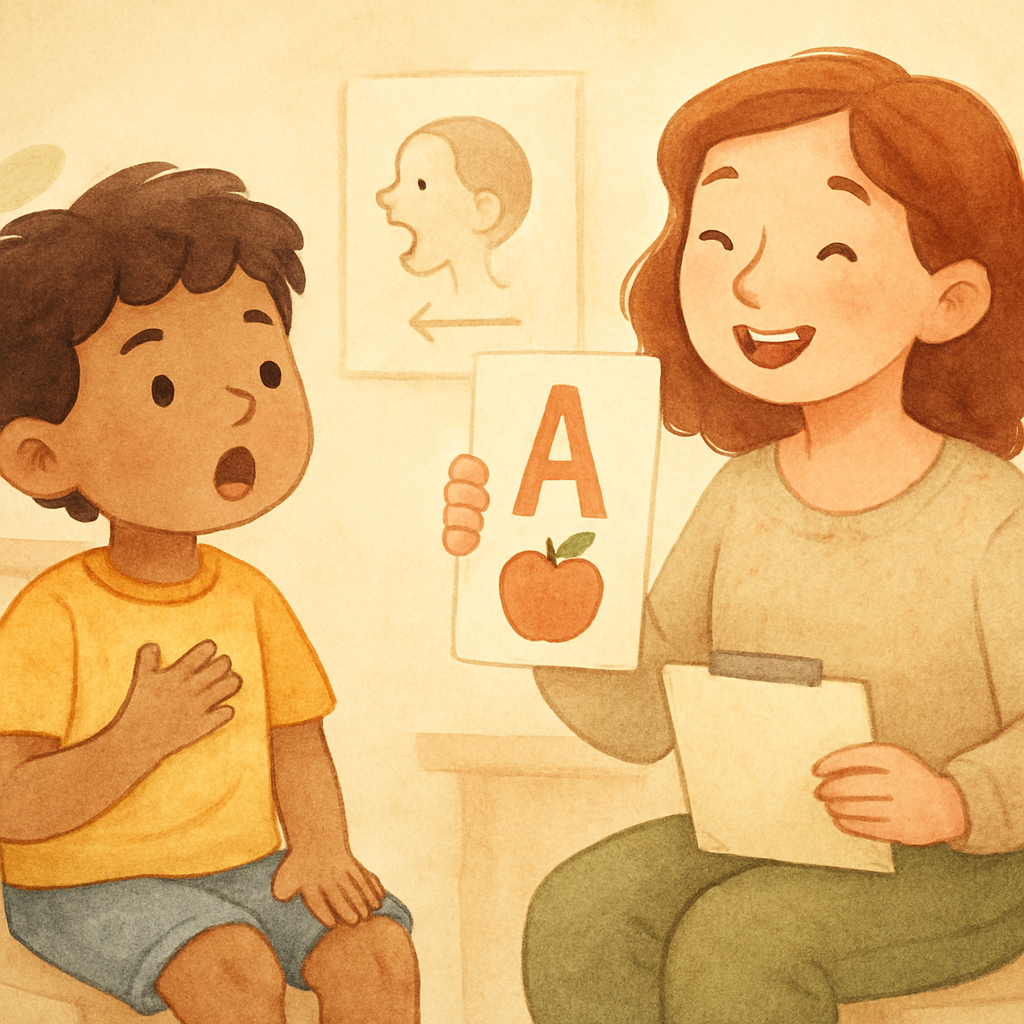
Developmental language disorders affect a child's ability to use and understand language, making learning and socializing more difficult. These can be expressive (difficulty communicating) or receptive (difficulty understanding).
In therapy sessions, speech pathologists use play-based techniques like books, pictures, and games to make learning fun and natural. They model correct sounds and words, teaching proper speech patterns.
Therapists also give parents strategies and homework to reinforce progress at home, helping children apply new skills in daily life.
Social communication disorders
Social communication disorders impact how people use language in social settings, affecting skills like turn-taking, staying on topic, and reading nonverbal cues. These challenges can make forming relationships difficult.
Therapy supports social development, especially for autistic children struggling with these skills. Sessions may be one-on-one or in small groups, providing a safe space to practice and build confidence.
Therapists use targeted strategies such as role-playing conversations and activities to interpret facial expressions and body language. These exercises help individuals develop practical social skills for everyday life.
Key Strategies in Speech Therapy for Social Communication
When it comes to improving social communication, speech therapy in Liverpool uses several key strategies. These are designed to build practical social skills that you can use in everyday conversations. A therapist will create a plan with specific communication goals tailored to your needs.
This plan often includes targeted speech therapy exercises like practicing conversational tactics and problem-solving activities. Just as important is family involvement, as practicing these new skills at home reinforces what is learned in therapy and helps accelerate progress. We will now look at some of these techniques more closely.
Techniques for building pragmatic language and interaction skills
Improving pragmatic language is essential for better social interactions. While the terms are often used together, it's helpful to know the difference between speech therapy and language therapy. Speech therapy focuses on the physical production of sounds and fluency, while language therapy addresses understanding and expressing thoughts, ideas, and feelings. Both are vital for effective communication skills.
To build pragmatic language, a therapist uses specific speech therapy exercises. These activities are designed to make the rules of social interaction more clear and intuitive. The goal is to improve your ability to navigate conversations with ease and confidence.
Some common techniques include:
-
Practicing conversational tactics to improve turn-taking and topic maintenance.
-
Using memory games and puzzles to enhance cognitive-communication skills.
-
Engaging in exercises to strengthen oral muscles for clearer speech.
-
Learning to control facial expressions to improve nonverbal communication.
Supporting family involvement in therapy routines
Family involvement is key to successful speech therapy in Liverpool. By participating, you reinforce lessons and provide a supportive environment for practice—especially important for children, where early intervention with family support leads to the best outcomes.
Incorporate therapy routines into daily life by using activities like reading or casual conversation to practice language skills. Consistency helps meet your loved one’s communication needs.
To help at home, ask your speech therapist for homework and strategies. Research shows that children make the most progress when parents or caregivers practice with them at home, ensuring learning continues beyond therapy sessions.
Conclusion
In conclusion, speech therapy plays a crucial role in fostering language development for both children and adults. Understanding the diverse needs and conditions that can benefit from speech pathology is essential for effective intervention. By employing targeted strategies and involving families in the therapy process, individuals can make significant strides in their communication skills. Remember, it’s never too late to seek help; early intervention can lead to the best outcomes.
If you have more questions or are looking for personalized guidance, don’t hesitate to reach out for a consultation or call daar at 02 9133 2500. Your journey toward improved communication starts today!
Frequently Asked Questions
Finding clarity on speech therapy can make a big difference for families facing communication challenges. Many wonder how speech therapists assess language skills or what types of speech disorders are most common in children and adults. Others may ask about the effectiveness of language therapy for conditions like autism or brain injuries. It’s also common to discuss the role of early intervention and how personalized treatment plans can improve social skills and overall quality of life for those with communication needs.
How can parents recognize if their child needs speech therapy?
Parents should watch for language delays or signs of a receptive or expressive language disorder. If your child has difficulty understanding you, expressing their thoughts, or has limited communication skills for their age, it is a good idea to consult a speech pathologist for an evaluation.
How long does it take to see results from speech therapy?
The time it takes to see results varies for each person. A therapist will create a treatment plan based on specific needs, age, and disorder severity. While speech therapy works, consistent attendance and practice are key components of an effective treatment to improve communication skills.
Frequently Asked Questions
How can a speech therapist assess a child's language skills?
A speech pathologist performs a thorough assessment to evaluate a child's language skills. This evaluation may include standardized tests, observation during play, and talking with the child to identify issues with language processing. The results help the therapist determine the best course of action.
.svg)




.svg)