
.png?width=48&height=48&name=Group%201%20(3).png)























16 April, 2026

5 Healthy Routines for Children to Boost Development

Parenting in today’s fast-paced world can often feel like a juggling act. Between rushing out the door for school, navigating afternoon extracurricular activities, and managing the inevitable bedtime battles, days can quickly dissolve into chaos. However, establishing healthy routines for children can give them a sense of ownership and is one of the most effective ways to replace that daily chaos with calm, predictable structure.
Healthy routines for children play a key role in supporting physical growth, emotional stability, cognitive development, and essential social skills. While spontaneity has its place, the ultimate foundation of a child's well-being is built on consistency. When children follow consistent daily habits, their bodies and brains function far more efficiently. A predictable schedule takes the guesswork out of their day, leading to significantly better sleep, improved daytime behaviour, and stronger overall health.
In this comprehensive guide, we will explore exactly why structure is so vital to a child's developing brain, break down the core components of an effective daily routine that includes both structured learning and free play, and provide you with simple, actionable steps to build habits that will set your child up for lifelong success.
Why Healthy Routines Matter for Kids
To understand why regular routines are so powerful, it helps to view the world from a child’s perspective. For a child, the world is remarkably vast, complex, and largely out of their control. They are constantly navigating new social dynamics, learning new academic concepts, and absorbing large amounts of sensory information. Without a predictable schedule, this constant influx of new experiences can quickly become overwhelming, triggering anxiety and stress.
Children inherently thrive on structure and predictability, especially young children. A well-balanced routine acts as a psychological safety net. When a child knows exactly what is expected of them in the morning, afternoon, and evening, it dramatically lowers their daily stress levels. They don’t have to expend mental energy worrying about what happens next, which frees up their brain power to focus on learning, playing, and growing.
Biologically, routines are just as critical for a child’s emotional development. A consistent daily schedule helps perfectly regulate a child’s internal body clock, also known as the circadian rhythm. From the timing of their sleep cycles to the predictability of their meals and playtime, consistent habits create a deep sense of biological security and stability. When the body knows when to expect food, physical activity, and rest, it can optimize the release of vital hormones—like growth hormone and melatonin—ensuring the body operates at its peak potential.
Key Components of Healthy Routines for Children
Creating an effective routine does not mean you have to plan every single minute of your child’s day to support your child’s growth. The most sustainable routines are those that act as gentle frameworks rather than rigid rules. Here are the four key components you should incorporate into your family’s daily life:
1. Consistent Sleep Schedule
Sleep is the absolute cornerstone of childhood health and development. Going to bed and waking up at the same time every day—even on weekends—helps regulate a child’s natural sleep cycles. When a sleep schedule is consistent, the brain learns exactly when to initiate the release of melatonin, making falling asleep a much smoother process. More importantly, a predictable sleep routine ensures that children gain a sense of control over their sleep environment and spend adequate time in deep, slow-wave sleep. This is the crucial stage of sleep where the body repairs tissues, supports immune function, and releases the human growth hormone necessary for healthy physical growth and comprehensive brain development. However, parents often face common challenges when setting consistent sleep routines for their children. Busy family schedules, extracurricular activities, or children’s resistance to bedtime can make it difficult to maintain the same sleep and wake times every day. Additionally, changes in routine due to travel or special occasions may disrupt established patterns and require extra patience and flexibility from parents.
2. Balanced Daily Activities
A healthy routine requires a thoughtful balance of how a child expends their energy. A mix of focused schoolwork, vigorous physical activity, and unstructured relaxation helps children stay active, focused, and emotionally balanced. Ensure that your child engages in at least 60 minutes of physical play every day. Moving their bodies helps burn off excess cortisol (the stress hormone), strengthens their muscles, and improves their gross motor skills. Equally important is scheduling quiet downtime where children are free to read, draw, or engage in imaginative play, thereby enhancing their time management skills without the pressure of a structured activity or adult direction.
3. Healthy Eating Habits
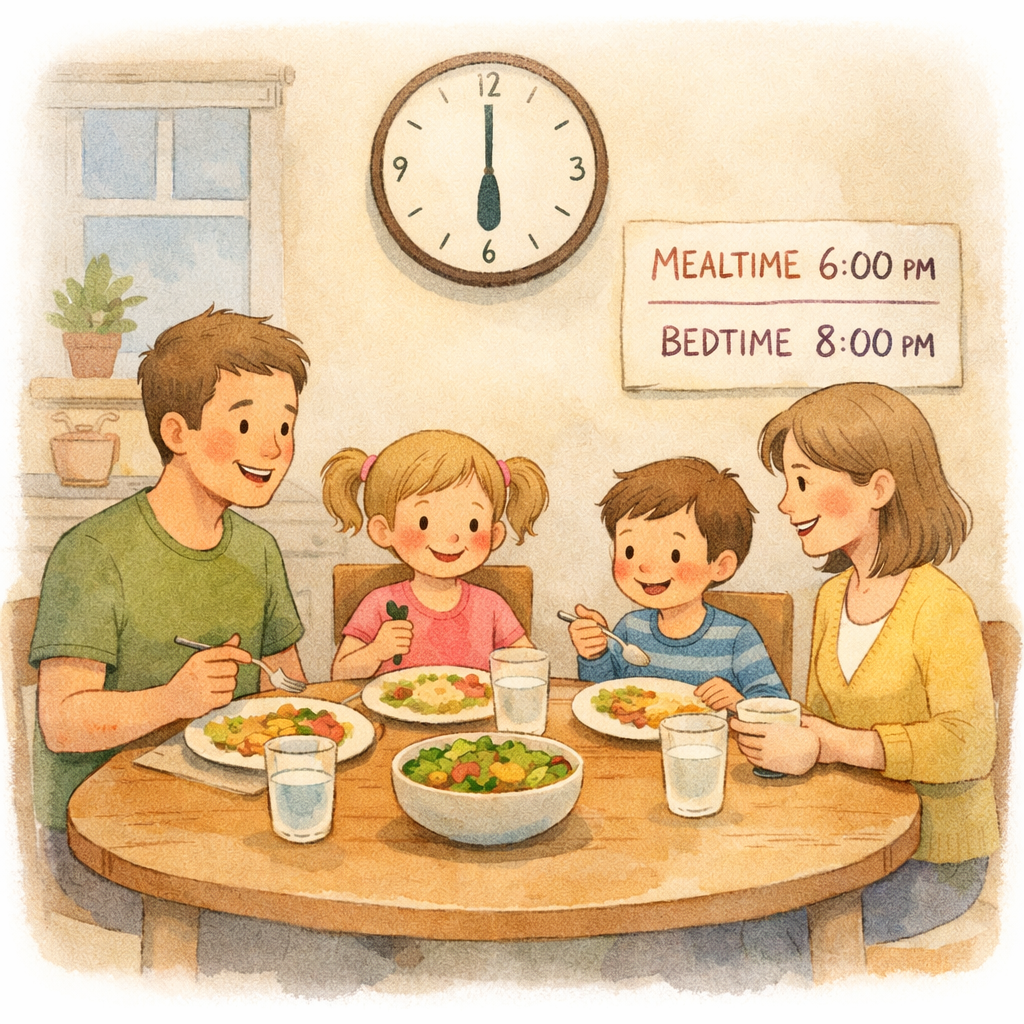
You cannot fuel a rapidly growing body and brain with unpredictable, nutrient-poor meals. Regular, nutritious meals and strategically timed snacks support stable energy levels, advanced brain function, and physical growth for all family members. When a child eats at roughly the same times each day, their blood sugar remains stable, preventing the sudden energy crashes and "hangry" emotional outbursts that can derail an entire afternoon. Focus on providing balanced plates that include lean proteins, complex carbohydrates, whole grains, and plenty of colorful fruits and vegetables to give their bodies the exact building blocks required for optimal development.
4. Screen-Free Wind Down Time
In the digital age, managing technology is a critical part of any child's daily routine. Limiting screen time and screens (such as smartphones, tablets, televisions, and video games) before bed helps directly improve sleep quality and drastically reduces overstimulation. Digital screens emit artificial blue light, which tricks the brain into completely halting the production of sleep-inducing hormones. Implement a strict screen-free wind-down period at least one hour before bedtime. Replace digital entertainment with calming, tactile activities—like taking a warm bath, listening to soft music, completing a puzzle, or reading a physical book—to help their nervous system transition peacefully into rest mode. For preschoolers and young children, age-specific recommendations for routines emphasize consistency and simplicity. Establish a predictable sequence of screen-free calming activities every evening, such as a warm bath followed by storytime, to support their developmental needs and foster healthy long-term sleep habits.
5 Transformative Benefits of Healthy Routines
When you invest the time and effort into establishing firm, loving boundaries and predictable daily habits, the positive ripple effects, including strong family connections, are remarkable. Here are the core benefits your child will experience:
Better Sleep Quality and Duration
Routines naturally cure many common childhoods sleep struggles in early childhood. By honoring a regulated circadian rhythm and enforcing a calm wind-down sequence, children fall asleep faster, experience fewer nighttime awakenings, and naturally achieve the 9 to 12 hours of sleep recommended by paediatricians for optimal health.
Improved Focus and Academic Performance
A child whose basic physiological needs—sleep, nutrition, and family meals—are consistently met walks into the classroom ready to absorb information. Predictable routines improve the brain's executive functioning skills, leading to sharper concentration, better memory retention, and noticeable improvements in academic performance.
Stronger Emotional Regulation
Children with strong daily routines experience far fewer daily tantrums, aggressive outbursts, and behavioural meltdowns that can impact mental health. Because they feel secure in knowing what is happening next, their nervous system isn't constantly bracing for unexpected changes. This predictability fosters a deep sense of calm and emotional resilience.
Reduced Stress and Anxiety
Anxiety often stems from the unknown. Knowing the daily schedule, including consistent bedtime routines, acts as a powerful buffer against the chaotic outside world. This lowers chronic cortisol levels, helping naturally sensitive or anxious children feel much more at peace and in control of their daily lives.
Enhanced Physical Growth and Immunity

Proper nutrition, daily physical activity, and deep, restorative sleep all work synchronously to boost the immune system and support family dinners. A well-regulated body is far better equipped to naturally fight off common schoolyard viruses and maximize the biological processes required for healthy height and muscle development.
Start building healthy
Consistent routines for your child today to actively support better sleep, improved daytime behaviour, and essential long-term physical and cognitive development. Providing your child with a structured, loving environment is one of the most impactful ways to guarantee their future health and happiness.
Reach out for a consultation or call daar at 02 9133 2500 for more expert parenting tips, practical child wellness guidance, and science-backed strategies delivered directly to your inbox!
Frequently Asked Questions (FAQs)
1. Why are routines important for children?
Routines are incredibly important because they provide a necessary framework of predictability in a child's quickly changing world. This predictability helps children feel psychologically secure, actively reduces their daily stress and anxiety, and supports healthy overall development, which is crucial for a child’s development. Biologically, routines help regulate the body's internal clocks, which dramatically improves sleep quality, stabilizes mood and daytime behaviour, and sets the stage for optimal learning.
2. What is a good daily routine for kids?
A good routine doesn't have to be rigid, but it should include reliable daily anchors that support a child’s life. It should consist of a consistent morning wake-up time, regular and highly nutritious meals and snacks to stabilize blood sugar, at least an hour of active physical activity, dedicated time for learning or chores, unstructured, completely screen-free relaxation, and a calming, predictable evening sequence that leads to the same bedtime every single night.
3. How do routines improve sleep in children?
Consistent evening routines act as powerful behavioural cues for the brain. When a child follows the exact same sequence every night—such as taking a bath, putting on pajamas, and reading a story—the brain learns to associate those specific actions with impending sleep. This helps to establish good habits and correctly regulate the body clock and triggers the natural release of melatonin, making it chemically and emotionally much easier for children to naturally fall asleep and consistently stay asleep until morning.
.svg)




.svg)