
.png?width=48&height=48&name=Group%201%20(3).png)























16 April, 2026

Understanding Growth Hormone When Sleeping for Kids
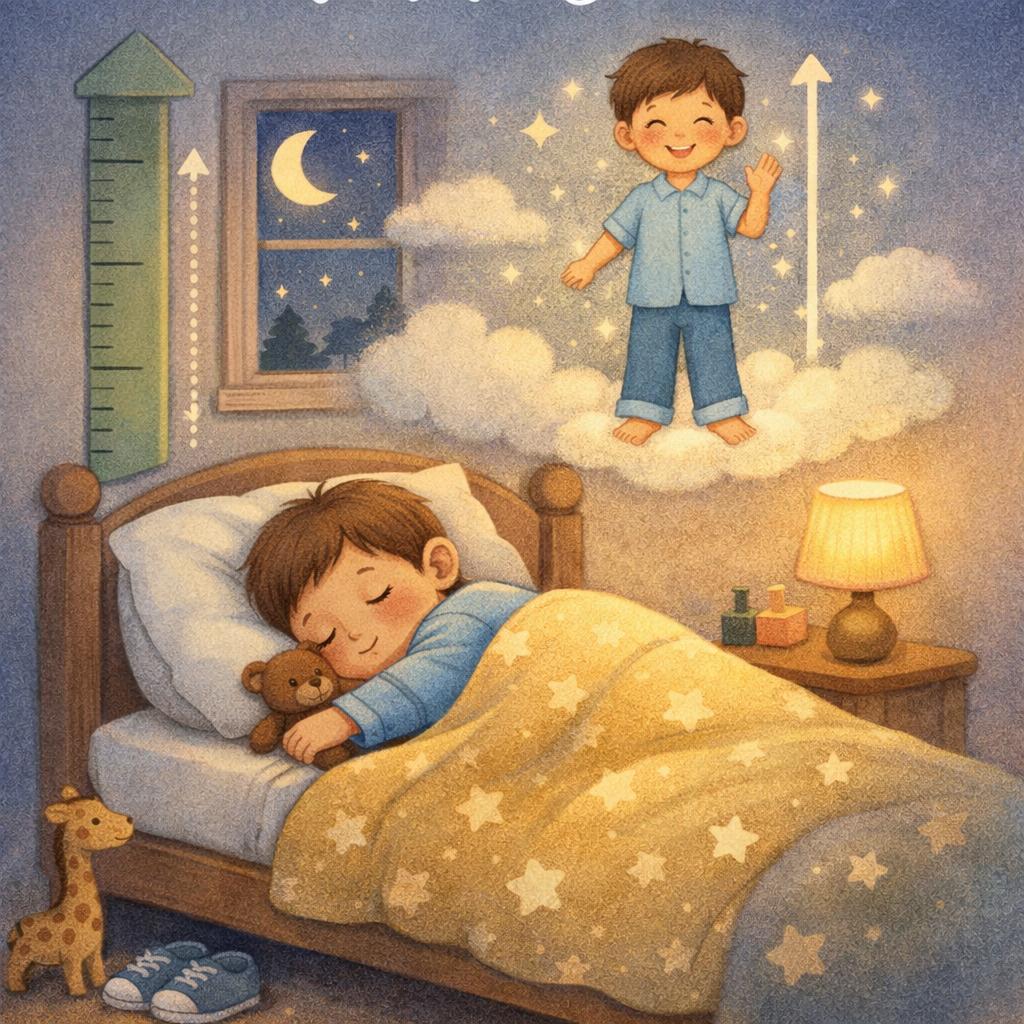
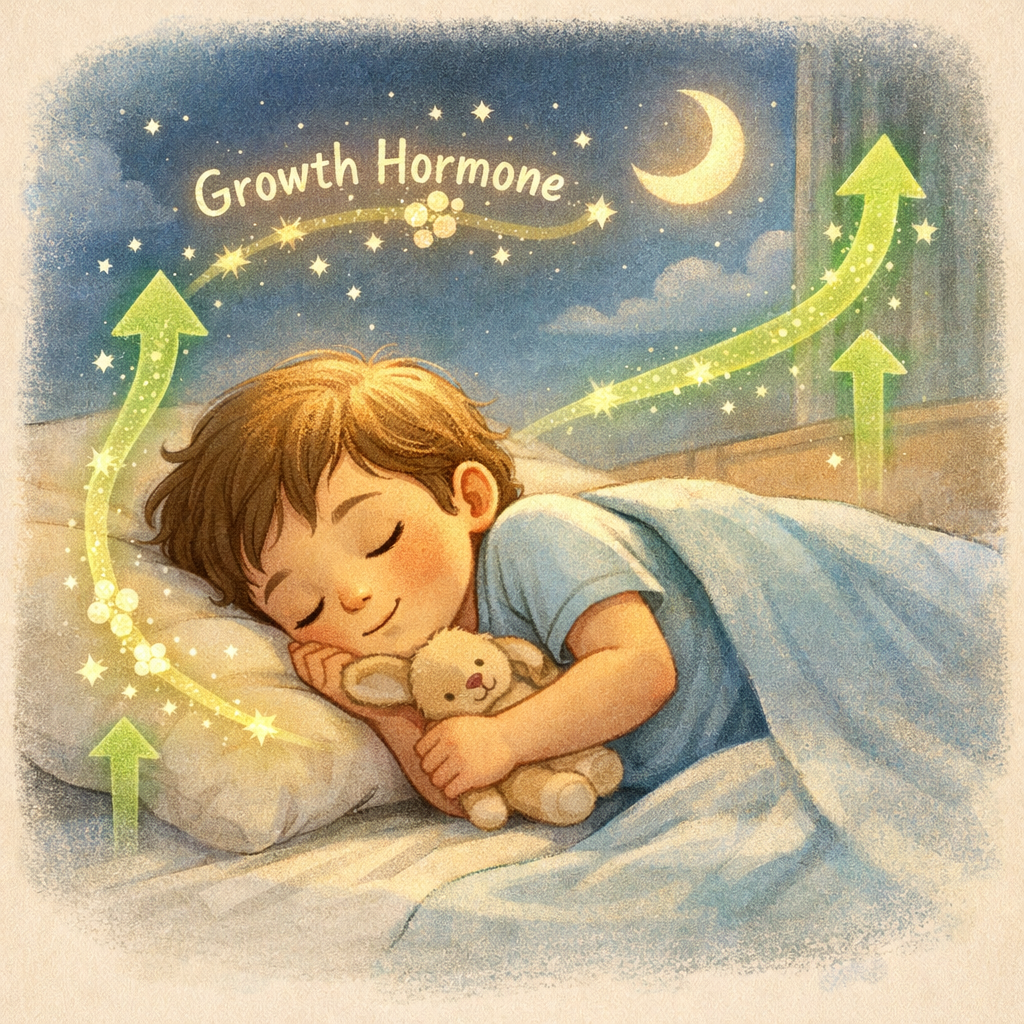
Every parent has probably experienced that baffling phenomenon: you put your child to bed, and the next morning they wake up, walk into the kitchen, and suddenly their pajama pants look an inch shorter. You might jokingly say, "You grew overnight!" But as it turns out, this old parenting cliché is actually a biological fact related to growth and weight gain. Growth hormone-releasing hormone plays a crucial role in this process, as it is involved in regulating both sleep and growth, helping to coordinate the timing of growth spurts during deep sleep cycles.
Sleep is one of the single most important factors in a child’s physical development. Sleep is not merely a passive state of rest or a "pause" button for the body. It is an incredibly active, highly productive biological phase that promotes restful sleep. During deep sleep, the brain commands the body to release growth hormone—the key driver of height, bone strength, and overall physical growth in children.
Without enough quality, uninterrupted sleep, this critical internal construction process can be severely disrupted, potentially impacting a child's developmental trajectory. In this comprehensive guide, we will explore exactly how growth hormone works, when it is released during the night, and how hgh therapy can be beneficial, as well as what actionable steps you can take to ensure your child gets the restorative sleep they need to reach their full physical potential. It is important to note that there are significant differences in growth hormone release during sleep between children and adults; children typically experience higher and more frequent bursts of growth hormone at night, supporting rapid growth and development, whereas adults have lower and less frequent releases.
What Is Growth Hormone and Why Does It Matter?
Human Growth Hormone (often abbreviated as GH or HGH) is a vital chemical messenger produced by the pituitary gland, a pea-sized structure located at the base of the brain. You can think of growth hormone as the body’s master builder or general contractor.
When released into the bloodstream, this hormone travels throughout the body and instructs cells to multiply and grow. It plays a vital role in helping children grow taller, build lean muscle mass, and support cognitive function and repair damaged tissues. While the body produces growth hormone throughout a person's entire lifetime—even in adulthood for tissue repair—it is exceptionally active and abundant during childhood and adolescence.
This window of early life is when the body is rapidly developing from the ground up. If the pituitary gland does not produce enough growth hormone, or if poor lifestyle habits block its release, a child may experience stunted growth, growth failure, slower muscle development, and a generally weaker physical foundation.
When Is Growth Hormone Released?
To understand how sleep impacts the secretion of growth hormone and growth, we have to look at the architecture of sleep itself. When a child falls asleep, they don't just stay in one uniform state. Their brain cycles through different stages: light sleep, deep sleep (also known as slow-wave sleep), and REM (rapid eye movement) sleep.
The vast majority of growth hormone—up to 70% or 80% of their daily dose—is released in massive pulses during deep sleep, facilitating muscle growth. This deep sleep phase is highly concentrated in the early part of the night, typically between 10:00 PM and 2:00 AM, assuming the child went to bed at a reasonable hour.
This means that both the quality and the timing of sleep are essential for proper growth. If a child stays up very late, their sleep architecture shifts, and they may miss this optimal biological window for deep sleep. Similarly, children who experience frequent sleep disruptions (like waking up multiple times from noise, sleep apnea, or anxiety) are constantly pulled out of deep sleep into light sleep, which can lead to poor sleep quality. Consequently, they may not get enough sustained deep sleep for optimal hormone release, shortchanging their body's nighttime growth process.
Benefits of Growth Hormone During Sleep
When your child gets the deep, continuous sleep they need, the nighttime release of growth hormone works absolute magic on their developing body, especially if they are not suffering from growth hormone deficiency. Here are four incredible benefits of growth hormone release during sleep:
1. Supports Height and Physical Growth
The most visible benefit of nighttime growth hormone is vertical growth. At the ends of a child's long bones (like those in the legs and arms) are areas of developing cartilage called epiphyseal plates, or "growth plates." Growth hormone severely stimulates these plates, prompting the bones to lengthen and thicken. Furthermore, certain factors can influence GH secretion during nighttime, and this activity is literally what helps children reach their full, genetic height potential.
2. Aids Muscle Development and Repair
Children are constantly in motion—running, jumping, climbing, and falling. All of this physical daytime activity creates microscopic tears in their muscle fibers. Growth hormone, including aspects of replacement therapy, accelerates muscle protein synthesis, rushing to these areas during deep sleep to repair muscles and tissues. This is what allows a child to recover from a tiring day at the Playground, build physical strength, and improve their gross motor skills.
3. Boosts Metabolism and Body Composition
Beyond just making bones longer, growth hormone plays an instrumental role in regulating your child’s metabolism and combating insulin resistance. It dictates how the body processes the food they ate that day. Growth hormone helps break down lipids (fats) and utilize carbohydrates for energy, rather than storing them. Promoting the growth of lean muscle mass and regulating fat storage, it ensures your child maintains a healthy, active body composition.
4. Supports Overall Health and Cell Regeneration
Growth hormone and HGH levels are fundamentally about cellular regeneration. It doesn't just build bones and muscles; it strengthens major organs, repairs minor scrapes and bruises from the day, and thickens the skin. Furthermore, deep sleep and the release of growth hormone are closely linked to a robust immune system. By rebuilding the body at a cellular level every single night, growth hormone ensures your child wakes up healthy, strong, and resilient for the next day.
How to Support Healthy Growth Hormone Release
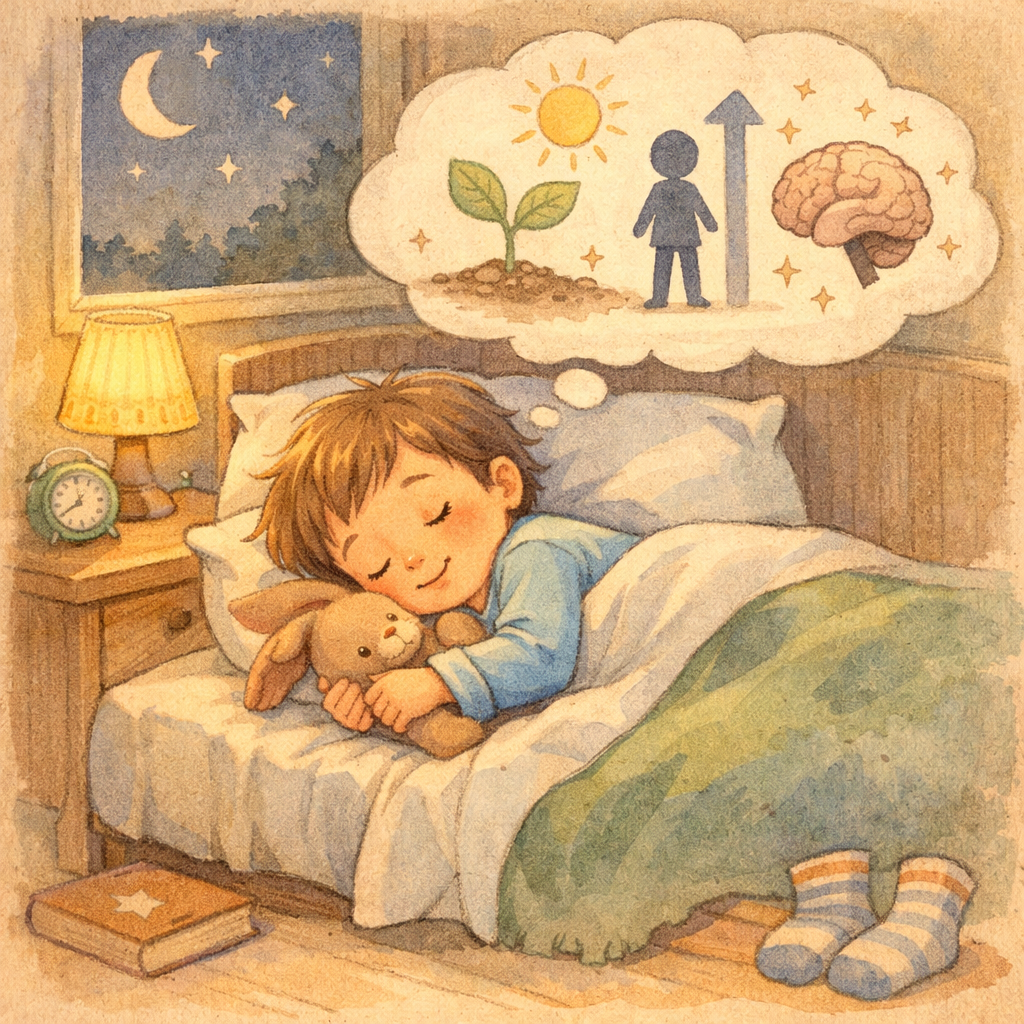
As a parent, you cannot manually control your child's pituitary gland, but you have immense power over the environment that allows it to thrive. Here are five actionable ways to support healthy growth hormone release through better sleep habits and promote good sleep hygiene:
- Ensure consistent sleep schedules: The brain's hormone release is governed by the circadian rhythm (the internal body clock). By putting your child to bed and waking them up at the same times every day—even on weekends—you train their brain to reliably drop into deep sleep at the correct time each night to ensure they get enough sleep.
- Prioritize early bedtimes for deeper sleep cycles: Because the deepest, most hormone-rich sleep occurs in the first third of the night, early bedtimes are crucial. Depending on their age, a bedtime between 7:00 PM and 8:30 PM ensures they catch that massive wave of growth hormone production before midnight, helping to avoid short sleep duration and support healthy growth.
- Create a calm, screen-free bedtime routine: High cortisol (the stress hormone) directly suppresses the release of growth hormone, which is especially crucial for healthy adults. Furthermore, blue light from screens halts melatonin production. Implement a strict "no screens" rule an hour before bed and replace it with a calming routine (bath, reading, dimmed lights) to lower stress and invite deep sleep.
- Encourage daily physical activity: Exercise is a natural trigger for growth hormone. Scientists call this "Exercise-Induced Growth Hormone Release" (EIGR). Ensuring your child gets at least 60 minutes of active, outdoor, heart-pumping play during the day will result in a much larger, more robust release of growth hormone when they finally fall asleep, contributing to their overall total sleep time that night.
- Maintain a comfortable sleep environment: Disrupted sleep and the quality of sleep kill growth hormone pulses. Protect their deep sleep by optimizing their bedroom. Keep the room temperature cool (around 65°F to 68°F), use blackout curtains to maintain total darkness, and use a white noise machine to drown out disruptive household or neighborhood sounds that might pull them out of their deep sleep cycle.
Give Your Child the Best Foundation
Your child's body is working incredibly hard while they sleep, building the physical foundation they will use for the rest of their lives. Support your child’s natural growth factor, physical strength, and overall daytime development by prioritizing high-quality, uninterrupted sleep every single night.
Start building better sleep habits today to help them reach their full potential! Reducing your body fat can also contribute positively.
Reach out for a consultation or call daar at 02 9133 2500 for more expert parenting tips on child health, sleep hygiene, and holistic wellness strategies delivered right to your inbox.
Frequently Asked Questions (FAQs)
1. When is growth hormone released in children?
While small amounts of growth hormone are released throughout the day, the sleep efficiency plays a crucial role as up to 80% of a child's daily growth hormone is released in intense, concentrated pulses during the deepest stages of sleep (slow-wave sleep). This period of deep sleep primarily occurs in the first third of the night, typically within the first few hours after falling asleep.
2. Does a lack of sleep affect a child’s physical growth?
Yes, absolutely. Chronic sleep disturbances, sleep deprivation, frequent nighttime awakenings, or consistently going to bed very late can drastically reduce the amount of deep sleep a child gets. Because this cuts off the body's prime window for growth hormone release, prolonged poor sleep can actually impact a child's physical development, muscle recovery, and overall height trajectory over time.
3. What time should kids sleep for optimal growth hormone production?
Because the most significant pulses of growth hormone occur in the early hours of the night (usually between 10:00 PM and 2:00 AM), early and consistent bedtimes are highly recommended by pediatricians. For toddlers and preschoolers, bedtime should generally be between 7:00 PM and 8:00 PM. For school-aged children, 8:00 PM to 9:00 PM is ideal. This ensures their brain has plenty of time to cycle down into the deep sleep stages right during the first half of the night when the growth hormone factory is ready to go to work.
.svg)




.svg)