
.png?width=48&height=48&name=Group%201%20(3).png)
























16 April, 2026

Unlock Healthy Growth: Sleep for Growing Children
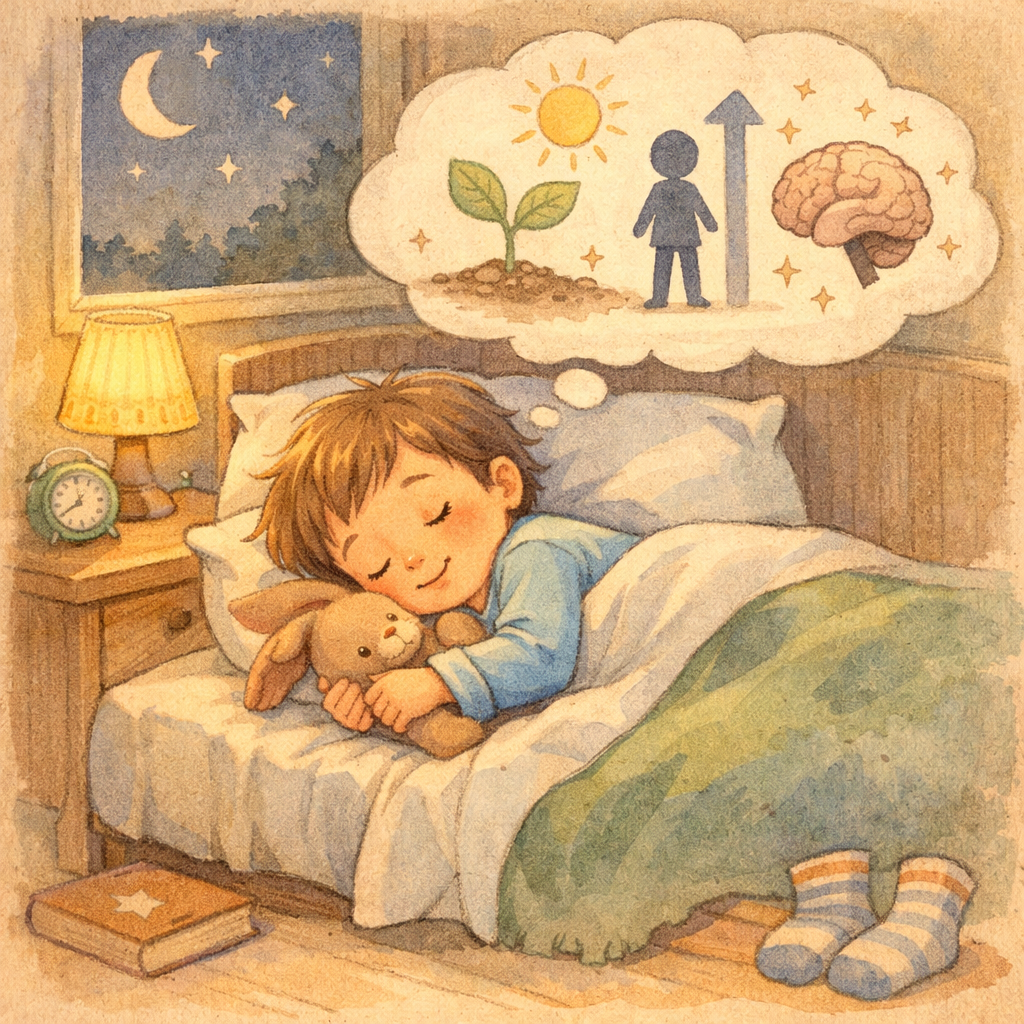
There is nothing quite as peaceful as watching a child sleep after a long, busy day of playing, learning, and exploring. As parents, we often cherish these quiet evening hours as a time to finally relax. But while your house may be quiet, your child’s body is working overtime. However, parents need to recognize signs that a child may not be getting enough sleep, including how much sleep children need for healthy development. Some common indicators include difficulty waking up in the morning, irritability, trouble concentrating, frequent mood swings, and appearing overly tired during the day. Recognizing and addressing these signs early can help ensure your child gets the rest they need to grow and thrive.
Sleep plays a vital, non-negotiable role in the healthy growth and development of children. It is not merely a "pause button" on their day; it is a highly active biological state that significantly impacts their mental health. As kids grow, their bodies and brains absolutely require high-quality rest to function properly, heal, and mature. From boosting their physical height to enhancing their cognitive abilities and emotional resilience, sleep is arguably one of the most important pillars of a child’s overall well-being.
In this comprehensive guide, we will explore the fascinating connection between sleep and child development, break down exactly how sleep fuels your child's brain and body, and provide actionable tips to help you build a consistent bedtime routine that actually works. Additionally, we’ll discuss key environmental factors that can improve or disrupt a child’s sleep, such as room temperature, light exposure, noise levels, and comfort of the sleep environment. By understanding and optimizing these factors, you can create the best possible setting to support restful, healthy sleep for your child.
How important is sleep for a child's growth?
Sleep is crucial for growing children as it supports physical and mental development. During sleep, the body releases growth hormones, aiding in tissue repair and muscle growth. Adequate rest also enhances cognitive function, emotional regulation, and overall well-being, making it essential for a child's healthy growth and development.
The Connection Between Sleep and Child Development
To understand why sleep is so crucial, we have to view the source of what happens beneath the surface when your child drifts off. Sleep is divided into distinct cycles—primarily light sleep, deep (slow-wave) sleep, and REM (Rapid Eye Movement) sleep. Each phase has a specific job in keeping your child healthy.
During sleep—especially the deep sleep phases that occur heavily in the first half of the night—the body works like a construction crew, enabling good sleep habits. The pituitary gland releases powerful growth hormones that quite literally help children grow taller and stronger.
At the same time, the brain is undergoing massive renovations. During REM sleep, it is a good idea for the brain to process new information, categorize what the child learned at school, strengthen memory pathways, and support emotional balance. The brain also uses this time to clear out cellular waste and build new neural connections.
When these cycles are interrupted or cut short, the developmental consequences are noticeable. Poor sleep can heavily impact everything from a child's learning ability and academic performance to their involvement in extracurricular activities, daily mood, impulse control, and behaviour.
Key Benefits of Sleep for Growing Children
The benefits of a good night's rest extend to every single system in your growing child's body. Here are the four most significant ways sleep impacts their development:
1. Promotes Healthy Physical Growth
Have you ever felt like your child actually woke up taller than when they went to sleep? You might not be imagining it! Deep sleep triggers the release of Human Growth Hormone (HGH), which is absolutely essential for height, bone strength, and muscle development. In fact, sleep training can help ensure that children produce the vast majority of their daily growth hormone while they are sound asleep. Furthermore, sleep provides the necessary downtime for muscles and tissues to repair themselves after a strenuous day of running, jumping, and playing sports.
2. Enhances Brain Function and Abilities
Think of your child’s brain as a sponge that absorbs incredible amounts of information all day long. Sleep is the process that permanently stores that information. Quality sleep improves attention spans, learning capacity, and cognitive performance, and memory retention, directly helping children perform better in school. A well-rested child has an easier time focusing on reading assignments, solving complex math problems, and thinking creatively. Conversely, sleep deprivation drastically mimics the symptoms of ADHD, leading to inattention, forgetfulness, and poor academic performance.
3. Supports Emotional and Behavioural Health
We all know that a tired toddler is prone to epic meltdowns, but this emotional fragility extends to older children and teens as well. Sleep, including daytime naps, restores the critical balance between the brain's emotional center (the amygdala) and the logical, decision-making center (the prefrontal cortex). Well-rested children are significantly less likely to experience severe mood swings, sudden irritability, and behavioural problems. They are better equipped to handle frustration, share with siblings, and regulate their own emotions when things don't go their way.
4. Boosts the Immune System
Schools and Playgrounds are a breeding ground for germs. Thankfully, adequate sleep acts as your child’s natural armor, helping protect them from illness by strengthening their immune response and reducing the risk of conditions such as sudden infant death syndrome. While a child sleeps, their immune system produces infection-fighting proteins called cytokines. These proteins actively target inflammation, viruses, and bacteria. Children who don't get enough sleep are far more susceptible to catching common colds and take much longer to recover when they do get sick.
Tips to Improve Sleep for Growing Children

Understanding the importance of sleep problems is easy; getting a squirmy, energetic child into bed is the hard part! If you want to support your child's development, start by implementing these proven sleep hygiene strategies:
- Set a consistent bedtime and wake-up schedule: The human body thrives on a predictable biological clock (circadian rhythm). and sleep patterns. Set a strict bedtime and wake-up time, and stick to it every single day—even on the weekends! Keeping weekend bedtimes within an hour of their weekday schedule prevents "social jetlag" and makes Monday mornings much easier.
- Create a relaxing bedtime routine: Sudden transitions from playtime to sleep time are jarring for children. Create a predictable 30-to-45-minute wind-down routine that includes calming activities like taking a warm bath, putting on pajamas, reading a book together, or practicing quiet time. This signals to their brain that sleep is approaching, especially after engaging in activities such as video games.
- Keep the bedroom cool, dark, and quiet: Optimize their bedroom for maximum comfort. The ideal sleeping temperature for children is generally between 65°F and 68°F. Use high-quality blackout curtains to block early morning sunlight, and consider a white noise machine to drown out disruptive household chatter or neighborhood traffic. Additionally, keeping a sleep diary can help track any sleep disturbances.
- Limit screen time before bed: The artificial blue light emitted by tablets, TVs, and smartphones tricks the brain into thinking it is still daytime, completely halting the production of melatonin (the sleep hormone). This guideline aligns with the consensus statement. Enforce a strict "digital curfew" by turning off all screens at least one hour before bed.
- Encourage daily physical activity: A physically tired child falls asleep much faster. Encourage at least 60 minutes of active, outdoor play every day. Exposure to natural sunlight during the day also helps reinforce their natural circadian rhythm. You can start to encourage a more regular sleep schedule by trying to avoid intense, heart-pumping activity right before bed, as it can be too stimulating.
Give your child the foundation they need to grow, learn, and thrive
Start building healthy sleep habits today! A good night's rest is the greatest gift you can give their developing brain and body. As children grow, they move through different stages of sleep, including light sleep, deep sleep, and REM sleep. Maintaining adequate sleep duration is crucial, as REM sleep makes up a larger portion of the sleep cycle in infants and young children, supporting rapid brain development. As kids age, the proportion of REM sleep gradually decreases, and sleep cycles become more similar to those of adults.
Reach out for a consultation or call daar at 02 9133 2500 for your child development insights and practical health advice.
Frequently Asked Questions (FAQs)
1. Why is sleep important for growing children? Sleep is a highly active biological state that supports nearly every aspect of a child's development, including the utilization of genomic information. It supports physical growth by releasing growth hormones, fuels brain development by solidifying memory and learning, aids in emotional regulation by calming the nervous system, and boosts overall health by strengthening the immune system to fight off daily illnesses.
2. How much sleep do growing children need?
Sleep needs vary depending on age group, but generally, most school-aged children need between 9–12 hours of sleep per night. Toddlers and preschoolers require more (10-14 hours including naps), while teenagers typically need 8-10 hours to support their rapidly changing bodies and demanding academic schedules.
3. What happens if a child doesn’t get enough sleep? Insufficient sleep can have immediate and long-term effects on a child. In the short term, it can lead to poor concentration, emotional meltdowns, hyperactivity, and a weakened immune system. Over the long term, chronic sleep deprivation can result in slower physical growth, ongoing behavioural issues, and significant struggles with academic learning and memory retention.
.svg)




.svg)