
.png?width=48&height=48&name=Group%201%20(3).png)























27 January, 2026

How Pediatric Speech Therapy Canterbury Supports Children
Introduction
Every child deserves to feel confident when they communicate. For families in Canterbury, pediatric speech therapy offers a supportive path for children facing communication challenges. This specialized support focuses on nurturing a child's communication abilities, helping them build the essential skills needed for clear speech and effective self-expression. By addressing difficulties early, you can support your child's language development and help them connect more easily with the world around them, setting them up for future success.
Key Highlights
-
Pediatric speech therapy helps children overcome a wide range of speech disorders. The goal is to improve communication skills, making it easier for children to express themselves. Early intervention is crucial for achieving the best long-term results. A typical speech therapy session involves engaging activities tailored to a child's needs, such as games, picture cards, repetition exercises, and interactive play. The speech therapist works one-on-one with the child, focusing on specific speech goals to support improved communication skills and address speech disorders effectively.
-
The goal is to improve communication skills, making it easier for children to express themselves.
-
Early intervention is crucial for achieving the best long-term results.
-
Therapy services are tailored to each child's unique needs and challenges.
-
Support is available for issues with speech sounds, language, social skills, and more.
-
Families play a key role in supporting a child's progress at home.
Understanding Pediatric Speech Therapy in Canterbury
Pediatric speech therapy is a specialized service designed to help children with a variety of communication challenges. A certified speech therapist works with your child to diagnose and treat speech disorders and language disorders that may be making it hard for them to speak clearly or understand others.
The ultimate goal is to foster effective communication. Whether your child has trouble pronouncing words, forming sentences, or understanding language, therapy provides the tools and support they need to thrive. Let's explore what this therapy involves and how it supports your child's journey.
What Is Speech Therapy and How Does It Help Children
Speech therapy, or language therapy, helps children improve communication skills affected by developmental delays, hearing loss, brain injury, or other conditions. Therapy starts with an assessment to identify your child’s challenges, followed by a personalized plan with targeted goals. Using fun, play-based activities in individual or group sessions, therapists help children practice speech clarity, language comprehension, and confidence. This support builds stronger personal and social skills, improving their overall quality of life.
The Role of Speech Pathology in Childhood Communication
Speech pathology diagnoses and treats communication and swallowing disorders. "Speech pathologist" and "speech therapist" refer to the same professional—an allied health expert with a university degree, trained to help people of all ages improve communication.
They address issues like language disorders, speech difficulties, stuttering, and social skill challenges. In Australia, most are Certified Practising Speech Pathologists (CPSP), meeting standards set by Speech Pathology Australia.
Speech therapists assess your child's needs and develop effective treatment plans using evidence-based techniques, helping them overcome communication challenges for optimal development.
Who Can Benefit from Pediatric Speech Therapy
Pediatric speech therapy is designed for a wide range of young children who experience communication difficulties. If your child struggles to be understood, has trouble following directions, or finds social interactions challenging, they may benefit from support. Therapy can help with many different language disorders and speech issues.
Every child is unique, so therapy is always tailored to their specific needs. A therapist will work to improve your child's communication skills in a way that is engaging and effective for them. Below, we discuss some of the common challenges that therapy can address.
Common Child Communication Challenges
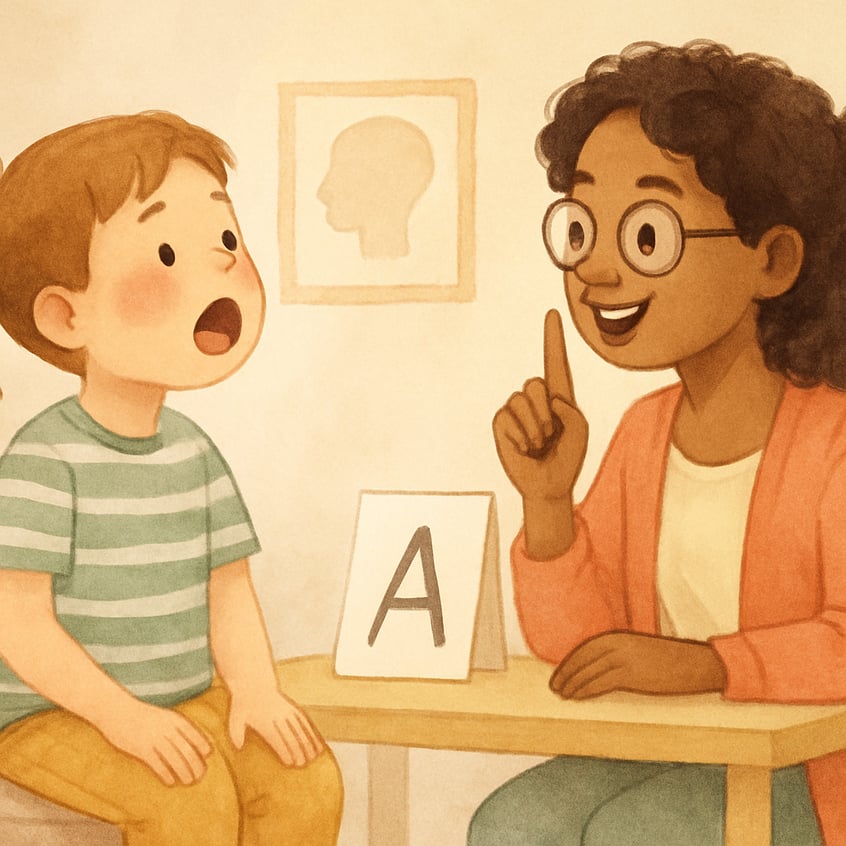
Many children face communication challenges as they grow, and speech therapy can help with a variety of speech disorders. These issues can affect a child’s ability to speak clearly, understand others, and interact socially. A speech pathologist can identify the specific problem and provide targeted support.
Some of the most common difficulties treated in therapy include articulation disorders, where a child has trouble making certain sounds correctly. Others may struggle with fluency issues like stuttering or have problems with their language skills, such as building vocabulary or forming sentences. Improving these skills is key to building confidence.
Common issues addressed by speech pathologists include:
-
Articulation disorders (difficulty pronouncing sounds).
-
Fluency disorders (stuttering or cluttering).
-
Voice disorders (problems with pitch or volume).
-
Language disorders (trouble understanding or using words).
-
Difficulties with social skills and interaction.
Social Communication Difficulties in Kids
Social communication, or pragmatics, involves the unspoken rules of conversation, such as reading body language, taking turns, and staying on topic. Many children struggle with these skills, making social interactions challenging.
Children with social difficulties may have trouble making friends, joining group activities, or understanding sarcasm. These issues are common in children with autism or social anxiety.
Speech therapy helps children develop these vital social skills. Through role-playing and guided practice, therapists teach kids to read social cues and hold conversations. This support helps them form friendships and feel more confident in social situations.
Early Signs Your Child May Need Support
Determining if your child needs speech therapy can be challenging, but early intervention is crucial. Watching for developmental milestones helps you spot possible language delays. While children develop at different rates, certain signs suggest a professional evaluation may be needed.
Look for issues such as difficulty with speech sounds, trouble understanding language, or not using age-appropriate words and sentences. If others struggle to understand your child, it’s a good idea to seek help.
Trust your instincts—if you have concerns, consult a speech pathologist for guidance and reassurance. Key milestones to watch:
|
Age |
Red Flags |
|---|---|
|
12 months |
Not babbling or responding to name |
|
16 months |
Not using single words |
|
24 months |
Not combining two words |
|
3 years |
Hard for family to understand |
Family Support and Resources in Canterbury
Your involvement is a powerful part of your child's success in speech therapy. Strong family support helps reinforce the skills learned in therapy sessions and makes a huge difference in your child's progress and quality of life. In Canterbury, there are therapy services and resources available to help you meet your child's communication needs.
Working with a speech therapist gives you the tools to help your child at home and in the community. Read on to discover some of the community-based and online options that can support your family's journey.
Community and Online Options
Finding support for your child’s communication needs is easier with many available resources. From local clinics to online groups, help is accessible. Many families benefit from combining professional therapy with community involvement.
In Australia, organizations like Speech Pathology Australia offer helpful information and tools. Their website has fact sheets and a service to locate certified speech pathologists—a great place to start when seeking trusted therapy.
Consider these options:
-
Speech Pathology Australia: Find certified speech pathologists online.
-
NDIS: The National Disability Insurance Scheme may fund eligible children.
-
Telehealth: Access online support and therapy sessions.
-
Community Health Centers: Public services are often free or low-cost.
How Families Can Support Progress at Home
As a family member, you are your child's most important teacher. Your support at home reinforces skills learned in therapy and creates a positive environment for practicing new language skills.
Your speech therapist will share strategies and activities to use between sessions. Incorporate these into daily routines like playtime or meals to make learning natural and enjoyable. Consistent practice is key to lasting progress.
Ways to support your child at home:
-
Practice therapist-recommended exercises and games.
-
Read together and discuss the pictures and story.
-
Model clear speech and patient listening.
-
Celebrate small victories to build confidence.
Conclusion
In conclusion, pediatric speech therapy in Canterbury provides essential support for children with communication challenges. Understanding the benefits and process helps families guide their child toward better communication skills. Early intervention and consistent support enable children to overcome obstacles and thrive. Parents and caregivers are key to this progress, and using community resources can boost results.
If you’re considering speech therapy for your child, contact us for a consultation or call daar at 02 9133 2500 to explore your options.
Frequently Asked Questions
How Do I Know If My Child Needs Speech Therapy?
If you have concerns about your child's language skills or if they face communication barriers, it’s best to consult a speech therapist. Early intervention is key for addressing speech disorders. A professional can assess your child's development and recommend if therapy is needed to help them communicate more effectively.
Is Speech Therapy Only for Speech Problems?
No, speech therapy addresses a wide range of communication disorders, not just speech. It also helps with language disorders, voice disorders, stuttering, social skills, and even feeding or swallowing difficulties. It is a comprehensive service aimed at improving all aspects of communication and interaction with others.
Can Speech Therapy Help Older Children and Teens?
Absolutely. Speech therapy is beneficial for all age groups, including older children and teenagers. It can help them refine their communication skills, address long-standing issues, and improve their language development. Therapy is tailored to their specific needs to ensure effective communication in social and academic settings.
.svg)




.svg)