
.png?width=48&height=48&name=Group%201%20(3).png)























6 February, 2026

Toddler Tantrums and the Angry Child: Navigating the Storms of Early Childhood
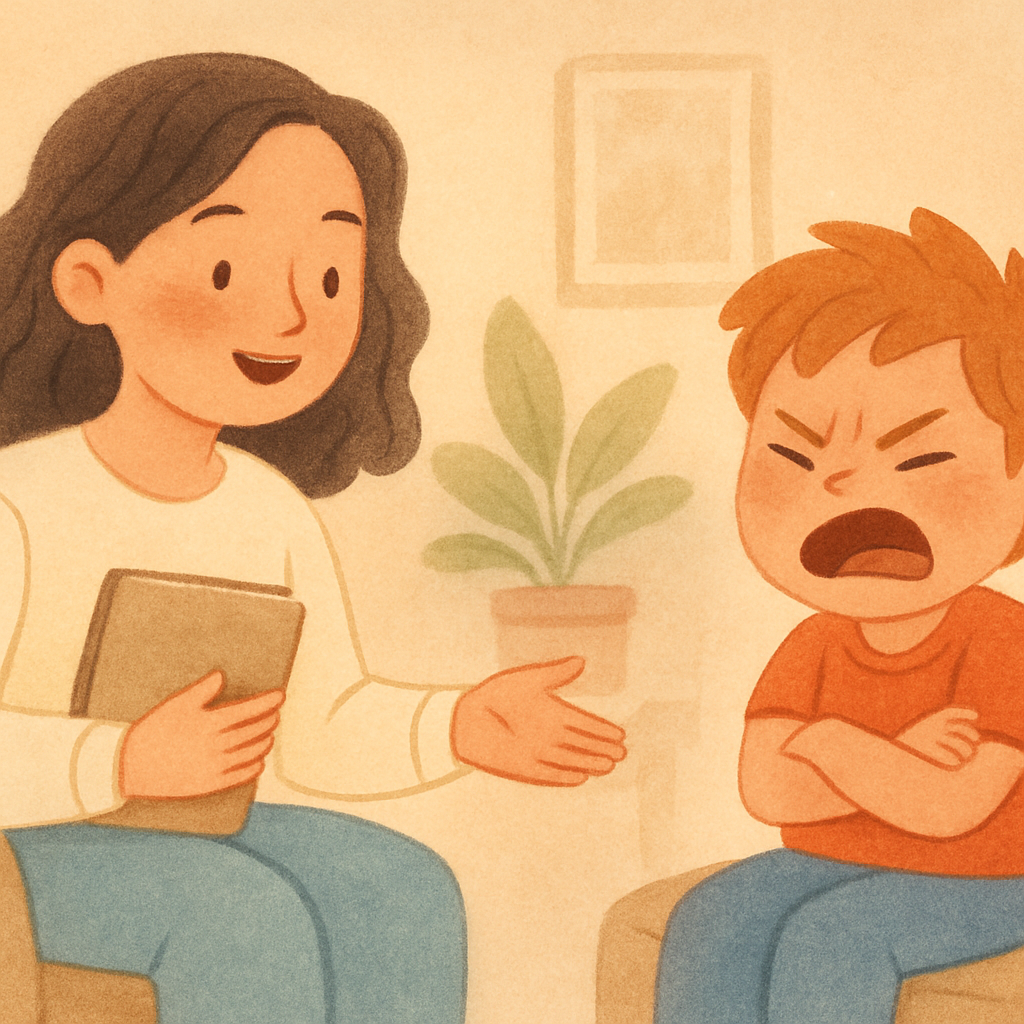
If you have ever stood in the middle of a grocery store aisle while your child screams on the floor because you wouldn't buy the "blue" cereal, you know the unique panic of a public meltdown. Parenting is a journey filled with immense joy, but it is also punctuated by moments of intense frustration—usually arriving in the form of toddler tantrums.
It is easy to feel isolated when your child is lashing out. You might wonder if this is just a phase or a sign of something more significant. Is this normal misbehaviour, or are there underlying behavioural concerns of a child that need addressing?
This guide is designed to help you decode the emotional storms of early childhood. We will move beyond the label of the "naughty kid" to understand the psychology behind the anger, offering you practical, compassionate strategies to bring peace back to your home.
Decoding the Meltdown: Why Do Tantrums Happen?
First, it is crucial to reframe how we view tantrums. While they feel like a personal attack on your patience, they are rarely calculated acts of defiance. For toddlers and young children, a tantrum is a developmental inevitability.
The "Upstairs" vs. "Downstairs" Brain
Child development experts often explain that young children operate largely from their "downstairs brain"—the primitive part responsible for survival instincts like fight, flight, or freeze. The "upstairs brain," responsible for logic, reasoning, and emotional regulation, is still under construction.
When a child becomes overwhelmed by hunger, fatigue, or big emotions, their upstairs brain goes offline. They physically cannot "calm down" on command because the neurological machinery required to do so isn't fully functional yet.
Communication Frustration
Often, an angry child is simply a misunderstood child. Toddlers have big ideas and desires but limited vocabulary. When they cannot articulate, "I am frustrated because my socks feel scratchy," it comes out as a scream.
Distinguishing Normal Misbehaviour from Behavioural Concerns
One of the most common questions parents ask is: "Is this normal?"
What is Typical?
- Frequency: Tantrums occurring daily in toddlers (ages 1-3) are common.
- Duration: Most typical tantrums last between 2 to 15 minutes.
- Recovery: The child can eventually be soothed and returns to a happy state.
- Context: The behaviour is usually triggered by a specific "no," a transition, or a physical need (tired/hungry).
When to Look Deeper
While misbehaviour is a part of growing up, some signs may indicate behavioural concerns of a child requiring professional support:
- Intensity: The child becomes physically aggressive (hitting, biting, kicking) regularly and with force.
- Duration: Tantrums consistently last longer than 20-30 minutes.
- Frequency: Meltdowns occur multiple times a day, every day, past the age of 4 or 5.
- Self-Injury: The child hurts themselves during an outburst.
- Regression: The child loses previously acquired skills (like toileting or speech) during stressful periods.
Strategies for Managing the Angry Child
Dealing with an angry child requires a shift from "controlling" the child to "co-regulating" with them. Here are effective strategies to manage the heat of the moment.
1. The Art of Prevention (HALT)
Many toddler tantrums can be avoided by checking the basics. Use the acronym HALT. Is the child:
- Hungry?
- Angry (about a previous boundary)?
- Lonely (needing connection)?
- Tired?
Addressing these physical needs often stops the behaviour before it starts.
2. Validate, Don't Fix
When a child is upset, our instinct is to fix the problem ("Here, have the cookie") or deny the feeling ("Stop crying, it's not a big deal"). Instead, try validating the emotion.
- "I can see you are so mad that we have to leave the park. You were having so much fun."
Validating doesn't mean giving in; it means acknowledging their reality.
3. The "Time-In" vs. "Time-Out"
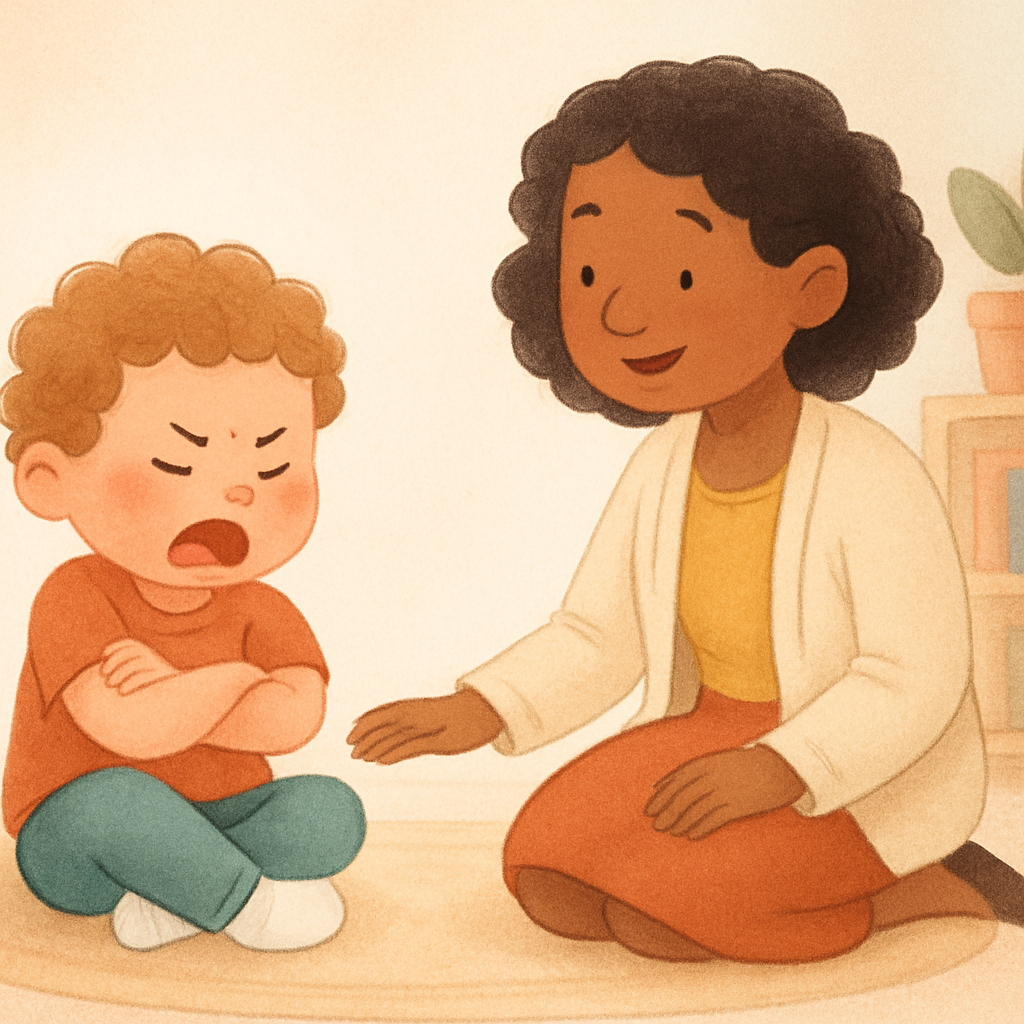
Traditional time-outs can sometimes increase feelings of isolation in an angry child. Consider a "Time-In." This involves sitting near the child (without forcing interaction) to show them they are safe and loved, even when they are having a hard time. This builds emotional safety and helps the storm pass faster.
4. Consistency is Key
If misbehaviour is met with different reactions every time (e.g., sometimes you laugh, sometimes you yell, sometimes you give in), the child becomes confused. Clear, consistent boundaries help children feel safe. If the rule is "no throwing toys," that rule must apply every single day.
Helping Your Child Build Emotional Intelligence
Long-term solutions involve teaching your child how to handle their feelings.
- Name it to Tame it: Give their emotions names. "You look frustrated."
- Model Regulation: Children learn by watching. If you slam doors when you are angry, they will too. Narrate your own calming process: "I am feeling grumpy right now, so I am going to take three deep breaths."
- Praise the Positive: Catch them being good. "I noticed you took a deep breath when your tower fell over instead of kicking it. That was so brave."
Conclusion
Parenting an angry child or navigating the daily grind of toddler tantrums is exhausting work. It requires a reservoir of patience that often feels empty. However, remember that this behaviour is a form of communication. Your child is learning how to be a human, and you are their guide.
By distinguishing between typical development and genuine behavioural concerns of a child, and by responding with consistency and empathy, you are laying the groundwork for emotional resilience. You are teaching them that feelings are manageable and that your love for them is unconditional—even on the bad days.
Book a consultation or call daar at 02 9133 2500 and let’s work together to bring calm and confidence back to your parenting journey.
Frequently Asked Questions (FAQ)
At what age do toddler tantrums usually stop?
While every child is different, the "peak" tantrum phase is usually between ages 18 months and 3 years. By age 4, as language skills improve, the frequency of physical outbursts typically decreases. If they persist intensely past this age, it may be worth discussing with a paediatrician.
How do I handle a tantrum in public?
Ignore the onlookers. Focus entirely on your child. If the tantrum is disruptive, calmly pick up your child and move to a private area (like the car or a quiet corner) until they settle. Do not bribe them to stop, as this rewards the behaviour.
Are behavioural concerns of a child always a sign of a disorder like ADHD?
Not necessarily. Behavioural concerns can stem from anxiety, sensory processing issues, major life changes (like a new sibling or moving house), or simply a temperament mismatch. A professional assessment can help clarify the root cause.
.svg)




.svg)