
.png?width=48&height=48&name=Group%201%20(3).png)























28 January, 2026

Speech Delay: Tips for Supporting Your Child's Development
Introduction
As a parent, you eagerly anticipate every new milestone, and hearing your child talk is one of the most exciting. While children learn language at different paces, it's natural to have questions about your child’s speech. Knowing what to expect in language development can help you identify if there’s a reason for concern. This guide offers tips on how to recognize speech delays and provides practical ways you can support your child’s journey to building strong communication skills.
Key Highlights
-
Recognizing the signs of a potential speech delay involves comparing your child’s progress against key developmental milestones.
-
Speech is the verbal production of words, while language is the broader system of understanding and communicating.
-
Parents can significantly support their child's language development at home through daily activities like reading and talking.
-
Early intervention is the most effective approach for addressing speech disorders and improving communication skills.
-
If you have concerns, seeking an assessment from a speech-language pathologist is a crucial step.
-
Untreated speech delays can have a negative impact on a child's learning and social skills later in life.
Recognizing the Signs of Speech Delay
Parents often struggle to tell if their child is simply a late bloomer or has an underlying issue. Speech delay differs from language delay: speech is forming sounds and words; language is understanding and expressing ideas. A child may have speech delays but still use phrases to communicate.
Knowing typical speech milestones helps you spot concerns early. Missing these markers could signal a speech disorder. Recognizing warning signs lets you act sooner. The next sections outline normal development timelines and red flags that mean it’s time to talk to your doctor.
Typical Developmental Milestones by Age
Tracking your child’s progress against developmental milestones provides helpful guidance. These milestones indicate average ages for skills like making sounds and forming sentences, but every child develops at their own pace.
There’s a typical age range for each milestone, such as first words around age one, though this varies. Focus on steady progress.
Key speech and language milestones:
|
Age |
Hearing & Understanding (Receptive) |
Talking (Expressive) |
|---|---|---|
|
By 3 months |
Startles at loud sounds; recognizes your voice |
Cooing; different cries for needs |
|
By 6 months |
Turns toward sounds; responds to tone changes |
Babbling with p, b, m sounds; laughs |
|
By 1 year |
Responds to simple requests; knows common words |
Says “mama,” “dada”; waves |
|
By 2 years |
Follows two-step commands; points to pictures |
Two-word phrases; vocabulary of 50+ words |
|
By 3 years |
Understands basic differences (“up” vs. “down”) |
Three-word sentences; speech clear to others |
When to Be Concerned and Early Indicators to Watch For
While every child develops at their own pace, certain signs can indicate delayed speech and warrant professional attention. Early identification allows for timely support.
Consult your pediatrician if you notice:
-
By 12 months: No gestures like pointing or waving.
-
By 18 months: Prefers gestures over sounds and struggles to imitate sounds.
-
By 2 years: Only imitates speech, without using words or phrases independently.
These signs don’t always signal a serious problem, but they should be discussed. Speech delays may sometimes relate to conditions such as hearing loss or autism spectrum disorder (ASD), so a thorough evaluation is important. Early intervention can make a significant difference.
Supporting Your Child’s Speech Development at Home
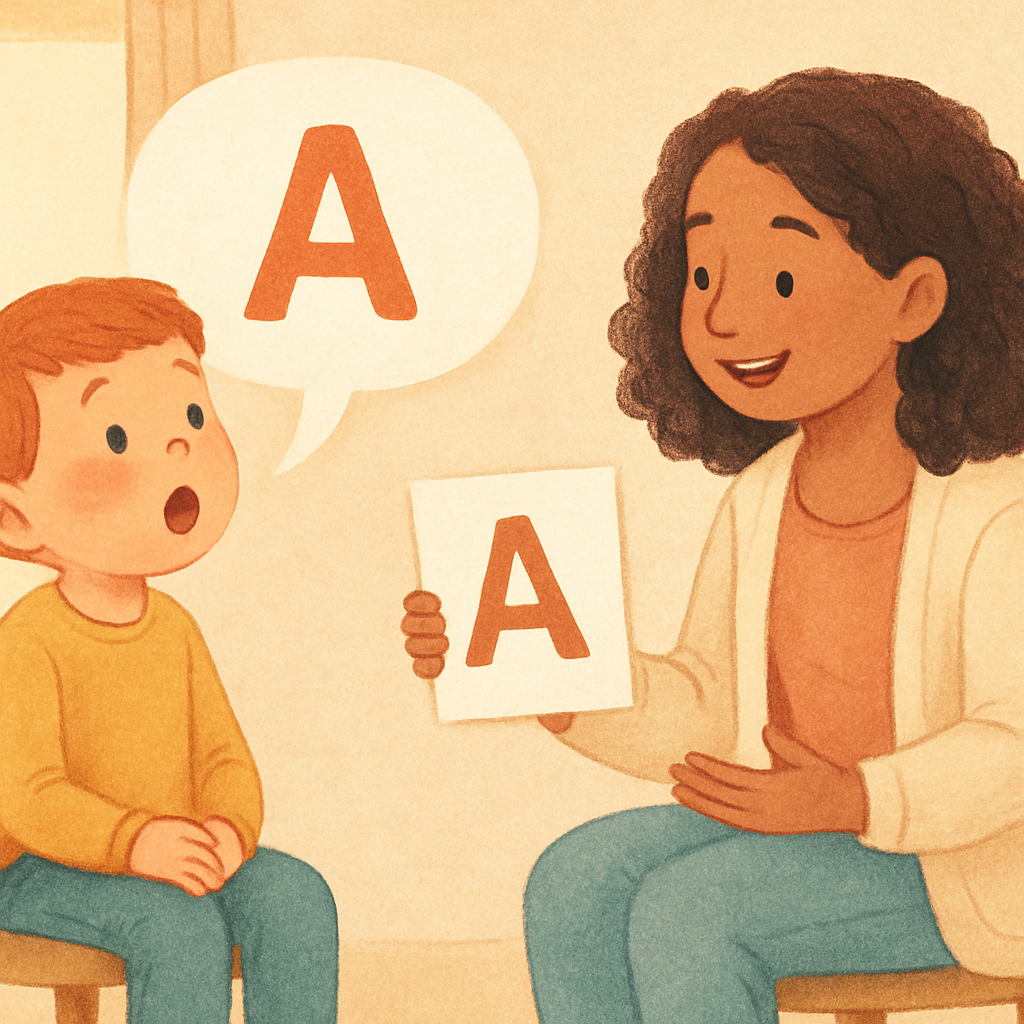
You are your child's first and most important teacher. You can play a huge part in helping them build strong language skills. By incorporating simple practices into your daily activities, you create a rich environment for learning new words and practicing speech sounds.
Focus on communication throughout your day, from getting dressed to mealtimes. This consistent exposure helps strengthen their communication skills. Untreated delays can affect a child’s learning and social skills, so your support at home is invaluable. The following tips will give you practical ways to encourage language in everyday situations.
Practical Activities and Communication Strategies for Parents
Supporting speech and language development can be simple and fun. Everyday activities boost your child’s vocabulary and confidence—just create chances for social interaction.
Respond enthusiastically when your child communicates, whether with sounds or gestures. Expand on what they say; if they say "car," reply, "Yes, a big blue car!"
Try these practical strategies:
-
Read together daily: Use picture books, name objects, and discuss the images.
-
Narrate your day: Describe what you’re doing in simple sentences as you go about daily tasks.
-
Sing songs and rhymes: Repetition and music help language learning. Songs with actions work best.
-
Offer choices: Instead of guessing what your child wants, ask questions like “Milk or water?” to encourage verbal responses.
When and How to Seek Professional Help
If you’ve tried supporting your child at home but still have concerns, it may be time to seek professional help. Trust your instincts. The best first step is to schedule a visit with your child’s pediatrician to discuss your observations and ask for a referral.
Your doctor can guide you toward an assessment with a speech-language pathologist (SLP). This specialist can determine if your child needs speech therapy. Getting appropriate referrals and starting the evaluation process is the most effective way to help your child. The next sections will explain what to expect during an assessment and how to find the right specialist.
Assessment and Diagnosis of Speech Delay by Experts
When you meet with a speech-language pathologist (SLP), they will thoroughly assess your child's communication skills. Speech delay diagnosis is based on a comprehensive evaluation, not just one factor, and usually follows a referral from your pediatrician.
The SLP will use standardized tests and observations to check developmental milestones. They will assess your child’s understanding (receptive language) and spoken abilities (expressive language), as well as oral-motor skills—how the mouth, tongue, and palate work together for speech.
A hearing test is also essential, since hearing issues can affect speech development. Based on these results, the SLP will determine if a speech delay exists and may recommend therapy. Resources from organizations like the American Speech-Language-Hearing Association (ASHA) can help you find qualified professionals.
Choosing Between Speech Pathologists and Other Specialists
The process often begins with your pediatrician, who can screen your child and refer you to the right specialist. For speech and language concerns, a speech-language pathologist (SLP) is the primary expert in diagnosing and treating communication disorders.
An SLP, or speech therapist, will work directly with your child to improve their skills. You can find a qualified SLP through your doctor or professional organizations like ASHA.
If other developmental issues are suspected—such as global delays, hearing loss, or autism—the SLP or pediatrician may refer you to additional specialists, like an audiologist for hearing tests or a developmental pediatrician for further evaluation.
Conclusion
In conclusion, supporting your child's speech development takes patience and understanding. Early recognition of speech delays and using effective communication strategies at home can help your child reach their potential. Create a nurturing environment that encourages self-expression. If you have concerns about your child’s progress, seek professional assessment. Every child develops at their own pace, and your involvement matters.
For personalized guidance, contact our team for a consultation or call daar at 02 9133 2500.
Frequently Asked Questions
Parents often wonder about the signs of speech delay in their young children. Common red flags include limited vocabulary and difficulty forming simple sentences. Many also ask about the role of early intervention, which can significantly impact language development. For children with frequent ear infections or those on the autism spectrum, seeking appropriate referrals to speech therapy is essential. Family members can play a pivotal role in encouraging communication skills through daily activities and the use of picture books, fostering a rich language environment.
What is the difference between a late talker and a child with speech delay?
A "late talker" is a toddler who has a smaller vocabulary for their age but is meeting all other developmental milestones. They often catch up on their own. A child with a true speech delay or language delay has a more significant lag in communication that may not resolve without support and could indicate an underlying issue.
Can speech delay be outgrown without intervention?
While some children with mild delays may catch up, waiting is a risk. An untreated speech delay can affect learning, social skills, and self-esteem down the road. Early intervention is the best approach to ensure your child develops the communication skills needed for success in their language development journey.
Are speech delay and language delay treated the same way?
No, the treatments are tailored to the specific issue. Speech therapy for a speech delay focuses on the physical production of sounds and articulation. Language therapy for a language delay works on understanding words and using them to build communication skills. However, since the two often overlap, a therapist may address both.
.svg)




.svg)