
.png?width=48&height=48&name=Group%201%20(3).png)























7 April, 2026

Early Signs of Autism: What Parents Should Know
Key Highlights
Here are the key takeaways from this guide on recognizing the early signs of autism: Early signs of autism can appear in young children, sometimes within the first 12 months. The possible causes of autism are not fully understood, but research suggests that a combination of genetic and environmental factors may play a role in the development of autism spectrum disorder.
- Early signs of autism can appear in young children, sometimes within the first 12 months.
- Key indicators include challenges with social communication, such as limited eye contact and delayed speech.
- Repetitive behaviours and restricted interests are also common characteristics to observe.
- Signs can differ between babies, toddlers, and preschoolers, making it important to monitor developmental milestones.
- If you notice potential signs, consulting a pediatrician is a crucial first step toward an autism diagnosis and support.
Introduction
As a parent or caregiver, one of the most important things you can do is learn the early signs of autism and become familiar with the developmental milestones your child should be reaching. Noticing these signs in young children can be the first step toward getting the right support. Autism spectrum disorder (ASD) and attention deficit hyperactivity disorder (ADHD) are neurodevelopmental conditions that affect how people communicate and interact in social situations. Understanding what to look for can make a significant difference in your child's development and well-being.
When Do Early Symptoms of Autism Typically Appear?
The age when early autism symptoms become noticeable can vary widely from one child to another. Some children show early signs of autism within the first 12 months of age. For others, the characteristics might not become apparent until they are 24 months old or even later, indicating that autism can affect people of all ages.
It is also important to note that some children with autistic disorder meet their developmental milestones until around 18 to 24 months. After this point, they may stop gaining new skills or even lose skills they once had. This makes ongoing observation crucial for parents. Now, let's explore the specific age ranges and what you might see.
Age Ranges for Onset of Signs
The early signs of autism can emerge at different stages of a child's early life. While every child develops at their own pace, there are general timelines where certain behaviours might become more apparent in autistic children. These signs often appear within the first two years of life.
Here is a general guide to what you might observe at different ages:
|
Age |
Potential Signs of Autism |
|---|---|
|
By 6 months |
Limited or no big smiles or other warm, joyful expressions; limited or no eye contact. |
|
By 9 months |
Little to no back-and-forth sharing of sounds, smiles, or other facial expressions. |
|
By 12 months |
Little or no babbling, lack of response to their name, and minimal back-and-forth gestures like pointing or waving. |
|
By 16 months |
Very few or no words spoken. |
|
By 24 months |
Very few or no meaningful, two-word phrases (that aren't just repeating or imitating). |
Gender Differences in Autism Presentation
Research suggests there can be gender differences in how the characteristics of autism present, which can sometimes lead to underdiagnosis in females. Males are diagnosed with autism about three times more often than females. This disparity may be partly because the signs are often more subtle in girls.
Females with autism may have stronger language and communication skills compared to males. They may also be more adept at "masking" or hiding their symptoms by copying the social behaviours of others around them. The National Autistic Society provides resources that highlight how this can make the signs harder to spot for parents, teachers, and even healthcare professionals.
Because of these differences, the standard tools used for the diagnosis of autism, which are often based on symptoms more common in males, may not be as effective for identifying autism in females. This can result in many females not receiving a diagnosis until adolescence or adulthood. Recognizing these varied presentations is key to ensuring everyone gets the support they need.
Comparing Symptoms in Babies, Toddlers, and Preschoolers
The signs of autism can shift and change as a child grows from a baby to a toddler and then to a preschooler. Understanding these differences can help you better monitor your child's developmental milestones. What might be a sign in a baby could look very different in a three-year-old.
In babies, you might notice a lack of social engagement, like not making eye contact or not sharing smiles. Toddlers might show more obvious signs, such as delayed speech, repetitive behaviours, or not responding to their name. By the time a child reaches preschool age, they may have a hard time with peer interaction and imaginative play, as difficulties may become more apparent.
Here's a quick comparison of signs you might see at different stages:
- Babies: Few warm, engaging expressions; limited eye contact.
- Toddlers: Delayed language, repetitive movements like hand-flapping, and resistance to changes in routine.
- Preschoolers: Difficulty making friends, narrow interests, and trouble understanding social cues from others.
Early Social Communication Signs to Watch For
One of the core areas where early signs of autism appear is in social communication. This involves how your child interacts with others using both verbal and nonverbal cues. You might notice differences in how they use eye contact, gestures, and facial expressions to connect with you and others around them.
Difficulties in understanding social cues can make interactions challenging. For example, a child may not respond to their name or may seem uninterested in games like peek-a-boo. The following sections will explore some of these specific social communication signs in more detail.
Limited Eye Contact and Lack of Shared Smiles
A common early sign of autism is unusual eye contact. While most children may occasionally avoid eye contact, consistently limited or avoided eye contact can be a concern. For example, a child might look away when you try to make eye contact or not make eye contact during social interactions.
Another indicator is a lack of shared smiles or warm facial expressions. Most infants smile back when you smile at them, but a child at risk for autism may not respond in this way, even if they smile on their own.
These behaviours can impact how a child connects socially, such as not looking at you to share excitement. However, some autistic children may have typical eye contact, so consider this sign along with other behaviours.
Delayed Babbling or Speech Development
Delayed speech is a common sign of autism, according to the Journal of Autism. While children develop communication skills at different rates, significant delays warrant attention. Most children babble by 12 months and say a few words by 16 months; a child with autism may babble little or not at all.
Delays also affect phrase formation. By 24 months, most toddlers use meaningful two-word phrases, not just imitations. Children with autism may use few or no phrases and might repeat words or phrases they hear—a behaviour called echolalia.
Speech delay alone doesn’t mean a child has autism, but combined with other signs, it may indicate risk. If you’re concerned about your child’s language development, discuss it with a healthcare professional during the autism evaluation process.
Difficulty with Gestures, Pointing, or Showing Objects
Nonverbal communication, like gestures, is essential to how we interact. Young children often point to show interest or reach for things they want. Children with autism may struggle with these simple gestures.
You might notice your child doesn’t point to draw your attention or show you interesting objects. Instead of pointing to something they want, they may take your hand to get it without making eye contact. This reflects differences in using body language to communicate and share experiences.
Examples of gesture difficulties include:
- Not pointing at distant objects to get your attention.
- Not showing you objects just to share enjoyment.
- Not waving back when you wave goodbye.
Behavioural Characteristics and Early Symptoms of Autism
Beyond social communication, another key area for identifying early signs of autism involves specific behavioural characteristics and the features of autism. Many autistic children display repetitive behaviours and have restricted or highly focused interests. These behaviours can be a way for them to regulate their emotions or interact with the world around them.
These actions can range from repetitive body movements to an intense fascination with specific topics or objects. While many children have favorite toys or routines, in autistic children, these patterns are often more pronounced and can cause distress if disrupted, reflecting a core feature of autism. The sections below will look at these behaviours more closely.
Repetitive Movements or Unusual Body Postures
Repetitive behaviours are a key symptom of autism. You might notice your child flapping their hands, rocking, or spinning—actions known as "stimming." These help them self-soothe or manage sensory input.
Some children also display unusual body language, such as holding their fingers oddly or walking on their toes. These movements are often repeated in the same way each time.
For instance, a child might extend their arms and spread their fingers after throwing a ball, repeating this motion consistently. While all children may have quirky habits, autistic children show these repetitive behaviours more frequently and they can disrupt daily activities.
Restricted Interests and Play Patterns
Children with autism often have highly focused or restricted interests, becoming intensely absorbed in specific topics, characters, or objects. Unlike typical childhood favorites, these interests can dominate their attention and conversations, making it hard to shift focus.
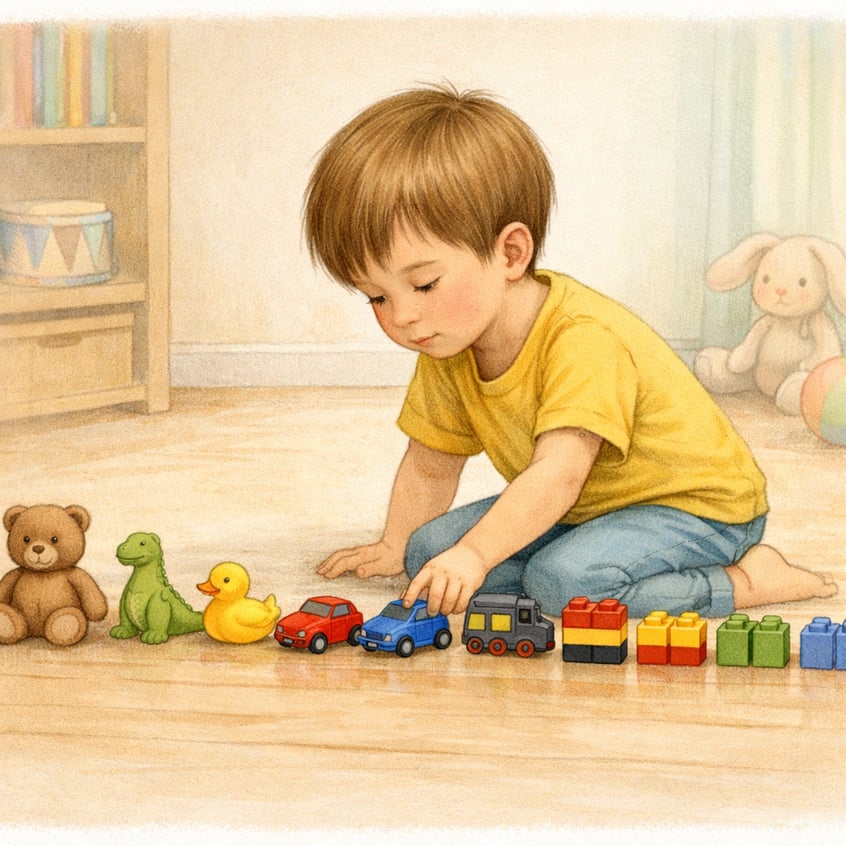
Their play may also differ. Instead of using toys imaginatively, they might fixate on parts of a toy—like spinning car wheels—or line up objects in strict sequences and become upset if the order changes.
Examples include:
- Playing with toys in unconventional ways, such as spinning wheels instead of rolling cars.
- Lining up objects and resisting any changes.
- Developing intense interests in narrow topics, like train schedules or fan models.
Unusual Attachment to Objects
Young children often have favorite blankets or stuffed animals. However, an unusual attachment to objects—such as keys or a wooden spoon—can be a sign of autism. Autistic children may insist on carrying these items everywhere and become very distressed if separated from them.
This intense attachment offers comfort and security, reflecting the autistic preference for predictability and consistency in an often overwhelming world.
For instance, a child might need to hold a parent’s checkbook all day and struggle to sleep without it. While typical children may miss a teddy bear at bedtime, autistic children can show greater distress and attach to less conventional objects.
Sensory Sensitivities in Young Children
Many young children with autism experience the world through a different sensory lens. They can have sensory sensitivities that cause them to be either over- or under-reactive to sensory input from their environment, which can be influenced by various environmental factors. This can include their reactions to sounds, lights, textures, smells, and tastes.
These sensitivities can significantly affect daily life, making ordinary situations feel overwhelming or uncomfortable. A crowded room might be too loud, or the texture of certain foods might be unbearable. The following sections will explore how these sensory sensitivities can manifest in different ways.
Over- or Under-Reactivity to Sound, Light, or Textures
Children with autism often react intensely or unusually to sensory input. They may be overly sensitive (hyper-reactive) or under-sensitive (hypo-reactive) to sounds, lights, and textures, making daily experiences difficult.
A hyper-reactive child might cover their ears around loud noises like vacuum cleaners or toilets and be bothered by bright or flickering lights. Sensitivity to textures can lead them to avoid certain clothes or foods, especially when starting solid foods.
Conversely, hypo-reactive children may seek strong sensory input, ignore loud noises, or show little response to pain—putting their safety at risk.
Examples include:
- Crying or covering ears in response to loud sounds.
- Refusing foods with specific textures.
- Fascination with certain lights or spinning objects.
A typical Responses to Physical Touch
A child’s reaction to physical touch can indicate sensory sensitivities linked to autism. Some children may find light touch uncomfortable or overwhelming, causing them to pull away from hugs or cuddles. This isn’t a rejection of affection but a response to sensory input, which can be hard for families to understand.
Others may be under-sensitive and seek deep pressure, enjoying tight hugs or heavy blankets. Understanding your child’s unique response to touch is key to supporting their comfort and well-being, as unmanaged sensory challenges can lead to anxiety.
Unusual Reactions to Smells or Tastes
Sensory sensitivities in children with autism often extend to smells and tastes. A child might have an unusually strong reaction to certain odors that others might not even notice. This could be anything from the smell of a particular food to the scent of a household cleaning product.
These sensitivities can also greatly impact eating habits. A child might have a very limited diet because they are sensitive to the tastes or textures of many foods. For example, a child might refuse to eat cheerios or bananas because the texture is unpleasant, becoming upset when presented with solid food. This can lead to nutritional challenges and stressful mealtimes.
A child might also seek out certain smells or tastes. You might observe them sniffing objects or people more than is typical. These unusual reactions are another piece of the puzzle when it comes to understanding the sensory world of a child with autism and how it affects their daily life.
Emotional and Social Interaction Signs
Navigating the world of social interactions can be complex for young children with Autism Spectrum Disorder (ASD) and Asperger syndrome. They may have difficulty with the back-and-forth of social engagement and struggle to develop the social skills needed to connect with others. This can be due to challenges in interpreting social cues and understanding others' feelings.
Most people with autism want to make friends, but they may find it hard to initiate and maintain relationships. The following sections will explore some of the specific signs related to emotional and social interactions that you might observe in your child with intellectual disability.
Challenges with Shared Attention and Engagement
Shared attention is a social skill where two people focus on the same object or event, sharing an experience—for example, you point at a bird and your child looks at it, then at you. Children with autism often struggle with shared attention. They may not follow your gaze or point, or show you something interesting, making social interaction and communication harder. For instance, they might ignore a toy car even if you point to it.
These challenges also show up during play. In peek-a-boo, a child at risk for autism may not make eye contact, smile, or laugh—not because they don’t enjoy it, but because they engage differently in social activities.
Difficulty Interpreting Social Cues
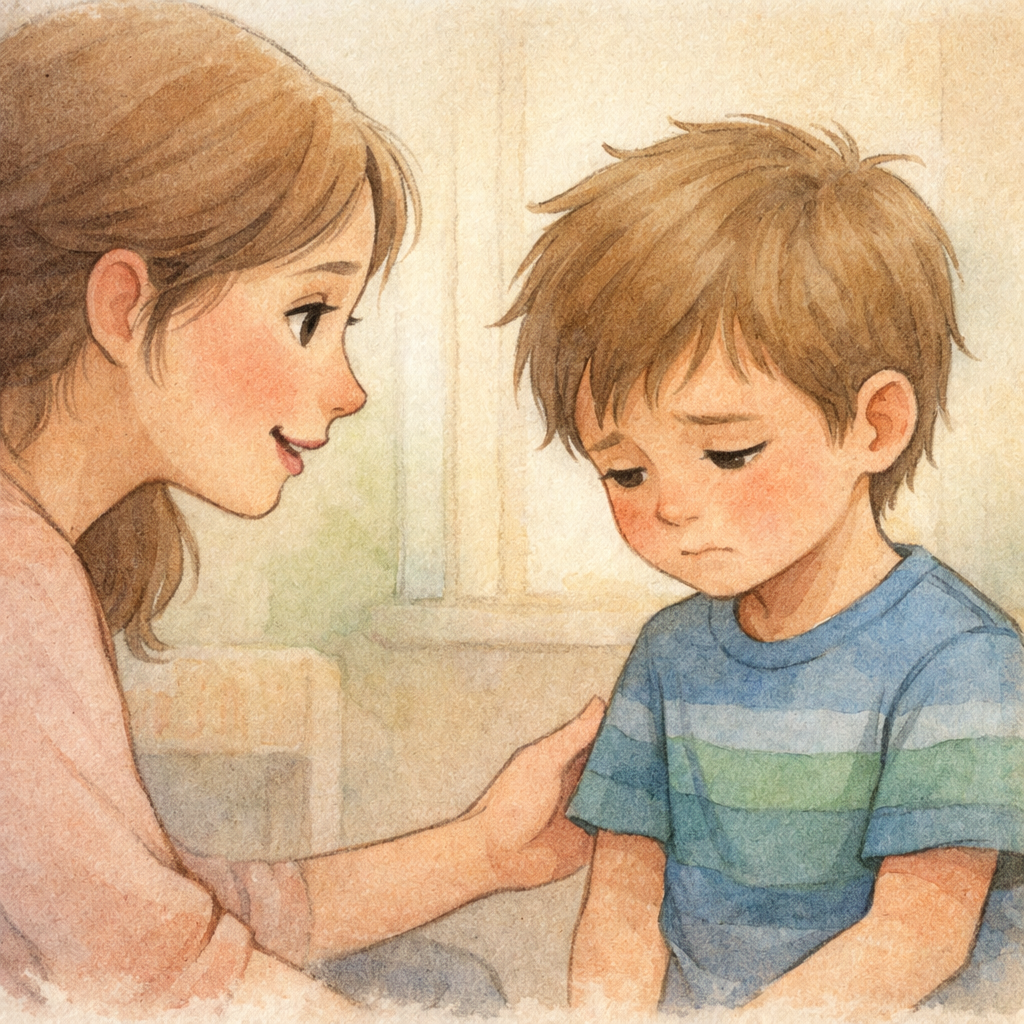
Interpreting social cues—like body language, facial expressions, and tone of voice—is essential for smooth social interaction. Many autistic people struggle to read these nonverbal signals, making social situations confusing and stressful.
For example, a child with autism may not recognize jokes or sarcasm and might take phrases literally. If you say, "It's raining cats and dogs," they could look outside for falling animals. This difficulty can affect their ability to build social skills and understand unwritten conversational rules.
This sets autism apart from some other developmental disorders. While children with language delays may have trouble speaking, they often still pick up on nonverbal cues. For autistic individuals, the main challenge is in interpreting the social aspects of communication—not just language itself. However, it is important to recognize that autistic individuals often demonstrate a range of strengths in various areas.
Lack of Interest in Peer Interaction
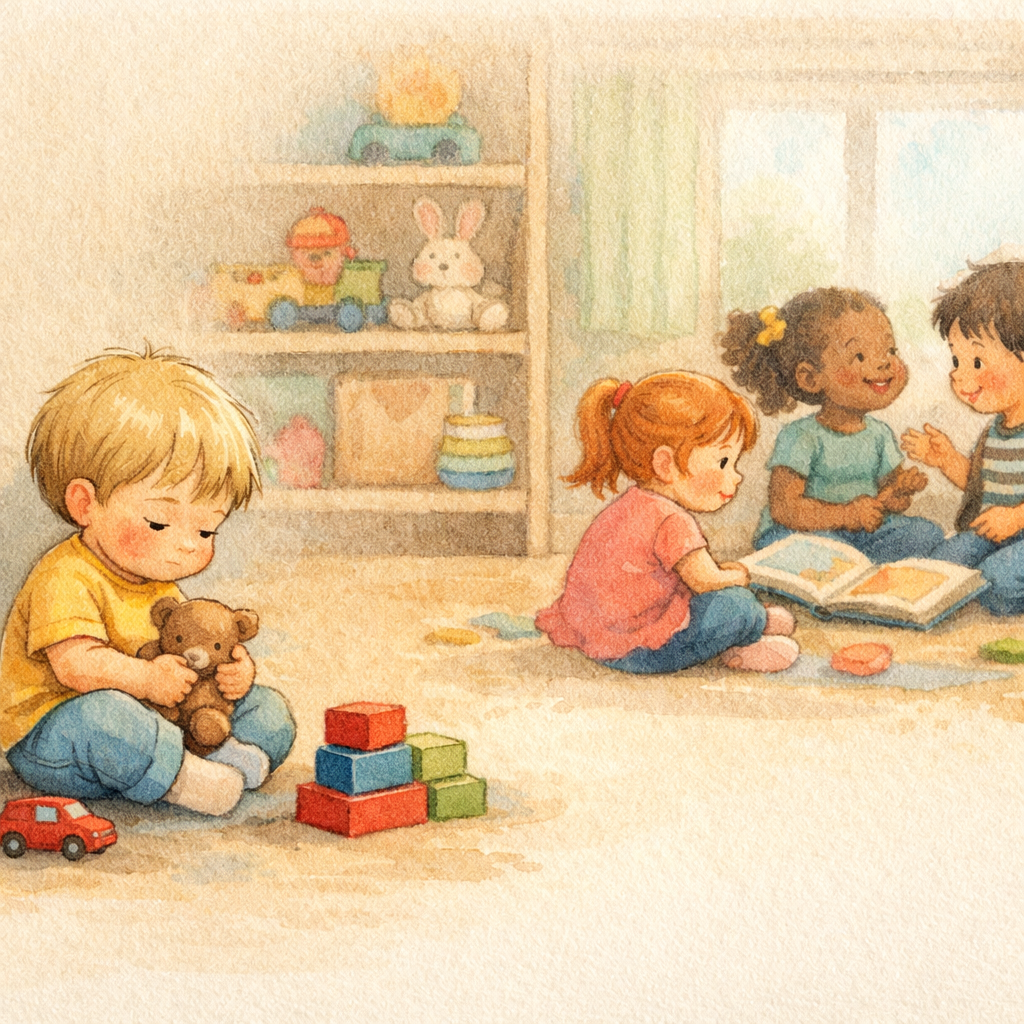
Many autistic children and adults want friendships but may avoid group interactions or prefer to play alone. This isn’t due to being antisocial—social situations can feel overwhelming or confusing.
At the park or in playgroups, your child might ignore other kids and be content playing alone, not responding to invitations to join in. Older children may struggle to make and keep friends.
It’s a misconception that people with autism prefer solitude. Many want social connections but lack the skills or confidence. Understanding this helps you find better ways to support your child’s social development.
Parental Concerns and What to Observe
If you are a parent who has concerns about your child's development, you are not alone. Trusting your instincts is important. You know your child best, and if you notice potential signs of autism, it's worth paying closer attention. Observing your child's behaviour in different situations can provide valuable information for you and for healthcare professionals.
Family members can also be a source of support and observation. Keeping track of specific behaviours and developmental milestones can help you communicate your concerns clearly when you seek a diagnosis of autism. The next sections will guide you on what to look for and how to document it.
Monitoring Developmental Milestones
Monitoring developmental milestones helps parents spot early signs of autism. Milestones include skills like smiling, babbling, walking, and talking at typical ages. The CDC offers free tools, such as the Milestone Tracker App, to track your child’s development.
Watch for social, communication, and behavioural milestones—like making eye contact by 6 months or responding to their name by 12 months. Delays may signal concerns. Also track motor skills, such as picking up small objects.
While every child develops differently, consistently missing milestones is a reason to consult your pediatrician. Keeping a checklist of your child’s abilities provides helpful information for your doctor.
Keeping Track of Regression or Loss of Skills
Some children with autism may lose skills they once had, which can be distressing for parents. For example, a child who was babbling or speaking may suddenly stop, or a child who made eye contact may begin to avoid it.
This regression typically occurs between 18 and 24 months. Noting any loss of skills is important.
If your child loses abilities, keep a record of what changed and when. This information helps your pediatrician. Track changes such as:
- Loss of speech, babbling, or social skills
- Withdrawal after being social
- Stopping gestures like waving or pointing
Noticing Unresponsive or Withdrawn Behaviours
Early signs of autism can include unresponsive or withdrawn behaviour. Your child may not respond to their name or seem uninterested in people and activities around them. This is sometimes mistaken for hearing issues or defiance, but it often relates to how autistic children process information. For example, a child may only react when physically picked up.
Such behaviours can affect social development and mental health. Notice if your child is unusually fussy, hard to soothe, underactive, or lacks enthusiasm for new experiences. While all kids have quiet moments, consistent unresponsiveness or withdrawal should be discussed with a healthcare professional.
Steps to Take if You Suspect Early Symptoms of Autism
If you've noticed some of these early signs of autism in your child, it's natural to feel worried. The most important thing to remember is not to wait. Taking action early can make a significant difference. Your first step should be to talk to trusted healthcare providers about your concerns.
Getting a formal diagnosis of autism is the key to unlocking the services and support your child might need, as each child may require different levels of support. The process can seem daunting, but there are clear steps you can take to get answers and help for your child. The following sections will walk you through what to do if you suspect your child has autism.
Consulting a Paediatrician or Child Health Nurse
If you’re concerned about your child’s development, contact their pediatrician or a child health nurse first. These professionals are trained in disease control and to assess development and will listen to your observations. Schedule an appointment specifically to discuss your concerns.
Come prepared with specific examples of behaviours you’ve noticed; notes or a developmental checklist can help. Your perspective is valuable—other family members can also share what they’ve observed.
The pediatrician can do an initial screening and, if needed, refer you to specialists such as a developmental pediatrician, child psychologist, or neurologist. This is an important first step toward getting a diagnosis and support.
Screening Tools for Early Identification
Several screening tools, usually questionnaires filled out by parents or caregivers, help identify autism early and determine if a professional evaluation is needed. These tools do not diagnose autism but serve as an important first step.
A common screening tool is the Modified Checklist for Autism in Toddlers, Revised (M-CHAT-R), an online questionnaire that can indicate the likelihood of autism. If results show risk, share them with your child’s doctor.
For formal diagnosis, specialists use comprehensive methods such as:
- Autism Diagnostic Observation Schedule (ADOS): Clinicians observe a child's social interaction, communication, and play.
- Questionnaires and interviews about developmental history.
- Direct observation in a clinical setting.
Importance of Early Intervention Services
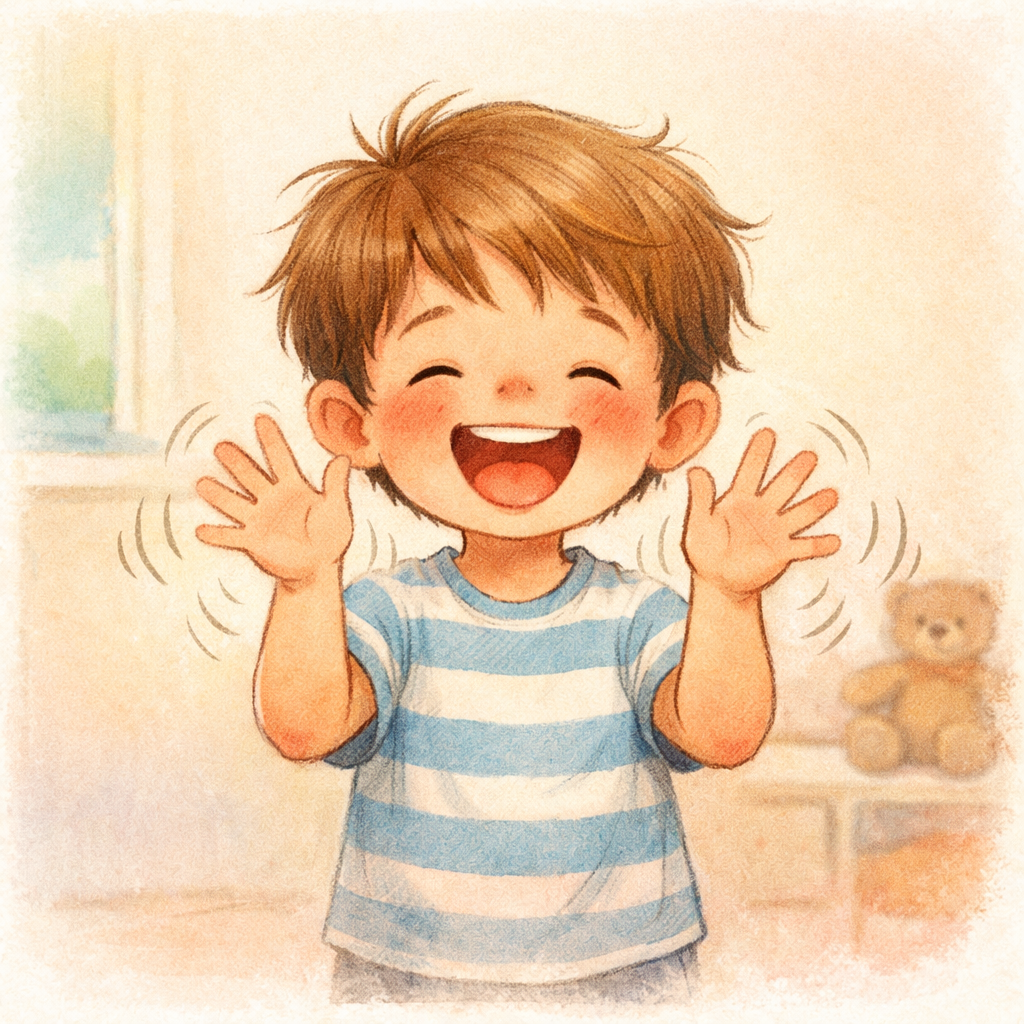
Research shows that early intervention greatly improves outcomes for children with autism. Starting therapies before age 3 helps children develop key communication, social, and learning skills. The aim isn’t to “cure” autism, but to equip children with tools to thrive.
Evidence-based therapies include occupational therapy for sensory and motor skills, speech therapy for communication, and psychological therapies like cognitive behavioural therapy (CBT) for emotions and social skills. Programs should be tailored to each child’s unique needs.
Finding services can be overwhelming, but your diagnostic team can help, and many resources are available. Early intervention empowers children to build on their strengths and manage challenges, setting the stage for a fulfilling life.
Conclusion
Recognizing early signs of autism in young children is vital for their well-being and development. Awareness of indicators like social communication challenges, behavioural traits, and sensory sensitivities helps you support your child. Early detection enables timely intervention, greatly impacting development. If you’re concerned about your child’s behaviour or progress, consult a pediatrician or child health nurse. Taking action can lead to better outcomes and a brighter future.
Don’t hesitate—your child’s health depends on it. Consider booking a consultation or call daar at 02 9133 2500 with a specialist today.
Frequently Asked Questions
What are the main symptoms of autism in infants and toddlers?
In young children, the main autism symptoms often involve social communication and behaviour. This can include limited eye contact, not responding to their name, delayed speech, and repetitive movements like hand-flapping. Additionally, difficulties with fine motor skills and missing key developmental milestones is a primary indicator that can lead to a diagnosis of autism.
How is autism diagnosed in young children in Australia?
In Australia, the diagnosis of autism involves a comprehensive assessment by a team of healthcare providers, such as a pediatrician and psychologist. Following Australian guidelines, they use tools like the Autism Diagnostic Observation Schedule (ADOS) and parent interviews to reflect the preferences of the autistic community. A formal diagnosis is necessary to access funding and early intervention services.
What are the next steps after an autism diagnosis?
After an autism diagnosis, the next step is to connect with early intervention services. This can include speech therapy, occupational therapy, and behavioural support tailored to your child's support needs. It's also important for family members to find support groups and resources to help navigate the journey ahead.
.svg)




.svg)