
.png?width=48&height=48&name=Group%201%20(3).png)























11 March, 2026

Understanding ADHD vs Autism Symptoms in Kids

Key Highlights
- ADHD and Autism Spectrum Disorder (ASD) are distinct neurodevelopmental conditions with some overlapping symptoms.
- Key differences lie in social interaction, communication styles, and patterns of interest and behavior.
- ADHD symptoms often relate to inattention and hyperactivity, while autism traits involve social communication challenges and repetitive behaviors.
- An accurate diagnosis from a qualified professional is crucial for providing the right support for young children.
- Many children have both conditions, which requires a comprehensive and tailored approach to support.
- Support groups can be a valuable resource for families navigating these challenges.
Introduction
As a parent, you want the best for your child, and understanding their unique needs is the first step. When you notice your child struggling with focus, social skills, or behavior, it's natural to have questions. Attention Deficit Hyperactivity Disorder (ADHD) and Autism Spectrum Disorder (ASD) are two common neurodevelopmental disorders that can affect young children. While they can look similar at first glance, they are distinct conditions. This guide will help you understand the differences and similarities, empowering you to find the right support.
Defining ADHD and Autism in Children
ADHD, also known as Attention Deficit Disorder, and Autism Spectrum Disorder are both defined by specific diagnostic criteria outlined by the American Psychiatric Association. These guidelines help professionals distinguish between the two neurodevelopmental conditions, even though some behaviors can overlap.
Understanding these definitions is the foundation for getting an accurate diagnosis. ADHD primarily impacts attention and impulse control, while autism affects social communication, interaction, and behavior. Let's explore what sets each condition apart.
What Is ADHD? Core Symptoms and Traits
ADHD is a neurodevelopmental disorder affecting attention, impulsivity, and hyperactivity. Children with ADHD often struggle to focus, control impulses, and manage energy, leading to challenges at school, home, and socially.
Symptoms fall into two categories: inattention and hyperactivity-impulsivity. A child may display signs from one or both groups, making organization and time management difficult.
Common traits include:
- Difficulty maintaining attention during tasks or play
- Frequent fidgeting or inability to stay seated
- Interrupting others or blurting out answers
- Trouble following instructions or completing tasks
What Is Autism? Core Traits and Spectrum
Autism Spectrum Disorder (ASD) is a developmental condition affecting social communication, interaction, and behavior. The "spectrum" reflects the wide range of traits and support needs—some individuals require significant help, while others live independently.
Children with autism often perceive the world differently, facing challenges with social cues and conversations. Common behaviors include repetition, intense interests, and difficulties processing sensory input such as sounds or textures.
Core traits include:
- Challenges with social communication and interaction
- Repetitive behaviors or restricted interests
- Strong preference for routines and difficulty handling change
- Unique responses to sensory experiences
Prevalence of ADHD and Autism in Australian Kids
Statistics reveal significant rates of ADHD and autism among young children in Australia. Recent studies highlight that approximately 1 in 20 children are diagnosed with attention deficit hyperactivity disorder, while about 1 in 70 children fall on the autism spectrum. These neurodevelopmental disorders present unique challenges, often affecting social skills and emotional regulation. Early diagnosis is crucial for accessing effective treatment options, such as behavioral therapy, which can greatly improve daily life for both children and their families.
Recognizing Behavioral Signs in Kids
Observing your child’s behavior is key to understanding their needs. During early childhood, certain behaviors can signal the possibility of ADHD or autism. The symptoms of ADHD often involve difficulties with focus and self-control, while signs of autism are more related to social communication and repetitive actions.
Paying close attention to your child’s development and how they interact with others can provide valuable clues. Noticing how they respond to social cues, manage their energy, and engage with their environment can help you start a conversation with a healthcare professional.
Key Indicators of ADHD in Children
Children with ADHD often stand out in structured settings like school due to symptoms of inattention, hyperactivity, and impulsivity. They may struggle to stay focused, remain seated, or control their movements and speech.
Common signs include:
- Difficulty paying attention to details or making careless mistakes
- Trouble staying seated during class or meals
- Frequently interrupting others
- Struggling to wait their turn
- Often losing items needed for tasks, such as toys or school supplies
Key Indicators of Autism in Children
Signs of Autism Spectrum Disorder (ASD) usually appear in early childhood and involve social communication and behavior. A child with autism may interact differently, show little interest in making friends, avoid eye contact, or have trouble understanding facial expressions.
Sensory sensitivities are common; your child may overreact to sounds, lights, or textures, or seem indifferent to pain or temperature. Repetitive behaviors like hand-flapping, lining up toys, or repeating phrases are also typical.
Key indicators include:
- Delayed language or lack of social interest
- Difficulty with back-and-forth conversation
- Intense focus on specific topics or objects
- Upset by small changes in routine
- Repetitive movements or speech
Overlapping Signs Parents Should Notice
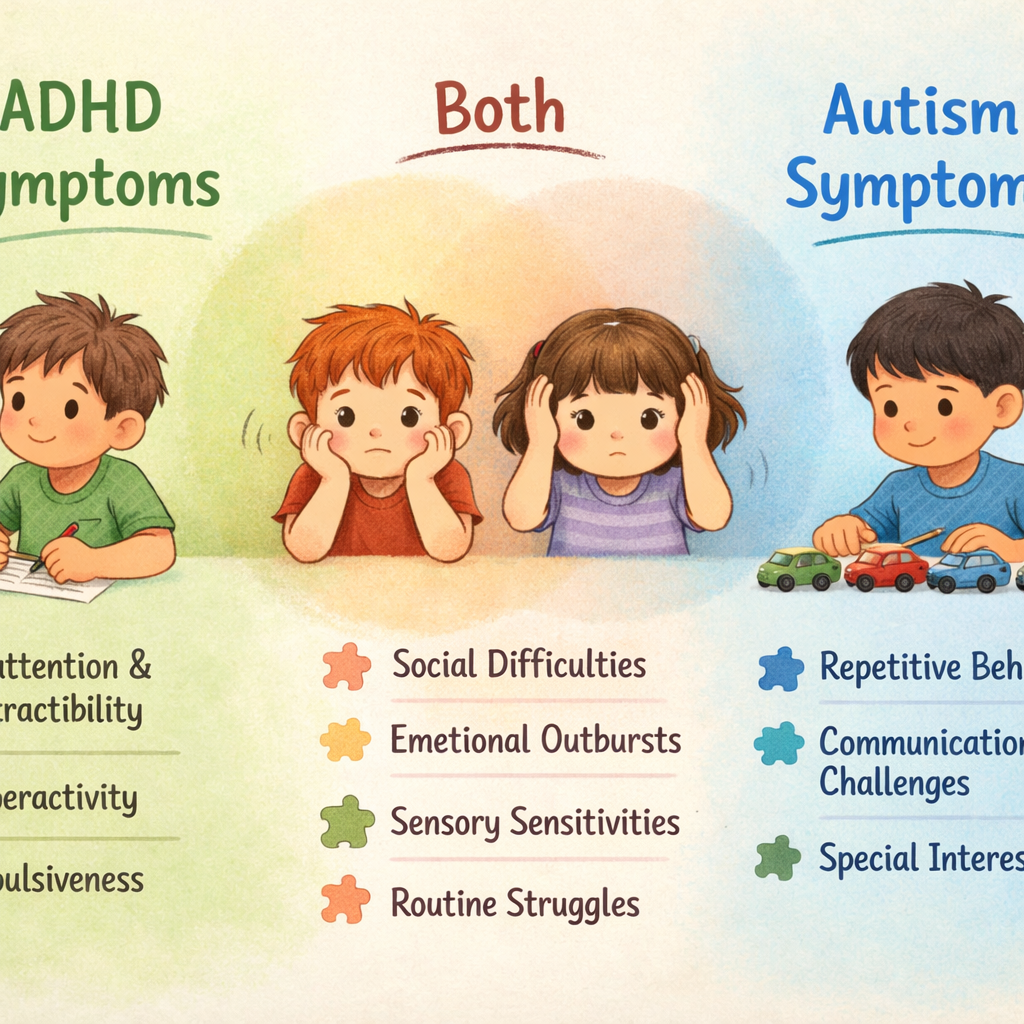
It's not uncommon for parents to be confused, as ADHD and autism share several symptoms. These overlapping signs can make a differential diagnosis challenging without a comprehensive evaluation from a professional. Recognizing these shared traits can help you have a more informed discussion with your child's doctor.
Both conditions can present unique challenges in social situations. For example, a child with either ADHD or autism might struggle to follow instructions or listen when spoken to. However, the reason behind the behavior often differs. A child with ADHD might be distracted by their surroundings, while a child with autism might be hyperfocused on something else.
Some common overlapping symptoms of both conditions include:
- Difficulties with social skills and making friends.
- Impulsive actions or speech.
- Challenges with emotional regulation.
- Struggles with maintaining focus on non-preferred tasks.
Differences in Social Skills and Communication
One of the most significant areas where ADHD and autism differ is in social skills and communication. How a child engages in social interaction can offer important clues about their underlying condition. Children with ADHD often want to be social but may struggle with the mechanics of it.
In contrast, children with autism may have a fundamental difficulty understanding and responding to social cues, making social communication itself a challenge. Exploring these differences can provide a clearer picture of what your child is experiencing.
Social Challenges in ADHD
Children with attention deficits often face social challenges, mainly due to impulsivity, inattention, and difficulty regulating emotions—not a lack of desire for connection. They usually want to interact but may struggle with social give-and-take, such as waiting their turn or not interrupting.
Peers may misread these behaviors as rudeness or disinterest, creating further social difficulties. While children with ADHD often understand social rules and cues, they find it hard to apply them in the moment.
Common social challenges for children with ADHD include:
- Interrupting or talking excessively
- Difficulty listening during conversations
- Acting impulsively, which can alienate peers
- Frustration and emotional outbursts during play
Social and Communication Differences in Autism
Children with Autism Spectrum Disorder experience core social and communication differences. Unlike children with ADHD, who may miss social cues due to distraction, autistic children often struggle to understand these cues intuitively. This includes difficulty interpreting body language, tone of voice, and facial expressions.
Their communication may also differ—they might have trouble starting or maintaining conversations, speak in a formal or monotone way, or show repetitive behaviors during interactions that others may misinterpret.
Common social and communication traits in autism include:
- Avoiding eye contact
- Difficulty understanding nonverbal cues
- Struggling with conversational back-and-forth
- Taking language literally and missing sarcasm or nuance
Distinguishing Social Cues: ADHD vs Autism
Distinguishing how children process social cues is key to telling ADHD and autism apart. While both are distinct conditions, their impact on social skills can look similar on the surface, which is why it's sometimes hard to differentiate them. A better understanding comes from looking at the 'why' behind the behavior.
A child with ADHD might miss social cues because they are distracted or too excited to pay attention. They often understand the social rule but fail to apply it in the moment. In contrast, a child with autism may not intuitively grasp the social cue in the first place. They might need to be explicitly taught what a certain facial expression or tone of voice means.
Here’s how to distinguish their responses to social cues:
- ADHD: Talks over others due to impulsivity, not a lack of social understanding.
- Autism: May not initiate conversation because they struggle with how to start or what to say.
- ADHD: Misses cues due to inattention but can often explain the social rule later.
- Autism: May not recognize the social cue or its meaning at all.
Getting a Diagnosis in Australia
Receiving an accurate diagnosis is the most important step toward getting the right help for your child. In Australia, the diagnostic process for ADHD and autism involves a comprehensive assessment by qualified professionals who use specific diagnostic criteria. This ensures your child’s unique needs are correctly identified.
Navigating the mental health system can feel overwhelming, but you are not alone. There are pediatricians, psychologists, and support groups available to guide you through the process and connect you with the resources you need.
How ADHD Is Diagnosed in Kids
Diagnosing Attention-Deficit/Hyperactivity Disorder (ADHD) in children requires a thorough review of their behavior and developmental history. Healthcare professionals, such as pediatricians or child psychologists, use DSM-5 criteria to assess symptoms, which is vital for the child's long-term well-being.
Unlike standard medical tests, ADHD diagnosis gathers information from multiple sources—parent and teacher interviews, behavior rating scales, and direct observation. Professionals look for ongoing patterns of inattention and/or hyperactivity that disrupt life in at least two settings, such as home and school.
The assessment also rules out other possible causes for these behaviors. This comprehensive process ensures an accurate diagnosis and allows for a tailored treatment plan.
How Autism Diagnosis Differs
The diagnostic process for Autism Spectrum Disorder (ASD) is thorough and uses different criteria than ADHD. While ADHD focuses on attention and hyperactivity, autism diagnosis centers on social communication challenges and restricted or repetitive behaviors. Professionals follow DSM-5 guidelines during assessment.
A multidisciplinary team—such as a developmental pediatrician, psychologist, and speech therapist—typically conducts the evaluation. This includes direct observation during play and social interaction, as well as a detailed developmental history from parents.
The team looks for ongoing difficulties in social interaction and communication across settings, along with repetitive behaviors or interests. This comprehensive approach helps distinguish autism from other conditions and ensures appropriate support.
Common Challenges in Accurate Diagnosis
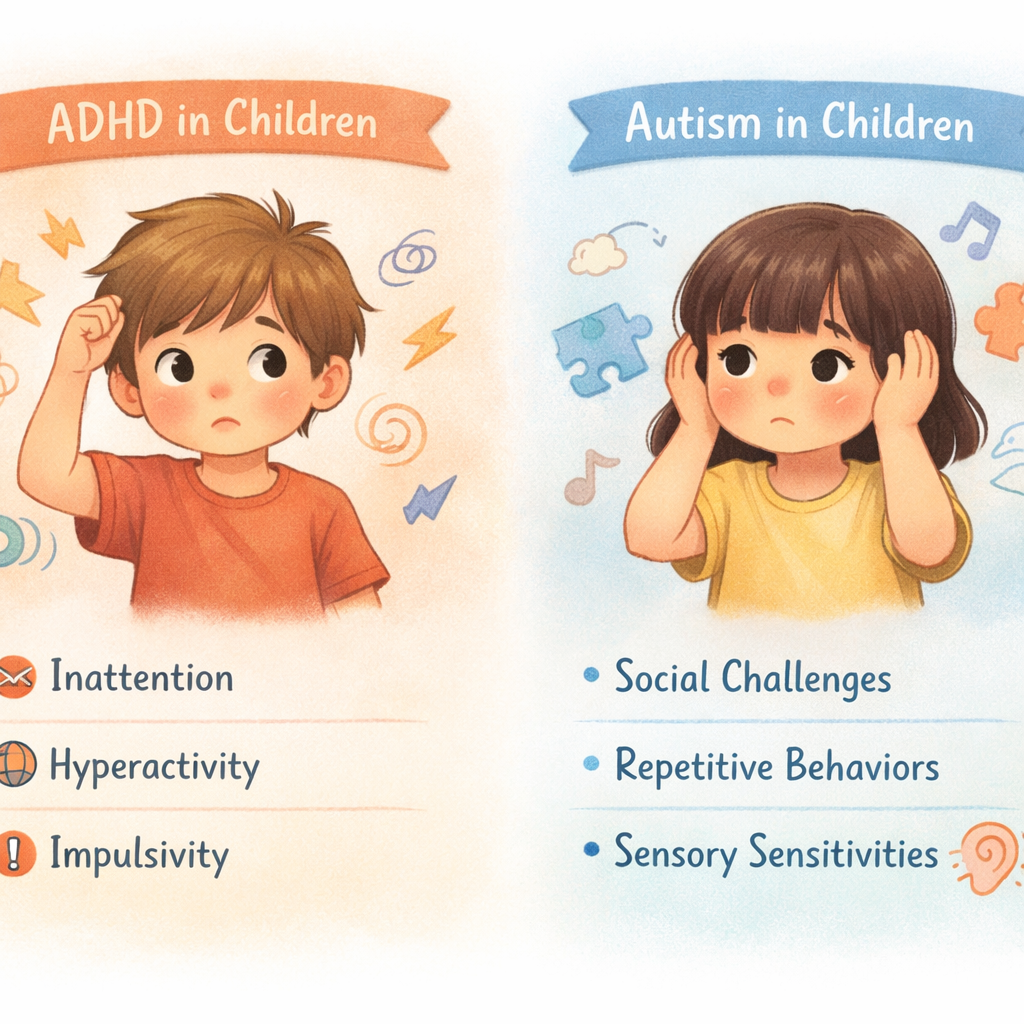
Achieving an accurate diagnosis can be complicated, especially in recent years, as awareness has grown. A major challenge in differential diagnosis is the significant number of overlapping symptoms between ADHD and autism. Behaviors like impulsivity, social challenges, and difficulty with focus can be present in both conditions, making it hard to distinguish between them.
Furthermore, there is a known genetic overlap between the two disorders, which can contribute to the co-occurrence of both conditions in one child. This comorbidity makes it essential for clinicians to conduct a thorough evaluation to identify all of a child's needs.
Common challenges include:
- The presence of overlapping symptoms blurring the lines between the two conditions.
- The possibility that a child has both ADHD and autism.
- Symptoms presenting differently depending on the child's age and environment.
- The need to rule out other conditions that can mimic ADHD or autism symptoms.
Conclusion
In conclusion, understanding the symptoms of ADHD and autism in children is crucial for parents and caregivers. By recognizing the core traits and overlapping signs, you can take proactive steps towards getting a proper diagnosis and support for your child. Each child is unique, and their experiences with these conditions can vary widely. Awareness and education empower you to advocate for their needs effectively.
Should you have any concerns or need further guidance, don’t hesitate to reach out for a consultation or call daar at 02 9133 2500 fprofessional help. Your child's well-being is paramount, and together we can navigate this journey.
Frequently Asked Questions
Can a child have both ADHD and autism?
Yes, a child can have both Autism Spectrum Disorder and ADHD. Many children show symptoms of both conditions, which is known as comorbidity. This can create unique social challenges, and an accurate diagnosis is essential to develop a support plan that addresses both the ADHD symptoms and the autism-related needs.
At what age do ADHD and autism symptoms usually appear in kids?
Signs of autism are often noticeable in early childhood, sometimes before age two, as they relate to a child’s development in social interaction and communication. Signs of ADHD may become more apparent when a child starts school and faces challenges with focus and sitting still. Early intervention is beneficial for both conditions.
Are treatments different for ADHD vs autism in children?
Yes, treatment options are tailored to each condition. A treatment plan for ADHD often includes behavior therapy and may involve medication. Autism treatment focuses on therapies like occupational therapy and social skills training to support communication and behavioral needs. If a child has both, their plan will integrate strategies for each.
.svg)




.svg)