
.png?width=48&height=48&name=Group%201%20(3).png)























16 February, 2026

Beyond "Speech Delay": Decoding Common Speech Disorders
"He’s just a late talker."
"She’s thinking faster than she can speak."
"It’s just a phase."
As a parent, when you notice your child struggling to communicate, you receive a lot of advice—some helpful, some not. You might hear terms thrown around in passing or read them on late-night Google searches: Stuttering, Apraxia, Dysarthria.
The terminology can be overwhelming. Is a speech delay the same thing as a disorder? If a child trips over their words, is it stuttering or something else?
Understanding the specific nature of your child’s speech challenge is the first step toward getting the right help. A treatment plan for muscle weakness looks very different from a treatment plan for a fluency issue.
In this guide, we will demystify the complex medical terms behind common speech disorders. We will break down the differences between Stuttering, Cluttering, Dysarthria, and Apraxia of Speech, helping you become the informed advocate your child needs.
Is it just a Speech Delay?
Before diving into specific disorders, it is important to understand the umbrella term: speech delay.
A speech delay generally refers to a child who is developing speech skills in the typical order, but at a slower rate than their peers. They might say their first word at 18 months instead of 12, or struggle to put two words together at age 2.
However, not all communication struggles are delays. Some are disorders. A disorder implies that the speech is developing in an atypical way, or there is a physical or neurological barrier preventing clear speech.
If your child’s speech patterns seem "different" rather than just "young," they may be dealing with one of the following conditions.
Understanding Fluency Disorders
Fluency refers to the flow, rhythm, and speed of speech. When this flow is broken, it is categorized as a fluency disorder.
Stuttering
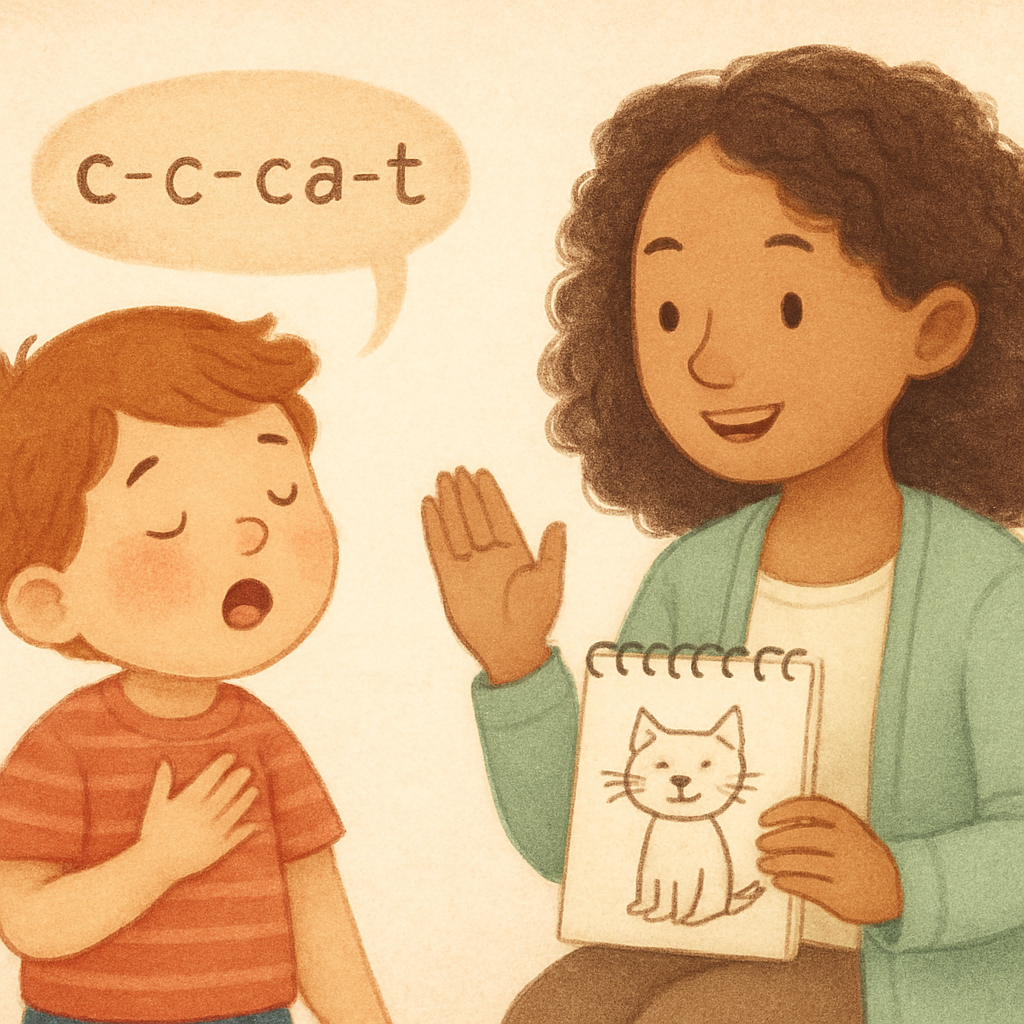
Stuttering is perhaps the most well-known speech disorder, yet it is often misunderstood. It involves disruptions in the production of speech sounds, also called "disfluencies."
These disruptions can look like:
- Repetitions: "L-l-l-look at the dog."
- Prolongations: "Mmmmmmmy name is..."
- Blocks: A complete pause where the mouth is positioned to say a sound, but no sound comes out.
Stuttering often varies day to day. A child might be fluent one week and struggle the next. It can also be accompanied by physical tension, such as eye blinking or clenching fists, which indicates the child is struggling to "push" the words out.
Cluttering
Less known but equally impactful is Cluttering. While stuttering is often about getting stuck, cluttering is about going too fast.
A child who clutters often speaks at a rapid or irregular rate. Their speech might sound jerky or "mashed together." Unlike a stutterer, who is usually painfully aware of their struggle, a clutterer is often unaware that their speech is unintelligible.
Signs of cluttering include:
- Collapsing words (e.g., saying "elphant" instead of "elephant").
- Excessive use of fillers like "um," "uh," and "like."
- Disorganized sentence structure.
- Little or no physical tension while speaking.
Understanding Motor Speech Disorders
Sometimes, the issue isn't with the flow of ideas, but with the brain's ability to tell the mouth muscles what to do. These are known as motor speech disorders.
Apraxia of Speech
Apraxia of Speech (specifically Childhood Apraxia of Speech or CAS) is a motor planning disorder.
Think of the brain as a GPS and the mouth as the car. In a child with Apraxia of Speech, the car (muscles) works fine, and the driver knows the destination (the word they want to say). However, the GPS signal is scrambling. The message from the brain to the mouth gets lost or distorted.
Children with CAS often:
- Make inconsistent errors (saying the same word differently each time).
- Struggle more with longer, complex words.
- Have "groping" movements with their mouth, looking like they are trying to find the right position for their tongue and lips.
- Understand language much better than they can express it.
Dysarthria
While Apraxia is a planning issue, Dysarthria is a strength and execution issue.
Dysarthria occurs when the muscles used for speech are weak, paralyzed, or uncoordinated. This can be caused by neurological conditions like cerebral palsy or muscular dystrophy.
Because the muscles are weak, the speech often sounds:
- Slurred or mumbled.
- Slow and labored.
- Too quiet or breathy.
- Nasal (sounding like they have a cold).
Unlike Apraxia, where errors are inconsistent, errors in Dysarthria are usually consistent because the muscle weakness remains the same.
The Importance of Accurate Diagnosis
Why does the label matter? Because the therapy for Stuttering is vastly different from the therapy for Apraxia of Speech.
- Stuttering therapy might focus on reducing anxiety, "easy onsets" (starting words gently), and building confidence.
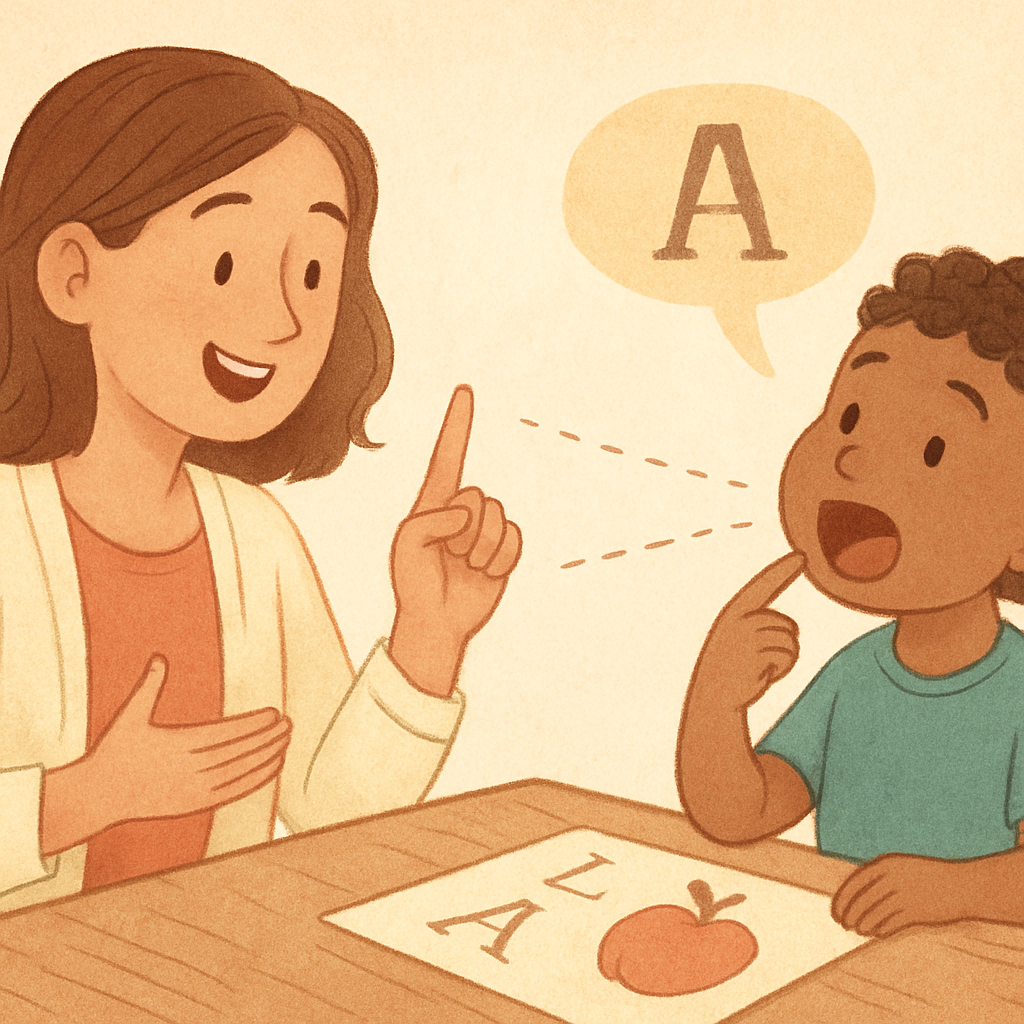
- Apraxia therapy focuses on repetitive motor drills to retrain the brain pathways.
- Dysarthria therapy focuses on strengthening the muscles and teaching breath support strategies to increase volume and clarity.
- Cluttering therapy focuses on self-monitoring and teaching the child to consciously slow down (pacing).
If a child with Apraxia is treated as if they have a simple speech delay, they may spend months in therapy with little progress. This is why a comprehensive evaluation by a certified Speech-Language Pathologist is non-negotiable.
Conclusion
Communication is complex. It requires a symphony of brain signals, muscle movements, breath control, and cognitive planning. When one part of that orchestra is out of sync—whether it’s the rhythm (Stuttering), the speed (Cluttering), the planning (Apraxia of Speech), or the muscle strength (Dysarthria)—the music of speech falters.
But with the right conductor, the music can be restored.
Identifying the specific nature of your child’s speech challenge is the key to unlocking their voice. These diagnoses are not roadblocks; they are signposts pointing toward the specific, targeted support your child needs to thrive.
If you suspect your child is struggling with Stuttering, Apraxia of Speech, or any other communication challenge, don't wait. Our team of expert Speech-Language Pathologists is here to provide a comprehensive evaluation and a personalized roadmap for success.
Contact us today to schedule your consultation or call daar at 02 9133 2500 and give your child the gift of confidence.
FAQ: Common Questions for Parents
Can a child have both Stuttering and Cluttering?
Yes. A child can exhibit signs of both disorders. This is sometimes referred to as "cluttering-stuttering." A skilled therapist can tease apart the symptoms to treat both effectively.
How is Dysarthria different from Apraxia?
The simplest way to remember: Apraxia is a planning problem (the brain can't send the map). Dysarthria is a muscle problem (the engine is weak). A child with Apraxia usually has normal muscle tone; a child with Dysarthria usually has low muscle tone.
When should I seek help?
Trust your gut. If you are concerned, seek an evaluation. Specifically, look for help if your child is frustrated by their inability to speak, if their speech is difficult for strangers to understand, or if they are showing physical tension when talking.
.svg)




.svg)