
.png?width=48&height=48&name=Group%201%20(3).png)























13 February, 2026

Speech Disorders vs. Language Disorders: Decoding Your Child’s Communication
"He understands everything we say, but he just points."
"She talks a mile a minute, but we can't understand a word of it."
For parents, communication milestones are often the most anticipated—and the most anxiety-inducing. When a child struggles to communicate, it is natural to worry. You might hear terms like "speech delay," "language impairment," or "articulation issue" thrown around, often interchangeably.
However, in the clinical world, Speech Disorders and Language Disorders are two very different things.
While they both fall under the umbrella of communication challenges, they affect different parts of the brain and body. A child can have perfect speech but struggle with language, or have a rich vocabulary (language) but struggle to physically say the words (speech).
Understanding this distinction is the first step to advocacy. In this guide, we will break down the differences, explore the red flags, and show how Speech Therapy can bridge the gap between your child and the world.
The Core Difference: Mechanics vs. Meaning
To understand the difference, it helps to think of communication as a computer.
- Speech is the hardware (the printer). It is the physical act of producing sound.
- Language is the software (the word processor). It is the code and the meaning behind the message.
What are Speech Disorders?
Speech Disorders involve the physical production of sounds. It is about the "how" of talking. A child with a speech disorder may know exactly what they want to say, but their mouth, tongue, jaw, or breath support cannot coordinate to make the sound correctly.
Common types include:
- Articulation Disorders: Difficulty making specific sounds. For example, substituting "w" for "r" (saying "wabbit" instead of "rabbit") or lisping.
- Fluency Disorders: Interruptions in the flow of speech, most commonly known as stuttering. This includes repetitions ("b-b-ball"), prolongations ("sssssnake"), or blocks (silence).
- Voice Disorders: Problems with the pitch, volume, or quality of the voice. A child might sound chronically hoarse, breathy, or nasally.
What are Language Disorders?
Language Disorders involve the understanding and use of words to convey ideas. It is about the "what" of talking. A child with a language disorder may be able to pronounce words perfectly, but they struggle to put them together or understand them.
These are generally divided into two categories:
- Receptive Language Disorders: Difficulty understanding what others say. The child might struggle to follow directions, answer questions, or understand concepts like "under" or "before."
- Expressive Language Disorders: Difficulty sharing thoughts, ideas, and feelings. The child might have a limited vocabulary, struggle to form sentences, mix up tenses (saying "I goed" instead of "I went"), or have trouble retelling a story.
How Speech Therapy Helps
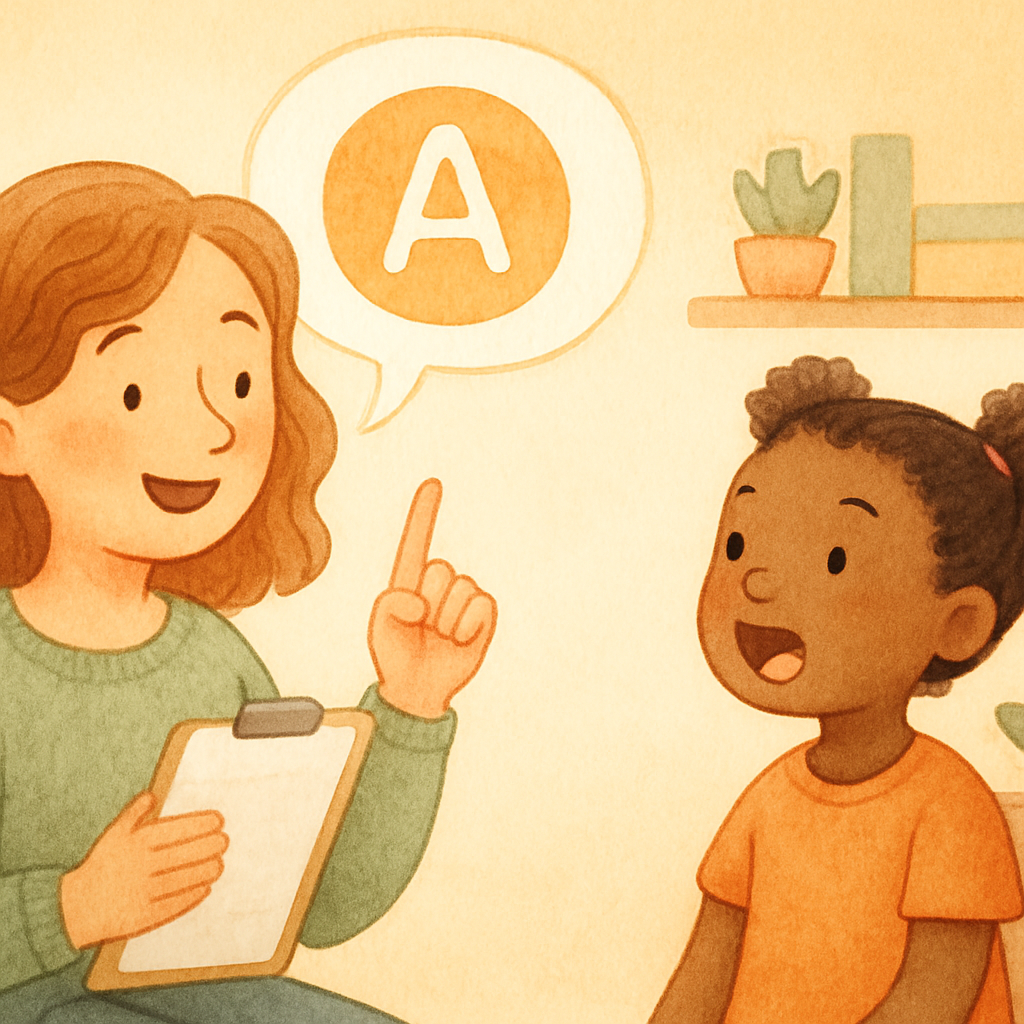
Whether the challenge is hardware (speech) or software (language), Speech Therapy is the gold standard for intervention. A Speech-Language Pathologist (SLP) is trained to diagnose and treat both areas.
Therapy for Speech Disorders
When treating Speech Disorders, therapy is often structured, repetitive, and physical.
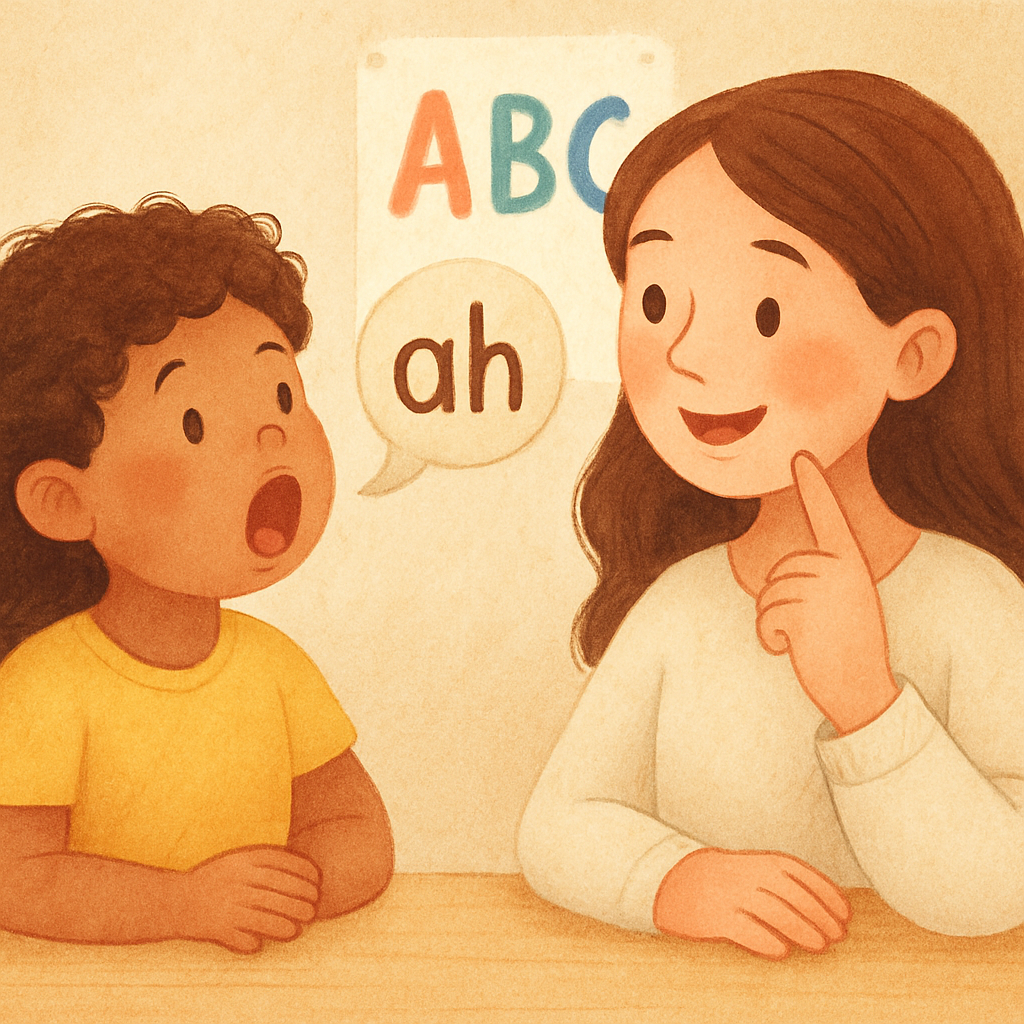
- Placement Cues: The therapist might use a mirror or a tongue depressor to show the child exactly where to put their tongue to make the "L" sound.
- Drills and Repetition: Practice makes permanent. Children might practice a target sound in isolation, then in syllables, then words, and finally in conversation.
- Breathing Techniques: For fluency or voice issues, therapy focuses on breath control and reducing tension in the vocal cords.
Therapy for Language Disorders
When treating Language Disorders, therapy is often cognitive, play-based, and interactive.
- Vocabulary Building: Using themes (like "ocean animals" or "superheroes") to introduce and practice new words in context.
- Social Scaffolding: Using role-play to practice social rules, like how to greet a friend or how to stay on topic.
- Visual Aids: Using pictures, timelines, or storyboards to help a child understand the structure of a sentence or a narrative.
Signs You Should Seek an Evaluation
"Wait and see" is a common piece of advice, but research consistently shows that early intervention leads to better outcomes. You know your child best. If you notice these signs, it is time to consult a professional.
Red Flags for Speech
- Intelligibility: By age 2, a stranger should understand about 50% of what your child says. By age 3, it should be 75%. By age 4, they should be mostly understood by everyone.
- Frustration: Your child gets angry or gives up when you don't understand them.
- Stuttering: Repetitions or blocks that last longer than six months or seem to cause the child distress.
Red Flags for Language
- Limited Vocabulary: By 18 months, a child should use at least 20 words. By age 2, they should be putting two words together ("Mommy up").
- Difficulty Following Directions: They can't follow simple commands like "Get your shoes" without a gesture.
- Echoing: They repeat questions back to you instead of answering them (echolalia).
- Social Isolation: They don't seem interested in playing with other children or struggle to join in.
The Impact of Untreated Disorders
Communication is the foundation of learning. When Speech Disorders or Language Disorders are left untreated, the impact often ripples into other areas of life.
- Academic Struggles: There is a strong link between spoken language and literacy. Children who struggle to articulate sounds often struggle to decode them when learning to read (phonics). Children with language disorders often struggle with reading comprehension.
- Social Challenges: The Playground runs on communication. Children who cannot keep up with the conversation or cannot be understood may withdraw or be excluded by peers.
- Behavioral Issues: Behaviour is communication. When a child cannot express "I'm frustrated" or "I don't understand," they often resort to hitting, screaming, or shutting down.
Conclusion
Hearing that your child has a disorder can be scary, but knowledge is power. Speech Disorders and Language Disorders are not roadblocks; they are simply hurdles.
With the right support, patience, and the expert guidance of Speech Therapy, your child can clear those hurdles. They can learn to articulate their thoughts, understand the world around them, and share their unique voice with confidence.
If you have concerns about your child’s speech or language development, don't wait. Our team of certified Speech-Language Pathologists is here to provide a comprehensive evaluation and a personalized roadmap for success.
Contact us today to schedule your consultation or call daar at 02 9133 2500 and start the conversation.
FAQ: Common Questions for Parents
Can a child have both a speech and a language disorder?
Yes, this is very common. A child might have trouble pronouncing sounds (speech) and have a small vocabulary (language). An SLP will evaluate both areas and create a comprehensive plan.
How long does Speech Therapy take?
There is no magic number. It depends on the severity of the disorder, the child's age, and how much practice happens at home. Some articulation issues can be fixed in a few months; complex language delays may require support for several years.
Does insurance cover Speech Therapy?
In many cases, yes. Most health insurance plans cover Speech Therapy if it is medically necessary. Additionally, in the US, children may qualify for free services through the public school system or Early Intervention programs.
.svg)




.svg)