
.png?width=48&height=48&name=Group%201%20(3).png)























17 February, 2026

Speech Therapy and Diagnosis: Navigating Your Child’s Speech Delay
There is nothing quite like the anticipation of hearing your child’s first words. We wait for the "mama" or "dada," ready to capture the moment on video. But when those milestones come and go with silence, or when a toddler’s vocabulary seems stuck while their peers are chattering away, anticipation can quickly turn to anxiety.
You might find yourself comparing your child to others at the Playground. You might be asking friends, "When did your son start talking?" or spending hours late at night searching for answers online.
If this sounds familiar, you are not alone. Speech and language delays are among the most common developmental delays in children. The good news is that they are also among the most treatable.
In this guide, we will walk you through the journey from worry to action. We will demystify the speech delay diagnosis process, explain how Speech Therapy works, and show you how early support can unlock your child’s potential.
Recognizing the Signs: When to Seek Help
Every child develops at their own pace. Some walk early and talk late; others are chatterboxes who refuse to crawl. However, there are specific milestones that serve as guideposts for development.
While "wait and see" was common advice in the past, experts now agree that early intervention is key. You should consider seeking a professional opinion if your child:
- By 12 Months: Isn’t using gestures like pointing, waving bye-bye, or shaking their head "no."
- By 18 Months: Prefers gestures over vocalizations to communicate or has trouble imitating sounds.
- By 2 Years: Has a vocabulary of fewer than 50 words and isn’t putting two words together (e.g., "more milk").
- By 3 Years: Isn’t understood by strangers at least 75% of the time.
Recognizing these signs isn't about panic; it's about awareness. These are the signals that it might be time to look into a speech delay diagnosis.
The Power of Early Intervention
The human brain is amazing, but it is never more amazing than in the first three years of life. During this period, the brain is "plastic," meaning it is incredibly adaptable and forms over a million new neural connections every second.
This is why Speech Therapy is so effective for young children. By intervening early, we can take advantage of this rapid development window. We can teach the brain new patterns for communication before incorrect habits become deeply ingrained.
Waiting until school age to address a delay often means the gap between your child and their peers has widened, making it harder to catch up. Early support builds the foundation for reading, writing, and social confidence later in life.
Demystifying the Speech Delay Diagnosis
For many parents, the word "diagnosis" feels heavy. It can feel like a label. But in the world of speech pathology, a speech delay diagnosis is simply a tool. It is a roadmap that tells us exactly where your child is starting so we can plan the best route to where they need to go.
Here is what you can expect during an evaluation with a Speech-Language Pathologist (SLP):
1. The Case History
The SLP will want to know the whole story. They will ask about your child’s medical history, ear infections (which can impact hearing), and when they hit other milestones like walking. They will also ask about your family history, as speech issues can sometimes run in families.
2. Play-Based Observation
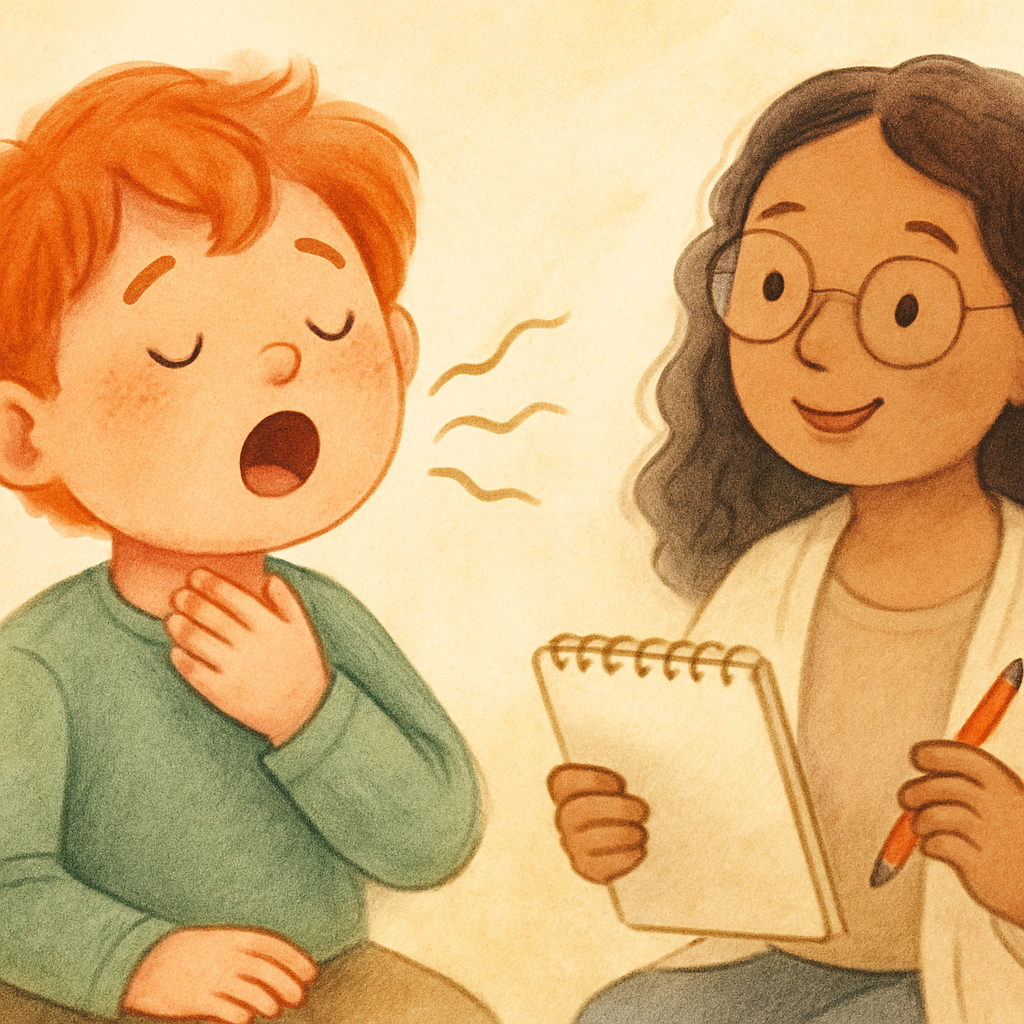
For toddlers and preschoolers, an assessment doesn't look like a test—it looks like playtime! The SLP will use toys, bubbles, books, and puzzles to interact with your child.
While playing, they are observing:
- Receptive Language: Does your child understand instructions? (e.g., "Give the bear a hug.")
- Expressive Language: How many words does your child use? Are they combining them?
- Social Communication: Is your child making eye contact, taking turns, and showing interest in others?
3. Structural Exam
The SLP may take a quick look inside your child’s mouth to ensure there are no physical barriers to speech, such as a tongue tie or low muscle tone.
4. The Verdict
After the assessment, the SLP will discuss their findings. They will clarify if your child has a "speech delay" (following the normal path but slowly) or a "disorder" (atypical development). This distinction is the core of a speech delay diagnosis and guides the treatment plan.
How Speech Therapy Works
Once a diagnosis is made, the real work begins. But what does Speech Therapy actually look like?
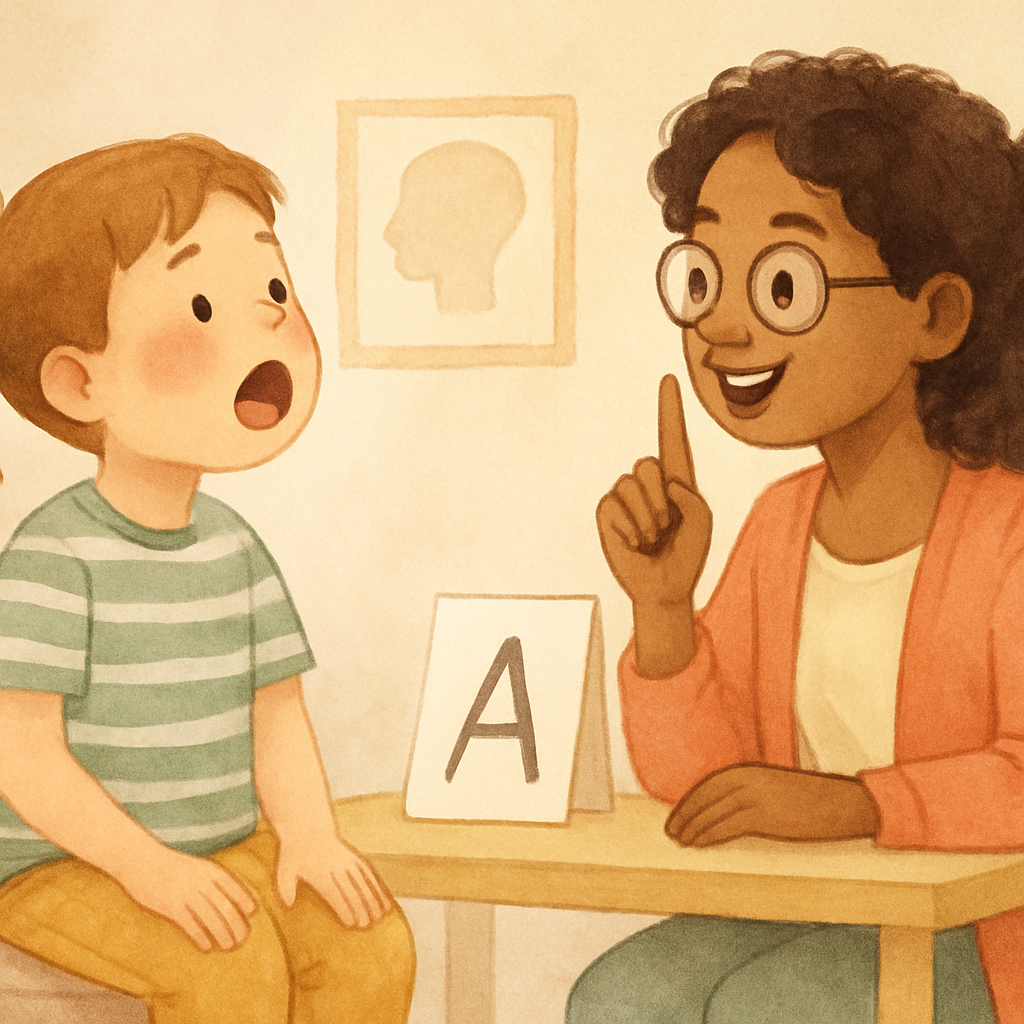
If you are picturing your energetic toddler sitting still at a desk repeating words, don't worry—that is rarely how it works. Modern pediatric therapy is child-led and play-based.
- For Toddlers: Therapy is integrated into play. The therapist might use a car ramp to teach concepts like "go," "stop," "up," and "down." They might use snack time to practice asking for "more." The goal is to create "communication temptations" that motivate the child to speak.
- For Parents: A huge part of therapy is coaching you. You are with your child every day. The therapist will teach you strategies—like parallel talk (narrating what you are doing) or expanding (adding a word to what your child says)—so you can turn bath time and car rides into mini-therapy sessions.
- For Older Children: Therapy might be more structured, involving games or reading to practice specific sounds (articulation) or sentence structures.
Conclusion
Hearing that your child needs Speech Therapy can feel overwhelming, but it is actually a moment of empowerment. It means you are no longer guessing. You are no longer worrying in the dark.
A speech delay diagnosis gives you a plan. It connects you with a professional who becomes a partner in your child’s development. It gives you the tools to understand your child better and help them express their wants, needs, and big ideas.
Your child has a voice. With patience, love, and the right support, you can help them find it.
If you have concerns about your child’s communication, we are here to help. Our team of experienced Speech-Language Pathologists specializes in comprehensive speech delay diagnosis and personalized, play-based therapy.
Contact us today to schedule a consultation or call daar at 02 9133 2500 for an evaluation and start your child’s journey to confident communication.
FAQ: Common Questions for Parents
Do I need a doctor's referral for a speech delay diagnosis?
In many cases, you can self-refer to a private Speech-Language Pathologist. However, if you are relying on insurance or public health systems, a referral from your pediatrician may be required. It is best to check with your provider.
Will my child "grow out of it"?
Some children are "late bloomers" and do catch up on their own. However, it is impossible to predict which children will catch up and which will fall further behind without a professional assessment. The risk of waiting is far greater than the risk of getting an evaluation that turns out to be unnecessary.
What is the difference between speech and language?
"Speech" refers to the physical production of sounds (articulation). "Language" refers to the system of words and symbols used to communicate meaning. A child can have perfect speech (clear sounds) but a language delay (limited vocabulary), or vice versa. A speech delay diagnosis will clarify which area is affected.
.svg)




.svg)