
.png?width=48&height=48&name=Group%201%20(3).png)























17 February, 2026

Speech Delay Diagnosis: Understanding Your Child’s Unique Voice
As a parent, you are the expert on your child. You know their favorite foods, their sleepy cues, and the specific cry that means "I dropped my teddy bear." But when it comes to their development, it is easy to feel like a novice—especially when it comes to communication.
You might be comparing your child to their peers at daycare. "Why is that child speaking in full sentences while mine is only saying single words?" "Is it normal that I’m the only one who understands what they are saying?"
These questions often lead to late-night research on terms like speech delay and speech disorder. It can be a confusing and anxious time, but understanding the landscape is the first step toward helping your child find their voice.
In this guide, we will break down the difference between a delay and a disorder, explore complex conditions like Apraxia of Speech and Dysarthria, and demystify the speech delay diagnosis process so you can move forward with confidence.
Is it a Speech Delay or a Speech Disorder?
While the terms are often used interchangeably by parents, a speech disorder is clinically distinct from a speech delay.
What is a Speech Delay?
A speech delay is exactly what it sounds like: a pause or a slow-down on the typical timeline of development.
Children with a speech delay are following the normal path of language development, but they are doing so at a slower rate than their peers. They are like a train that is on the right track but running behind schedule. They might use "baby talk" longer than expected or have a smaller vocabulary, but the pattern of their speech is typical.
What is a Speech Disorder?
If a delay is a train running late, a speech disorder is a train that has jumped onto a different track entirely. It refers to development that is atypical.
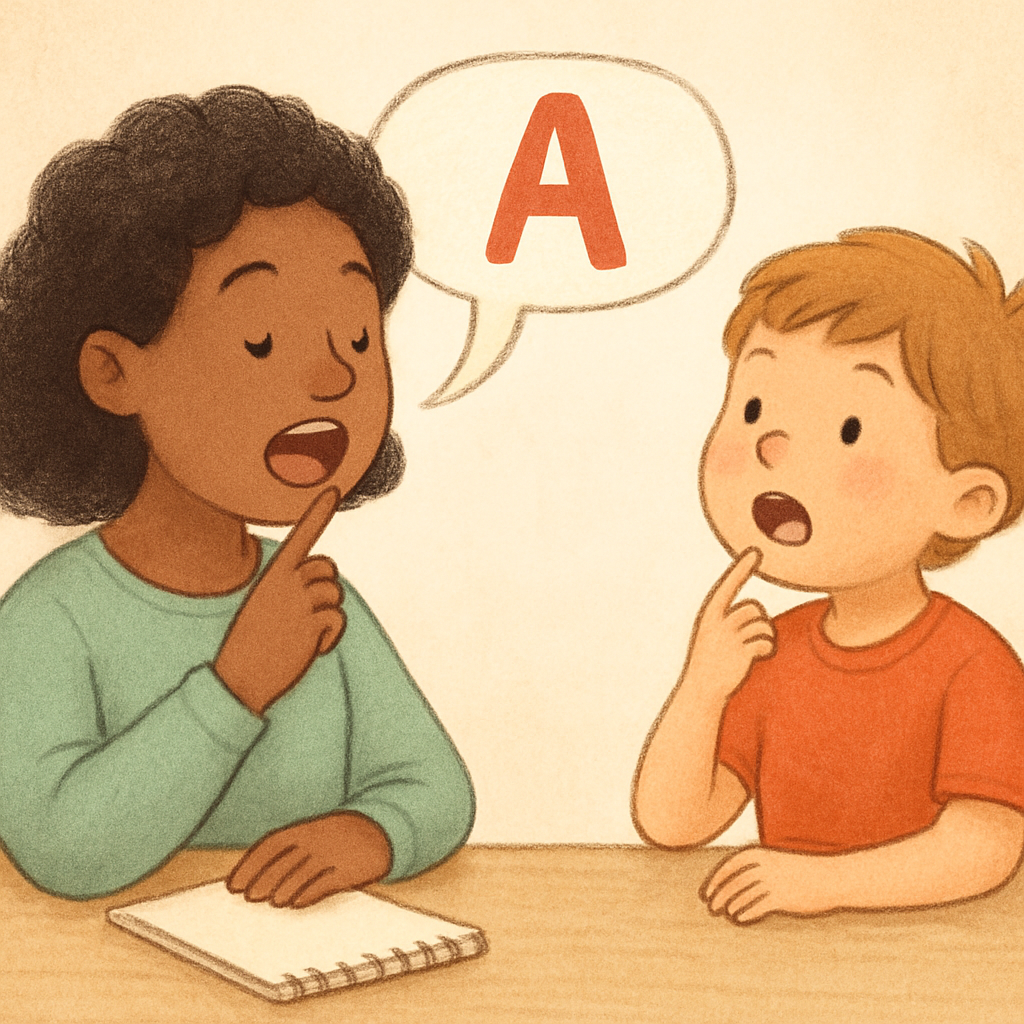
A child with a speech disorder may have trouble producing specific sounds correctly, may struggle to plan the movements of their mouth, or may have difficulty with the flow of speech. These children often require specific, targeted therapy techniques that go beyond just "catching up."
The Path to a Speech Delay Diagnosis
If you suspect your child is struggling, the "wait and see" approach is rarely the best option. Seeking a formal speech delay diagnosis can open the door to services that make a massive difference.
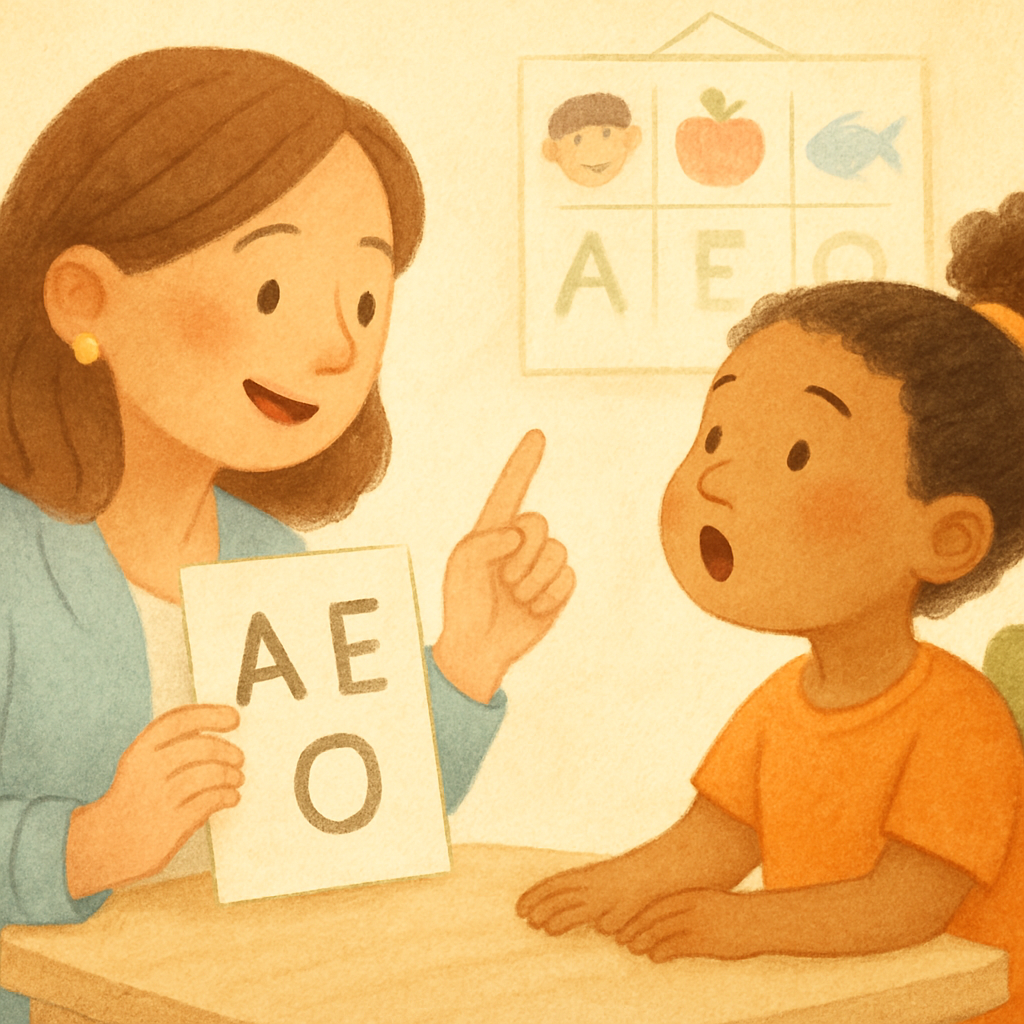
A comprehensive evaluation by a Speech-Language Pathologist (SLP) typically involves:
- Case History: Reviewing medical history, ear infections (which affect hearing), and family history.
- Observation: Watching how the child plays, follows directions, and attempts to communicate.
- Standardized Testing: Comparing the child's skills to age-based norms to determine if a speech delay or speech disorder is present.
- Oral-Motor Exam: Checking the physical structure of the mouth (lips, tongue, jaw) to rule out physical barriers.
Common Speech Disorders Explained
During an assessment, an SLP will look for signs of specific disorders. Understanding these terms can help you advocate for the right support.
Fluency Disorders: Stuttering and Cluttering
Stuttering is perhaps the most well-known speech disorder. It involves disruptions in the flow of speech, such as:
- Repetitions: "I w-w-w-want the ball."
- Prolongations: "Mmmmmmmy turn."
- Blocks: A silence where the mouth is positioned to speak, but no sound comes out.
Less commonly discussed is Cluttering. While it affects fluency like stuttering, it presents very differently. A child who clutters often speaks at a rapid, irregular rate. Their speech might sound jerky or "mushed together," and they may be unaware that they are difficult to understand.
Motor Speech Disorders: Apraxia and Dysarthria
Sometimes, the issue isn't about the flow of ideas, but the physical execution of speech.
Apraxia of Speech (Childhood Apraxia of Speech or CAS) is a motor planning disorder. The child knows what they want to say, and their muscles are strong enough to say it, but the brain struggles to send the correct signal to the mouth muscles to move in the right sequence. You might see "groping" movements of the jaw or inconsistent errors (saying "banana" correctly once, then "nana" the next).
Dysarthria, on the other hand, is a motor execution disorder caused by muscle weakness or paralysis. A child with Dysarthria might have "slurred" or "mumbled" speech because the muscles of the lips, tongue, and jaw are physically unable to move precisely or quickly enough. It is often associated with conditions like Cerebral Palsy.
Conclusion
Navigating the alphabet soup of diagnoses—from Dysarthria to Cluttering—can be overwhelming. But knowledge is power.
A speech delay diagnosis is not a label to fear; it is a roadmap. It gives you the answers you need to move from worrying to acting. Whether your child needs strategies to smooth out stuttering, motor practice to conquer Apraxia of Speech, or simply a boost to overcome a speech delay, therapy is incredibly effective.
The brain is most adaptable in the early years. By seeking support now, you are giving your child the best possible foundation for a lifetime of confident communication.
If you are concerned about your child’s speech development, don't wait. Our experienced team specializes in comprehensive assessments for speech delay, stuttering, and complex motor speech disorders.
Contact us today to schedule a consultation or call daar at 02 9133 2500 for an evaluation and start your child’s journey to finding their voice.
FAQ: Common Questions for Parents
Will my child grow out of a speech delay?
Some children are "late bloomers" and catch up on their own, but it is impossible to predict which ones will without an assessment. Early intervention is the gold standard. If it is a speech delay, therapy speeds up the process. If it is a speech disorder like Apraxia of Speech, they will not grow out of it without specialized help.
What causes Stuttering?
The exact cause of stuttering is unknown, but it is often a combination of genetic and neurological factors. It is not caused by anxiety or bad parenting. However, stress or excitement can make stuttering more noticeable in the moment.
How is Cluttering treated?
Therapy for Cluttering focuses on self-monitoring. The child learns to "pause" their speech, over-articulate sounds, and check in with the listener to ensure they are being understood. Unlike stuttering, where reducing anxiety is key, Cluttering therapy often involves increasing awareness.
.svg)




.svg)