
.png?width=48&height=48&name=Group%201%20(3).png)























17 February, 2026

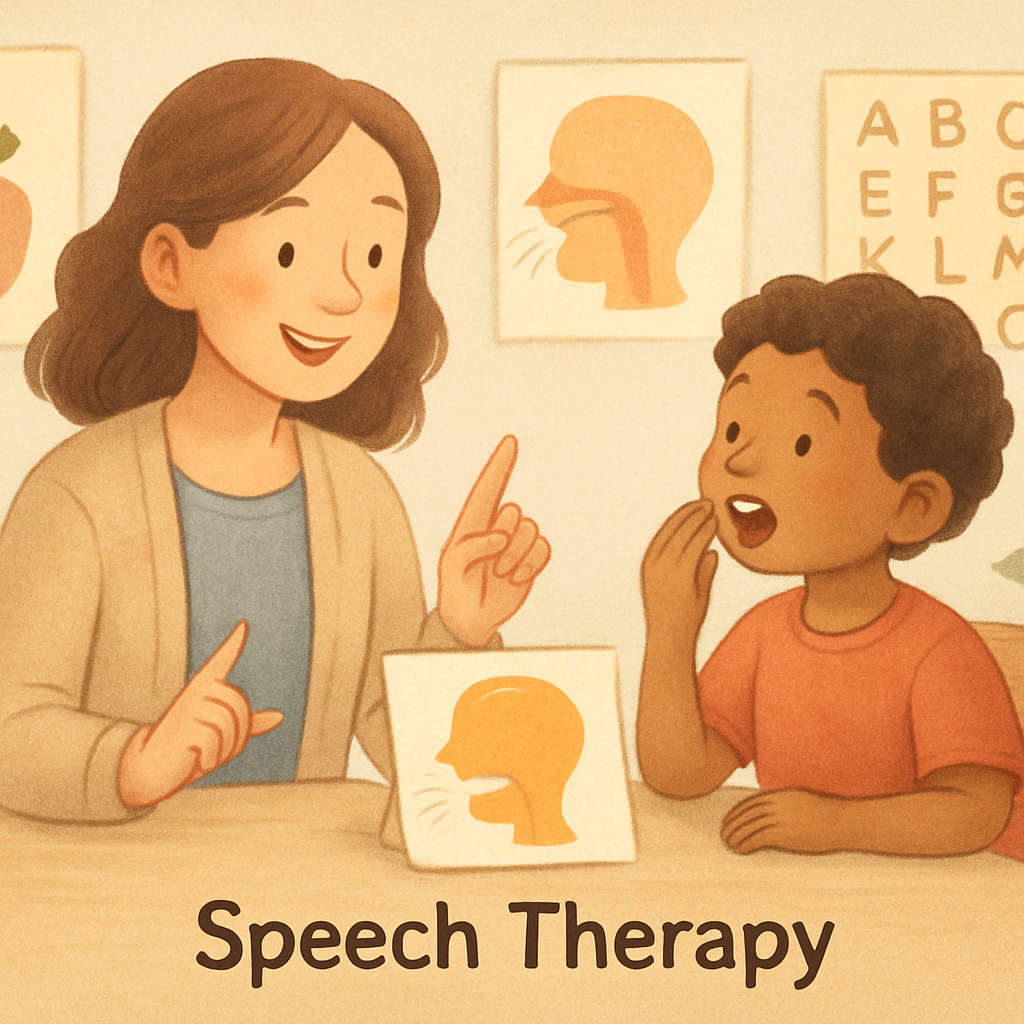
Speech Sound Disorders & Language Delays: Decoding Your Child’s Communication
"Can you say that again?"
"I think he wants the blue one... or maybe the red one?"
As parents, we become expert translators for our children. We learn to decipher the grunts, the points, and the "baby talk" that no one else understands. But there comes a point when the translation game stops being cute and starts becoming a source of worry.
You might notice that your child’s peers are speaking in clear sentences while your child is still struggling to make certain sounds. Or perhaps they seem to tune out when you give instructions, leaving you wondering if they are ignoring you or if they genuinely don't understand.
Communication is a complex web of skills. When one thread is loose, it can affect the whole picture. To get the right help, you need to understand exactly what is going on. Is it a problem with Speech sound disorders? Is it a struggle with Expressive language? Or is the issue with Receptive language?
In this guide, we will untangle these terms, explain the speech delay diagnosis process, and show you how Speech Therapy can help your child communicate with clarity and confidence.
The First Step: Getting a Speech Delay Diagnosis
If you have a gut feeling that your child is falling behind, the most important thing you can do is act on it. The "wait and see" approach is outdated. Research consistently shows that early intervention leads to the best outcomes because a young child's brain is incredibly adaptable.
Seeking a speech delay diagnosis is not about labeling your child; it is about creating a roadmap for support.
When you visit a Speech-Language Pathologist (SLP), they will look at the "Big Three" areas of communication:
- Speech: How clearly the child says sounds.
- Language (Receptive): What the child understands.
- Language (Expressive): What the child says.
Understanding the breakdown in these specific areas is the key to effective Speech Therapy.
Input vs. Output: Receptive and Expressive Language
One of the biggest "aha!" moments for parents is learning the difference between speech and language. A child can have perfect speech (clear sounds) but struggle with language (meaning), and vice versa.
1. Receptive Language (The Input)
Receptive language is the foundation of communication. It refers to how well a child understands the words and gestures used by others. Before a child can say "shoe," they need to understand what a shoe is and recognize the word when they hear it.
Signs of a Receptive language delay include:
- Difficulty following simple instructions (e.g., "Go get your coat").
- Not answering questions appropriately (e.g., nodding yes when you ask "What is your name?").
- Echoing words back (Echolalia) without understanding the meaning.
- Looking to other children to see what to do in a group setting.
2. Expressive Language (The Output)
Expressive language is what we typically think of as "talking." It refers to the ability to use words, sentences, gestures, and writing to convey a message.
Signs of an Expressive language delay include:
- Using a limited vocabulary compared to peers.
- Struggling to name objects ("that thingy").
- Using short, simple sentences or leaving out grammatical markers (e.g., "Him run" instead of "He is running").
- Getting frustrated when they cannot make themselves understood.
It is very common for a child to have a "gap" between the two—for example, having excellent Receptive language (understanding everything) but a significant delay in Expressive language (unable to speak).
When Clarity is the Issue: Speech Sound Disorders
Sometimes, a child has a great vocabulary and understands everything perfectly, but their speech is unintelligible. You know they are telling you a complex story about their day, but it sounds like a different language.
This is the realm of Speech sound disorders.
These disorders refer to difficulties in producing the sounds of speech clearly enough for others to understand. They generally fall into two categories:
Articulation Disorders
This involves difficulty physically producing specific sounds. The child might not be able to place their tongue or lips in the correct position.
- Example: A lisp (saying "thun" for "sun") or substituting "W" for "R" (saying "wabbit" for "rabbit").
Phonological Disorders
This involves difficulty with the patterns of sounds. The child can physically make the sound, but they use it incorrectly or leave it out entirely.
- Example: "Cluster reduction," where a child simplifies complex sounds (saying "tar" for "star").
- Example: "Final consonant deletion," where a child leaves off the ends of words (saying "ca" for "cat").
A speech delay diagnosis will determine if the issue is physical (Articulation) or pattern-based (Phonological), as the Speech Therapy techniques for each are very different.
How Speech Therapy Bridges the Gap
Once we understand if the issue is Speech sound disorders, Receptive language, or Expressive language, the real work begins.
Speech Therapy is designed to meet your child exactly where they are.
- For Language Issues: Therapy is often play-based. We create "communication temptations"—like putting a favorite toy in a clear, locked box—to motivate the child to use their words or signs to ask for help. We narrate play, model sentence structures, and use visual aids to build vocabulary.
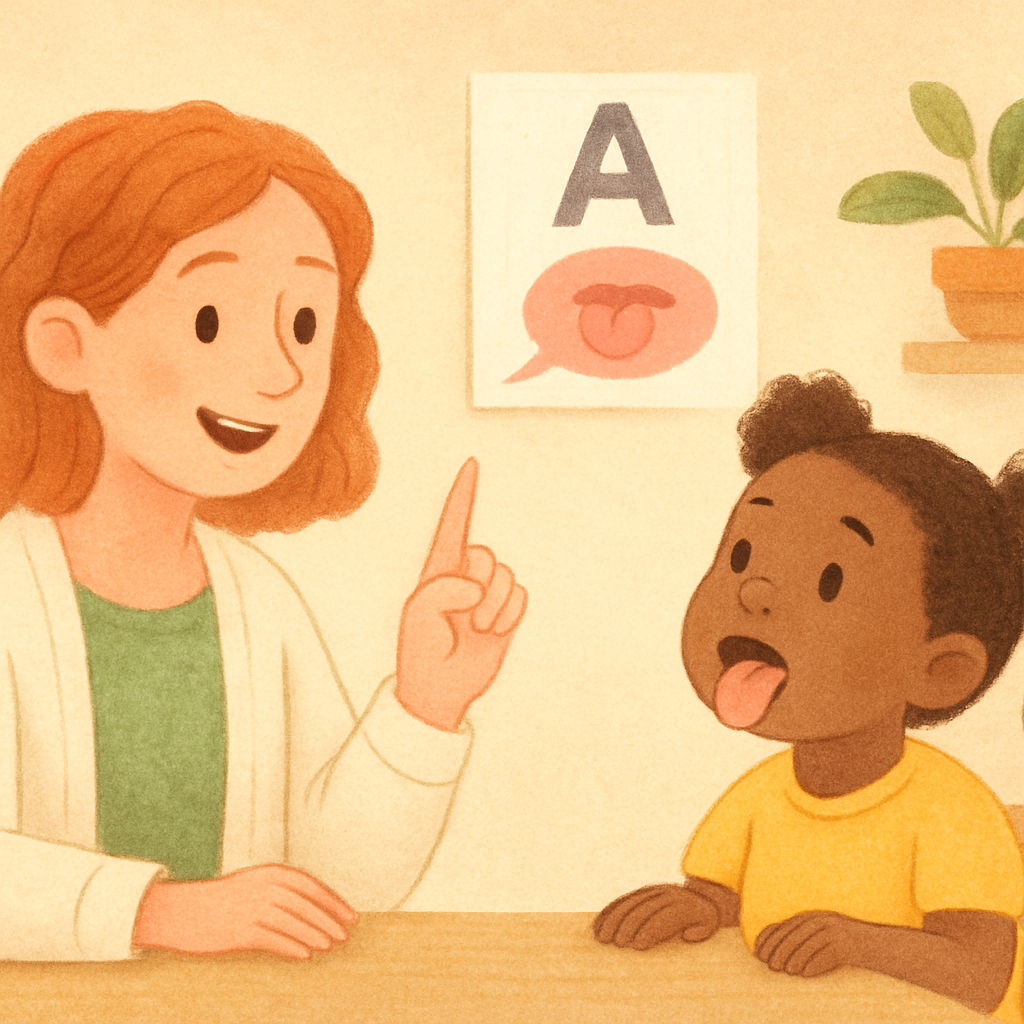
- For Speech Sound Disorders: Therapy might involve looking in a mirror to practice tongue placement, playing listening games to distinguish between sounds, or using repetition to build muscle memory for clear speech.
Conclusion
Communication is the bridge between your child and the world. It is how they make friends, learn at school, and tell you they love you.
When that bridge is under construction, it can be stressful for the whole family. But understanding the specific nature of the problem—whether it is Speech sound disorders, Expressive language, or Receptive language—is the first step toward fixing it.
A speech delay diagnosis gives you the power to act. With the right Speech Therapy support, you can help your child clear the hurdles and find their unique voice.
If you are concerned about your child’s speech or language development, we are here to help. Our team of experienced Speech-Language Pathologists specializes in comprehensive evaluations and personalized therapy plans.
Contact us today to schedule a consultation or call daar at 02 9133 2500 for an assessment and start your child’s journey to confident communication.
FAQ: Common Questions for Parents
At what age should I worry about Speech sound disorders?
It is normal for toddlers to make mistakes (like saying "nana" for "banana"). However, by age 3, a stranger should be able to understand about 75% of what your child says. By age 4, they should be 100% intelligible, even if they still have a few minor errors.
How do I get a speech delay diagnosis?
You can start by talking to your pediatrician, who can refer you to a Speech-Language Pathologist. Alternatively, you can contact a private clinic directly. The assessment will involve observing your child play, listening to their speech, and asking you questions about their history.
How long does Speech Therapy take?
There is no set timeline. It depends on the severity of the diagnosis, the child's age, and how much practice happens at home. Some children need a few months to "catch up," while others with complex Speech sound disorders may need support for a year or more.
.svg)




.svg)