
.png?width=48&height=48&name=Group%201%20(3).png)























10 August, 2026

How to Balance Managing Kids Screen Time Wisely

Key Highlights
- Set clear time limits for screen time and keep household rules simple.
- Choose high-quality content on digital devices and watch together when possible.
- Use parental controls to filter content and support safer media use.
- Protect sleep, meals, homework, and family time with screen-free routines.
- Match your child’s screen time rules to age and stage, not one fixed plan.
- Build healthy habits by encouraging play, reading, movement, and open conversations.
Introduction
Screens are part of life, so the goal is not to remove all screen use. It is to help your child build a healthy balance with media use. That means setting healthy limits, choosing better content, and protecting sleep, play, and family connection. Balanced screen time starts with simple routines you can actually keep. If you want healthier habits, focus on quality, involvement, and consistency instead of counting every minute with stress.
Effects of Excessive Screen Time on Child Development
Too much digital media can affect child development in several ways. Reports link excessive screen time with sleep problems, behaviour issues, attention difficulties, less time learning, and delays in language and social skills. For younger children, passive screen time does not support growth like real-world interaction does.
It can also affect physical health and mental health when screen use replaces movement, play, and face-to-face connection. The impact is not only about the amount of time. The quality of the media matters too. Let’s look first at health effects, then at social and emotional changes.
Physical and Mental Health Impacts
Excessive screen time often replaces physical activity, sleep, reading, and problem-solving, which can harm a child’s health. Too much screen use is linked to obesity, poor sleep, attention issues, and behaviour problems. Young children especially benefit more from unstructured play than passive viewing.
Too much screen exposure and not enough real interaction can also impact mental health. Experts recommend clear time limits, especially for young children. The Academy of Pediatrics advises against most media use before 18 months (except video chatting) and suggests no more than one hour of high-quality programming daily for ages 2 to 5.
Social and Emotional Consequences
Screens can influence how children relate to others. When screen time replaces talking, playing, and reading with family, healthy development may suffer. Young children learn best through real-life interaction—not virtual environments.
As kids get older, online spaces become more important. Social media and online friendships require guidance, not just access. Children and teens may face cyberbullying, oversharing, or inappropriate content. Without support, their emotional health can be affected.
Stay involved by asking about what they watch or play and discussing mistakes calmly. Free resources like reviews and safety tools can help you guide screen choices and online behaviour.
Establishing Healthy Screen Time Habits
Healthy habits start with clear screen time rules your family understands. Keep household rules practical. Protect meals, sleep, homework, and play first. Then decide when screens fit into the day. This helps your child see screens as one part of life, not the center of it.
For young people, healthy limits work best when parents stay involved and lead by example. Review rules as your child grows because needs change with age. The next two sections cover how to set age-based limits and how to build smarter digital habits.
Setting Age-Appropriate Limits and Family Rules
A one-size-fits-all plan usually does not work. Age-appropriate limits give you a better starting point. The Academy of Pediatrics advises against media use, except video chatting, for children younger than 18 months. For ages 18 to 24 months, if you introduce media, choose high-quality content and avoid solo use.
For children ages 2 to 5, limit high-quality programming to 1 hour a day. As kids get older, household rules should protect homework, sleep, and family routines. Parental controls can help block or filter content and support safer use.
|
Age group |
Suggested approach |
|---|---|
|
Younger than 18 months |
Avoid media use except video chatting |
|
18 to 24 months |
Use only high-quality media and avoid solo viewing |
|
2 to 5 years |
Limit to 1 hour daily of high-quality programming |
|
Older children |
Set household rules, curfews, and tech-free times |
Encouraging Positive Digital Literacy
Digital literacy means teaching your child to think about what they watch, play, and share. That matters because your child will eventually use digital devices outside your supervision. Quality screen time is not only about what is blocked. It is also about what your child learns to question.
Start with simple conversations during media use. Ask if the content seems accurate, who made it, and what message it is sending. Help your child understand that online content may reflect someone’s point of view and may collect data to send ads.
Helpful habits include:
- Preview shows, apps, and games before use.
- Use Common Sense Media to check age fit and reviews.
- Watch or play together and discuss ads, claims, and behaviour.
Practical Strategies for Reducing Excessive Screen Use
Reducing screen use does not require a perfect plan. Small changes can make a real difference. Start by turning off background TV, creating tech-free mealtimes, and keeping devices out of bedrooms. These steps support ccc without making the whole family feel punished.
You should also look at your own screen time. Children notice what adults do. When you model better habits, your child is more likely to follow. Next, let’s focus on offline options and free resources that give parents helpful information and practical support.
Promoting Offline Activities and Free Resources for Parents
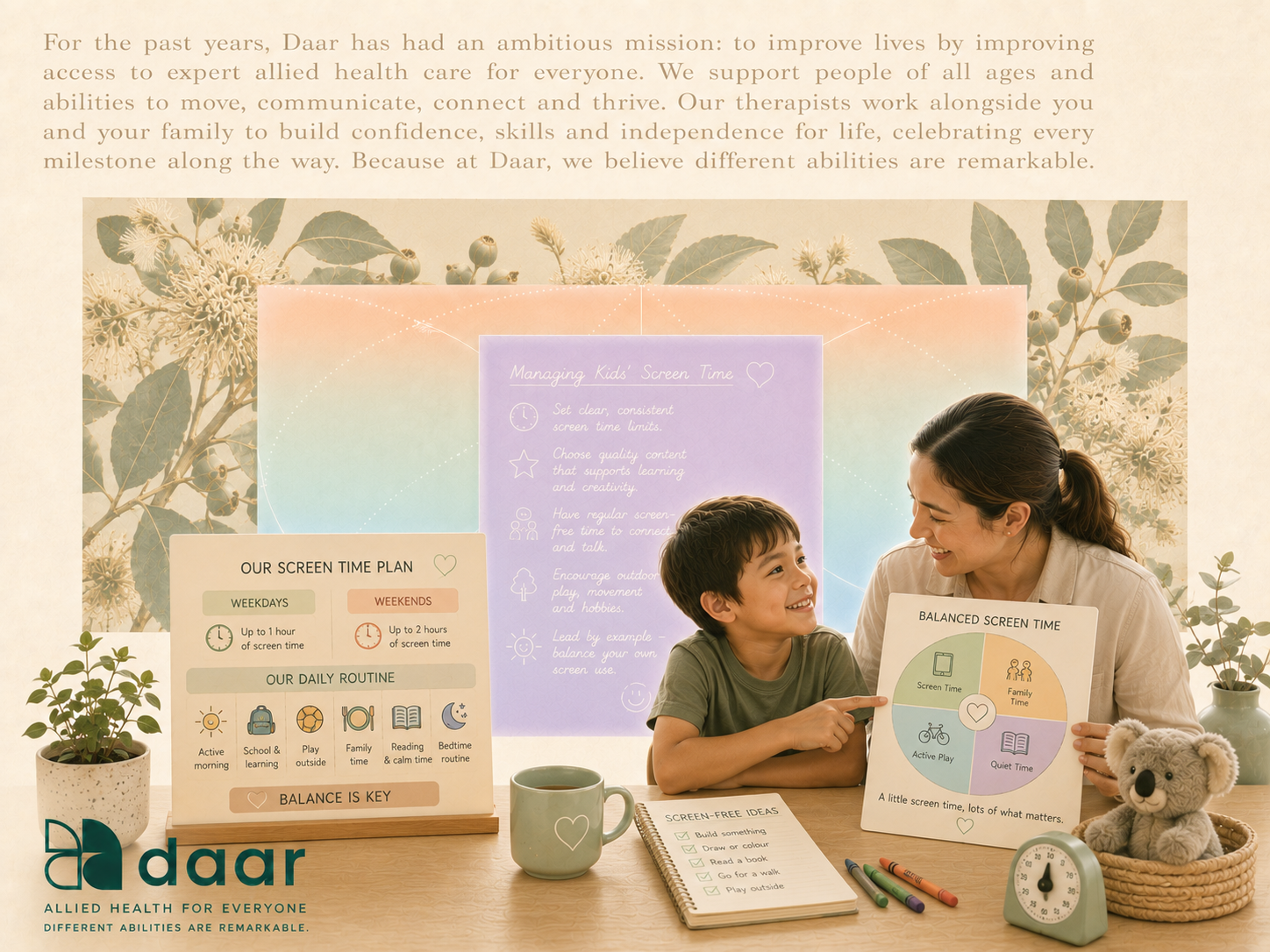
Children are more likely to choose offline activities when those options are easy and part of the routine. Unstructured playtime, books, imaginative play, outdoor time, and conversation all support healthy development. Start with one screen-free moment each day, such as the dinner table or a short family walk.
A few simple ideas can help:
- Make mealtimes screen-free to build family time.
- Offer books, toys, music, or art within easy reach.
- Plan outdoor play and nature time after school.
- Keep one regular evening each week unplugged.
Free resources for parents can also support better habits. Common Sense Media offers ratings and reviews. Online safety sites provide tips on parental controls and family tech agreements. Parent programs with screen time guides, goal-setting tools, and activity ideas can make change feel more manageable at home.
Conclusion
In conclusion, managing kids' screen time is essential for fostering their overall development and well-being. By establishing healthy habits and setting age-appropriate limits, you can help your children navigate the digital world responsibly while encouraging a balanced lifestyle. Promoting offline activities and positive digital literacy will not only reduce excessive screen use but also nurture their social and emotional skills. Remember, it's all about finding the right balance that works for your family.
If you're looking for more support and resources on this topic, don't hesitate to reach out for a consultation or call daar at 02 9133 2500 for tips and guidance tailored to your needs.
Frequently Asked Questions
What are some effective strategies for setting screen time limits for kids?
Set clear time limits, protect mealtimes and bedtime, and create simple household rules your child can remember. Use parental controls to support your plan, not replace it. A healthy balance is easier when your child’s screen time fits around sleep, homework, play, and family routines.
How can I encourage my children to engage in non-screen activities?
Make offline activities easy to start and part of the day. Keep books, toys, art supplies, and outdoor play options ready. Protect family time at the dinner table and allow plenty of unstructured playtime. These habits support healthy development and reduce the pull of screens naturally.
How does excessive screen time impact children's development and behaviour?
Excessive screen time can affect mental health, physical health, sleep, attention, learning, and behaviour. The effects of screen time may also include delays in language and social skills when screens replace real interaction. Healthy habits, better content choices, and clear limits can lower those risks.
.svg)




.svg)