
.png?width=48&height=48&name=Group%201%20(3).png)























21 September, 2026

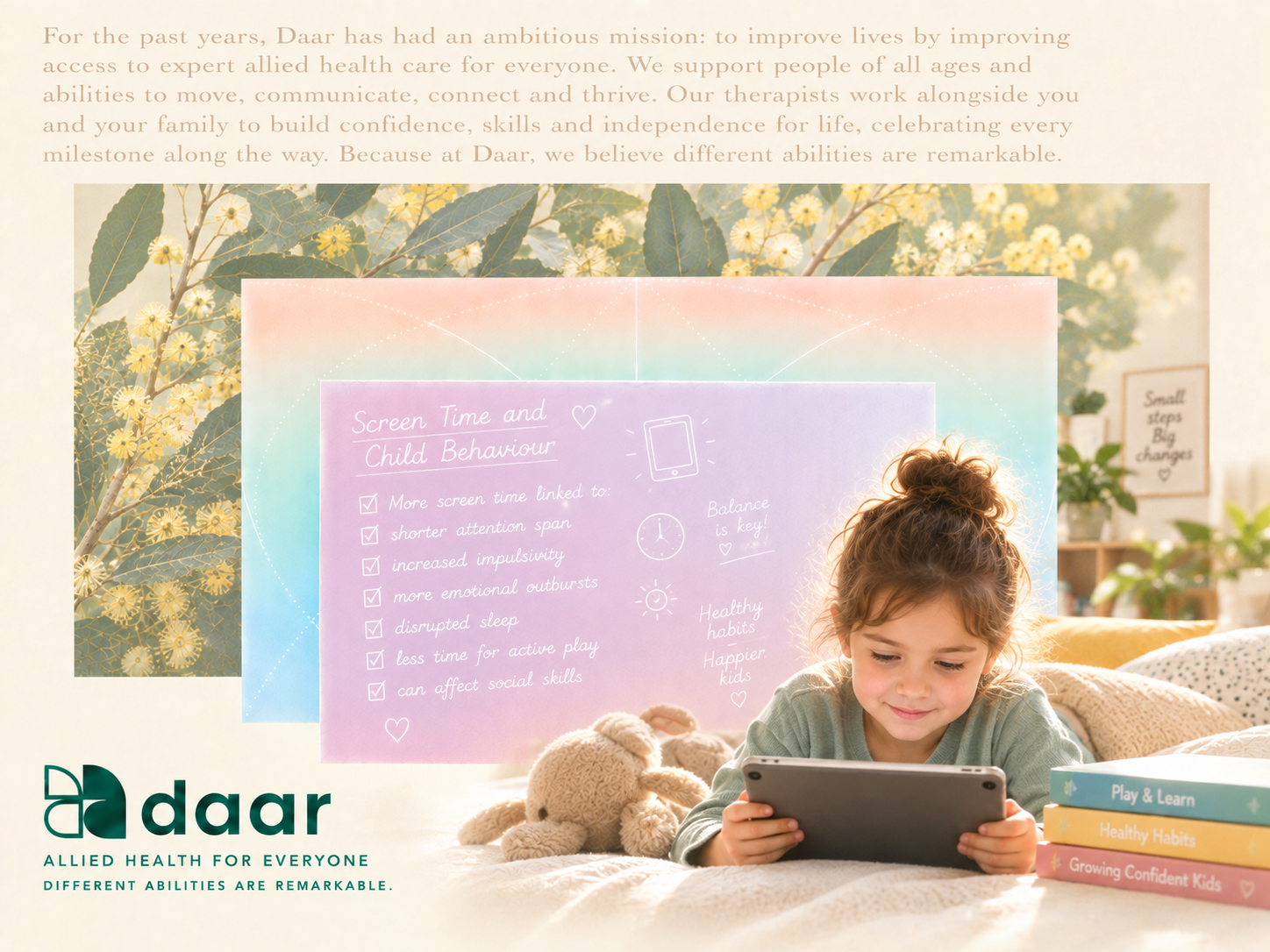
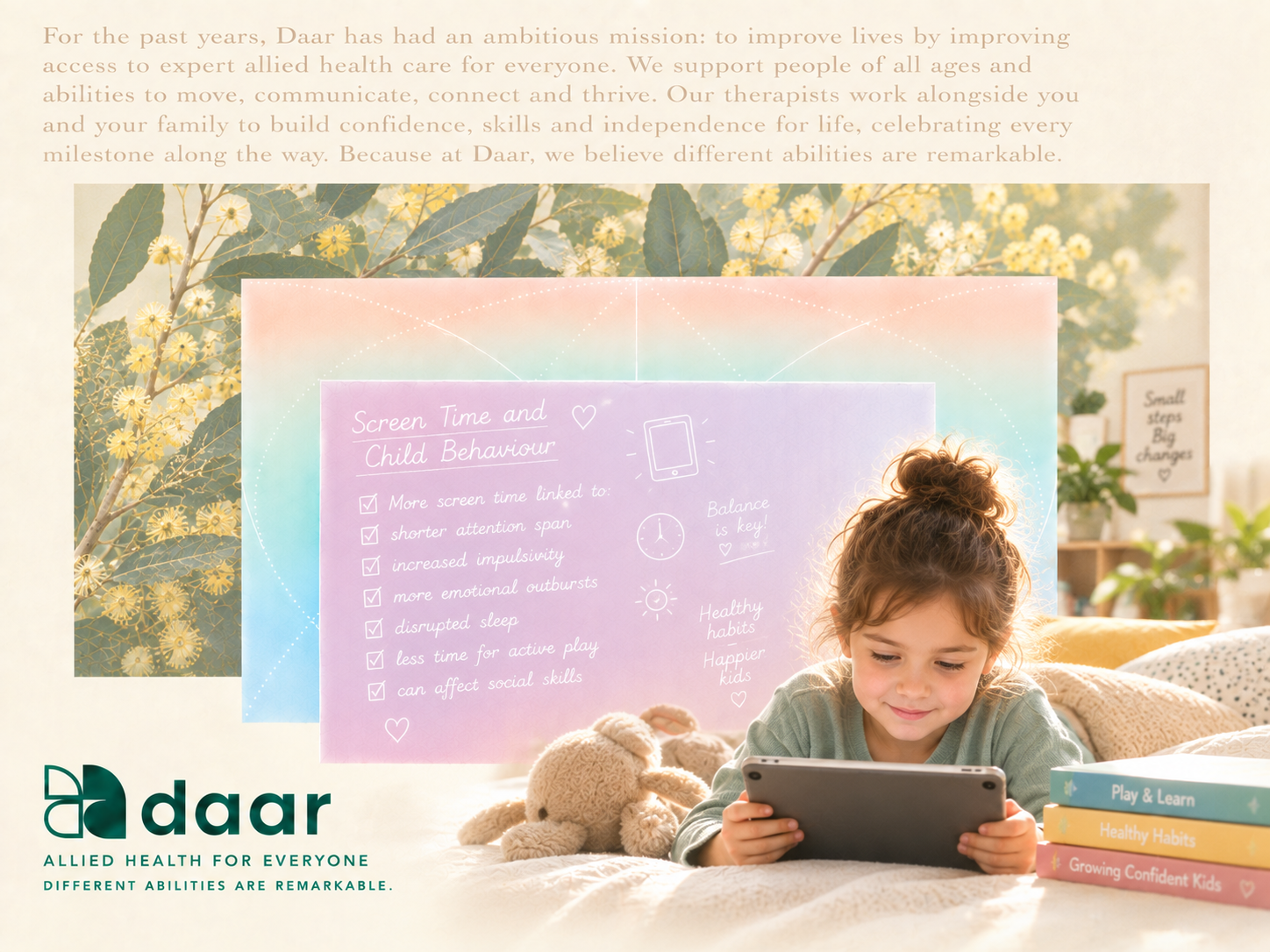
Screen Time and Children’s Behaviour: The Impact Explained
Key Highlights
- Tablets and video games supply the brain with rapid, continuous hits of dopamine. When the device is turned off, the sudden drop in dopamine severely impairs healthy development, screen time, and emotional regulation, particularly in younger children.
- For neurodivergent children, shifting attention away from a highly preferred digital activity is not just "annoying"; it requires an immense, often unavailable amount of executive functioning.
- The link between screen time, tantrums and transitions is profound. Setting verbal warnings like "five more minutes" often fails because gaming heavily distorts a child's perception of time.
- Evaluating screen time and children's behaviour is not about banning devices entirely—screens are a valid form of downtime. It is about understanding the function of the screen and building a neurological bridge back to the real world. For recommended daily screen time limits, experts suggest that children aged 2 to 5 should have no more than one hour per day of high-quality screen time, while older children and teenagers should ideally limit recreational screen time to two hours daily. These guidelines help ensure that screens serve as beneficial tools without negatively impacting development.
- Delivered securely via telehealth, daar’s allied health professionals use the "mediator model" to coach Australian parents live in their living rooms, directly during these high-friction digital transitions.
Introduction
It is the modern parent’s daily battle: You announce that it is time to turn off the iPad, the television, or the gaming console. Instantly, the peace in your home shatters, disrupting precious family time. What follows is a disproportionate explosion of anger, screaming, and sometimes physical aggression. To help parents manage and regulate children's screen use and promote a balanced approach to technology use, several free tools and resources are available. Apps such as Google Family Link, Apple Screen Time, and Microsoft Family Safety enable parents to set limits, monitor activity, and encourage healthy, high-quality screen habits. Additionally, websites like Common Sense Media provide expert advice on managing technology at home, as well as age-appropriate recommendations for high-quality digital content.
It is incredibly easy to perceive this reaction as defiance or a sign of an "addiction." However, beneath the screaming is a complex neurobiological stress response related to a child’s health. Screens, including social media, rapidly alter a child's brain chemistry, making the return to reality physically and emotionally jarring. At daar, our allied health professionals are experts at decoding these digital friction points. Parental control apps can help manage this challenge by allowing caregivers to set limits on children's screen time. These apps typically work by scheduling device usage, automatically locking devices after a set period, or blocking access to certain apps during designated hours, helping children transition more smoothly away from screens. Let’s explore the deep connection between screen time and children's behaviour, why digital transitions cause such profound distress, and how our telehealth clinic equips you with strategies to reclaim peaceful routines.
The Dopamine Drop: Screen Time and Emotional Regulation
To understand the meltdown, we have to look briefly at neurochemistry. Activities like scrolling through fast-paced videos or playing interactive video games provide the brain with continuous, high-speed hits of dopamine (the reward and motivation neurotransmitter). In a comprehensive study of the effects of too much screen time, if screen time is causing emotional problems, parents might notice signs such as increased irritability, mood swings, difficulty calming down after using devices, withdrawal from other activities, or trouble managing frustration. These behaviours suggest that a child's brain may be struggling to regulate emotions once the dopamine drops after screen use.
When you abruptly take the screen away, that dopamine supply instantly plummets. This sudden neurochemical crash leaves the child’s brain feeling deeply under-stimulated and agitated. Good screen time and emotional regulation mean understanding that a child cannot just "snap out of it" and cheerfully come to the dinner table. Their nervous system needs time to recalibrate, especially when household rules around screen usage are involved. If we immediately place a heavy demand on them while their brain is in this dopamine deficit, their poor emotional regulation will almost always manifest as an explosive outburst. It is important to note that the effects of screen time on dopamine and emotional regulation may differ between educational and entertainment content. Entertainment content, especially fast-paced games or videos, tends to trigger higher dopamine responses and makes the transition away from screens more challenging. In contrast, educational screen time often involves slower-paced, goal-oriented tasks that are less stimulating, resulting in a less dramatic dopamine drop and typically milder emotional reactions when the session ends.
Bridging the Gap: Screen Time, Tantrums, and Transitions
Why do tantrums happen almost exclusively at the moment the device shuts off? It is a failure of transition.
Neurodivergent children, particularly those with ADHD or Autism, often hyper-focus on screens. Because they are in a state of "flow," they literally block out external stimuli. Therefore, yelling a verbal warning from the kitchen—"iPad off in five minutes for high-quality media transition!"—does not work. They either don't process the instruction, or they have no concept of how long five minutes actually is, meaning the shutdown still feels abrupt and unfair.
Managing screen time, tantrums, and transitions effectively requireres a strategy called "bridging." Instead of shouting from afar, physically sit next to your child. Enter their world for a few minutes. Ask a question about the game they are playing. "Wow, how did you build that house in Minecraft?" By joining their world first, you draw their attention out of the digital space and back into the physical room. Once they are verbally engaging with you, you can then introduce a visual timer to signal the end of the activity, making the transition collaborative rather than combative.
Function Over Fear: Screen Time and Children's Behaviour
Many parents carry intense guilt about screens, assuming all screen time is inherently "bad." It is important to set boundaries, evaluate screen time and children's behaviour through a functional lens, rather than an arbitrary time limit.
Instead of asking how much time they spent on a device, ask what function the device is serving. Is your child using an iPad in a quiet corner after school to safely decompress and regulate their overstimulated nervous system? Or are they watching highly stimulating, fast-paced videos right before bed, leading to insomnia and next-day aggression? When we view screens as a tool that has both regulatory benefits and dysregulating risks, we can structure their usage logically around the family's natural rhythms, rather than relying on the usual snapshots that provide a limited perspective.
Live Coaching for Digital Transitions via Telehealth
The most challenging aspect of managing screens is that the meltdowns happen exclusively in the home environment. Practicing transitions in a clinician’s office without a real device, or without the real triggers of the home, is highly ineffective in ensuring a safe experience.
Because daar operates entirely via telehealth, our practitioners bypass the artificial clinic setting. Using the "mediator model," our specialists can observe your child’s actual tablet transition routines securely via video. We coach you right in the moment—teaching you how to bridge, how to introduce visual transition tools, and how to de-escalate if a tantrum begins. To ensure your family is paired with an expert who knows exactly how to navigate this modern digital landscape, discover telehealth therapy and find your perfect match with our nationwide network.
Conclusion
Screens are a permanent fixture in modern childhood, but they do not have to be the source of daily conflict in your home. By understanding the neurological impact of digital media consumption and employing proactive, connection-based transition strategies, you can guide your child safely back to the real world without the explosive meltdowns.
Replace the daily screen battles with structured, neuro-affirming routines. Expert, NDIS-aligned guidance is available to Australian families right now.
Reach out to explore a consultation or call daar directly at 02 9133 2500 to find your perfect match today for an email preview of our services.
Frequently Asked Questions
Is a "digital detox" or complete screen ban a good behaviour intervention strategy?
For most neurodivergent children, a sudden, complete ban on screens—including media use—causes severe, prolonged dysregulation, as you are abruptly removing their primary source of predictability and (sometimes) dopamine. Rather than a total ban, our allied health professionals recommend establishing highly structured "screen-free zones" (like the dinner table or bedrooms) and focusing intensely on teaching safe transition strategies.
Should I use screen time as a reward or punishment?
Using screens as a high-stakes reward or punishment often increases the child's anxiety around the device and can lead to various behavioural problems. If they know losing screen time is on the line, their overall distress levels rise, making meltdowns more likely. We encourage parents to view screen time as a neutral, scheduled part of the day (e.g., "Screen time happens at 4 PM"), separating it from their behavioural performance to reduce the extreme emotional weight attached to the device.
Can we use NDIS funding to help manage children’s screen time-related behavioural issues?
Yes. If screen transitions are causing severe daily distress, physical aggression, or preventing your family from engaging in necessary daily routines, NDIS funding under Capacity Building: Improved Relationships or Improved Daily Living can absolutely be used. This funds our telehealth experts to assess the behaviour and provide targeted parent coaching to build seamless, safe daily transitions while also addressing the child’s screen time habits.
.svg)




.svg)