
.png?width=48&height=48&name=Group%201%20(3).png)























16 April, 2026

Sleep and Cortisol Balance: Tips for Better Sleep

How to Prevent Cortisol from Rising at Bedtime?
To prevent cortisol from rising at bedtime, establish a calming nighttime routine. Limit exposure to screens, practice relaxation techniques like deep breathing or meditation, and ensure your sleep environment is dark and quiet. Consistent sleep schedules also help regulate cortisol levels, promoting better rest and overall well-being.
Sleep and cortisol balance are inextricably and deeply connected. Cortisol, widely known as the body’s main stress hormone, is not inherently bad. In fact, it is necessary for our daily survival. It naturally follows a predictable 24-hour daily rhythm known as the diurnal curve. In a healthy system, maintaining regular sleep patterns allows cortisol to rise sharply in the early morning to help us wake up, feel alert, and tackle the day. As the day progresses, those levels slowly taper off, and cortisol rises again to indicate times of stress, reaching their absolute lowest point late at night to effortlessly allow for deep, restful sleep.
However, modern lifestyles, chronic anxiety, and poor bedtime routines frequently hijack this system. When sleep problems occur, and sleep is poor or inconsistent, this delicate balance can be severely disrupted. The body begins to produce cortisol at the wrong times, drastically affecting mood, behaviour, cognitive performance, and overall physical health, making sleep medicine essential in addressing these issues.
In this comprehensive guide, we will explore the fascinating science of how sleep directly affects natural cortisol levels, unpack the profound developmental benefits of keeping these hormones in check, and provide you with actionable, science-backed strategies to naturally improve your family's sleep, cortisol balance, and overall energy levels.
How Sleep Affects Cortisol Levels
To understand how to fix sleep struggles, we must first look at the biological seesaw that happens inside the body every night. Your brain's sleep-wake cycle (the circadian rhythm) is regulated by two opposing hormones: melatonin (the sleep hormone) and cortisol production (the waking and stress hormone). For one to go up, the other must go down.
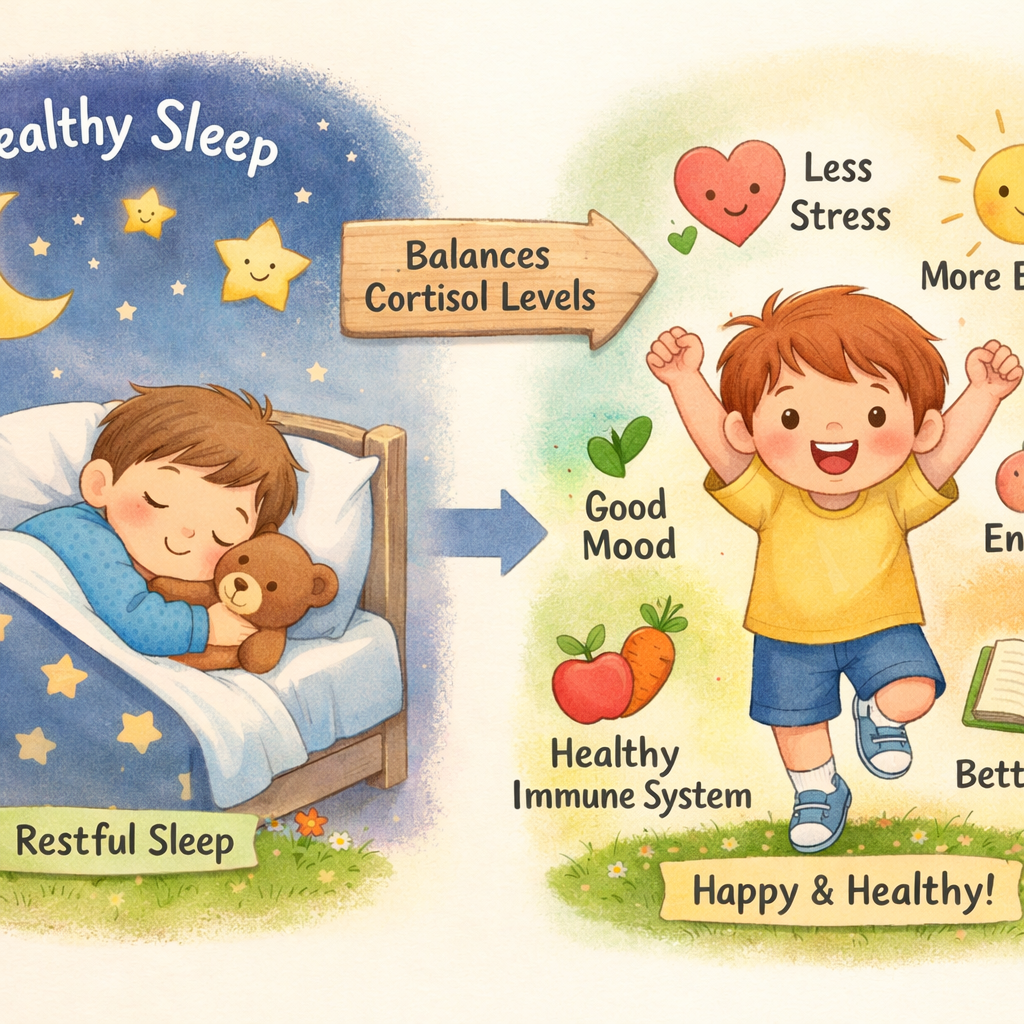
Healthy, uninterrupted sleep helps perfectly regulate cortisol by allowing the body to mentally and physically reset its internal stress response system and can also prevent sleep disorders. When the sun goes down, and your environment becomes dark, your brain naturally stops producing cortisol and starts pumping out melatonin. As you drift off into the deepest stages of sleep (slow-wave sleep), sleep loss can disrupt this process, leading to an increase in stress hormones. Your central nervous system shifts into a deeply restorative state, effectively clearing out the day's circulating stress hormones. This deep sleep in particular plays a vital key role in lowering nighttime cortisol levels, which supports cellular relaxation and full-body physical recovery.
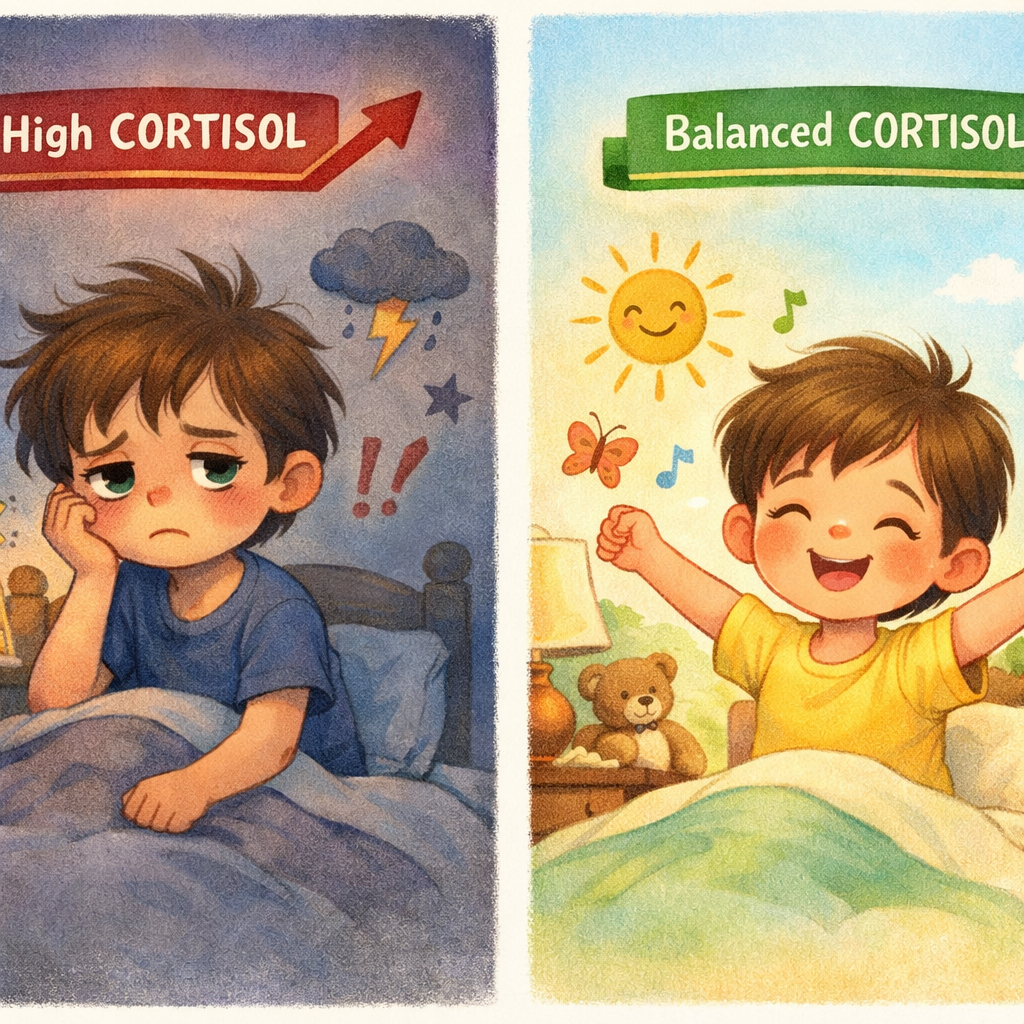
Poor sleep, on the other hand, acts as a biological threat and can lead to various sleep issues, including poor sleep quality. If you or your child stays up too late, experiences highly fragmented sleep, or suffers from sleep deprivation, the brain registers this lack of rest as a stressful emergency. To keep the body functioning through this 'emergency,' the adrenal glands pump out more cortisol. This keeps cortisol artificially elevated throughout the night and into the next day, creating a vicious cycle: high stress makes it harder to fall asleep and stay asleep, and a lack of sleep creates even higher stress.
Why Cortisol Balance Is Absolutely Important
Bringing your body’s stress hormones back into alignment within the hpa axis is one of the most impactful things you can do for your overall well-being. When cortisol and sleep disturbances are working in harmony, the benefits ripple through every system in the body. Here are the four major reasons why maintaining cortisol balance is critical:
1. Supports Better Sleep Quality
Because cortisol and melatonin cannot effectively share the stage, achieving balanced cortisol levels in cases of chronic stress is the direct secret to curing nighttime restlessness and avoiding various health problems. When cortisol naturally drops in the evening, it allows children and adults to physically relax, stop tossing and turning, and fall asleep much more easily. Furthermore, low nighttime cortisol prevents the frustrating phenomenon of middle-of-the-night awakenings, helping the brain seamlessly transition through all necessary sleep cycles to enjoy deeper, more restorative rest.
2. Improves Mood and Behaviour
Chronically elevated cortisol keeps the brain’s emotional threat center (the amygdala) hyper-activated. This is why sleep-deprived children, including shift workers, are often highly reactive, tearful, and uncooperative. Similarly, sleep-deprived adults often feel short-tempered and easily overwhelmed, and this chronic stress can increase the risk of heart disease. Stable cortisol levels effectively calm the nervous system, dramatically reducing daytime irritability, soothing unexplained anxiety, and sharply decreasing the frequency of emotional outbursts or tantrums.
3. Enhances Brain Function and Focus
High cortisol is famously toxic to the hippocampus, the area of the brain responsible for learning and memory retention. It also impairs the prefrontal cortex, which governs logic, attention span, and impulse control. Proper hormone balance supports profound cognitive clarity and healthy sleep patterns. When cortisol drops, and deep sleep is achieved, the brain is able to efficiently consolidate memories, improve daytime focus, and enhance a child's ability to learn new academic concepts in the classroom.
4. Strengthens Overall Physical Health
Cortisol does more than just manage stress; it also regulates inflammation, blood sugar, and metabolism. However, long-term elevated cortisol can lead to health issues such as high blood pressure, and it can also contribute to weight gain and actually suppresses the immune system's ability to produce white blood cells. Balanced cortisol, achieved through consistent sleep, actively contributes to robust immune function. It ensures that the body's natural defenses are strong enough to fight off common viruses and infections, supporting long-term physical well-being and cellular repair.
How to Improve Sleep and Cortisol Balance Naturally
You do not need medication to fix a broken circadian rhythm caused by shift work. The human body is highly adaptable and responds beautifully to environmental cues. Here is how you can proactively improve sleep and restore cortisol balance starting tonight:
- Maintain a consistent bedtime sleep schedule: Your body's internal clock thrives on strict predictability. Go to bed and wake up at the same time every single day, including on weekends. This unwavering consistency trains your adrenal glands to know exactly when to spike cortisol (morning) and when to halt cortisol rhythm (night).
- Avoid screens before bed to reduce overstimulation: The bright artificial blue light emitted by smartphones, tablets, and televisions directly suppresses melatonin production and tricks the brain into thinking it is still daytime (which spikes cortisol), negatively impacting your overall health. Turn off all screens at least one to two hours before bed.
- Create a calm, dark, and quiet sleep environment: Your bedroom should signal your brain that it is time to rest. Lower the thermostat to a cool 65°F–68°F (which mimics the natural nighttime drop in body temperature), use heavy blackout curtains to eliminate outside light, and utilize a continuous white noise machine to mask cortisol spikes caused by sudden noises.
- Encourage daily physical activity: Intense physical movement aligns with the body’s natural rhythm and biological mechanism for burning off excess cortisol. Engaging in at least 30 to 60 minutes of daytime exercise or outdoor play prevents stress hormones from building up in the bloodstream. However, avoid vigorous exercise within two hours of bedtime, as the post-workout adrenaline can delay sleep.
- Practice relaxation techniques before sleep: Actively engage your parasympathetic nervous system (the "rest and digest" system) to physically lower cortisol. If relaxation techniques aren’t effective, consider consulting a healthcare provider. Incorporate simple relaxation techniques into your nightly routine, such as deep belly breathing, deep breathing exercises, guided mindfulness, gentle stretching, or taking a warm, soothing bath.
Start Balancing Your Body Tonight!
You hold the power to break the cycle of stress levels and exhaustion. Improve your sleep and gently support a healthy cortisol balance starting tonight by making a few simple, intentional lifestyle changes to your evening routine. Build better, long-lasting habits for optimal stress management, emotional mood stability, and overall physical well-being!
Reach out for a consultation or call daar at 02 9133 2500 for more expert sleep strategies, holistic health tips, and evidence-based guidance delivered straight to your inbox.
Frequently Asked Questions (FAQs)
1. How exactly does sleep time affect cortisol levels?
The good news is that sleep and cortisol are inversely related. High-quality, deep sleep acts as a daily biological reset button. When you fall into the deeper stages of the sleep cycle, your brain signals the adrenal glands to halt the production of cortisol. This naturally lowers your stress hormone levels at night, restoring hormonal balance in the body and allowing your cells to engage in vital physical repair and recovery without the interference of stress chemistry.
2. What happens to the body when cortisol dysregulation is too high at night?
When cortisol remains artificially high at night—due to chronic daytime stress, excessive blue light exposure, or an irregular schedule—it actively blocks the production of melatonin. This completely derails the circadian rhythm. High nighttime cortisol consistently leads to severe difficulty falling asleep, an inability to relax a racing mind, frequent and frustrating middle-of-the-night awakenings, poor sleep quality, and potentially contributes to sleep apnea.
3. Can better sleep habits actually reduce daytime stress hormones?
Yes, absolutely. By fiercely protecting your sleep routine and establishing good sleep hygiene, you create a buffer against daytime stress. Consistent and high-quality sleep, including adequate sleep duration, helps naturally lower your baseline cortisol levels, meaning you wake up with a calm, well-regulated nervous system. A well-rested brain is far more resilient, drastically improving how your body responds to and recovers from unexpected stressful events throughout the following day.
.svg)




.svg)