
.png?width=48&height=48&name=Group%201%20(3).png)























9 March, 2026

Neurodivergent Kids and Screen Time

Key Highlights
- Screen use can offer both benefits and risks for neurodivergent children on the autism spectrum.
- For many neurodivergent children, screens provide a safe, predictable space that helps with regulation and anxiety.
- Technology can foster social connection and help build social skills without the pressures of face-to-face interaction.
- However, excessive screen time poses risks to physical health, sleep quality, and focus.
- Finding a healthy balance between online and offline activities is crucial for a child's overall well-being.
- Parents can help by understanding their child's screen use, setting collaborative limits, and modeling healthy habits.
Introduction
When it comes to screen time, most expert advice focuses on the dangers and how to limit it. However, for neurodivergent kids, including those on the autism spectrum, the conversation is more nuanced. Technology can play a surprisingly positive role in their lives. In a world that often feels overwhelming, screens can offer a safe, predictable space to learn, connect, and simply be themselves. Understanding both the benefits and the potential risks is key to helping your child build a healthy relationship with technology.
Exploring the Effects of Screen Time on Neurodivergent Kids
The impact of screen time on neurodivergent children, especially those with autism, is drawing increased attention. Media use can affect cognitive development, mental health, and social skills in both positive and negative ways. For some, digital media provides a comforting, predictable way to connect and learn.
Neurodivergent children may interact with screens differently than their neurotypical peers, which can create unique challenges. Understanding how screen exposure affects their cognitive, social, and sensory experiences is essential. The following sections will explore its effects on cognition, communication, and attention.
Cognitive and Emotional Impacts of Screen Exposure
Screen exposure can significantly affect a child’s cognitive and emotional development. While quality educational programs may support learning, excessive screen time—especially when multitasking—can harm executive functions like working memory and focus, making academic success more difficult.
Screens also impact mental health and emotional understanding. Research links higher screen time in young children to reduced emotional awareness later. For example, having a TV in the bedroom at age six predicts lower emotional understanding by age eight. Video gaming has been associated with increased symptoms of depression and anxiety in some children.
Overall, while screens can aid learning, overuse poses risks. Heavy reliance on screens may hinder the development of social skills and emotional regulation, sometimes leading to dependence-like behaviors.
Influence on Social Skills and Communication
Technology can help neurodivergent kids improve social and communication skills. Many feel more comfortable connecting through screens, which reduces the stress of face-to-face interaction and can lead to stronger friendships, especially among autistic students.
This digital environment builds confidence and allows children to practice social cues without feeling overwhelmed. Helpful activities include:
- Collaborating in video games for teamwork and conflict resolution
- Watching shows to learn social etiquette
- Joining online communities to connect with peers who share interests
However, excessive screen time can limit valuable interactions with caregivers that are vital for language development. The key is balancing technology use so it supports social growth without replacing important in-person experiences.
Effects on Sensory Processing and Attention
For many neurodivergent children, screens provide predictability and a sense of control in an overwhelming sensory environment. Familiar content can soothe anxiety and offer a respite.
However, excessive screen time may harm attention and executive function. Fast-paced digital media can make it harder to focus on real-world tasks. Common concerns include:
- Impaired Attention: Overuse reduces focus on activities lacking instant rewards.
- Worsened ADHD Symptoms: Screen-triggered dopamine pathways are linked to ADHD behaviors.
- Lower Executive Function: Media multitasking hampers memory and task-switching skills.
Balance is crucial. Screens can help regulate sensory needs, but shouldn't be the sole coping mechanism or source of engagement.
Risks of Excessive Screen Time for Neurodivergent Children
While screens have benefits, parents should be aware of the risks of excessive use—especially for neurodivergent children. When screen time interferes with schoolwork, hygiene, or relationships, it can harm both mental and physical health.
Too much screen time can replace important developmental activities that require real-world interaction. Parents should watch for signs of maladaptive use, which may signal issues like depression or burnout. Below, we discuss how excessive tech use can worsen symptoms and affect physical health.
Worsening of Certain Symptoms and Behaviors
Excessive screen time can worsen symptoms and behaviors in children with autism spectrum disorder. Research links prolonged early screen exposure to increased autism-like behaviors, though screens do not cause autism—they may intensify existing challenges.
Notably, high TV exposure between six and 18 months is associated with aggression and externalizing behaviors. Early and consistent access to violent content further increases the risk of later antisocial behavior.
Some children may also become less responsive to everyday situations with too much screen use. These findings highlight the need to monitor both the amount and type of screen content to minimize negative effects.
Physical Health Concerns Linked to Too Much Tech
Over-reliance on technology can directly affect a child’s physical health. Excessive device use often replaces physical activity, increasing the risk of obesity and other health issues.
Sleep is also impacted. Blue light from screens disrupts circadian rhythms, making it harder for kids to fall asleep and leading to poor sleep quality, fatigue, and mood problems—especially when screens are used before bed.
Key physical health risks include:
- Sleep Disturbances: Screen use at night reduces both sleep duration and quality.
- Reduced Physical Activity: More screen time means less outdoor play and exercise.
- Increased Obesity Risk: Sedentary behavior from device use raises the likelihood of weight gain.
Considerations for Early Screen Exposure and Development
The first years of life are critical for brain development. Interactions with caregivers support language and social-emotional growth, while too much screen time can disrupt these milestones. Research shows that early and prolonged screen exposure may harm white matter development, affecting language and literacy.
Some studies link screen time at age one to a higher risk of autism spectrum disorder (ASD) by age three, especially in boys. While screens don’t directly cause developmental disorders, early exposure may contribute to or worsen symptoms in at-risk children. The context also matters—background TV can negatively impact language and executive function.
To reduce risks, limit screen time during early childhood.
|
Age Group |
Key Developmental Considerations |
|---|---|
|
Under 2 |
Rapid brain growth; face-to-face interaction is essential for language. |
|
2–5 |
High-quality, co-viewed content can help; too much leads to behavior issues. |
Potential Benefits of Screen Time for Neurodivergent Kids
Beyond the risks, screen media exposure offers clear benefits for neurodivergent kids, enhancing everything from learning to social connection. Educational apps and assistive tech can transform the way children with learning challenges engage with new information. For many, technology provides a safe and comforting space to explore their interests, build confidence, and develop a healthy relationship with their peers.
These tools can be particularly powerful for children who find traditional learning or social environments stressful. By understanding these advantages, parents can help their children leverage technology in positive ways. The following sections will highlight how screens can support education, social life, and emotional regulation.
Educational Apps and Learning Tools for Autism and ADHD
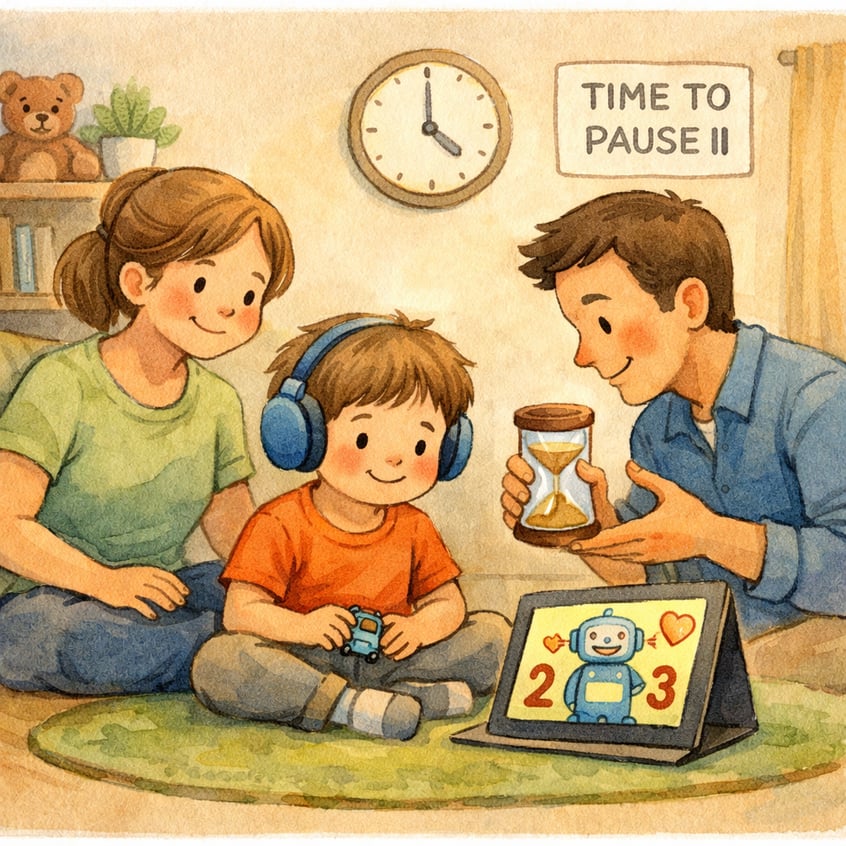
Educational apps and digital tools can be transformative for children with autism and ADHD. Kids who struggle with traditional lessons often engage better with gamified learning, which breaks down complex subjects into interactive, manageable tasks. These apps can supplement methods like ABA therapy.
Technology also brings valuable accessibility features. Speech-to-text and text-to-speech tools support students with reading, writing, or communication challenges. Electronic books and reading apps are shown to boost early literacy and language skills.
Additionally, virtual and augmented reality help teach life skills such as personal hygiene and public transportation use. By making learning engaging and accessible, these technologies empower children to build skills and confidence at their own pace.
Supporting Social Connection Through Technology
Technology can be a bridge to meaningful social connection for many autistic children. The digital world allows them to connect with like-minded peers from anywhere, fostering friendships that might not be possible in traditional social settings. This is especially true for kids with niche interests, who can find vibrant communities online.
For many neurodivergent individuals, social media use and online gaming remove the pressures of in-person social interaction. Communicating through text or a gaming headset can feel less intimidating than trying to read facial expressions and body language. This can lead to what some autistic students describe as higher-quality friendships.
To support this positive social interaction, parents can:
- Encourage participation in moderated online groups or games centered on their child's interests.
- Play games with them to understand the social dynamics and offer guidance.
- Teach online safety rules to help them navigate social media use and protect themselves from risks like cyberbullying.
Regulating Emotions and Behavior with Assistive Tech
For many neurodivergent children, assistive tech can be a powerful tool for emotional regulation and managing behavior. Engaging with familiar content on a screen can be incredibly soothing and predictable, offering a safe haven from a world that can feel chaotic and overwhelming. This can help manage anxiety and improve overall mental health.
Giving a child the ability to choose what they watch or play also provides a much-needed sense of control. This autonomy has been shown to be a protective factor against depression and anxiety. Furthermore, certain apps and devices are designed specifically to support emotional regulation.
Here are a few ways technology can help:
- Digital planners and reminders can help kids who struggle with executive function, reducing stress and anxiety.
- Augmentative and Alternative Communication (AAC) devices give nonverbal children a way to express their needs and feelings, preventing frustration.
- Gamified learning can teach life skills, like personal hygiene or transportation, in a low-pressure environment.
Balancing Screen Time—Guidelines and Best Practices
Finding the right balance with screen time isn't about enforcing a strict number of hours. Even the American Academy of Pediatrics has moved away from rigid guidelines in favor of a more nuanced approach. The goal is to help your child build a healthy relationship with media that supports their well-being. This involves observing their habits, using parental controls wisely, and communicating openly.
Instead of just setting limits, focus on what screen time is displacing. If your child is engaged in school, getting enough sleep, and participating in offline activities, there's less reason to worry about an extra hour of screen time. The following sections offer practical advice on adapting guidelines to your child's needs and balancing tech with other activities.
How Much Screen Time Is Safe for Neurodivergent Kids in Australia?
There’s no universal screen time limit for neurodivergent kids. Experts in Australia and the U.S. now recommend focusing on how screens are used, not just for how long. The American Academy of Pediatrics suggests a personalized approach, emphasizing quality over quantity and ensuring screen use doesn’t interfere with sleep or physical activity.
Australian guidelines offer age-based recommendations—like one hour for ages 7-12 and two hours for teens—but these are starting points, not strict rules. For neurodivergent children, ideal screen time depends on individual needs and how technology is used.
Monitor your child: Is screen time helping them regulate, learn, or connect? Or is it disrupting sleep and other healthy habits? Use these observations to guide what’s right for your family, rather than following a rigid limit.
Adapting Screen Guidelines for Individual Needs
Because every neurodivergent child is different, screen time guidelines should be personalized. Research shows that rigid, one-size-fits-all rules don’t work. Instead, observe how your child reacts to various media—one app may trigger dysregulation, while another provides comfort.
Communication is key. If you have concerns, share them openly: “I see this game is hard to stop playing. Let’s find a good place to pause together.” This collaborative approach helps your child build self-monitoring skills.
Tips for setting guidelines:
- Work together on stopping points to give your child control.
- Give clear warnings before screen time ends for smoother transitions.
- Stay flexible and allow natural stopping points when possible, respecting their autonomy.
Balancing Technology Use With Offline Activities

Creating a healthy relationship with technology means balancing screen time with offline activities. Too much screen time can replace essentials like physical activity, sleep, and face-to-face interaction—key for social development. Mixing activities helps your child develop a well-rounded lifestyle.
Encourage offline alternatives based on your child's interests. For example, if they enjoy building in Minecraft, suggest a LEGO club. If they're passionate about a topic, look for related books or local events. The goal isn't to eliminate screens but to make them just one part of a diverse life.
Tips for encouraging balance:
- Model healthy habits by limiting your own screen use.
- Set clear screen limits together, such as tech-free meals or bedtimes.
- Prioritize physical activity by scheduling sports, walks, or park visits regularly.
Conclusion
In conclusion, navigating screen time for neurodivergent kids requires a thoughtful approach that balances the potential benefits and risks. While excessive screen exposure can exacerbate certain symptoms and affect physical health, there are educational tools and supportive technologies that can enhance learning and social skills. Establishing clear guidelines tailored to each child's unique needs is essential in ensuring that screen time remains a positive experience. Remember, it's not just about limiting screen time but also enriching it with meaningful offline activities.
If you’re looking for personalized strategies and support, don't hesitate to reach out for a consultation or call daar at 02 9133 2500. Your child's well-being is worth the investment!
Frequently Asked Questions
Are there unique screen time recommendations for neurodivergent children?
There are no official, unique screen time guidelines for neurodivergent children. Organizations like the American Academy of Pediatrics now recommend a flexible approach for all kids, focusing on individual needs rather than strict limits. For children on the autism spectrum, it's about balancing the benefits with potential risks and ensuring screen use supports their well-being.
Does excessive screen time increase autism-like symptoms?
Excessive screen time does not cause autism spectrum disorder, but some research suggests it can increase or worsen autism-like symptoms, particularly with high screen use in early childhood. These negative effects may include challenges with social communication and behavior, highlighting the need for moderation and monitoring of content.
What are safe ways for neurodivergent kids to use technology?
Safe technology use for kids on the autism spectrum involves active parental guidance. This includes using parental controls, choosing high-quality educational apps, and co-viewing content together. Establishing clear boundaries around screen time and encouraging a balance with offline activities helps foster a healthy relationship with technology.
.svg)




.svg)