
.png?width=48&height=48&name=Group%201%20(3).png)























2 April, 2026

Understanding Children Screen Time Limits: A Parent's Guide

Key Highlights
Here's what you need to know about navigating screen time with your kids:
- Setting clear screen time limits is crucial for your child's physical and mental health.
- The American Academy of Pediatrics offers age-specific guidelines, recommending zero screen time for children under 18 months, except for video chats.
- Too much screen time from activities like video games can lead to poor sleep, obesity, and behavior issues.
- Encourage a balance between digital media and physical activity to support overall well-being.
- Using parental controls and creating a family media plan can help manage your child's digital life effectively.
Introduction
In a world where screens are everywhere, managing your child's relationship with digital media can feel like a constant battle. From educational apps to social media, technology is a huge part of modern life. As a parent, you might wonder how much is too much. This guide is here to help you understand current screen time guidelines, the importance of setting boundaries, and how you can use tools like parental controls to create a healthy digital environment for your family.
Why Do Screen Time Limits Matter for Kids?
Setting screen time recommendations is about more than just limiting time on devices; it's about making space for other essential childhood activities. When a child’s screen time is excessive, it often replaces valuable moments for physical play, social interaction, and getting the recommended amount of sleep.
Too much screen time can take away from activities vital for healthy development. Implementing parental controls and following expert guidelines helps ensure your children have a well-rounded daily routine that isn't dominated by screens. It's about guiding them toward a balanced lifestyle. Now, let's explore the specific effects of screen time.
Short-Term and Long-Term Effects of Too Much Screen Time
Excessive screen time can cause immediate issues for children, such as poor sleep, behavioral problems, and attention difficulties. It also reduces time for active play, which is vital for physical health.
Long-term effects are more serious. Studies link heavy screen use—especially social media—to anxiety, depression, and poor mental health from online pressures and limited real-life interaction. Constant screens can also contribute to obesity due to inactivity and unhealthy snacking.
These risks show why it’s essential to manage children’s screen use for their overall well-being.
The Link Between Technology Addiction and Child Development
Technology addiction in children and teens can disrupt healthy development. Dependence on screens for entertainment or socializing often hinders real-world skill building and may cause irritability or anxiety when devices are removed.
Unstructured play is much more beneficial for young brains than electronic media. If your child regularly chooses screens over outdoor play, family time, or homework, they may be spending too much time online.
Parental controls can help limit access, but open conversations about healthy digital habits are also essential. Recognizing the signs of technology overuse is the first step toward helping your child achieve balance.
Physical and Mental Health Impacts of Excessive Screen Use
Excessive screen time presents significant risk factors for both the physical and mental health of a child. Physically, spending hours in front of a screen reduces time for physical activity, which can lead to obesity and related health problems. It's a key contributor to a sedentary lifestyle.
From a mental health perspective, high screen exposure is linked to issues like anxiety, depression, and lower self-esteem. It can also diminish the quality of real-life social connection, as virtual interactions replace face-to-face communication. Let's look closer at how screens specifically affect sleep, eyesight, and posture.
How Screen Time Influences Sleep, Eyesight, and Posture
Blue light from electronic devices can disrupt children’s natural sleep cycles, making it harder to get enough rest. This may cause fatigue, irritability, and trouble focusing in school. Following screen time guidelines—like turning off devices an hour before bed—supports healthy sleep.
Extended screen use also leads to digital eye strain, causing blurry vision, dry eyes, and headaches. Poor posture while using devices can result in neck and shoulder pain. Encouraging good posture and regular breaks helps prevent these issues.
Summary of impacts:
|
Area Affected |
Impact of Excessive Screen Time |
|---|---|
|
Sleep |
Disrupts sleep patterns; lowers sleep quality |
|
Eyesight |
Causes eye strain, dryness, and risk of nearsightedness |
|
Posture |
Leads to neck, shoulder, and back pain from slouching |
Emotional and Social Behaviors Associated withh High Screen Exposure
Excessive screen time, especially on social media, can negatively affect a child's emotional and social development. Children may struggle with social skills and making friends due to less face-to-face interaction, making it harder to read social cues and form relationships.
Emotionally, exposure to online content can lower self-esteem and increase anxiety through constant comparison. Difficulty in managing screen time can cause frustration and behavioral issues when limits are set.
Following screen time guidelines encourages real-world interactions, fostering emotional intelligence and strong social connections. Striking a balance supports healthy overall development.
Strategies for Creating Healthy Screen Time Boundaries at Home
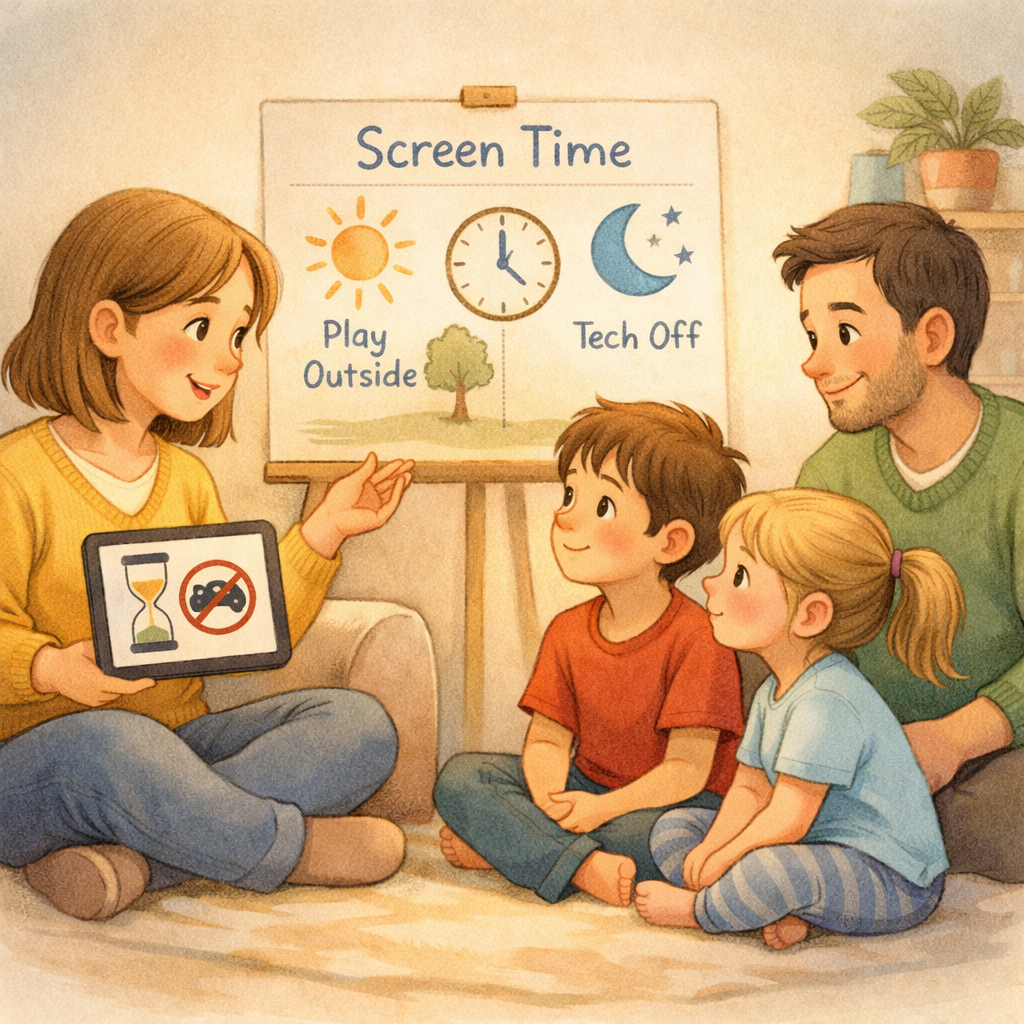
Creating healthy screen time boundaries starts with open communication and a clear plan. A family media plan is an excellent tool that allows you to set rules and expectations together. This plan should be tailored to your child's age group and outline when, where, and for how long screens can be used.
Combining this plan with parental controls on devices can help enforce the limits you agree on. Consistency is key to making these boundaries stick. The goal is to teach your children how to enjoy technology responsibly as part of a balanced and healthy screen time routine. Next, we will discuss how to create age-appropriate plans and find balance with offline activities.
Age-Appropriate Family Media Plans
A successful family media plan tailors screen time to each child's age. For toddlers, limit screen use to high-quality educational content you watch together. Resources like Common Sense Media can help you choose appropriate programs.
As kids grow, adjust the plan to set rules for homework, social media, and recreational screen time. Involve your children in creating the plan so they understand and take responsibility for their digital habits.
Tips:
- No screen time for children under 18 months, except for video chatting with family.
- For ages 2–5, limit to one hour daily of quality programming.
- Set tech-free zones, such as at the dinner table and in bedrooms, to encourage family time.
Balancing Digital Technology With Active Play and Offline Activities

Balancing screen time with other activities is vital for your child’s well-being. The World Health Organization highlights the need for physical activity, making time for play essential. Encourage kids to choose offline activities by making them more appealing.
Use free time for connection and movement—plan family outings, play board games, or try arts and crafts. Engaging alternatives reduce reliance on screens and support healthy physical, social, and creative development.
Try these tips:
- Schedule at least one hour of physical activity daily.
- Keep a list of fun, screen-free activities your child can pick from when bored.
- Set an example by putting away your devices and joining in offline activities as a family.
Conclusion
Setting screen time limits is essential for healthy child development. Understanding the effects of excessive screen use helps parents create balanced routines that support physical and mental well-being. Age-appropriate media plans and offline activities allow children to thrive in a digital world. Your guidance is vital in helping your child navigate technology.
For personalized advice, explore resources or request a consultation or call daar at 02 9133 2500—your child's health is worth it.
Frequently Asked Questions
How can parents recognize signs of technology addiction in children?
Signs of technology addiction include irritability when without internet access, prioritizing online activities over real-life events, and an inability to control their own screen time. If your child consistently chooses screens over friends, hobbies, or schoolwork, it may be time to reassess their usage and implement stricter parental controls.
What are practical tips to reduce children’s daily screen time?
To reduce daily screen time, establish tech-free zones and times, like during meals and an hour before bed to protect the recommended amount of sleep. Encourage offline family activities, use parental controls to enforce healthy limits, and have your child charge their devices outside of their bedroom at night.
At what age is it okay to introduce screens or devices to young kids?
The American Academy of Pediatrics recommends zero screen time for younger children under 18 months, except for video-chatting. For the 18-to-24-month age group, you can introduce high-quality educational media to watch together. Resources like Common Sense Media can help you choose age-appropriate content as your child grows.
.svg)




.svg)