
.png?width=48&height=48&name=Group%201%20(3).png)























10 March, 2026

Screen Time and Autism: Finding the Right Balance for Kids
Key Highlights
- For children on the autism spectrum, screen time can offer unique benefits, including social connection and learning opportunities.
- However, excessive screen time is linked to negative effects, such as sleep problems and decreased focus in autistic children.
- Early screen exposure in young children may be associated with a higher risk of developing autism-like symptoms.
- Quality matters more than quantity; educational apps and co-viewing with a parent can make screen time more beneficial.
- Finding a healthy balance involves setting clear rules, encouraging alternative activities, and understanding your child's individual needs.
- Reducing excessive screen use and increasing social interaction can lead to improvements in autism symptoms.
Introduction
Navigating the digital world is a challenge for every parent, but it can feel even more complex when your child has autism spectrum disorder (ASD). While many experts warn about the dangers of screen use for children, technology can also play a positive role for those who are neurodivergent. For kids with autism, media use isn't just about entertainment; it can be a tool for learning, connecting, and even developing social skills. This guide will help you understand the nuances of screen time and find a healthy, balanced approach for your family.
Understanding Screen Time for Children with Autism
For autistic children, screen time often serves as a source of comfort and stability, offering predictability in an otherwise overwhelming world. Technology can help manage anxiety and provide a controlled space for learning.
Managing screen time for autistic children requires more than setting limits; it involves understanding their reasons for using screens and how it affects their behavior and social interactions. Balancing the benefits with potential risks is key to creating healthy habits.
Different Types of Screen Time Activities
Not all screen time is created equal. The type of screen activities your child engages in can make a big difference in their impact on their development. Digital media can be categorized into passive consumption, interactive engagement, and social connection. Understanding these differences helps you guide your child toward more beneficial options.
For instance, passively watching videos on YouTube is very different from engaging with educational content designed to build new skills. Interactive activities, such as educational apps or games, can be particularly helpful for children with autism. These can gamify learning in a way that traditional lessons cannot, making it more engaging.
Some of the most common types of screen time include:
- Educational Apps and Games: Designed to teach math, language, or social skills.
- Passive Viewing: Watching television shows, movies, or online videos.
- Social Media and Communication: Interacting with others through platforms like Discord or online gaming.
- Creative Tools: Using apps for drawing, coding, or creating music.
How Autistic and Neurotypical Kids Engage with Screens
Autistic children often engage with screens differently than their neurotypical peers. For many, screens provide a respite from face-to-face social pressures and a way to connect over shared interests without navigating complex social cues. Studies even suggest that autistic students report higher-quality friendships through social media.
Neurotypical youth, on the other hand, may experience more social stress from screen use, with increased time linked to higher anxiety and depression. For autistic kids, screen time tends to be neutral or calming, driven by their need for predictability and structure.
Technology also supports executive function in neurodivergent children. Tools like calendar apps, reminders, and visual schedules help with organization and planning—a key difference in how these children use screens compared to their peers.
Current Screen Time Trends in the United States
In the United States, media use among children is widespread, with many exceeding recommended guidelines. Studies show that American children can spend between five and seven hours a day on electronic devices, a trend that raises concerns about its impact on development, mental health, and physical activity.
This high level of screen usage is not just a passing phase; it has become a staple of modern childhood. Parents of tweens and teens now worry more about internet addiction than substance addiction. Understanding these national patterns helps put your own family's screen time habits into perspective.
Most Common Devices and Platforms Used
The digital world is vast, and children today have access to a wide array of devices and platforms. From smartphones and tablets to gaming consoles and computers, screen media is everywhere. The specific devices and platforms a child uses can influence the nature of their screen time, whether it's for learning, socializing, or entertainment.
For many children with autism, certain platforms are particularly appealing. Online gaming communities, for example, can provide a space for social connection with like-minded peers. Educational programming and specialized apps can offer structured learning opportunities that cater to their unique needs. However, platforms like TikTok are designed to be addictive, which can make it hard for any child to strike a healthy balance.
Here’s a look at some common devices and the types of content they offer:
|
Device |
Common Platforms/Activities |
|---|---|
|
Smartphones/Tablets |
Social media, educational apps, video streaming (YouTube), and mobile games |
|
Computers |
Online gaming, coding, research, and educational programming |
|
Televisions |
Streaming services (Netflix), DVDs, and broadcast television |
|
Gaming Consoles |
Interactive video games, online multiplayer communities (Discord) |
Patterns by Age and Autism Spectrum Needs
Screen time varies by age and individual needs, especially for children with autism. For kids under 18-24 months, experts advise avoiding screens to support healthy brain development and prioritize face-to-face interaction.
As children grow, their screen use changes. Preschoolers may use educational apps, while teens connect through social media. For some autistic children, screen time is essential—for example, using AAC devices for communication.
There’s no universal guideline. The American Academy of Pediatrics now recommends creating a personalized media plan based on each child’s age, development, and specific needs.
The Impact of Screen Time on Autistic Children
The impact of screen time on autistic children is a double-edged sword. While it can be a valuable tool, excessive or unmanaged screen time is linked to several negative effects. Research shows that high levels of screen exposure can worsen autism symptoms, particularly repetitive behaviors and challenges with social communication.
These impacts can also extend to mental health and overall well-being. It’s important to observe how screen time affects your child specifically. For some, it may be a calming tool, but for others, it could lead to increased anxiety or dysregulation. Understanding these potential outcomes is key to making informed decisions.
Effects on Social, Communication, and Play Skills
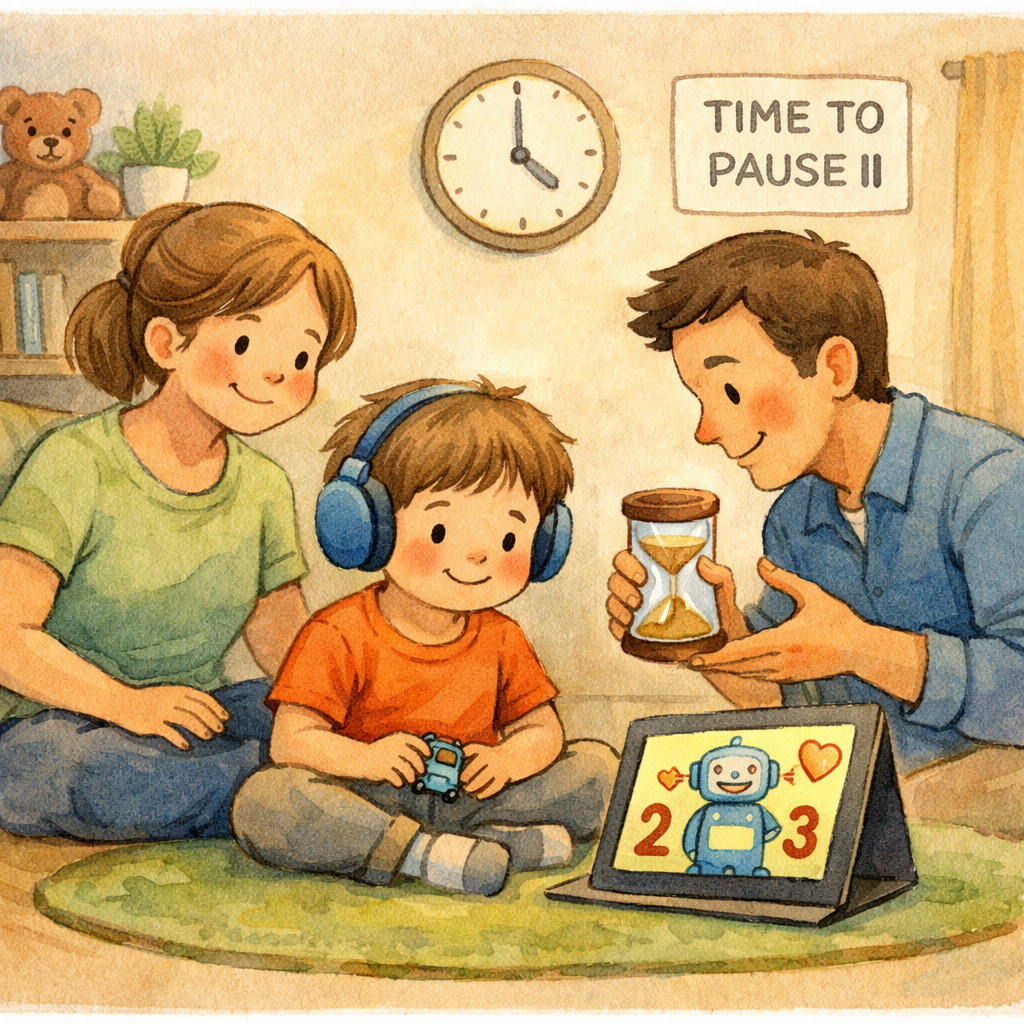
One major concern with screen time is what it replaces—especially face-to-face interactions crucial for young children’s social and communication development. Excessive screen use can limit real-world engagement and opportunities to build these skills.
Research links longer screen time to lower language development scores, suggesting that too much screen exposure may delay communication skills. This is particularly concerning for children with autism.
Still, technology can support skill development when used intentionally. Speech therapy apps, social stories, and visual schedules can complement traditional therapies but should not replace direct human interaction. The goal is to balance screen use so it supports—not hinders—social and play skills.
Behavioral Changes and Emotional Well-being
Excessive screen use can lead to noticeable behavioral changes in children, including those with autism. One of the most significant impacts is on sleep quality. The blue light from screens can disrupt the body's natural sleep-wake cycle, making it harder to fall asleep and reducing the quality of rest. Poor sleep is often linked to increased behavioral problems, such as irritability and difficulty with emotional regulation.
For some children, screens become a primary coping mechanism for anxiety. While this can be helpful in the short term, over-reliance on screens can prevent them from developing other self-soothing strategies. Maladaptive screen use can also be a sign of underlying issues like depression or burnout.
Some common behavioral changes linked to excessive screen use include:
- Increased repetitive behaviors: Studies show a link between high screen exposure and an increase in these core autism symptoms.
- Difficulty with focus: Excessive screen time can impair attention spans, making it hard to concentrate on other activities.
- Meltdowns during transitions: Abruptly ending screen time can be a major trigger for children who struggle with changes in routine.
Early Screen Exposure and Autism Symptoms
The conversation around early screen exposure and the autism spectrum is gaining attention. While screen time does not cause autism, a neurodevelopmental disorder with complex origins, research suggests a link between early and excessive screen time and the risk of developing autism-like symptoms. During early childhood, the brain is undergoing rapid development, making it particularly vulnerable to environmental influences.
The concern is that excessive screen time may interfere with critical developmental processes. When infants and toddlers are engrossed in screens, they may miss out on the rich, interactive experiences necessary for healthy brain development. These negative effects highlight the importance of managing screen exposure from a very young age.
Research Findings on Early Screen Use
Recent research has begun to uncover the relationship between early screen use and brain structure. A systematic review of studies found on platforms like Google Scholar indicates that excessive screen exposure in the first few years of life is associated with changes in the brain's white and gray matter. These areas are crucial for language, literacy, and cognitive function.
One study linked prolonged screen time at one year of age with a higher likelihood of an ASD diagnosis at age three, particularly in boys. This suggests that the timing of screen exposure matters. The earlier a child is exposed to screens for long periods, the higher the potential risk for developmental challenges.
Another case report introduced the concept of "early media overexposure syndrome," where toddlers displayed autism-like symptoms that improved or even reversed after screen exposure was eliminated. These findings reinforce the idea that while screens don't cause autism, they can be a significant environmental factor influencing a child's developmental path.
Developmental and Language Milestone Challenges
Excessive screen time in early childhood can create significant challenges for reaching key developmental milestones, especially in language acquisition. The development of white matter in the brain, which is essential for learning and communication, can be negatively impacted by high levels of screen use and a lack of interactive experiences.
This can lead to delays in both understanding and using language. When children are passively watching screens, they are not practicing the back-and-forth conversational skills that are fundamental to social communication. This is why early intervention and, in some cases, speech therapy are so important for children showing signs of delay.
Too much screen time can contribute to challenges in several areas:
- Delayed language skills: Less time spent interacting with caregivers can slow down vocabulary growth.
- Poor social interaction skills: Missing out on real-world play reduces opportunities to learn social cues.
- Difficulties with cognitive function: Changes in brain structure can affect attention and learning.
- Slower progress in meeting developmental milestones: Overall development can be affected by a lack of varied, real-world experiences.
Weighing the Benefits and Risks of Screen Time
Finding a healthy balance with screen time means carefully weighing the benefits and risks for your child. On one hand, technology can be a powerful tool for learning, communication, and social connection. Quality content, such as educational apps and therapeutic programs, can support skill development in a way that is engaging and accessible for autistic children.
On the other hand, the risks of excessive screen time are real. These include sleep disruption, decreased focus, and missed opportunities for social interaction. The key is to be intentional about how screens are used. By prioritizing high-quality content and ensuring screen time doesn't displace other important activities, you can help your child build a healthy relationship with technology.
Potential Positive Uses of Educational and Therapeutic Apps
Educational and therapeutic apps can be incredibly beneficial for skill development in children with autism. Unlike passive TV watching, these interactive tools can actively engage a child in learning. Many apps are designed to complement therapies like Applied Behavior Analysis (ABA) by reinforcing skills in a structured and motivating way.
For example, apps that use social stories can help a child understand social situations and expectations. Visual schedules can provide the predictability and routine that many autistic children thrive on, reducing anxiety around transitions. These digital tools can make abstract concepts more concrete and understandable.
Here are some positive uses of technology for skill development:
- Social Stories: Interactive stories that teach social customs and etiquette.
- Visual Schedules: Digital planners that help with transitions and daily routines.
- Gamified Learning: Educational content that feels like playing a game, boosting engagement.
- Communication Aids (AACs): Devices that help non-verbal or minimally verbal children express themselves.
- Life Skills Training: Virtual reality or augmented reality apps can teach practical skills like personal hygiene or map reading.
Concerns About Excessive Screen Use and Overstimulation

While screens can be calming for some, excessive screen time can also lead to overstimulation and other negative effects. The constant stream of information and sensory input from some apps and games can be overwhelming for a child’s developing brain, leading to dysregulation and meltdowns.
One of the most well-documented concerns is the impact of blue light on sleep quality. Exposure to screens before bedtime can suppress melatonin, the hormone that helps regulate sleep. For children with autism who may already struggle with sleep, this can be particularly disruptive, leading to fatigue and heightened behavioral issues during the day.
Ultimately, excessive screen use can worsen common behaviors seen in autism, such as repetitive actions and social withdrawal. It can also interfere with the development of crucial social and communication skills by replacing face-to-face interaction. Being mindful of these risks is essential for preventing screen time from becoming a problem.
Conclusion
In conclusion, finding the right balance of screen time for children with autism is essential for their development and well-being. While screens can offer educational benefits and therapeutic opportunities, they also pose risks such as overstimulation and behavioral challenges. Understanding how autistic children engage with technology allows parents to make informed decisions about screen time usage. By weighing the benefits against the potential negative effects, families can create a balanced approach that supports both learning and healthy development.
If you're looking for personalized strategies on managing screen time effectively, consider reaching out for a consultation or call daar at 02 9133 2500 to ensure your child's needs are met.
Frequently Asked Questions
How much screen time is recommended for kids with autism?
The American Academy of Pediatrics has moved away from strict time limits, instead advising parents to create a family media plan. For autistic children, the focus should be on balancing screen usage with other activities and ensuring the content is high-quality. Limiting screen exposure in early childhood is especially important.
Does screen time delay language or social development in autistic children?
Yes, excessive screen time can have negative effects, potentially delaying language development and social skills. This is especially true in early childhood when face-to-face interaction is crucial for learning. When screens displace these interactions, it can hinder a child's ability to build essential communication and social abilities.
What are effective ways for parents to manage screen time at home?
Effective management involves setting clear boundaries and establishing healthy screen habits. Use visual schedules to signal screen time transitions, model good behavior yourself, and prioritize physical activity and other alternative activities. Collaborating with your child to establish stopping points can also help them develop self-monitoring skills.
.svg)




.svg)