
.png?width=48&height=48&name=Group%201%20(3).png)























30 December, 2025

Behaviour Therapy: Effective Strategies for Social Skills
Introduction
Navigating social situations can sometimes feel challenging, but what if you could learn practical strategies to make it easier? Behaviour therapy offers a powerful, action-focused path to improving your social skills and boosting your overall mental health. Unlike therapies that focus on past events, this approach gives you the tools to change your behaviours right now. It helps you build confidence, form better relationships, and manage social interactions more effectively, paving the way for a better quality of life.
Key Highlights
-
Behaviour therapy is a practical approach focused on changing harmful behaviours to improve social skills and mental health. Positive behaviour support is a strategy within behavioural therapy that emphasizes teaching and reinforcing constructive behaviours, rather than punishing negative ones. It is typically used in settings where individuals display challenging or harmful behaviours, such as schools or clinics, to promote positive change and increase overall well-being. Key techniques include cognitive behavioural therapy (CBT), which targets negative thought patterns, and exposure therapy for overcoming fears.
-
Key techniques include cognitive behavioural therapy (CBT), which targets negative thought patterns, and exposure therapy for overcoming fears.
-
This therapy is action-oriented, teaching new, adaptive behaviours to replace maladaptive ones.
-
It effectively helps individuals with autism, social anxiety, and communication challenges build confidence.
-
Social skills training within behaviour therapy provides practical strategies for better interpersonal relationships.
Understanding Behaviour Therapy and Its Role in Social Skills
Behaviour therapy is all about taking action. It’s a therapeutic approach that focuses directly on changing behaviours that negatively affect your life, especially when it comes to social skills. Instead of just talking about problems, you learn and practice new, healthier ways of interacting with the world.
This focus on practical change makes it highly effective for various mental health disorders. By using specific behavioural strategies, like those found in cognitive behavioural therapy, you can systematically build the social confidence you need to thrive.
Definition of Behaviour Therapy
Behaviour therapy is a mental health treatment focused on changing learned, unhealthy behaviours. Rather than exploring deep psychological causes, it targets the behaviours themselves. The main goal is to eliminate unwanted actions and teach healthier ones.
Unlike insight-based therapies that examine your past, behaviour therapy is practical and action-oriented. It assumes that since problematic habits are learned, they can be unlearned through new strategies.
With a therapist, you identify issues and develop plans to change them. This approach gives you more control over your actions and supports better decision-making for improved daily life.
Key Principles Underlying Behaviour Therapy
Behaviour therapy is based on behaviourism, which states that our actions are shaped by our environment. Positive outcomes make behaviourus more likely to be repeated, while negative outcomes reduce them—this is the core of behaviour modification.
Cognitive restructuring, a key part of cognitive behavioural therapy (CBT), recognizes that thoughts strongly influence actions. By identifying and challenging harmful thought patterns, you can change how you respond to situations.
This approach helps you develop new, construc constructive behaviours tive behaviours and offers tools for lasting change, improving emotional and social well-being.
The Science Behind Behaviour Change
Behaviour therapy is grounded in well-established scientific theories of learning. One of the earliest is classical conditioning, discovered by Ivan Pavlov. This theory explains how we can learn to associate a neutral stimulus with a specific response, which is often used in therapies to treat phobias.
Another cornerstone is operant conditioning, developed by B.F. Skinner. This concept focuses on how consequences—rewards and punishments—shape our behaviour. Positive reinforcement, or rewarding a desirable behaviour, is a powerful tool used in behaviour analysis to encourage positive changes and make them stick.
Furthermore, Albert Bandura’s social learning theory highlights that we also learn by observing others. This idea is crucial for social skills training, as watching and imitating positive social interactions can help individuals acquire new behaviours. These scientific principles form a solid foundation for the techniques used in behaviour therapy today.
Main Techniques Used in Behaviour Therapy
Behaviour therapy employs a variety of practical techniques to help you achieve your goals. These methods are designed to facilitate skill development and promote lasting behavioural change. Many of these strategies are rooted in principles of social learning and are also integral to cognitive behavioural therapy.
From practicing new skills in a safe space to gradually facing your fears, these tools are all about hands-on learning. The following sections explore some of the most common and effective behavioural therapy techniques used to build confidence and improve interactions.
Modeling and Role-Playing
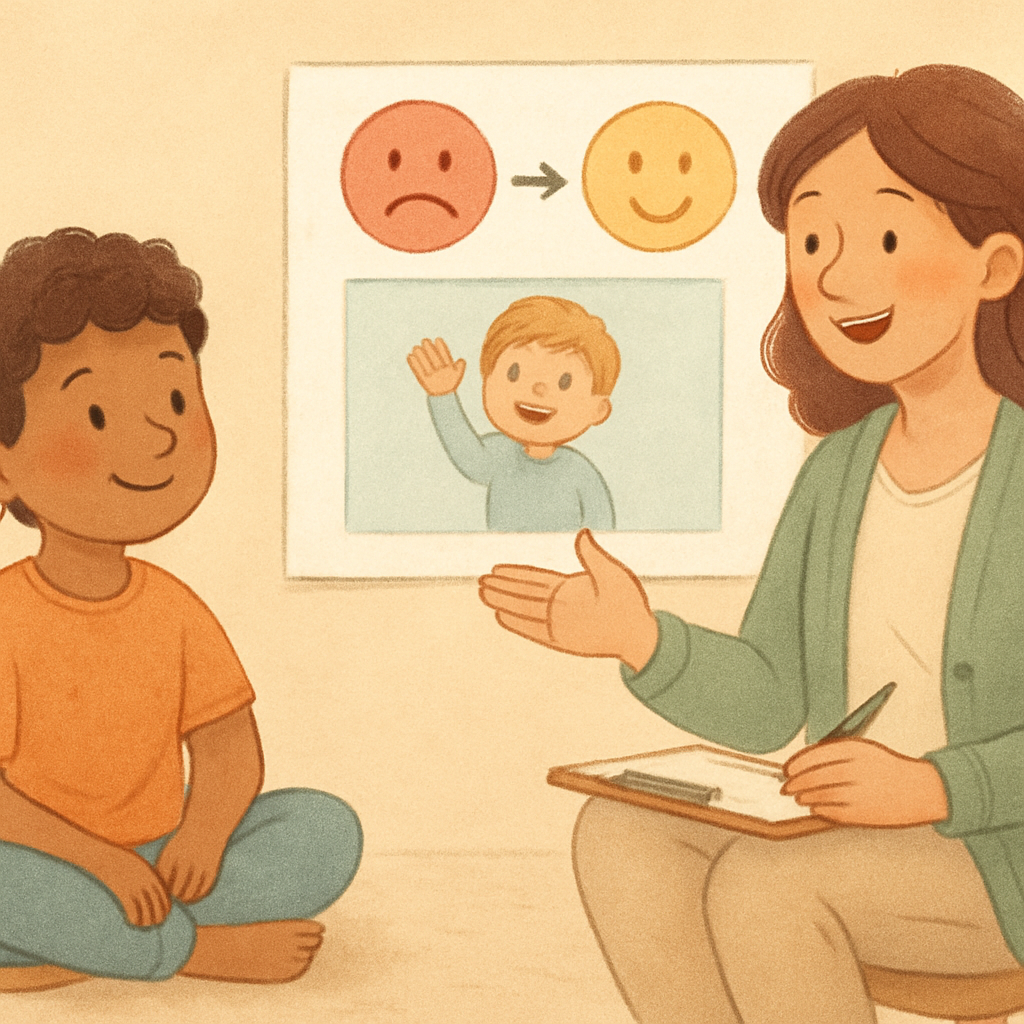
One of the most effective ways to learn new skills is by watching others. This is the principle behind modeling, where you observe a therapist or peers demonstrate desired behaviours in social interactions. It provides a clear, practical example of how to act in situations that you find challenging.
After observing, you get to practice these new skills yourself through role-playing. This technique allows you to try out new behaviours in a safe, supportive environment without the pressure of real-world consequences. It’s like a dress rehearsal for social situations, helping you build confidence and competence.
Modeling and role-playing are powerful for skill development because they:
-
Provide clear examples of positive social behaviours.
-
Allow you to practice communication and interaction skills.
-
Help you receive immediate feedback from your therapist.
-
Reduce anxiety about trying new behaviours in daily life.
Social Reinforcement and Positive Feedback
Social reinforcement rewards you for practicing healthy behaviours, encouraging you to repeat them. It uses praise or positive feedback—like encouragement from others or a sense of accomplishment—to make change feel rewarding.
As a key part of behaviour therapy, social reinforcement helps you:
-
Build positive associations with new skills
-
Stay motivated, even when it’s challenging
-
Boost self-esteem and confidence
-
Reduce unwanted behaviours over time
Exposure and Systematic Desensitization
If you have anxiety disorders or phobias, facing your fears can feel overwhelming. Exposure therapy makes it easier by gradually and systematically confronting what you fear with the help of a therapist.
A key technique is systematic desensitization, developed by Joseph Wolpe. It combines relaxation exercises with gradual exposure, helping you manage anxiety until the feared situation no longer triggers panic.
Exposure therapy is effective because it:
-
Lets you face fears in a safe, controlled environment
-
Reduces avoidance behaviours
-
Shows that feared outcomes are unlikely
-
Builds confidence to handle challenges independently
Social Skills Training in Behaviour Therapy
Social skills are not something you’re just born with; they can be learned and improved with practice. Social skills training is a fundamental part of behaviour therapy that focuses on teaching you how to communicate and interact with others effectively. This skill development is crucial for building relationships and improving your overall quality of life.
By breaking down complex social interactions into manageable steps, this training provides you with a clear roadmap for navigating social situations. Let’s look at the essential components and practical strategies involved in this transformative process.
Essential Components of Social Skills Training
Effective social skills training combines key elements to improve your interactions. It’s about what you say, how you say it, and understanding others. This structured approach makes learning new behaviours easier.
Behaviour modification techniques help you practice starting conversations, handling disagreements, and more. The goal is to give you practical skills for any social situation, so you feel confident and less anxious.
Core components include:
-
Communication Skills: Active listening, clear expression, and appropriate non-verbal cues.
-
Assertiveness Training: Stating your needs and opinions respectfully.
-
Problem-Solving: Managing conflicts and disagreements constructively.
-
Understanding Social Cues: Reading body language, tone of voice, and subtle signals.
Practical Strategies for Everyday Social Skill Building
Building social skills isn’t limited to therapy sessions—it happens in everyday life. Behaviour therapy offers practical strategies you can use daily to reinforce what you’ve learned. The key is to start small and stay consistent.
A helpful approach is behavioural activation: engage in enjoyable activities or social events even if you’re not motivated. This creates natural chances to practice new skills and build positive habits.
Try these strategies:
-
Set Small Goals: Begin with simple actions, like making eye contact with a cashier or asking a coworker about their weekend.
-
Practice Active Listening: During conversations, focus fully on the other person instead of planning your response.
-
Observe Others: Watch how people you admire interact and adopt some of their positive behaviours.
-
Seek Feedback: Ask a friend or family member for gentle feedback on your communication style.
Real-Life Scenarios in Social Skills Training
Applying what you learn in therapy to real life is the ultimate goal. Social skills training often uses real-life scenarios to help you practice adaptive behaviours. Through behaviour analysis of these situations, you can understand what works and what doesn't, drawing on the principles of social learning.
For instance, you might role-play a scenario like joining a conversation at a party or asking for help at work. By breaking down the situation, you can identify your typical response and practice a more effective, adaptive one. This preparation makes it much easier when you face the situation in the real world.
Here’s an example of how a scenario might be analyzed in therapy:
|
Scenario |
Maladaptive Behaviour |
Adaptive Behaviour |
|---|---|---|
|
Being invited to a social event |
Automatically declining the invitation due to anxiety about talking to new people. |
Accepting the invitation and setting a small goal, like talking to one new person for five minutes, then leaving if you feel overwhelmed. |
Who Can Benefit from Behaviour Therapy for Social Skills?
Do you ever feel like you're missing the instruction manual for social interactions? You're not alone. Behaviour therapy for social skills can help a wide range of individuals, from children struggling with social cues to adults facing communication challenges at work.
This approach is particularly beneficial for those with specific mental health issues or social behaviour disorders, but it can also help anyone looking to boost their social confidence and build stronger connections. Let’s explore a few groups who can significantly benefit from this type of therapy.
Children with Autism Spectrum Disorders
Children with autism spectrum disorder (ASD) often struggle with social skills. Behaviour therapy, especially Applied Behaviour Analysis (ABA), helps by breaking down complex behaviours into simple, teachable steps.
Techniques like play therapy teach sharing, turn-taking, and understanding others in a fun way. ABA sets clear goals and tracks progress, tailoring interventions to each child’s needs.
Research shows early, intensive behavioural therapy improves communication, social interaction, and learning for children with ASD. Using positive reinforcement, therapists help build lasting social skills.
Adolescents and Social Anxiety
The teenage years bring intense social pressures, which can be overwhelming for adolescents with social anxiety. This disorder often leads to avoiding social situations and stunts personal growth. Behaviour therapy provides effective support.
Therapists use exposure therapy to help teens gradually face their fears—like speaking in class or joining groups—starting with less intimidating steps. Over time, this reduces anxiety as teens realize they can manage these situations.
Cognitive techniques also address negative thoughts that drive anxiety. By challenging and replacing these with more realistic ones, behaviour therapy helps teens break the cycle of fear and avoidance, build friendships, and engage more fully in life.
Adults with Communication Challenges
Communication challenges aren’t limited to kids or teens—many adults also struggle to express themselves or understand others. These issues can affect careers, relationships, self-esteem, and are sometimes linked to mental health disorders. Behaviour therapy, especially with cognitive techniques, offers practical solutions.
For adults, therapy often targets workplace social skills like participating in meetings, giving presentations, or networking. Therapists help clients recognize and reframe negative thoughts that fuel communication anxiety, such as fear of judgment.
With role-playing and real-world practice, adults build confidence in handling social interactions. This targeted skill-building boosts interpersonal effectiveness, strengthens relationships, and increases comfort in social settings.
Addressing Social Behaviour Disorders with Behaviour Therapy
Social behaviour disorders can create significant challenges in daily functioning, affecting relationships at home, school, and work. These mental health conditions involve patterns of disruptive or harmful behaviours that can be difficult to manage. Behaviour therapy provides a structured and effective framework for addressing these issues.
Using techniques from cognitive behaviour therapy and other behavioural approaches, individuals can learn to identify the triggers for their behaviour and develop new, healthier coping strategies. Let’s look at how this therapy helps identify these disorders and offers targeted support.
Identifying Social Behaviour Disorders
The first step in addressing social behaviour disorders is accurately identifying them. This process goes beyond simply labeling a behaviour as "bad." It involves a thorough behavioural analysis to understand the function and pattern of the harmful behaviours. A therapist will look at what happens before, during, and after the behaviour occurs.
This systematic observation helps distinguish between occasional misbehaviour and a persistent pattern of undesirable behaviours that indicates an underlying disorder. The focus is on objective data rather than judgment, allowing for a clear understanding of the challenges the individual is facing.
By identifying the specific triggers and consequences that maintain these behaviours, therapists can develop a targeted and effective treatment plan. This careful assessment is crucial for ensuring that the interventions address the root of the behavioural issue and promote lasting change.
Targeted Interventions for Challenging Social Behaviours
Once challenging behaviours are identified, behaviour therapy provides targeted interventions tailored to the individual’s needs and the reasons behind their actions. The goal is to replace maladaptive behaviours with constructive ones.
Techniques like behaviour modification reinforce positive actions and reduce negative ones, while cognitive restructuring helps change the negative thought patterns driving difficult behaviours. This approach addresses both thoughts and actions.
Common strategies include:
-
Behaviour Contracts: Clear agreements outlining expected behaviours and consequences.
-
Replacement Skills: Teaching appropriate alternatives to meet underlying needs.
-
Contingency Management: Using rewards to consistently reinforce desired behaviours.
-
Problem-Solving Training: Building skills to handle frustration without disruptive behaviour.
Supporting Emotional Regulation in Social Situations
Many challenging social behaviours stem from difficulty managing intense emotions. A key part of behaviour therapy is supporting emotional regulation, which is the ability to understand and control your emotional responses. This skill is vital for navigating social situations successfully and maintaining positive mental health.
Therapists, sometimes in collaboration with social workers and other professionals, teach practical techniques to help individuals recognize their emotional triggers and respond to them in healthier ways. This might involve mindfulness exercises, distress tolerance skills, or strategies for calming down when feeling overwhelmed.
Here are some ways behaviour therapy supports emotional regulation:
-
Identifying Emotions: Helping you learn to recognize and name your feelings as they arise.
-
Mindfulness Practices: Teaching you to observe your emotions without judgment, which reduces their intensity.
-
Distress Tolerance Skills: Providing strategies to get through emotional crises without making the situation worse.
-
Improving Interpersonal Effectiveness: Teaching you how to express your needs and emotions to others in a way that is likely to be heard.
Conclusion
In conclusion, behaviour therapy offers a structured approach to enhancing social skills across various age groups and needs. By implementing techniques such as modeling, role-playing, and systematic desensitization, individuals can develop essential social competencies in a supportive environment. Whether it's for children with autism, adolescents facing social anxiety, or adults grappling with communication challenges, the benefits of behaviour therapy are profound and transformative. Prioritizing social skills not only improves personal interactions but also fosters emotional well-being and confidence. If you're interested in exploring these strategies further, consider reaching out to a qualified behaviour therapist in your area to start your journey toward better social interactions today!
Contact us for a consultation, or you may call us at 02 9133 2500.
Frequently Asked Questions (FAQ)
Understanding behaviour therapy often comes with questions. It’s common to wonder how this therapeutic approach can effectively address mental health disorders, such as anxiety disorders or traumatic stress disorder. Many are curious about the differences between cognitive behavioural therapy and dialectical behaviour therapy, especially regarding skill development and emotional regulation. Another frequent query is about the specific techniques used, like exposure therapy or systematic desensitization. Learning about positive reinforcement or behaviour modification can clarify how behavioural strategies help in managing maladaptive behaviours and improving social skills.
How Effective Is Behaviour Therapy for Improving Social Skills?
Behaviour therapy is highly effective for improving social skills across various mental health disorders. Approaches like cognitive behavioural therapy provide structured, evidence-based techniques that lead to significant gains in communication, confidence, and interpersonal relationships. This ultimately enhances an individual's overall quality of life and daily functioning.
Are There Any Side Effects to Behaviour Therapy for Social Skills?
While behaviour therapy is generally safe, some individuals may experience temporary emotional distress or increased anxiety when confronting fears or practicing new behaviours. These are not side effects in the traditional sense but are part of the therapeutic process. A qualified therapist helps manage these feelings, ensuring a supportive experience.
How Can I Find a Qualified Behaviour Therapist in Australia?
To find a qualified behaviour therapist, start by asking for a referral from your general practitioner. You can also search online directories from professional organizations like the Australian Psychological Society (APS). Ensure the therapist is registered and has experience with the types of therapy you need to create an effective treatment plan.
.svg)




.svg)