
.png?width=48&height=48&name=Group%201%20(3).png)























10 March, 2026

Online Gaming - The Risks Parents Need to Know
Key Highlights
- Online games can be designed to be addictive, leading to a recognized condition called gaming disorder.
- Excessive screen time dedicated to gaming can have negative consequences on a child's mental health.
- It's important for family members to recognize the signs of gaming addiction, such as loss of interest in other activities and withdrawal symptoms.
- The risks of online gaming include exposure to strangers, privacy issues, and in-game purchase pressure.
- Parents can support healthy habits by setting boundaries and maintaining open communication.
Introduction
Online gaming is a popular pastime for kids, offering fun and even mental stimulation. However, have you ever worried if the amount of screen time your child spends gaming is too much? While most children enjoy games without any issues, it's possible for gaming to become an all-consuming habit. This can lead to negative impacts on their daily life and mental health. Understanding the potential risks and knowing what to look for can help you ensure your child's gaming remains a healthy and enjoyable activity.
Identifying Gaming Addiction in Kids
It can be hard for families to tell if a child’s gaming is just a hobby or something more serious. Gaming disorder, or internet gaming disorder, involves losing control over gaming habits and can lead to major issues.
Recognizing signs of video game addiction is crucial. Key risk factors include impulsivity, anxiety, and spending more than 20 hours a week gaming. Let’s look at the specific symptoms and how to distinguish addiction from healthy gaming.
Most Common Signs of Gaming Addiction in Children
Excessive video game playing can signal a problem, especially when gaming dominates your child’s day and negatively affects other areas of life.
Warning signs include preoccupation with gaming, irritability or anxiety when unable to play, and an increasing need to spend more time gaming. The American Psychiatric Association considers internet gaming disorder a serious concern.
Common signs of addiction:
- Needing to play more to feel satisfied (tolerance)
- Unsuccessful attempts to cut back
- Lying about gaming time
- Gaming to escape negative emotions
- Losing interest in other activities
- Jeopardizing relationships or school due to gaming
Distinguishing Healthy Habits from Problem Gaming
Distinguishing between a passion for gaming and a problem can be challenging. Healthy gaming means it’s just one part of a balanced life—a child can easily pause to do homework, eat, or spend time with friends.
Gaming becomes an issue when it interferes with daily activities. If your child struggles to limit gaming or plays despite negative consequences, it’s likely a problem. They may neglect sleep, schoolwork, or hygiene for more game time.
Context matters. A long gaming session on a rainy weekend isn’t always cause for concern. But if gaming consistently replaces responsibilities and relationships, consider seeking mental health support to help your child restore balance.
Major Risks of Online Gaming for Kids
Beyond the risk of addiction, online gaming presents other dangers that parents should be aware of. The interactive nature of these games means children are not just playing against a computer; they are often connecting with a global community of players. This can expose them to several risk factors.
These risks can have negative consequences for your child's safety, privacy, and even your finances. From exposure to inappropriate content to pressures involving in-game spending, the virtual world can have real-world impacts. Understanding these potential issues is crucial for protecting your child's mental health and well-being.
Exposure to Inappropriate Content and Strangers
One of the main risks in online gaming is your child interacting with strangers. Many popular games have chat features that allow players to communicate, which can encourage teamwork but also expose children to adults with bad intentions.
Children may encounter inappropriate language, aggressive behavior, or be targeted by those trying to groom them or collect personal information. These dangers are similar to social media risks but can feel more personal within games.
To help protect your child, watch for:
- Cyberbullying from other players
- Exposure to violent or sexual content
- Requests for personal details like name, school, or address
- Pressure to move chats to less-monitored platforms
- Online predators pretending to be children
Privacy, Data Security, and In-Game Purchases
When children play computer games, their privacy and data security can be at risk. Game companies often collect data, and unsecured accounts leave personal information vulnerable. Always review the privacy settings on any gaming platform your child uses.
Another concern is in-game purchases, or microtransactions. Games are often designed to encourage spending on virtual items, which can be predatory—especially for children who may not grasp the real financial consequences.
Children may feel pressured to buy items, sometimes spending money without permission. Here are common risks and how to manage them:
|
Risk |
Description |
How to Manage |
|---|---|---|
|
Data Security Breaches |
Hackers may target gaming accounts for personal or financial information. |
Use strong passwords and enable two-factor authentication. |
|
In-Game Purchase Pressure |
Games use tactics to push players into buying items to advance or fit in. |
Set spending limits, disable in-app purchases, and discuss marketing tactics with your child. |
|
Sharing Personal Info |
Children may share sensitive details in profiles or chats. |
Teach children not to share personal information online and review their game profiles regularly. |
Impact of Online Gaming on Mental and Social Health
Excessive screen time spent on gaming can have a profound impact on a child’s mental and social well-being. When gaming becomes an obsession, it can look a lot like other behavioral addictions and may even co-occur with other mental disorders like anxiety or depression. The constant stimulation and reward cycle of games can alter how a child's brain responds to pleasure.
This shift can make other activities seem boring and unfulfilling, leading to a decline in real-world social interactions. Instead of developing social skills face-to-face, a child may retreat further into the online world, which can hinder their emotional and social development.
Effects on Emotional Well-being and Academic Life
When internet gaming becomes addictive, a child's emotional well-being can suffer. They may use gaming to escape stress or sadness, which offers only temporary relief and prevents them from developing healthy coping skills. This can lead to deeper emotional issues.
Gaming addiction often hurts academics. Children may lose interest in schoolwork, see their grades drop, feel too tired to focus after late-night sessions, or skip homework for gaming.
This cycle can lower self-esteem and academic performance, pushing them to game even more. As a result, anxiety and depression may increase, especially when they can't play.
Social Impairment Through Excessive Online Interaction
While online games offer community, relying on them for social interaction can impair real-life relationships. Online connections lack the nuances of face-to-face communication, such as body language and tone.
Children who spend too much time gaming may struggle to connect with peers and family offline, finding real-world interactions awkward or less appealing. This can lead to isolation and loneliness.
Excessive gaming can hinder social development by:
- Reducing opportunities to practice real-life social skills
- Causing children to prioritize online relationships over family and friends
- Increasing social anxiety in offline settings
- Leading to withdrawal and antisocial behavior
How Parents Can Support Safe and Healthy Gaming
As a parent, you play a crucial role in promoting safe gaming habits. The goal isn't necessarily to ban games entirely but to find a healthy balance. Parental support is key to helping your child navigate the digital world responsibly. This starts with creating clear expectations and rules around gaming.
Establishing a family agreement about screen time can be a great first step. For more serious issues, don't hesitate to seek professional help. Open communication and a supportive environment can make a huge difference in preventing and addressing problematic gaming. Let's look at some practical strategies you can implement.
Setting Boundaries and Monitoring Gameplay
Set clear boundaries to encourage healthy gaming habits. Establish rules for when and how long your child can play to prevent gaming from interfering with homework, family time, or sleep.
Parental control tools help monitor activity by limiting gameplay, restricting access based on age ratings, and blocking in-game purchases. This isn't about spying—it's about guiding your child toward responsible behavior.
To manage gaming effectively:
- Set "tech-free" times during meals and before bed.
- Keep devices in common areas.
- Use parental controls on devices and platforms.
- Discuss the games and players with your child.
- Set clear consequences for rule-breaking.
Open Communication and Building Digital Resilience
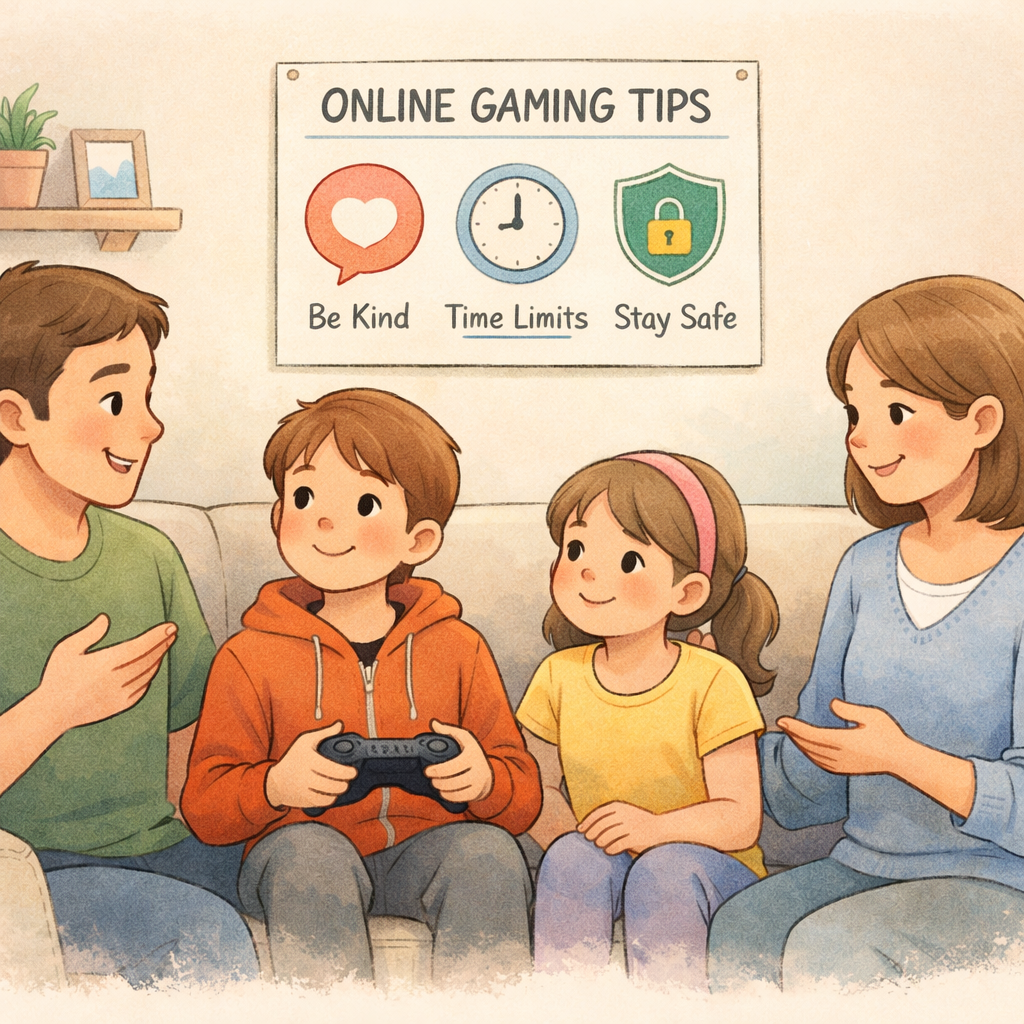
Beyond setting rules, open communication is key to building your child's digital resilience. Create a safe space so your child can comfortably share their online experiences—good or bad. Ask about the games they play, friends they make, and any challenges.
This ongoing dialogue keeps you informed and allows early intervention if issues arise. When children know they won't be judged or punished, they're more likely to seek support when needed—a critical step toward healthy technology use.
If you suspect a problem, approach with empathy and concern, not accusation. Work together on solutions like reducing gaming time, finding new hobbies, or seeking professional support. Your encouragement helps your child regain control and develop healthier habits.
Conclusion
In conclusion, understanding online gaming risks is essential for parents who want to protect their children’s mental and social health. Recognize signs of gaming addiction, set clear boundaries, monitor playtime, and maintain open communication to support your child. Focus on a balanced approach that includes real-world interactions and emotional well-being—not just limiting screen time.
For personalized strategies to help your child navigate the digital world safely, consider scheduling a consultation or call daar at 02 9133 2500. Your proactive involvement matters!
Frequently Asked Questions
What steps should parents take to help a child with gaming addiction?
If you suspect your child has a gaming addiction, early intervention is key. Start by creating a family agreement to limit screen time and encourage other activities. If these steps are unsuccessful, don't hesitate to seek professional help from a therapist who specializes in behavioral addictions.
Are there effective treatments or resources for families dealing with gaming addiction in kids?
Yes, there are effective treatments for gaming disorder. Cognitive-behavioral therapy (CBT) helps children change their thought patterns and behaviors related to online gaming. Family counseling and group therapy can also provide valuable mental health support. Seeking professional help is a crucial step toward recovery.
Can online gaming have benefits for children with autism?
Recent research suggests there can be benefits of gaming for autistic children. The structured and predictable nature of some games can be comforting. Online gaming can also provide a low-pressure environment for social interactions, helping children on the autism spectrum practice communication skills with others.
.svg)




.svg)