
.png?width=48&height=48&name=Group%201%20(3).png)























6 March, 2026

Managing Online Gaming: Tips for Parents and Families
Key Highlights
Here's a quick look at what this guide covers for managing your child's online gaming:
- Setting clear screen time rules and using parental controls is essential for creating balance.
- Parents should be aware of dangers like cyberbullying, privacy risks, and exposure to inappropriate content.
- Recognizing behavioral changes is key to spotting unhealthy gaming habits early.
- Encouraging healthy gaming habits involves promoting digital citizenship and respectful play.
- Balancing online games with offline activities is crucial for your child's mental health and overall wellness.
- Open communication helps create a safe space to discuss online gaming experiences and potential issues.
Introduction
Online video games are a major part of life for many young gamers, offering a fun way to develop skills and connect with friends. While gaming can be a great way to bond, parents need to guide their children toward positive and safe online gaming experiences. Managing gaming time and being aware of potential risks helps ensure that your child develops a healthy relationship with their screen time. This guide offers practical tips for families to navigate the digital world together.
Dangers of Online Gaming All Parents Should Know
Online gaming offers benefits but also poses risks that parents should know. Dangers include cyberbullying, exposure to violence, sharing personal information with strangers, and simulated gambling. Some games link to social media or can lead to internet gaming disorder. Awareness of these issues is the first step toward creating a safer gaming environment for your family.
Common Cyber Threats and Privacy Issues
In online gaming, safeguarding your child's personal information is crucial. Hackers often target gamers to steal personal and financial details. Players may also unintentionally overshare in chats or forums, risking their privacy.
Cyberbullying is another major concern—unfriendly interactions can quickly escalate, causing emotional harm. Some exploit internet anonymity for harmful acts like doxing, publicly sharing private information. Additionally, security gaps in gaming technology can be exploited.
To help protect your child:
- Use strong, unique passwords for all gaming accounts.
- Never share real names, addresses, or phone numbers.
- Be wary of phishing emails or links offering free game content.
- Download games and updates only from official sources.
Risk of Inappropriate Content and Interactions
A major concern for parents is children encountering inappropriate content while gaming. Many popular online games contain extreme violence or mature themes unsuitable for young kids. Without supervision, children may access games beyond their age rating.
Online games also pose other risks. Chat features can expose kids to harmful language, bullying, or grooming by strangers. Some games include gambling-like elements, normalizing this behavior early. Excessive playtime in these environments can also be harmful.
To reduce these risks:
- Check each game's age and content ratings before your child plays.
- Use parental controls to disable or monitor chat features.
- Talk to your child about what to do if they feel uncomfortable online.
- Be aware of in-game purchases and gambling-like mechanics such as loot boxes.
Spotting Signs of Unhealthy Gaming Habits
How much gaming is too much? It depends on its impact on your child’s life. If gaming starts to take priority over school, friendships, or other hobbies, it may be unhealthy. Pay close attention to screen time and how it affects daily routines.
Watch for mood changes or irritability when gaming is limited—these can be warning signs. While not every enthusiastic gamer has a problem, neglecting responsibilities or showing anxiety when not playing may signal internet gaming disorder. Monitoring both their gaming time and its effect on mental health is crucial. Here are specific behavioral changes to look for.
Changes in Behavior to Watch Out For
Observing your child's behavior is one of the most effective ways to gauge if their gaming is becoming a problem. Significant behavioral changes can signal that gaming is negatively impacting their mental health and overall wellness. You might notice they seem more irritable, anxious, or sad, especially when they are unable to play.
A decline in social skills or a withdrawal from family and friends is another common sign. If your child, who once enjoyed various activities, now only wants to game, it's worth a conversation. The Child Mind Institute notes that such shifts can indicate an underlying issue that needs attention.
Here are some specific changes to monitor:
- Losing interest in hobbies and activities they used to enjoy.
- A noticeable decline in school performance or neglecting homework.
- Changes in sleep patterns, such as staying up late to game.
- Becoming angry or aggressive when asked to stop playing.
- Complaining of headaches or other physical discomfort from too much screen time.
When to Seek Extra Support
If conversations and boundaries at home aren’t enough to manage unhealthy gaming habits—and your child’s mental health or behavior worsens, especially affecting school, relationships, or daily life—it’s time to seek professional help.
A therapist or counselor can offer strategies for healthier gaming and identify underlying issues like anxiety, depression, or ADHD. They provide a safe space to address these challenges.
Reach out to a mental health professional specializing in adolescent behavior or technology addiction. School counselors and pediatricians can also provide referrals. Seeking support is a sign of strength and an important step toward improving your child’s well-being.
Setting Clear Boundaries and Healthy Screen Time
Creating a balanced digital life for your child starts with setting clear boundaries around screen time. Establishing screen time rules helps manage expectations and prevents gaming from taking over family life. It’s important to agree on reasonable limits for how long and at what times of the day gaming is allowed.
These rules should be consistent and apply to all forms of media, not just video games. The goal is to limit screen use in a way that promotes a healthy lifestyle, ensuring there's plenty of time for homework, chores, and offline activities. Next, we will discuss how to create and enforce these rules effectively.
Creating Effective Screen Time Rules
Creating effective screen time rules starts with clear communication and family collaboration. The American Academy of Pediatrics (AAP) suggests making a family media use plan. Involve your child in these discussions so they understand healthy screen habits.
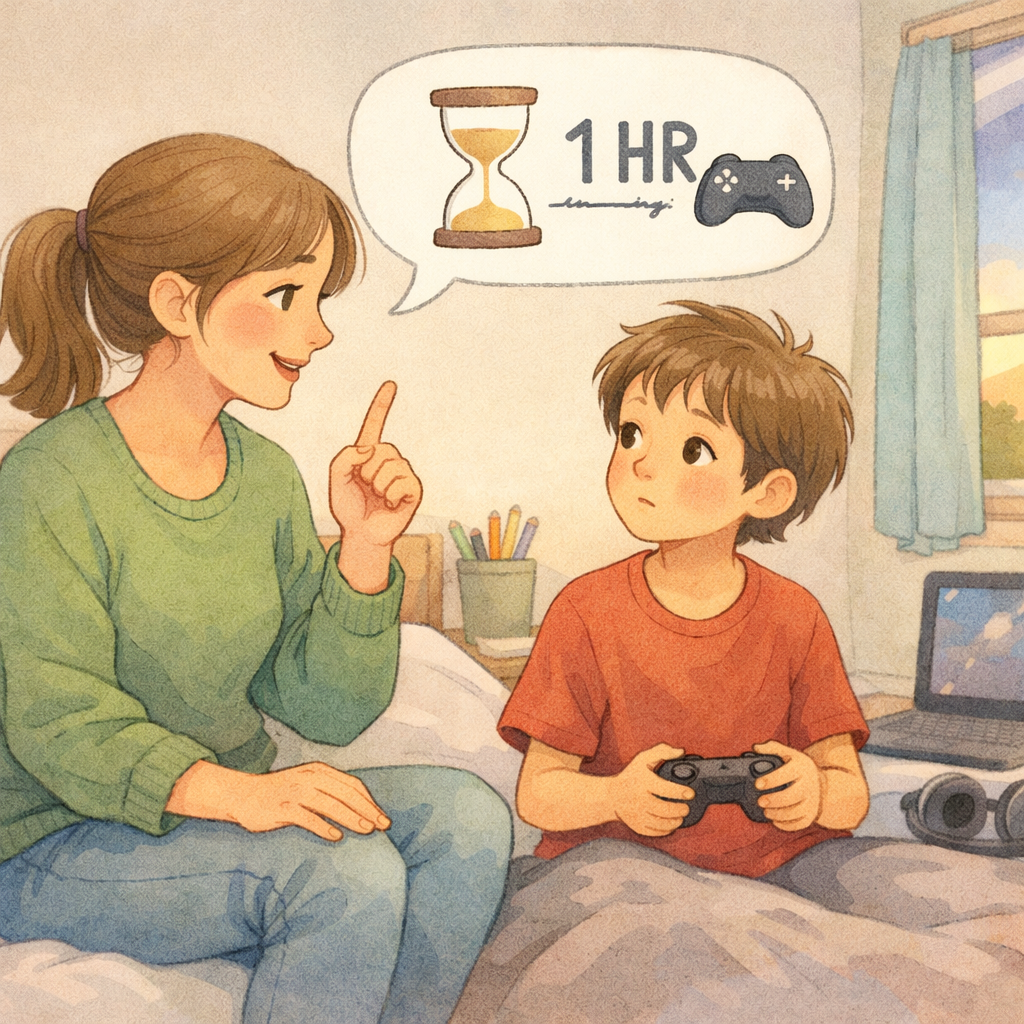
Screen time limits should be age-appropriate, clear, and consistent—such as no screens during meals or an hour before bed. Set realistic rules your child can follow and you can enforce.
Example gaming time limits:
|
Day Type |
Age Group |
Gaming Limit |
Conditions |
|---|---|---|---|
|
School Days |
6-12 years |
Up to 60 mins |
After homework and chores |
|
School Days |
13-18 years |
Up to 90 mins |
Must balance with schoolwork/activities |
|
Weekends/Holidays |
6-12 years |
Up to 2 hours |
Break up with physical activity |
|
Weekends/Holidays |
13-18 years |
Up to 3 hours |
Encourage social gaming with friends |
Tips for Enforcing Boundaries Consistently
Once you set rules, consistent enforcement is key. Inconsistent rules, especially with older children, encourage boundary-testing. Parental controls on devices and apps make managing screen time easier.
Parents should also agree on the rules to avoid sending mixed messages. Consistent moderation shows that limits matter and helps children adjust. Set a good example by limiting your own screen time.
Tips for effective enforcement:
- Use built-in parental controls to set time limits.
- Give a 5- or 10-minute warning before gaming time ends.
- Enforce clear, immediate consequences for rule-breaking, such as losing gaming privileges the next day.
- Praise your child when they follow the rules and transition off screens calmly.
Encouraging Positive Online Gaming Behaviors
Beyond setting limits, it's important to actively encourage positive behaviors in the digital world. This means teaching your child about digital citizenship, respectful play, and how to be a kind and responsible online community member. These skills help them have safer and more enjoyable gaming experiences.
By promoting kindness and respect, you empower your child to contribute positively to their gaming communities. The eSafety guide suggests that having conversations about online etiquette can make a significant difference. In the following sections, we'll explore how to foster these positive behaviors and balance gaming with other life activities.
Promoting Digital Citizenship and Respectful Play
Teaching your child digital citizenship is key to their online safety and well-being. It’s about instilling values like kindness, respect, and responsibility, especially in fast-paced, anonymous online games.
Encourage respectful play: treat others well, avoid trash talk, and don’t engage with bullies. The eSafety Commissioner notes that a positive online identity helps kids handle challenges.
Promote digital citizenship by:
- Discussing the importance of kindness and respect.
- Teaching them to report bullying or cheating.
- Reminding them not to share personal information.
- Encouraging them to mute or block uncomfortable players.
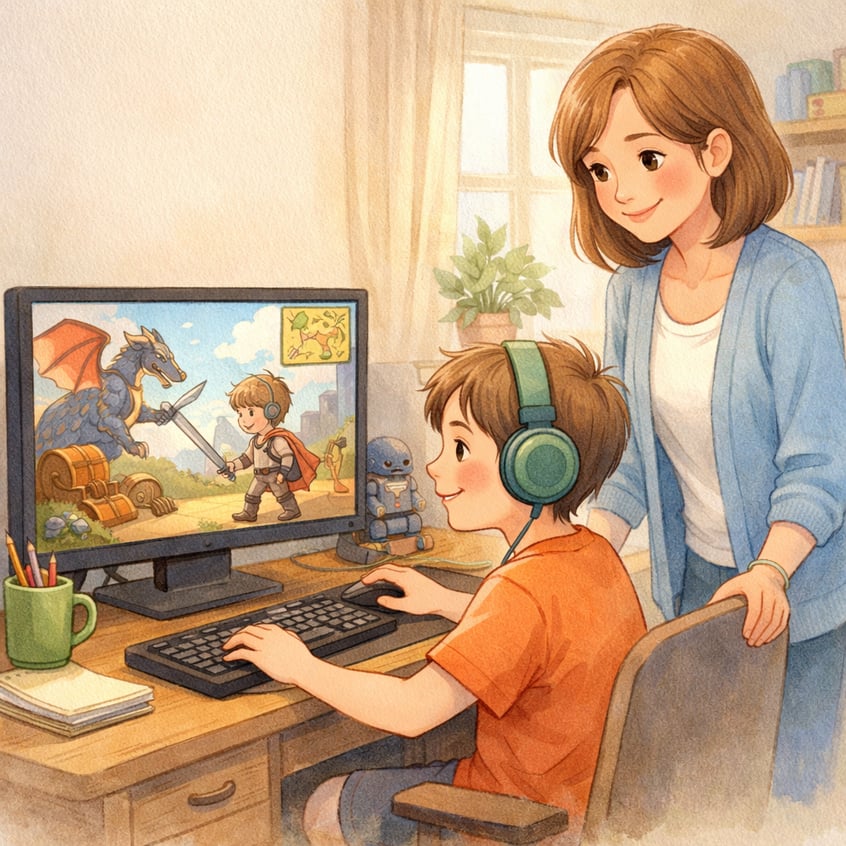
- Playing games together to model good sportsmanship and communication.
Balancing Gaming with Offline Activities and Hobbies
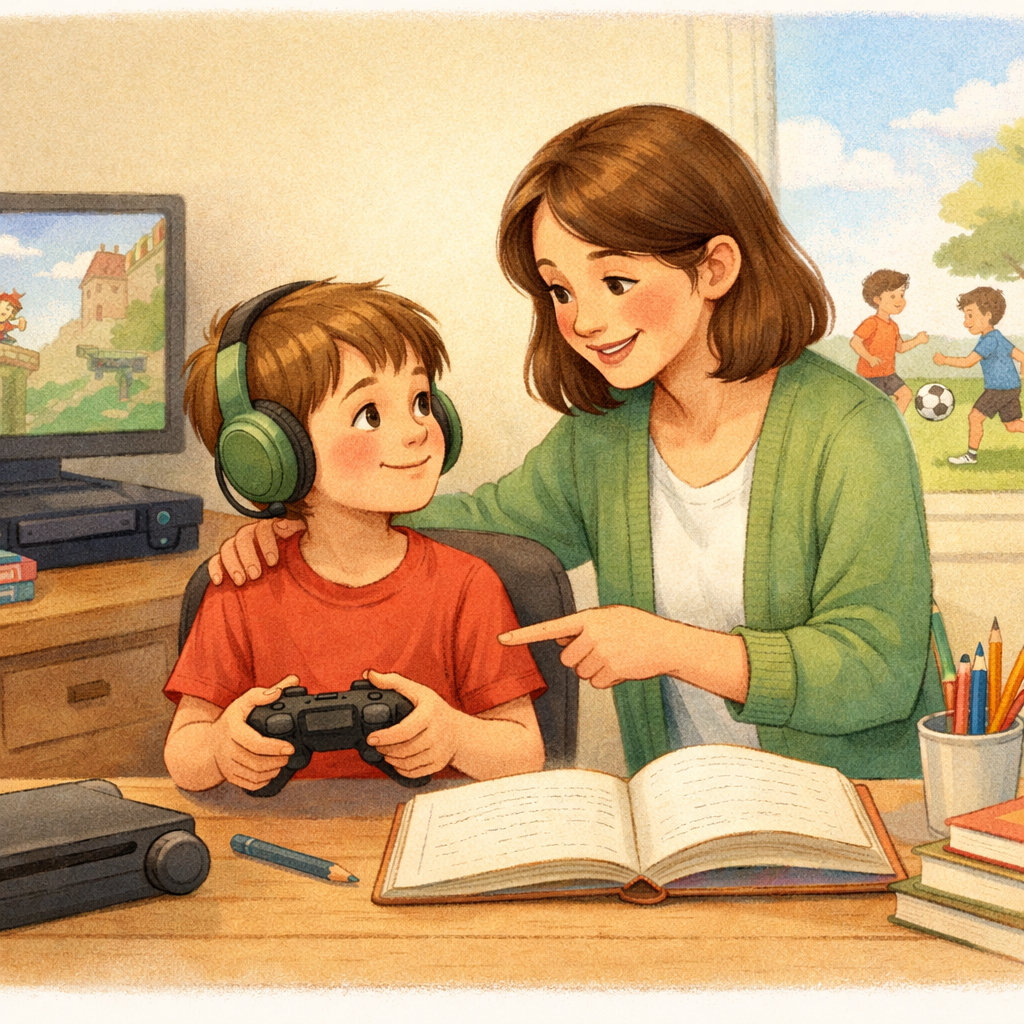
Healthy gaming means ensuring it doesn't take over your child’s life. Encourage a balance between screen time and offline activities for their physical and mental well-being. Help them find enjoyable, non-screen hobbies.
Add physical activity to their routine through sports, hiking, or outdoor play. Creative pursuits like music, art, or yoga offer outlets for stress and self-expression. Show your child that life offers many rewarding experiences beyond screens.
To balance gaming with other activities:
- Schedule family time for board games or movie nights.
- Enroll them in sports, art classes, or clubs.
- Encourage outdoor activities like biking or hiking.
- Plan regular tech-free outings or vacations.
Conclusion
In conclusion, managing online gaming is key to maintaining a balanced lifestyle for your family. By understanding risks and spotting unhealthy habits, parents can set boundaries that encourage positive behaviors. Open conversations about gaming empower children to make informed choices. Focus not only on limiting screen time but also on adding enriching offline activities.
For personalized advice, reach out for a consultation or call daar at 02 9133 2500 —your child's digital well-being matters!
Frequently Asked Questions
What are the most effective strategies to manage my child’s online gaming?
The best strategies include setting clear screen time limits, using parental controls to enforce them, and having open conversations about healthy gaming habits. Consistent moderation and encouraging a balance with offline activities are also key. Co-playing with your child can help you understand their digital media world better.
How can I help my child avoid online gaming risks and stay safe?
Teach your child not to share personal information and to be wary of strangers online. Use parental controls to limit chat functions and check game ratings. The eSafety guide also recommends talking about cyberbullying and what to do if they see something that makes them uncomfortable on social media or in games.
What should I do if my child becomes upset after an online gaming session?
Stay calm and listen to their concerns without judgment. The Child Mind Institute suggests validating their feelings and helping them problem-solve. This builds trust and encourages them to come to you for support. If this happens often, it may be a sign to re-evaluate their gaming habits or seek professional mental health support.
.svg)




.svg)