
.png?width=48&height=48&name=Group%201%20(3).png)























3 March, 2026

Key Signs of Speech Delay in Young Children
Key Highlights
Here are the key takeaways from this article:
- Children learn speech and language at their own pace, but there are typical milestones to watch for.
- Signs of a speech delay can include not using gestures by 12 months, having trouble imitating sounds by 18 months, or not combining words by age two.
- Speech delay involves the verbal expression of language, while language delay relates to understanding and communicating information. Various factors can cause speech delay in children, including hearing loss, developmental disorders, intellectual disabilities, environmental factors, or insufficient stimulation. If you notice signs of speech delay, it's important to consult your child's pediatrician or a speech-language pathologist.
- If you notice signs of speech delay, it's important to consult your child's pediatrician or a speech-language pathologist.
- Early intervention programs and speech therapy are effective treatments for improving a child's speech development.
Introduction
As a parent, you eagerly await your child’s first words and sentences. While every child's journey with speech is unique, you might wonder if your little one's language development is on track. It can be tricky to know if your child is just a "late talker" or if there's a reason for concern. Understanding the key signs of a speech delay can help you identify potential issues early. This guide will walk you through typical speech milestones and highlight when it might be time to seek professional help for your child’s speech.
Understanding Speech Development in Young Children
Speech development is a fascinating part of your child’s growth. It's more than just saying words; it involves learning how language sounds even before they can speak. This progression is a crucial element of your child's development, as it lays the foundation for communication.
Children naturally progress through various stages, from cooing and babbling as infants to forming words and sentences as toddlers. While the timeline can vary, this natural progression helps them master language skills. Now, let's look at the specific milestones you can expect.
Typical Speech Milestones by Age
Tracking developmental milestones helps you monitor your child’s progress. While each child develops at their own pace, most follow similar patterns in speech and language. Babies begin with cooing and babbling—the foundation for future speech.
By 12 months, many say their first words. Vocabulary grows rapidly; toddlers (18–24 months) may know around 50 words and start forming simple phrases. Knowing these milestones can help identify possible speech delays.
Here’s a general guide to typical speech milestones:
|
Age Range |
Typical Milestones |
|---|---|
|
1–3 Months |
Cries and coos |
|
4–6 Months |
Sighs, grunts, gurgles, laughs, makes varied crying sounds |
|
6–9 Months |
Babbles in syllables; imitates tones and sounds |
|
By 12 Months |
Usually says first words |
|
18–24 Months |
Uses ~50 words; begins combining two-word phrases |
|
2–3 Years |
Forms sentences of 4–5 words; mostly understood by strangers |
|
3–5 Years |
Holds longer conversations; asks many questions |
Differences Between Speech Delay and Language Delay
Speech and language problems are different but often overlap. Speech involves forming sounds and words, while language is about understanding and expressing information through verbal, nonverbal, or written communication.
A child with a speech delay may use words to share ideas but is hard to understand—this signals a speech disorder. In contrast, a child with a language delay may pronounce words clearly but only use two-word phrases, which indicates a language disorder.
Children develop at their own pace; some are simply “late talkers” and catch up naturally, while others need support. Knowing the difference helps you explain concerns more clearly to your healthcare provider.
Key Signs of Speech Delay to Watch For
When monitoring your child’s speech development, there are specific signs of a speech delay you can look for at different ages. A baby who doesn't respond to sound or make vocalizations should be checked by a doctor immediately. For toddlers, the signs might be more subtle but are just as important to recognize.
Noticing these signs is the first step toward getting your child the support they need. From difficulties with pronunciation to a limited use of gestures, several indicators can point to a delay. Let's examine some of these signs more closely.
Trouble Pronouncing Sounds or Words
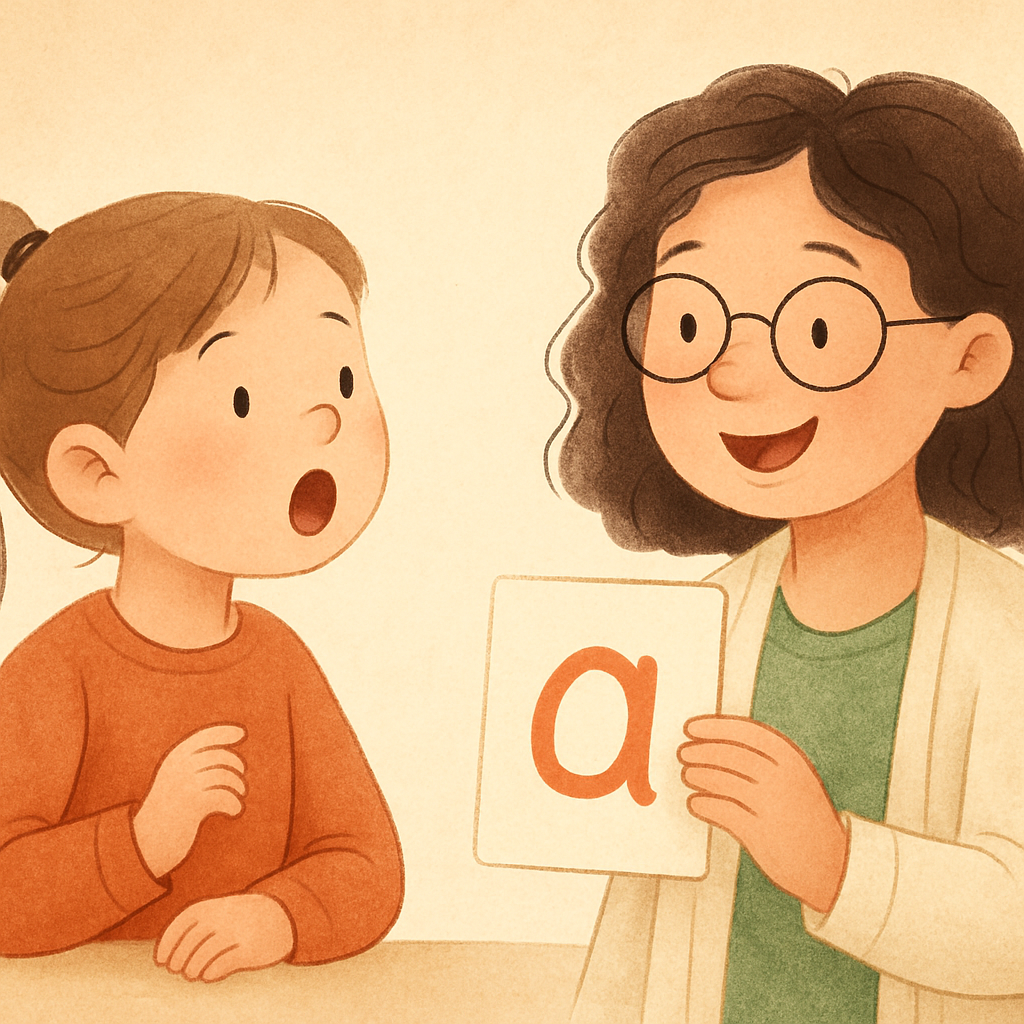
A key sign of speech delay is difficulty with articulation—how your child forms sounds and words. While speech may be unclear in young children, parents should understand about 50% of their child's speech by age two and 75% by age three.
If your child struggles to imitate sounds or is much harder to understand than peers, it could indicate a phonological disorder, which affects the brain areas that coordinate speech muscles. A speech therapist can assess this.
Watch for these signs:
- Only imitates speech, doesn't use words spontaneously by age 2.
- Repeats just a few sounds or words.
- Has an unusual tone, such as raspy or nasal.
- Isn't learning or using new words regularly.
Limited Use of Gestures, Cluttering, and Nonverbal Cues
Communication goes beyond words. Even before speaking, children use gestures and nonverbal cues to express themselves—an early sign of developing language skills. A lack of gestures may indicate a speech delay.
By 12 months, most children use gestures like pointing or waving. If by 18 months a child relies only on gestures instead of trying to vocalize, or rarely uses gestures, this could signal a communication issue. Simple signs like “more” or “please” also count as nonverbal communication.
Watch for these missing nonverbal cues:
- Waving “hi” or “bye-bye”
- Pointing to wanted items
- Raising arms to be picked up
- Clapping or giving high-fives
- Not using sounds or gestures when needing help
Conclusion
In conclusion, recognizing key signs of speech delay in young children is crucial for early intervention. Understanding typical milestones and the differences between speech and language delays helps you identify when your child may need support. Watch for issues like trouble pronouncing sounds, limited gestures, or cluttered speech. Early communication support can greatly impact your child’s learning and social development.
If you’re concerned about your child’s speech, reach out for a consultation or call daar at 02 9133 2500 for a professional—your awareness and involvement are vital to their growth.
Frequently Asked Questions
How is speech delay diagnosed by specialists in Australia?
In Australia, a speech delay is typically diagnosed by a speech pathologist, sometimes called a speech therapist. Your child’s doctor or another health care provider may refer you. The speech pathologist will assess your child's communication skills through standardized tests and observation to determine if a delay is present compared to their peers.
Can speech delay affect my child’s learning and social skills?
Yes, a speech delay can impact a child’s development in other areas. Difficulties with communication skills can lead to frustration, which may affect social skills and interactions with peers. Language disorders can also create challenges with learning and academic performance down the road if not addressed early.
What activities or exercises can parents try at home for speech delay?
You can support your child's language development by talking, singing, and encouraging the imitation of sounds and gestures daily. Reading picture books together and naming objects is also very helpful. For more structured support, a speech therapy program can provide personalized activities to practice at home.
.svg)




.svg)