
.png?width=48&height=48&name=Group%201%20(3).png)























24 April, 2026

12 Fun Speech Therapy Techniques for Children to Try
Key Highlights
- Discover fun speech therapy techniques that transform daily routines into opportunities for language development.
- Play-based activities are effective for improving a child's communication skills in a low-pressure environment.
- Early intervention and consistent at-home practice are crucial for making significant progress in speech.
- Parents can use simple strategies like modeling sounds, singing songs, and reading stories to boost social communication skills.
- Positive reinforcement during therapy sessions and daily interactions helps build confidence and motivates children to communicate.
Introduction
Does your child ever get frustrated trying to find the right words? You're not alone. Many parents look for ways to support their child's speech development journey. The great news is that speech therapy can be fun and easily woven into your daily life, turning simple moments into powerful learning opportunities. By using engaging techniques, you can help nurture your child's communication skills, build their confidence, and empower them to express their unique personality. Educators can also play a valuable role using speech therapy techniques in the classroom. Methods such as modeling correct pronunciation, encouraging turn-taking in conversations, using visual aids, and incorporating games that focus on listening and speaking can help all students improve their communication abilities while making learning interactive and enjoyable.
12 Fun Speech Therapy Techniques for Children to Try
As a parent, your involvement in your child's speech therapy can make a huge difference. You can turn everyday moments into learning opportunities that help improve language skills. Simple word games in the car or narrating your actions while cooking can have a big impact.
Whether you're working with speech therapists or practicing on your own, these fun and interactive therapy activities support your child's progress. Let's explore some effective speech therapy techniques you can use at home to make learning feel like play.
1. Play-Based Learning Activities
Children learn best when they’re engaged and having fun, making play central to effective speech therapy. Games boost participation, help kids practice new skills, and encourage real-life use. Play-based techniques also reduce anxiety and improve focus.
Speech practice can be playful and simple. Puppets, toys, or pretend scenarios prompt verbal interaction and make learning feel natural—like using a toy kitchen to say “I want pizza” or “Pour the juice.”
Try these play-based ideas:
- Building blocks: Narrate actions (“You have the red block!”) and offer choices (“Blue or yellow block?”).
- Toy animals: Make animal sounds together to practice speech and build vocabulary.
- Pretend play: Set up a store or restaurant for practicing social skills and turn-taking.
2. Modeling Speech and Sounds
Modeling is a key speech therapy technique. Children learn language by listening and imitating. Speak clearly and slowly, emphasizing target words or sounds to provide a correct example for your child.
When teaching an object’s name, hold it near your mouth before giving it to your child. This links the object with its spoken name. Consistent modeling encourages children to imitate sounds and builds a foundation for proper sentence structure.
Tips for modeling speech:
- Speak slowly and clearly: Enunciate so each sound is distinct.
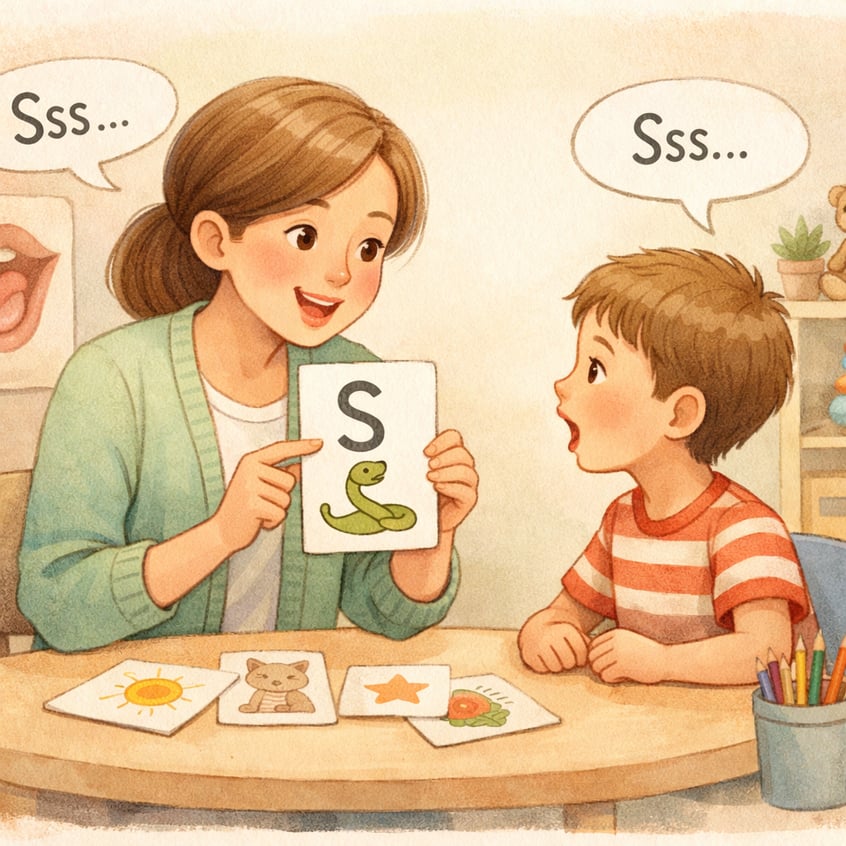
- Emphasize target sounds: For example, “Look at the sssunny sssky!” when practicing the "s" sound.
- Use simple language: Model words and phrases just above your child’s current level.
3. Using Visual Aids and Picture Cards
Visuals are powerful tools in language therapy, especially for young children. Picture cards, flashcards, and photos help kids connect words to meanings, making abstract ideas easier to understand and therapy more engaging.
Displaying pictures of daily routines can help your child anticipate their day and ease transitions. A family photo book helps teach names of relatives and friends; pointing and labeling encourage your child to do the same.
Try these visual aids:
- Picture cards: Build vocabulary with images of objects, actions, or emotions.
- Routine charts: Create visual schedules for daily activities.
- Communication boards: Use pictures or symbols to help nonverbal children express needs.
4. Singing Songs and Rhymes
Music supports language development with consistent lyrics, making it ideal for building vocabulary and improving speech clarity in toddlers. Singing songs and nursery rhymes offers a fun, repetitive way to learn words and practice articulation.
Songs like "Old McDonald" aid speech production, while "Wheels on the Bus" teaches concepts such as "up," "down," "open," and "shut." Adding gestures boosts vocabulary and sound imitation, making learning playful and increasing phonological awareness.
Ways to use singing:
- "Head, Shoulders, Knees and Toes": Teaches body parts and following directions.
- Fill-in-the-blank: Pause during familiar songs for your child to finish phrases (e.g., “Twinkle, twinkle, little…”).
- Gestures: Use hand movements to reinforce word meanings.
5. Interactive Storytelling and Reading Aloud
Reading books together is a fantastic way to stimulate your child's imagination and expand their vocabulary. Interactive storytelling improves listening skills and language comprehension, which are vital for strong communication skills. You can make reading more engaging by asking questions about the story or pictures.
As your child's language and attention grow, they'll be ready to hear the story and maybe even tell you part of it. A toddler can learn to turn the pages and point to objects while you name them. This form of speech therapy helps them learn new words and understand how stories are structured. Language expansion can happen naturally as you discuss the book.
Try these tips for interactive reading:
- Ask open-ended questions: Instead of "Do you see the dog?", ask "What is the dog doing?"
- Let your child "read": Encourage them to tell you the story based on the pictures.
- Point to words: As you read, run your finger under the words to connect spoken and written language.
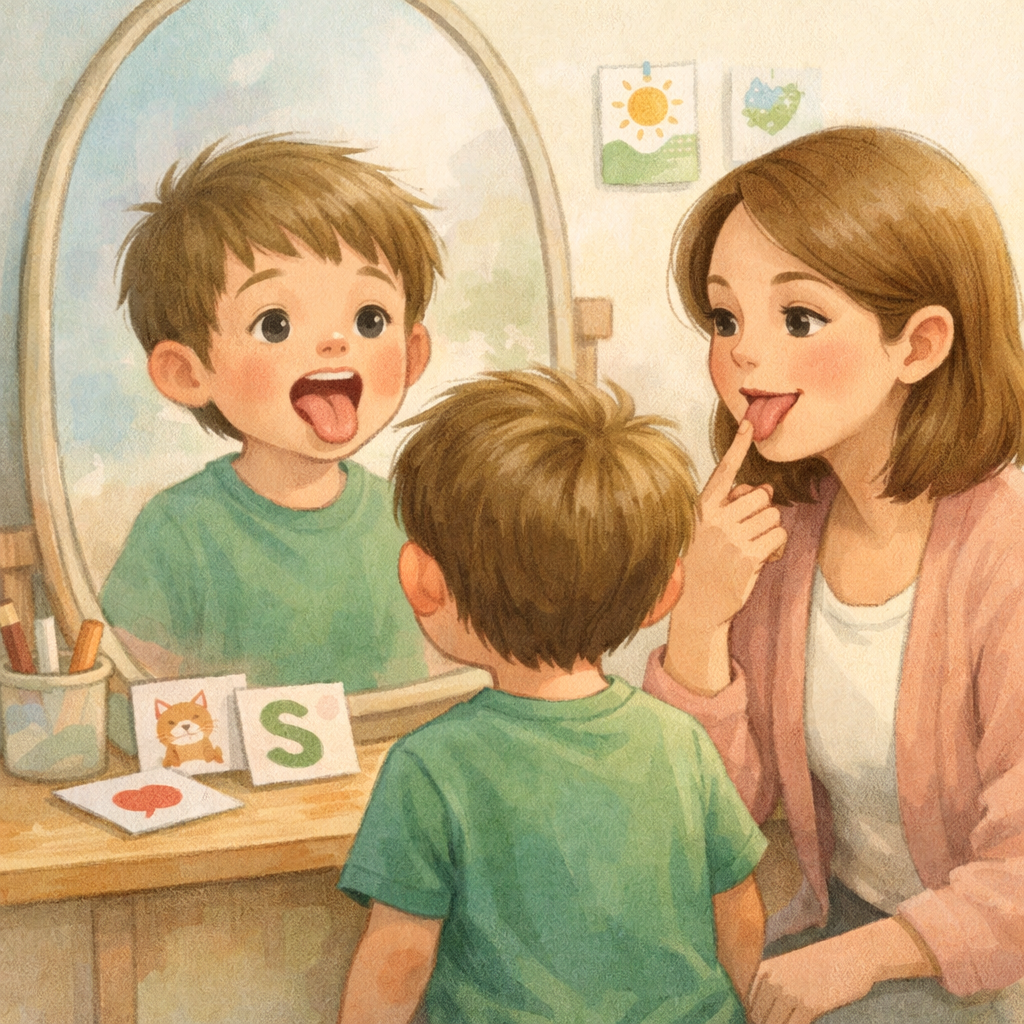
6. Mirror Exercises for Articulation
Using a mirror in articulation therapy can significantly help children improve their speech. Mirror exercises let kids see how their mouth, tongue, and lips move when making sounds, providing valuable visual feedback. This makes practice more effective—and even fun.
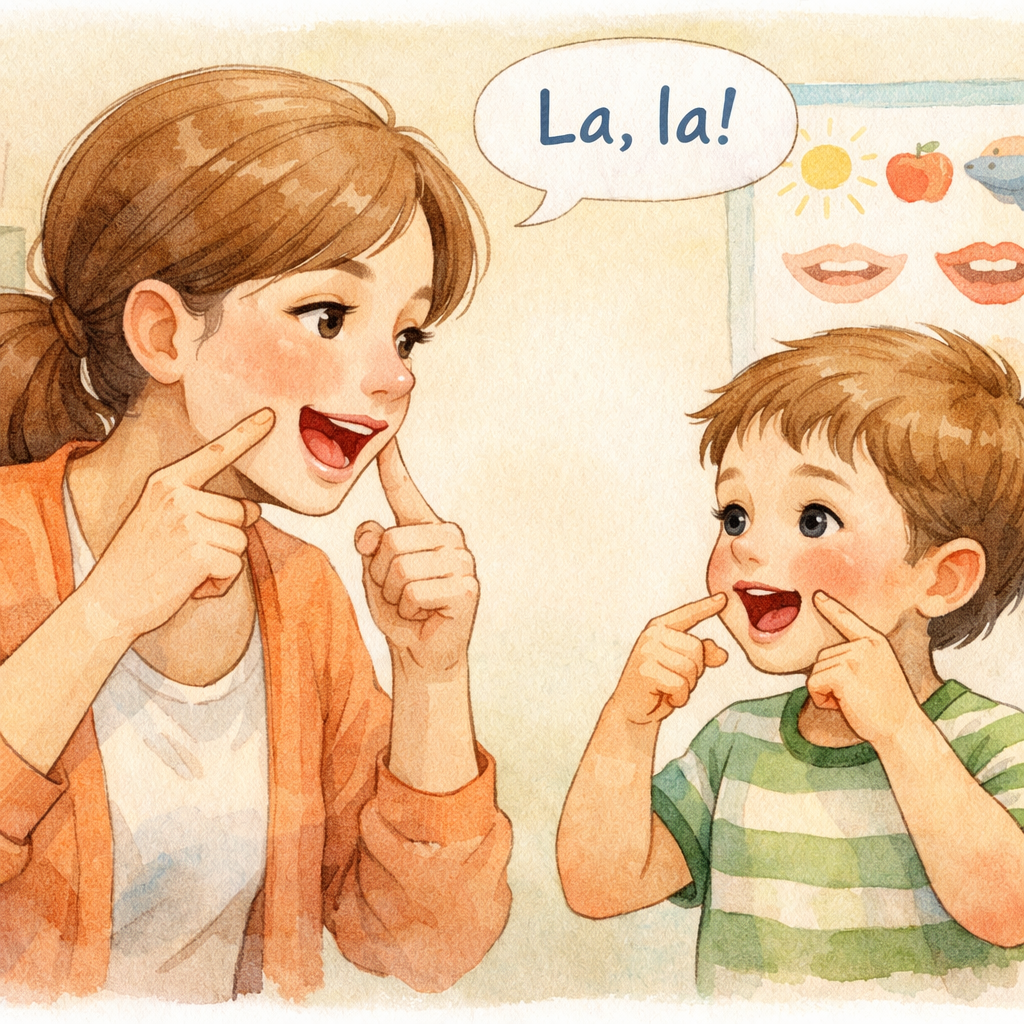
Sit with your child in front of a mirror and make funny faces together. Then, show them the correct mouth shape for tricky sounds like “l” or “th.” Encourage them to copy you while watching their reflection. This builds awareness of how their mouth moves, which is key for clearer speech.
Try these mirror exercises:
- Sound practice: Say a target sound like “p-p-p” and have your child watch both your lips and theirs as they imitate you.
- Silly faces: Make exaggerated faces—like puffing cheeks or sticking out tongues—to warm up mouth muscles.
- Word repetition: Practice simple words with the target sound while watching your mouths in the mirror.
7. Language Expansion Through Everyday Routines
You can turn daily routines into powerful moments for language development. Language expansion is a speech therapy technique where you take what your child says and add to it. This helps them progress from single words to longer phrases and builds their communication skills in a natural, everyday context.
Listen to what your child says, and then model a phrase that's one word longer. If your child says "juice," you can respond with "more juice" or "want juice." This provides a consistent model of what you expect from them. Over time, they will begin to expand their own language and use more complex phrases during daily routines.
Integrate language expansion into activities like:
- Mealtime: If your child says "eat," you can say, "eat broccoli."
- Getting dressed: When they point and say "shoe," you can model, "put on shoe."
- Playtime: If they say "car," you can expand it to "fast car" or "blue car."
8. Gesture and Sign Language Practice
For toddlers, gestures and basic sign language are effective tools to bridge the gap to speech. This alternative communication reduces frustration and empowers children to express their needs before they can speak verbally. Contrary to concerns, sign language does not delay speech—it often encourages it.
Speech therapy frequently uses simple signs to boost communication skills. For example, a toddler can gesture “all done” more easily than say the words. Teaching basic signs gives your child a practical way to communicate and shows that their efforts are valued.
Start with these essential signs:
- More: Use during meals or playtime when your child wants to continue.
- All done: Signal the end of an activity or meal.
- Help: Enables your child to ask for assistance.
9. Sorting Games for Vocabulary Building
Sorting games are a fun, hands-on way to work on vocabulary building and teach the purpose of everyday objects. This language therapy activity leverages a child's natural interest in organizing things to teach new words and concepts. Speech therapists often use this technique to encourage independent thinking and problem-solving skills.
You can use real-life objects from around the house or picture cards for this game. For instance, you could gather different fruits and vegetables and have your child sort them by color. Or, you can use picture cards and ask them to group all the clothes we wear or all the foods we eat. This helps build categories and promotes effective communication.
Here are some sorting game ideas:
- Sort by category: Group toys by type, such as animals, vehicles, and food.
- Sort by attributes: Use picture cards to sort objects by color, size, or shape.
- Real-life objects: During laundry time, have your child sort socks, shirts, and pants.
10. Positive Reinforcement and Reward Systems
Everyone responds well to praise, and children are no exception. Using positive reinforcement is a powerful tool in speech therapy to encourage desired behaviors and build confidence. When your child attempts a new sound or uses a new word, celebrate their effort. This makes therapy sessions and daily speech therapy exercises feel more rewarding.
Instead of a generic "Good job," try being specific. You could say, "Wow, you said 'please' all by yourself! That was amazing!" Your smile, a high-five, or a compliment can encourage your child to use more language throughout the day. This approach helps foster strong social communication skills and supports their overall speech development.
Try these positive reinforcement strategies:
- Sticker charts: Create a chart where your child earns a sticker for practicing their speech goals.
- Specific praise: Highlight exactly what your child did well, such as "I love how you asked for 'more' juice."
- Choosing a fun activity: Offer a special game or activity as a reward for a productive practice session.
11. Animal Noise Imitation and Fun Sound Games
Making animal noises is one of the most fun and effective therapy techniques for encouraging speech production in young children. Many children love animals, and imitating sounds like "moo," "baa," and "oink" can be a great way to practice specific sounds without pressure. This is especially helpful for toddlers and children with articulation disorders.
You can set up a toy barn or a make-believe farm and mimic the animal noise as your child picks up each animal. Soon, they may try to recreate these noises themselves. This simple game can also boost social skills as you take turns making sounds and playing together.
Here are some ways to play with sounds:
- Toy farm: Use toy animals to practice a variety of sounds in a playful context.
- Sound books: Read books that feature animal or vehicle sounds and encourage your child to join in.
- Vehicle sounds: Imitate the sounds of cars ("vroom"), trains ("choo-choo"), and sirens ("nee-naw") to practice different mouth movements.
12. Turn-Taking and Social Play Activities
Conversation is all about taking turns, and you can teach this essential skill through play. Turn-taking activities are excellent speech therapy techniques that build the foundation for social communication. These games help children understand the back-and-forth nature of social interaction and are crucial for language development.
Even simple games can teach this concept. For example, when you roll a ball back and forth, you can say "My turn" and "Your turn" to reinforce the idea. This practice helps improve social skills by teaching patience and how to engage with others in a shared activity.
Incorporate these turn-taking games into your playtime:
- Rolling a ball: A classic and simple way to practice the concept of "my turn, your turn."
- Building a tower: Take turns adding one block at a time to build a tall tower together.
- Playing with puppets: Use puppets to have a simple conversation, taking turns to speak.
How Parents Can Support Speech and Language Development at Home
As a parent, you are your child's most important teacher. Integrating simple speech therapy exercises into your daily life can significantly accelerate their language development. You don't need to be an expert; consistent practice and creating a supportive environment are the keys to success.
Your home is the perfect place for early intervention, and the support systems you create can make all the difference. By being patient, playful, and present, you can turn everyday moments into fun learning opportunities that boost your child's communication skills. Let's look at some practical ways to do this.
Building Communication Skills Into Daily Routines
You don’t need to set aside special time for speech therapy—just weave it into daily routines. This makes practice feel natural and helps your child use new communication skills in real-life situations. Early awareness of challenges lets you target language development from the start.
A simple technique is narrating your actions. For example, while cooking, say, “I’m stirring the batter. Now I’m pouring it.” This ties language to actions and gives your child a chance to learn new words by joining in.
Ways to build communication into your day:
- Mealtime: Talk about the food—its color, texture, and taste.
- Bath time: Name body parts as you wash them or describe bath toys (“The duck is swimming!”).
- Getting dressed: Offer choices: “Do you want the red shirt or the blue one?”
Creating a Language-Rich Environment
A language-rich environment surrounds your child with meaningful communication—not constant noise, but real interactions and exposure to words. One effective technique is parallel talk: narrate what your child is doing. For example, if they’re playing with a car, say, “Your car is so fast! Vroom!” This links words to actions and builds comprehension without pressuring your child to respond. Reducing distractions like TV helps your child focus on language and improves their skills.
To create a language-rich environment:
- Read books daily: Make reading part of your bedtime routine.
- Sing songs: Play and sing together during car rides or playtime.
- Talk throughout the day: Narrate your activities and have simple conversations with your child.
Encouraging Independent Communication Choices
As a parent, anticipating your child's needs is natural, but always doing so can limit their communication practice. Encouraging independent choices motivates your child to use language and express themselves.
Offering choices is simple: instead of handing them a snack, ask, "Do you want an apple or crackers?" This prompts them to respond and builds their confidence by showing their words matter.
Ways to encourage independent choices:
- Offer two options: Present two toys and ask, "Do you want the blocks or the bubbles?"
- Planned sabotage: Give them the wrong item intentionally so they can correct you.
- Expectant waiting: Pause and let them request what they want before providing it.
Special Considerations for Children with Autism and Other Needs
Children with autism or other specific needs often face unique communication challenges. Speech therapy for these children is tailored to their strengths, sensory preferences, and developmental levels. A personalized approach is essential for effective skill-building.
Every child is different. By understanding their needs and collaborating with therapists, you can find the best strategies to support them. Let’s look at how to adapt techniques for children with autism and address their sensory needs.
Adapting Techniques for Autism Spectrum Disorders
Many therapy techniques can be adapted for children with autism. Since these children often prefer routine, visual aids like picture schedules help reduce anxiety and clarify daily activities.
Speech therapists often use a child’s interests—such as trains—to teach vocabulary, ask questions, and practice turn-taking. Alternative communication methods, like boards or sign language, can also build skills and ease frustration for nonverbal children.
Common adaptations for ASD include:
- Visual supports: Use visual schedules and picture cards to aid understanding.
- Special interests: Incorporate favorite topics or toys into activities.
- Social stories: Share simple stories to teach social cues and appropriate behaviors.
Addressing Sensory Preferences in Speech Therapy
Many children, especially those with autism or specific needs, have unique sensory preferences. Some are sensitive to sounds, textures, or lights; others seek extra sensory input. Addressing these needs makes speech therapy more effective and enjoyable.
Working with an occupational therapist can help identify your child's sensory profile. For example, practice in a quiet room for noise sensitivity or include movement activities—like jumping—if your child needs to move. Customizing activities supports speech development.
Here are ways to adapt speech therapy based on sensory preferences:
|
Sensory Preference |
Adapted Speech Therapy Exercise |
|---|---|
|
Seeks Movement |
Practice vocabulary while jumping on a trampoline or swinging. |
|
Avoids Loud Noises |
Use quiet activities like sorting cards or reading in a calm space. |
|
Enjoys Tactile Input |
Use play-dough or sand to form letters and practice sounds. |
|
Sensitive to Touch |
Use visual aids like flashcards instead of tactile games. |
Conclusion
In conclusion, implementing fun speech therapy techniques can significantly enhance children’s communication skills while making the learning process enjoyable. By engaging in activities like play-based learning, interactive storytelling, and sound games, you not only promote language development but also create a positive environment for growth. Remember, your involvement as a parent or caregiver is crucial; integrating these methods into daily routines helps reinforce the skills learned during therapy. Encouraging open communication and providing support will create a strong foundation for your child’s future conversations.
If you're looking for personalized guidance, don’t hesitate to reach out and get a consultation or call daar at 02 9133 2500!
Frequently Asked Questions
What are some recommended resources and games for speech therapy at home?
Great resources for at-home speech therapy include picture books, sorting games, and apps that use visual aids to teach new words. Simple activities like singing songs, playing with puppets, and using flashcards are effective speech therapy strategies that make learning fun and can complement formal therapy sessions for language development.
How does speech therapy contribute to a child’s overall development?
Speech therapy is crucial for a child's overall development because it does more than just improve communication skills. Through early intervention, it helps children meet developmental milestones, boosts their confidence, enhances social skills, and supports academic success. Ultimately, it improves their overall quality of life by empowering them to connect with others.
What speech therapy strategies work best for toddlers?
For toddlers, the best speech therapy strategies are play-based and woven into daily routines. Modeling simple language, imitating animal noises to practice specific speech sounds, singing songs, and offering choices are highly effective. These activities support speech development and build foundational language skills in a fun, low-pressure way.
.svg)




.svg)