
.png?width=48&height=48&name=Group%201%20(3).png)























27 January, 2026

Navigating Speech Delay: A Parent’s Guide to Help
Introduction
Watching your child grow is full of exciting moments, especially when you anticipate their first words. While every child’s path to talking is unique, some may have a speech delay. Understanding the typical stages of language development can help you know when to be concerned and what steps to take. This guide offers insights into recognizing the signs, supporting your child’s speech at home, and knowing when to seek professional advice to ensure your little one has the tools they need to communicate effectively.
Key Highlights
-
Understanding the difference between speech and language is the first step in identifying a potential speech delay.
-
Tracking your child’s speech and language development against key milestones can help spot concerns early.
-
Parents should be aware of specific red flags, such as a child not babbling by nine months or having no single words by 16-18 months.
-
You can support your child’s speech at home through daily activities like reading, singing, and narrating your day.
-
If you have concerns, early intervention through speech therapy is the most effective approach to help your child.
Recognizing the Signs and Milestones
Knowing what is considered typical in speech development can help you determine if your child is on track. Developmental milestones provide a general framework for tracking your child’s progress and ensuring they are reaching the appropriate communication goals for their age.
While there is a wide range of what’s considered normal, certain signs of speech delay are important to watch for. Paying attention to these indicators can help you decide if it’s time to talk to a doctor. The following sections will explore specific milestones and red flags in more detail.
Common Indicators of Speech Delay by Age
It can be difficult for parents to tell if a child is simply a late talker or has a speech issue. Comparing your child's progress to typical speech milestones can help. While every child develops differently, missing these milestones may signal a delay.
Key speech milestones:
|
Age |
What to Watch For |
|---|---|
|
12 months |
Not using gestures like pointing or waving bye-bye |
|
18 months |
Uses gestures more than sounds or words |
|
2 years |
Only imitates speech; doesn’t use words spontaneously |
|
3 years |
Strangers understand less than 75% of their speech |
If your child isn’t meeting these, it could indicate a speech disorder. These are general guidelines—persistent issues should be discussed with your pediatrician. Early recognition helps ensure your child gets the support they need.
When to Be Concerned About Your Child’s Speech Development
While minor developmental differences are normal, certain signs warrant professional advice. These "red flags" may signal significant delays that benefit from early intervention. Trust your instincts—if something feels off, get it checked.
Contact your pediatrician for a specialist referral if your child:
-
Doesn’t babble by 9 months
-
Has no clear single words by 16-18 months
-
Lacks spontaneous two-word phrases by 24 months
-
Shows any regression in language or social skills at any age
Worrying about your child’s speech is understandable, but taking action is important. A doctor can rule out issues like hearing loss or autism and connect you with the right resources. Early support gives your child the best chance to develop strong communication skills.
Steps Parents Can Take at Home
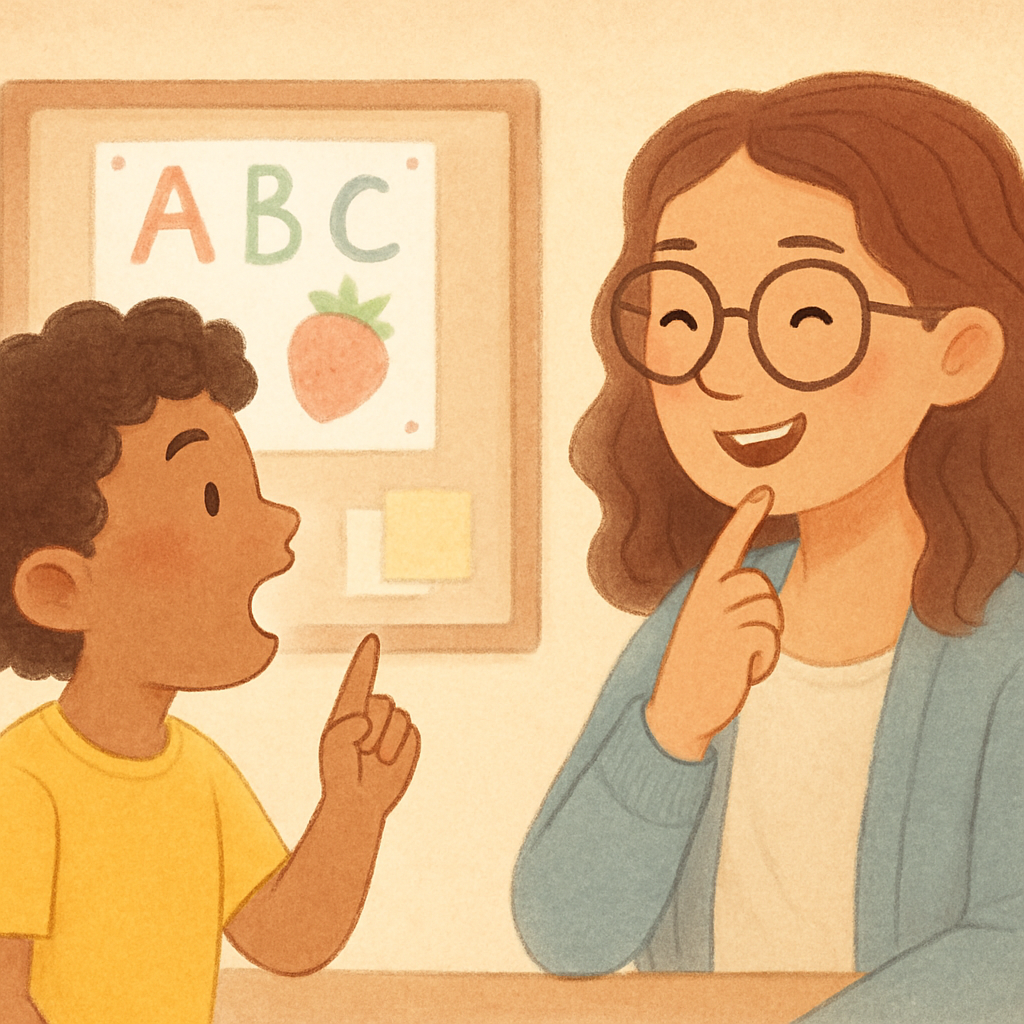
Parents are a vital part of helping children who have a speech or language problem. While professional speech therapy is essential for addressing diagnosed delays, the support you provide at home can make a significant difference in your child's language development.
Simple changes to your daily routine can encourage your child to practice their language skills in a natural and fun way. The following strategies and activities are easy to incorporate and can help build a strong foundation for communication before and during formal therapy.
Everyday Strategies to Support Speech and Language Skills
You can easily weave language learning into daily routines. Young children absorb language from their surroundings, so a language-rich home is key for development. Simple interactions make a big difference.
Try these strategies:
-
Narrate your actions—talk through tasks like cooking or getting dressed.
-
Expand on your child’s words. If they say “car,” reply, “Yes, that’s a big, blue car!”
-
Offer choices, such as “Do you want an apple or a banana?” to encourage responses.
-
Respond to their communication attempts, even if it’s just sounds or gestures.
These everyday activities build vocabulary and show how language works in real life. Involving other family members creates more opportunities for your child to learn and grow.
Engaging Speech-Boosting Activities for Young Children
In addition to everyday conversation, set aside time for fun speech-boosting activities to improve your child’s communication skills. Play is a powerful tool for language learning.
Try these engaging activities:
-
Read together daily. Use picture books and name objects to build vocabulary.
-
Sing songs and nursery rhymes, especially those with actions, to teach rhythm and repetition.
-
Play naming games like “I Spy” to expand vocabulary and encourage social interaction.
These activities boost language skills and strengthen your bond, making learning enjoyable and supporting early intervention.
Conclusion
In conclusion, navigating a speech delay can be challenging for both parents and children, but understanding the signs and taking proactive steps can make a significant difference in your child’s development. By implementing everyday strategies and engaging in fun activities, you can create an encouraging environment that supports their communication skills. Remember, each child develops at their own pace ande, and being patient and attentive to their needs is key. If you have further questions or concerns about your child's speech development, don’t hesitate to reach out for additional support or resources. Your involvement is crucial in helping them thrive.
Contact us for a consultation or call us at 02 9133 2500. Start your child’s communication journey today!
Frequently Asked Questions
Are speech delay and language delay the same thing?
No, they are different but often overlap. A speech delay relates to the verbal expression of language, including articulation and forming sounds. A language delay is about understanding and conveying information. A child with a language delay might say words clearly but struggle to form sentences.
Can speech delay affect a child’s learning or social skills?
Yes, an untreated speech delay can have a negative impact on learning and social skills. Communication skills are fundamental for interacting with peers, participating in school, and understanding instructions. This can lead to difficulties with reading, behavioral problems, and impaired psychosocial adjustment in social situations.
What causes speech delay in children?
Several factors can cause speech delays. Common causes include hearing loss, which can result from frequent ear infections, and oral impairments like problems with the tongue or palate. Developmental conditions such as autism spectrum disorder or a general cognitive delay can also be contributing factors.
.svg)




.svg)