
.png?width=48&height=48&name=Group%201%20(3).png)























2 February, 2026

Tantrums Uncovered: Navigating Emotional Outbursts
Introduction
Emotional outbursts are one of the biggest challenges of raising young children. The screaming, crying, and flailing of a full-blown tantrum can be stressful and exhausting for any parent. While these episodes are a normal part of growing up, understanding what’s behind them is the first step toward navigating them effectively. Knowing why tantrums happen can help you respond in a way that not only calms the storm but also teaches your child better ways to manage their feelings.
Key Highlights
- Tantrums in young children are often triggered by big feelings like frustration and anger, not manipulation.
- Emotional outbursts can sometimes be a symptom of underlying conditions such as ADHD, anxiety, or sensory processing issues.
- Parental response is key; staying calm and avoiding giving in can prevent the behaviour from becoming a habit.
- Identifying triggers and preparing your child for changes are effective ways to prevent tantrums before they start.
- For persistent or severe tantrums, professional help and parent management training can improve a child’s mental health and behaviour.
- Talking to your child after they have calmed down helps them develop better communication skills for the next time.
Why Do Children Have Tantrums?
When your child is overwhelmed by big feelings, they may lash out with a temper tantrum. This challenging behaviour is a form of communication. Your child may not have the words or skills to express their frustration, so they show you through their actions.
It's helpful to view these moments not as behaviour problems, but as a sign that your child is struggling. Often, this is not intentional manipulation but an inability to handle frustration or anger. Addressing their mental health and teaching them coping skills is more effective than punishment.
Common Triggers for an Angry Child
Most kids who have frequent meltdowns do so at predictable times. The trigger is often being asked to do something they dislike or to stop an activity they enjoy. Simple transitions can feel like major roadblocks for children with short attention spans.
An unexpected change in routine can easily set off a child who relies on consistency for comfort. Underlying issues can also be a major factor. Some children experience sensory processing issues, where too much noise or even scratchy clothing can feel overwhelming. Others may have undiagnosed behaviour disorders like ADHD or anxiety that make it harder for them to manage their big emotions.
Common triggers include:
- Homework time
- Bedtime routines
- Being asked to stop playing a game
- Leaving a fun place, like a park
- Facing work that is too difficult for them
How Developmental Stages Influence Misbehaviour
Tantrums are a normal part of toddler development, especially during the "terrible twos," as children assert independence but lack emotional control. Frustration often arises when their abilities don't match their desires.
As children grow, their impulse control and emotional skills improve, and tantrums become less frequent. While occasional tantrums are normal for preschoolers, frequent or intense outbursts in older children may signal delayed emotional regulation or an underlying issue.
In older kids, ongoing tantrums are less typical and suggest they may need additional support.
The Role of Emotions in Outbursts
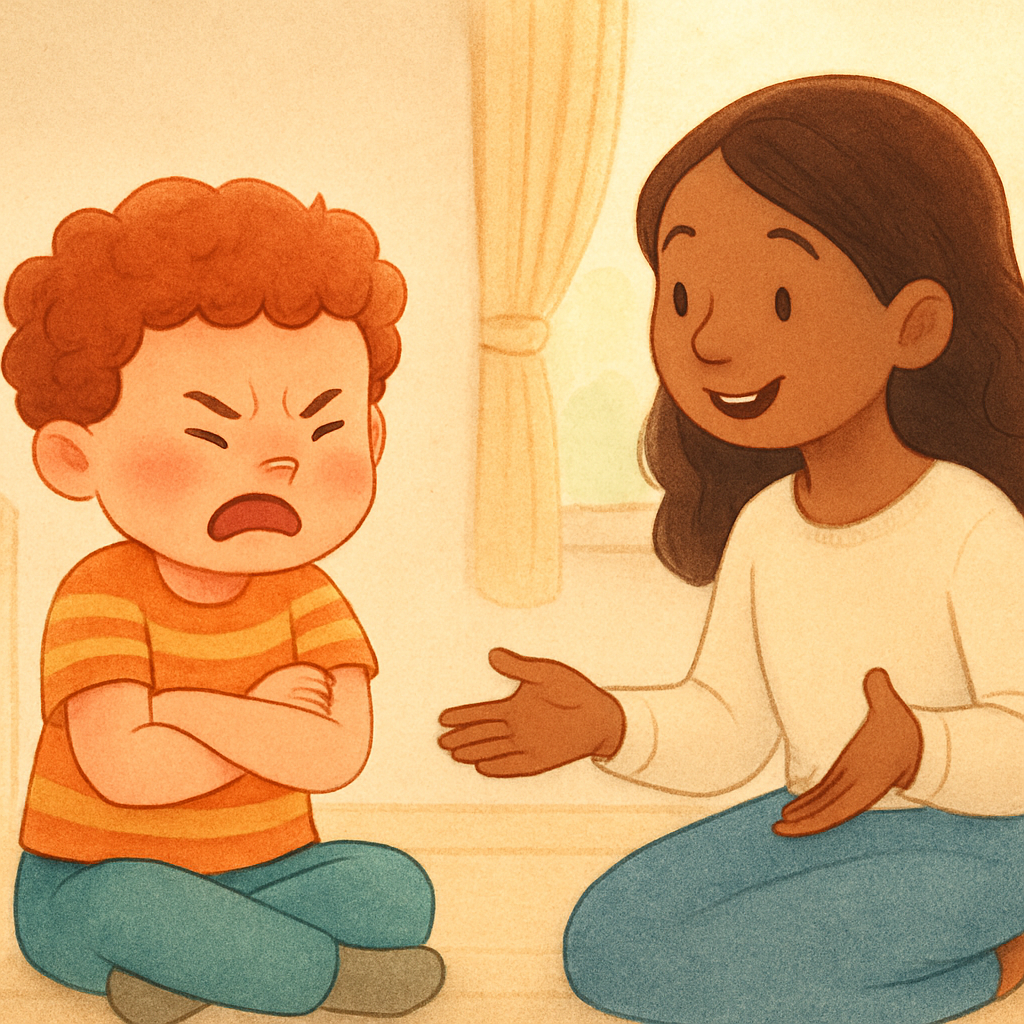
Emotional outbursts are symptoms of a child struggling with feelings they cannot yet regulate. Anger is a primary driver, often sparked when a child feels a deep sense of injustice, like being denied something they want. Anxiety is another powerful trigger that can cause a child to panic and lash out to escape a stressful situation.
Many parents distinguish between tantrums, where a child has some control, and meltdowns, where they completely lose it. Regardless of the label, these events show that a child's big feelings have hijacked their rational thinking. Providing emotional comfort and teaching emotional regulation are crucial for their long-term children’s mental health. Understanding the emotions behind the outburst is the first step in helping them.
How Children Experience and Express Anger
For many kids, anger feels like an overwhelming force. It often stems from frustration when they can't have or do something they want. These strong emotions can be confusing, and without the right skills, children express them in very physical and vocal ways. It’s not that they want to be "bad," but that their big emotions take over completely.
Understanding the child’s feelings is essential. They may not be able to say, "I'm angry because you said we have to leave the playground." Instead, they show it. This expression of their range of emotions is a raw, unfiltered signal that they need help managing what they're feeling.
A child’s expression of anger can look like:
- Screaming, cursing, or yelling
- Throwing objects or ripping up papers
- Hitting, kicking, or biting
Brain Science Behind Emotional Reactions
Emotional reactions aren't just a matter of choice; they have roots in brain science. For some children, especially those with conditions like ADHD, the part of the brain that governs attention and impulse control may be less active. This makes it incredibly difficult for them to stop and think before they react.
A clinical psychologist can explain that this is a matter of emotional development, not defiance. The child lacks the skills for emotional regulation because their brain is still building those connections. When a child has a tantrum, they are overwhelmed and cannot access the more logical, problem-solving parts of their brain.
This is why the distinction between a tantrum and a meltdown is useful. One is a struggle for control, while the other is a complete loss of it.
|
Feature |
Tantrum |
Meltdown |
|---|---|---|
|
Control |
The child has some control over their behaviour and may stop if ignored. |
The child has lost control completely and only stops when exhausted. |
|
Goal |
Often goal-oriented, like trying to get a toy or avoid a task. |
Not goal-oriented; it's a reaction to being overwhelmed (e.g., by sensory input). |
|
Safety |
The child is usually aware of their surroundings and unlikely to harm themselves. |
The child may not be aware of their surroundings and could be a danger to themselves or others. |
Effective Parenting Strategies During Tantrums
How you react during a tantrum has a huge impact on whether the behaviour continues. The most effective ways to respond involve staying calm, confident, and consistent. Giving in to a child's demands to stop the tantrum may work in the short term, but it teaches them that outbursts are a good way to get what they want.
Your goal is to become a source of emotional comfort and create a safe place for your child to calm down. By modeling positive behaviour and strong communication skills, you can guide your child toward better ways of handling their feelings. The following strategies offer concrete techniques to use when things get heated.
Techniques to Stay Calm and Supportive
When your child is raging, it’s easy to get swept up in the chaos and start yelling at yourself. However, if you can remain calm, you become a model for your child on how to manage emotions. Using a steady voice shows that you are in control, which can help your child feel more secure.
It’s crucial to ensure you are getting enough rest and support for yourself, as parenting an explosive child is draining. If you feel your own anger rising, it's okay to step away for a moment to collect yourself, as long as the child is in a safe place. This isn't giving up; it's regulating your own emotions so you can help your child. Some parents find parent management training helpful for learning these skills.
To stay calm, you can try to:
- Take deep breaths before you respond.
- Remind yourself that the behaviour is not personal.
- Speak in a low, calm tone of voice.
- Focus on keeping your child and others safe.
- Provide emotional comfort once the storm has passed.
How to Communicate With Your Child in the Heat of the Moment
During a tantrum, less is more. Your child is too overwhelmed to listen to reason or lectures. The focus should be on safety and de-escalation, not a conversation. Use simple, clear, and calm phrases if you need to speak at all.
Once your child has calmed down, that's the time for communication. Praise them for pulling themselves together. This reinforces positive behaviour. You can then talk about what happened and brainstorm what they could do next time they feel that way. This helps them build communication skills and emotional regulation.
When your child is calm, you can:
- Acknowledge their feelings ("I could see you were very angry").
- Help them label their emotions.
- Talk about other ways to solve the problem.
- Remind them they are loved, even when their behaviour is challenging.
Conclusion
In conclusion, navigating the emotional landscape of tantrums can be challenging for both parents and children. Understanding the triggers and the underlying emotions can transform these outbursts into opportunities for connection and growth. By employing effective parenting strategies, you can create a supportive environment that fosters emotional intelligence and resilience in your child. Remember, it’s not just about managing the tantrum; it's about guiding your child through their feelings and teaching them how to express themselves constructively. Don't hesitate to seek additional resources or support if you find yourself needing guidance on this journey. Your child's emotional development is worth every effort!
Book a consultation now or call daar at 02 9133 2500 for expert guidance tailored to your child’s needs.
Frequently Asked Questions
When Should Parents Worry About Frequent Tantrums?
You should be concerned about frequent tantrums if they are unusually intense, happen several times a week, or continue past the preschool years. This could be a sign of an underlying issue affecting their mental health, such as disruptive mood dysregulation disorder. Consulting a clinical psychologist is a good first step.
Can Older Children Still Have Tantrums?
Yes, older children can still have frequent temper tantrums. When this occurs, it is more concerning than in toddlers. It may be linked to conditions like ADHD or the autism spectrum. This disruptive behaviour often indicates that the child is struggling to develop emotional intelligence and needs additional support.
How Can Parents Help Their Child Calm Down After an Outburst?
After an outburst, provide quiet emotional comfort in a safe place. Let your child feel your loving presence without judgment. Once calm, praise them for regaining control. This helps the child feel secure and teaches them positive behaviour to use the next time they feel overwhelmed.
.svg)




.svg)