
.png?width=48&height=48&name=Group%201%20(3).png)























24 April, 2026

Effective Speech-Language Pathology Interventions for Kids
Key Highlights
Here’s a quick look at what you’ll find in this guide to speech-language pathology interventions for children: Speech therapy offers a range of interventions, from articulation therapy to language development activities. In addition, there are several resource guides available that provide evidence-based strategies and best practices for speech-language pathology interventions, helping professionals and families support a child’s communication growth effectively.
- Speech therapy offers a range of interventions, from articulation therapy to language development activities.
- Early intervention is crucial for addressing speech and language disorders, leading to better long-term outcomes.
- A speech-language pathologist plays a key role in assessing a child's communication needs and creating a tailored treatment plan.
- Collaboration between therapists, families, and educators is essential for successful language development.
- Effective communication is the ultimate goal of all speech-language pathology interventions.
Introduction
Have you ever wondered how speech therapy can help a child struggling with communication? Speech-language pathology is a field dedicated to helping children overcome communication disorders and language disorders. Through targeted speech therapy, children can build the skills they need to express themselves confidently. Early intervention is a cornerstone of this process, setting the stage for significant improvements in a child's ability to communicate and interact with the world, ultimately enhancing their quality of life.
Overview of Speech-Language Pathology Interventions for Kids
Speech-language pathology interventions cover a wide spectrum of techniques designed to address various speech disorders in children. These interventions are highly individualized, using evidence-based practices to meet each child's unique communication needs and support their language development.
The most effective approaches are tailored to the specific child and their challenges. The goal of early intervention is to provide support as soon as a need is identified, which helps remove barriers to learning and social participation. Below, we’ll explore the cornerstones of these interventions.
Understanding Typical Speech and Language Development in Children
A child's language development follows key milestones, starting with coos and babbles, progressing to first words, and then simple sentences. This growth is essential to their overall development.
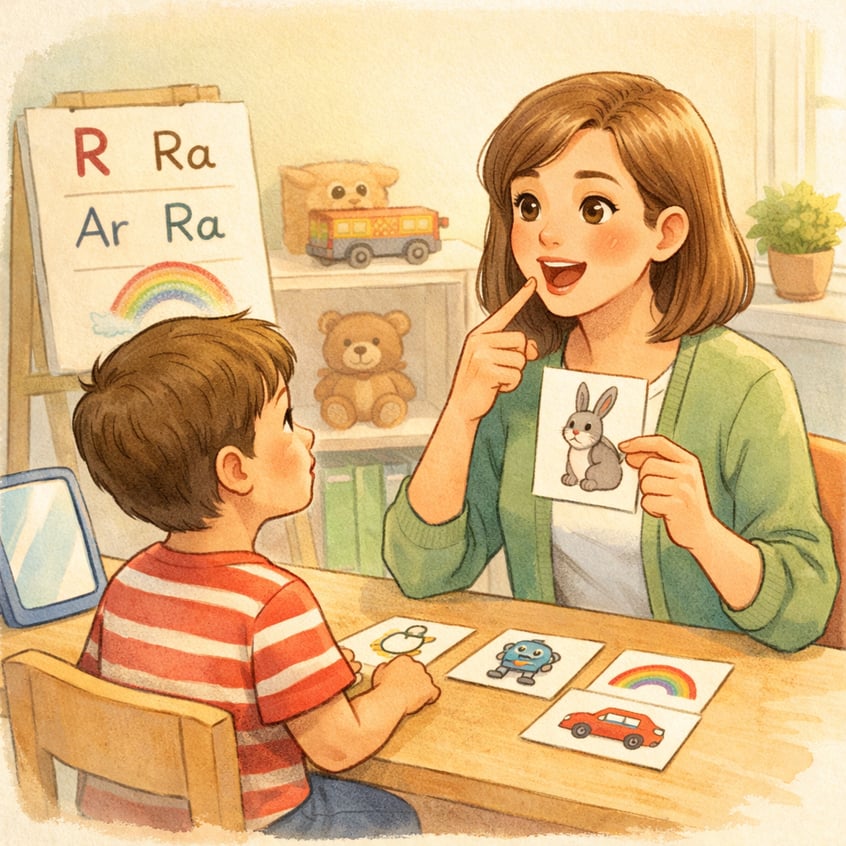
Speech therapy uses specific methods—like flashcards for teaching sounds—and broader approaches, such as play-based or structured techniques. The choice depends on the child's needs.
Parents track these stages, from babbling to complex sentences. While children develop at different rates, knowing typical milestones helps identify delays or speech disorders that may need extra support.
Common Types of Speech and Language Disorders in Kids
Children can experience various speech and language disorders, each with unique challenges. Articulation disorders involve difficulty pronouncing certain sounds, making speech hard to understand. Speech sound disorders affect the phonological system.
Language disorders may impact a child’s ability to understand (receptive) or express language (expressive). Some children also struggle with pragmatic language, such as taking turns in conversation or understanding non-literal meanings. Therapists address these issues through techniques like modeling correct sentences, storytelling, and role-playing social situations.
These difficulties can affect friendships, classroom participation, and daily life. Identifying the specific disorder is essential for providing effective support.
The Role of a Speech-Language Pathologist
A speech-language pathologist (SLP) is a specialist who diagnoses and treats communication disorders in children. Their main goal is to help children communicate better and improve their quality of life. SLPs use targeted techniques during therapy sessions to address specific speech and language needs.
Treatment begins with a thorough assessment, including tests, observations, and input from family members. Using this information, the SLP creates personalized plans with clear, achievable goals.
SLPs also collaborate with parents, teachers, and other professionals to provide consistent support across all settings, which is essential for lasting progress.
Goals of Early Intervention in Childhood
Early intervention provides support as soon as developmental delays are detected, aiming to address speech and language challenges before they worsen. Early identification helps therapists build essential language skills for future learning and social development, emphasizing a partnership with parents.
Treatment goals are customized but typically focus on improving comprehension, expanding vocabulary, and enhancing expressive abilities. Examples include encouraging toddlers to use two-word phrases or helping preschoolers follow two-step directions.
Addressing language difficulties early leads to lasting benefits—children gain skills for academic success and stronger peer relationships. This proactive approach also empowers families with strategies to support progress at home.
Identifying Speech and Language Challenges
Recognizing speech and language difficulties early on is vital for a child's development. Early identification of communication disorders allows for timely intervention, which can significantly improve a child's ability to learn and socialize. A thorough assessment is the first step in understanding the nature of the challenge.
For multilingual children, assessment must distinguish between a language disorder and the natural process of learning multiple languages. Interventions for them should be culturally and linguistically appropriate, often involving support in all languages the child uses. Next, we will discuss what to look for and how the assessment process works.
Key Signs and Symptoms to Watch For
As a parent, you are often the first to notice if your child is having trouble communicating. While every child develops differently, certain signs may point to spoken language disorders or other communication issues. Early identification of these symptoms is key to getting your child the support they need.
Some risk factors, like a family history of speech problems, can increase the likelihood of a disorder. However, many challenges appear without any obvious cause. Knowing what to watch for can help you decide when it’s time to seek a professional opinion.
Keep an eye out for common indicators, which can vary by age. Here are a few signs that may warrant a conversation with a speech pathologist:
- Limited vocabulary for their age.
- Difficulty following simple directions.
- Struggles with making certain speech sounds or frequent speech sound errors.
- Not combining words into sentences by age 2.
- Others have a hard time understanding what your child says.
Screening and Initial Assessment Process
When concerns about a child's speech or language arise, the process starts with a screening—a quick check to see if further assessment is needed. Screenings help identify whether a child’s skills are typical or if there are potential concerns.
If issues are found, a comprehensive assessment follows. The speech-language pathologist uses tests, observations, and caregiver interviews to gather detailed information. This helps pinpoint the child's strengths and challenges for clinical decision-making.
Based on the results, the SLP creates an individualized intervention plan with therapy goals, strategies, and a service delivery model to support your child’s progress.
Collaboration with Families and Educational Staff
A collaborative approach is highly effective in speech-language pathology. When family members and school staff partner with the therapist, a child’s progress accelerates. This teamwork ensures therapy skills are reinforced at home and in the classroom.
Teachers can support communication needs by adapting lesson plans with visual aids or allowing extra response time. Families can practice techniques during daily routines, turning everyday moments into learning opportunities.
Effective intervention includes training for educators and guidance for parents, empowering everyone to support the child’s communication growth and confidence.
Articulation and Phonological Interventions
Articulation and phonological interventions are designed to help children who have trouble producing speech sounds correctly. These direct interventions focus on improving speech production, whether the issue is a single sound in a speech sound disorder or a pattern of errors seen in phonological disorders.
Evidence-based practices like articulation therapy guide these sessions. The goal is to make a child's speech clearer and more understandable to others. In the following sections, we will explore some of the specific techniques used to achieve this.
Traditional Articulation Therapy Techniques
Traditional articulation therapy is a proven method for children with speech sound disorders. It teaches correct sound production through a structured approach, progressing from simple to complex speaking tasks.
Therapy starts by helping the child distinguish between correct and incorrect sounds. Once they can hear the difference, the therapist guides them in producing the sound accurately. The goal is for the child to use the sound correctly in conversation and eliminate errors.
The process is broken into manageable steps:
- Isolation: Practicing the target sound alone.
- Syllables: Pairing the sound with vowels (e.g., "sa," "see," "so").
- Words: Using the sound at different positions within words.
- Sentences: Using target words in sentences.
Minimal Pairs and Phonological Process Therapy
When a child has a speech sound disorder characterized by predictable error patterns, such as dropping the final consonants of words, interventions like minimal pairs therapy can be very effective. This method is a cornerstone of evidence-based language intervention for phonological disorders. It helps children develop phonological awareness by highlighting how a single sound change can alter a word's meaning.
During therapy sessions, a speech pathologist presents the child with pairs of words that differ by only one sound, like "key" and "tea" or "cap" and "cat." The child is shown that using the wrong sound results in saying a different word, which encourages them to correct their speech pattern.
This technique is particularly beneficial for children who have multiple speech errors that fit into a consistent pattern. By targeting the underlying phonological process rather than just one sound at a time, this therapy helps generalize learning across many words, making it an efficient and powerful tool.
Strategies for Persisting Speech Sound Disorders
Some speech sound disorders persist despite initial therapy and require more intensive, specialized treatment. Best practices use structured, motivating interventions tailored to the child.
For older children, therapy may focus on metacognitive strategies—teaching them to self-monitor and correct their speech. Visual cues and technology can provide immediate feedback to help break old habits and build new, correct speech patterns.
Addressing these issues is crucial, as they can negatively affect academic performance and social confidence. A skilled speech pathologist will adapt interventions to each child’s needs to ensure effective, engaging long-term therapy.
Language and Communication Interventions
Language and communication interventions are essential for children who struggle with understanding or using language. These therapy sessions address a wide range of challenges, from expressive language difficulties to broader communication skills. There are various treatment options available, each tailored to the child's specific needs.
The primary aim of language intervention is to build a strong foundation for effective communication. We will now explore different types of therapy that help children improve their receptive and expressive language, as well as their conversational abilities.
Receptive and Expressive Language Therapy
Language therapy focuses on two main areas: receptive and expressive language. Receptive language involves understanding what is said, while expressive language is about sharing thoughts and feelings. Both are essential for effective communication and academic success.
In receptive language therapy, children practice following directions, answering questions, and learning new vocabulary—often through activities like listening to stories and discussing them. This strengthens comprehension skills inside and outside the classroom.
Expressive language therapy helps children put their ideas into words by forming sentences, using correct grammar, and telling stories. Strengthening both areas enables children to participate more fully in conversations and learning. For multilingual children, supporting both languages in therapy is often recommended.
Enhancing Narrative and Conversational Skills
Developing strong narrative and conversational skills is essential for language acquisition. Narrative skills help with tasks like recounting experiences or writing essays, and therapy often uses story maps or picture sequences to teach logical organization.
Conversational skills focus on the flow of social interaction—taking turns, staying on topic, and active listening. Role-playing in therapy helps children practice these abilities in a supportive setting.
Treatment goals are set after a thorough assessment by a speech pathologist, who identifies specific areas to target, such as turn-taking or using complex sentences. This individualized approach ensures therapy addresses each client’s communication needs.
Semantic and Vocabulary Development Activities
A strong vocabulary is the bedrock of effective communication, and activities focused on semantic skills and vocabulary development are essential for language development. For children with language difficulties, explicitly teaching new words and the relationships between them is a key part of therapy. This helps them understand and use language with greater precision.
These activities are designed to be engaging and meaningful to meet a child's communication needs. Instead of just memorizing definitions, children learn words in context through books, games, and hands-on experiences. This approach makes learning more effective and fun.
Best practices in intervention models emphasize using a variety of techniques to build vocabulary. Here are some examples of effective activities:
- Word Sorting: Grouping words into categories (e.g., animals, food, clothes) to build semantic connections.
- Reading and Discussing Books: Introducing new vocabulary in the context of a story.
- Using Semantic Maps: Creating visual webs that show a word's definition, synonyms, and examples.
- Playing Word Games: Using games like "I Spy" or "20 Questions" to practice describing and guessing words.
Fluency and Stuttering Interventions
Fluency disorders, most notably stuttering, affect the flow and rhythm of speech. Interventions for these challenges aim to help children speak more smoothly and with greater confidence. Treatment plans are highly individualized and based on evidence-backed approaches.
There are two primary methods used in therapy: fluency shaping and stuttering modification. Both are effective speech-language pathology interventions that can significantly improve a child's fluency. We will explore these techniques and the role of family in the following sections.
Fluency Shaping and Stuttering Modification Techniques
When it comes to treating stuttering, speech pathologists often use two main evidence-based approaches: fluency shaping and stuttering modification. These treatment options have different goals and are used in therapy sessions to improve speech production, though they can sometimes be combined.
Fluency shaping focuses on teaching the child to speak more fluently from the start. It involves techniques like slowing down the rate of speech, using gentle onsets for words, and controlling breathing to promote smooth speech. The goal is to prevent stuttering from happening.
Stuttering modification, on the other hand, aims to reduce the tension and fear associated with stuttering. Instead of avoiding stutters, this approach teaches the child to stutter more easily and with less struggle. This helps them feel more in control of their speech.
|
Technique |
Goal |
Key Strategies |
|---|---|---|
|
Fluency Shaping |
To speak more fluently and prevent stutters |
Slower speech rate, easy onsets, light articulatory contacts |
|
Stuttering Modification |
To stutter more easily and with less tension |
Cancellations (pausing and re-starting), pull-outs (easing out of a stutter) |
Addressing Secondary Behaviors in Stuttering
Secondary behaviors are actions people who stutter use to get through stuttering moments, like eye blinking, foot tapping, or avoiding words. Though these may seem helpful briefly, they can become distracting and add to communication difficulties.
Effective therapy addresses and reduces these behaviors by increasing the child’s awareness and teaching better ways to manage stuttering, such as modification techniques.
Reducing secondary behaviors not only improves speech clarity but also supports mental health by lowering anxiety and boosting confidence. The best intervention approaches treat the whole person—not just their speech.
Family Involvement in Fluency Therapy
Family involvement is essential for successful fluency therapy. When families participate, they create a supportive home environment that encourages fluent communication and improves the child’s quality of life. This collaboration extends the benefits of therapy into daily routines.
Parents aren’t expected to act as therapists but as supportive partners. Therapists often share strategies, such as reducing conversational time pressures, modeling slow speech, and focusing on what the child says rather than how they say it.
By working with the speech pathologist, families help their child build confidence and practice new skills in a safe, encouraging setting. This teamwork is often key to lasting progress.
Social Communication and Pragmatic Language Interventions
Social communication, or pragmatic language, is all about the social rules of conversation. Interventions in this area help children learn how to use language appropriately in social interactions. These social skills are vital for making friends and navigating the social world, and are often a focus for children with autism spectrum disorders.
Strategies to improve social communication can range from group therapy to using visual aids. The primary goal is to make social situations less confusing and more rewarding. The next sections will detail specific interventions that build these crucial skills.
Social Skills Groups and Role-Playing
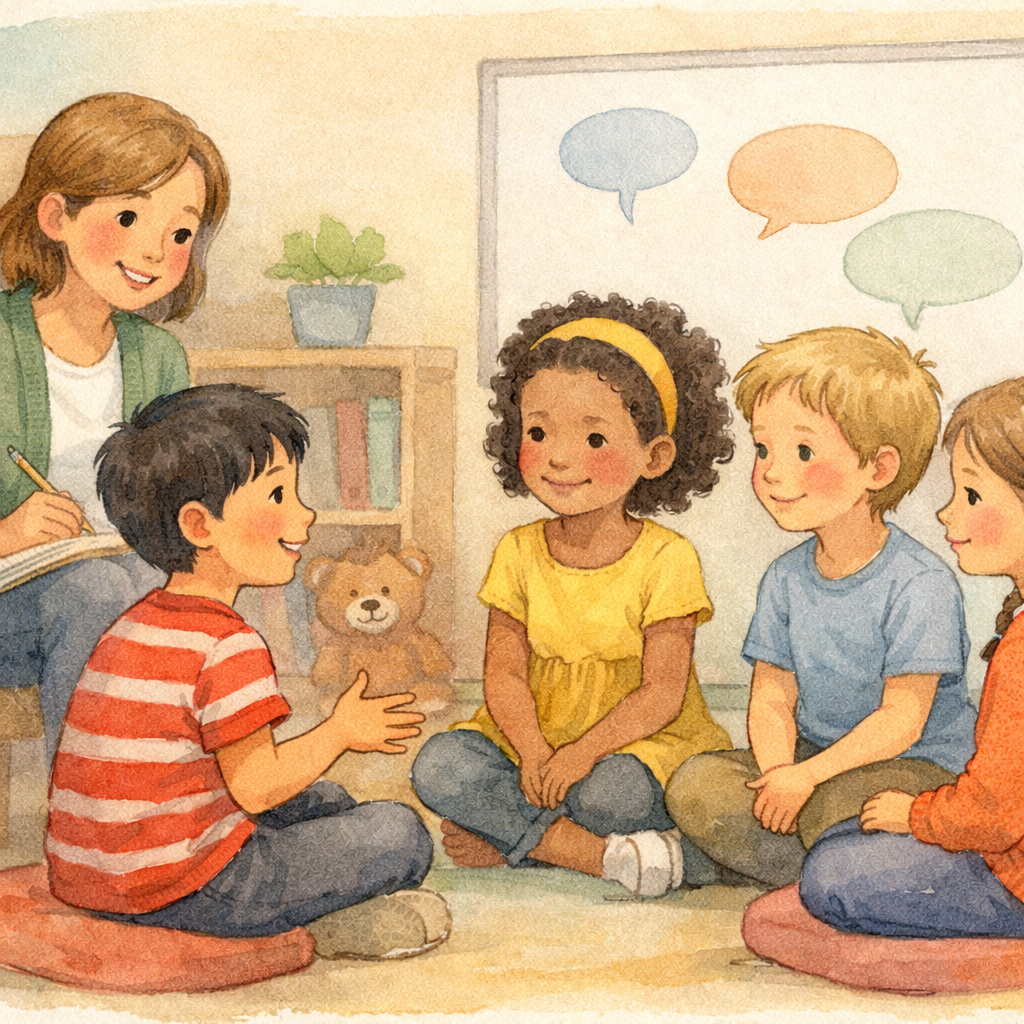
Social skills groups are a fantastic treatment option for children who need to work on their social communication. In these groups, children can practice their skills with peers in a structured and supportive setting. The therapist guides the interactions, providing feedback and encouragement along the way.
Role-playing is a powerful tool used in these groups to teach and practice social skills. It allows children to act out different social interactions, such as joining a conversation, asking for help, or resolving a conflict. This hands-on practice helps them feel more prepared for real-life situations.
A speech pathologist develops an intervention plan by first assessing a child's specific social challenges. Based on this, they can recommend a social skills group and set goals for therapy. Key role-playing activities might include:
- Practicing how to start and end a conversation.
- Learning to take turns and share with others.
- Figuring out how to read and respond to body language.
- Working on compromising and negotiating with peers.
Visual Supports and Video Modeling
Visual supports and video modeling are proven methods for teaching social skills. Visual supports, like picture schedules or charts of facial expressions, make abstract concepts clearer and easier to understand.
Video modeling involves showing a child a video of someone correctly performing a social skill, such as inviting a friend to play. The child then imitates the behavior, making it especially helpful for learning complex actions and subtle social cues.
These techniques benefit children with diverse communication needs by offering clear, repeatable examples of desired behaviors. They also provide alternative ways to communicate, helping children navigate social situations more confidently.
Strategies for Autism Spectrum Disorders
Children with autism spectrum disorders often face unique communication challenges, particularly in the area of pragmatic language. Speech-language therapy for these children typically involves direct interventions that are structured, predictable, and tailored to their individual needs and strengths.
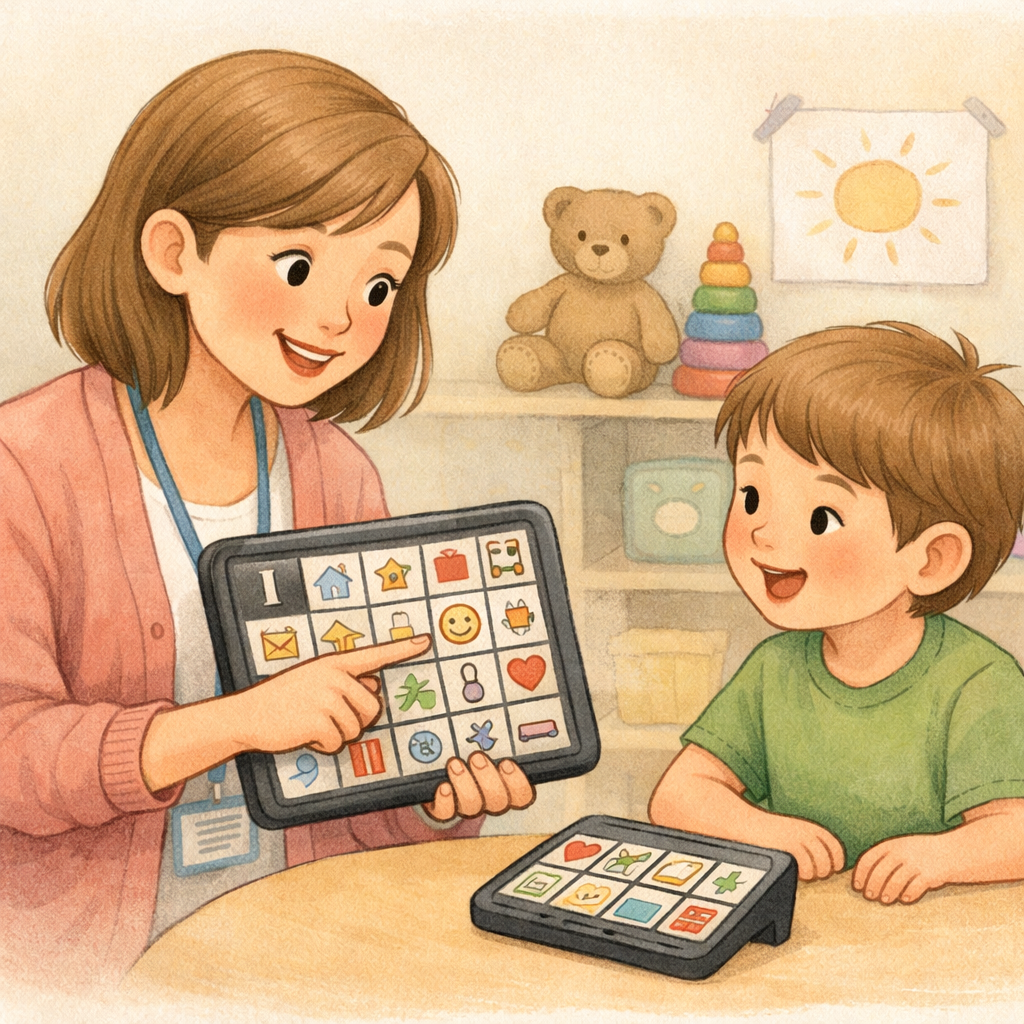
Strategies often include the use of visual supports, social stories, and video modeling to teach social rules and expectations. For example, a social story might walk a child through the steps of a new social situation, like going to a birthday party, to reduce anxiety and set them up for success. The service delivery may be one-on-one, in small groups, or integrated into the classroom.
For multilingual children with autism, it is recommended that interventions support all of the languages they use. This helps them build communication skills in the contexts that are most meaningful to them. The ultimate goal is to provide them with the tools they need to connect with others and express themselves effectively.
Targeting Written Language and Literacy Skills
Speech-language pathologists also play a crucial role in developing written language and literacy skills. The connection between spoken and written language is strong, so challenges in one area often affect the other. Interventions target skills like phonological awareness, which is fundamental for reading.
By addressing the underlying language components of literacy, speech therapy can help children overcome written language disorders and achieve academic success. Let's look at how therapists support reading, writing, and spelling.
Supporting Phonological Awareness and Reading
Phonological awareness is the ability to recognize and work with the sounds in spoken language. It is a critical skill for learning to read, and it is a key area of focus in treatment plans for children with reading difficulties. Strong phonological awareness is a bridge between spoken language development and literacy.
Speech-language pathologists target these skills by helping children understand that words are made up of smaller units of sound. This can involve activities that focus on rhyming, counting syllables, and identifying the first or last speech sound in a word.
Interventions are designed to be playful and engaging. Here are some techniques used to support phonological awareness and reading:
- Rhyming Games: Identifying and producing words that rhyme.
- Sound Blending: Putting individual sounds together to form a word (e.g., /c/ /a/ /t/ = "cat").
- Sound Segmentation: Breaking a word down into its individual sounds.
- Alliteration Activities: Playing with words that start with the same sound.
Written Expression and Spelling Intervention
For many children with language difficulties, challenges with written language can be a major hurdle to academic success. Spelling intervention provided by a speech-language pathologist often goes beyond rote memorization. It focuses on teaching the underlying rules and patterns of the English language.
By understanding the relationship between sounds and letters (phonics), as well as the morphological rules (e.g., how prefixes and suffixes change a word), children can become more proficient spellers. This approach helps them tackle unfamiliar words with greater confidence.
Similarly, interventions for written expression help children organize their thoughts and translate them into clear, coherent sentences and paragraphs. Therapists work on building the necessary language skills, such as using complex sentences and varied vocabulary, to improve the quality of their writing. This comprehensive support can make a significant difference in a child's ability to succeed in school.
Integrating Speech and Literacy Goals at School
Integrating speech and literacy goals within the school setting is one of the best practices for supporting a child's academic success. A collaborative approach between the speech-language pathologist, teachers, and special education staff ensures that the child's therapy goals are reinforced throughout the school day.
For example, a speech therapist might work with a teacher to select books for a reading group that contain the child’s target speech sounds. Or, they might co-teach a lesson on writing, providing extra support to students who struggle with organizing their ideas. This teamwork makes learning more cohesive and effective.
This integrated model allows children to practice their skills in meaningful, real-world contexts, rather than just in isolated speech therapy sessions. By aligning therapeutic and academic objectives, schools can create a powerful support system that helps every child reach their full potential.
Conclusion
In summary, effective speech-language pathology interventions are vital in supporting children's communication development. By understanding the specific needs and challenges faced by each child, speech-language pathologists can tailor their approaches to encourage progress. From articulation techniques to language enhancement strategies, these interventions create a solid foundation for children to express themselves confidently. Collaborating with families and educational teams further enriches this process, ensuring a holistic approach to therapy. Remember, early intervention can make a significant difference, so stay vigilant for signs of speech and language challenges.
If you have questions or need support, don’t hesitate to reach out for a consultation or call daar at 02 9133 2500 – your child's communication journey matters!
Frequently Asked Questions
What should parents expect during their child’s speech-language intervention?
Parents can expect therapy sessions to be a collaborative process. The speech therapist will assess your child's communication needs and create a plan to address any language disorders. Especially with early intervention, you will likely be involved in sessions and given strategies to practice at home, becoming a key partner in your child's progress.
How do speech-language pathologists choose the best intervention for a child?
A speech pathologist chooses the best intervention after a thorough assessment of the child's specific needs. They analyze the results to understand the nature of the language impairment and create individualized treatment plans. The chosen intervention will be evidence-based and tailored to the child’s unique strengths, challenges, and goals.
Are there home practice activities that can support speech therapy progress?
Yes, home practice is crucial for supporting speech therapy progress. Your therapist will provide specific activities to integrate into your daily life. This can include reading books together, practicing active listening, and playing games that reinforce skills from the language intervention. Consistent practice at home helps generalize learning and accelerate progress.
.svg)




.svg)