
.png?width=48&height=48&name=Group%201%20(3).png)























24 April, 2026

Understanding Speech Therapy for Apraxia of Speech in Kids
Key Highlights
- Apraxia of speech is a motor speech disorder where the brain struggles to plan the movements for speech.
- Childhood apraxia of speech (CAS) affects a child's ability to produce sounds and words correctly and consistently.
- A speech pathologist diagnoses CAS through specialized assessments and creates a tailored speech therapy plan.
- Effective speech therapy for apraxia focuses on intensive practice, repetition, and motor learning principles.
- Treatment helps improve a child's speech production and overall communication skills, leading to clearer speech over time.
Introduction
Does your child know what they want to say but struggle to get the words out? This can be a sign of apraxia of speech, a specific type of speech disorder that makes it difficult for the brain to coordinate the muscle movements needed for speech production. While it can be frustrating for both you and your child, the right support can make a significant difference. Through targeted speech therapy, children can learn to improve their speech and build essential communication skills, helping them express themselves more clearly and confidently.
Main Signs and Symptoms of Apraxia of Speech
Childhood apraxia of speech (CAS) is a motor speech disorder characterized by difficulty planning and programming the speech movements. Children with this condition know what they want to say, but their brain has trouble sending the right signals to their mouth muscles. This results in significant speech difficulties and can be very frustrating for them.
Unlike a typical speech sound disorder, where errors are consistent, a key sign of CAS is inconsistency. A child might say a word correctly once and then struggle to say it again. Recognizing the specific symptoms of apraxia is the first step toward getting the right diagnosis and support.
How to recognize the early warning signs
Early signs of apraxia are critical for your child's speech development and often emerge as they begin to talk. A common indicator is a noticeable gap between what your child understands and what they can say.
You may notice their speech requires effort, with visible lip and tongue movements as they try to form sounds—classic signs of motor planning difficulty.
Watch for these key warning signs:
- Limited babbling or few consonant sounds as an infant
- Inconsistent errors when repeating the same word
- Trouble with longer or complex words
- Monotone speech or equal stress on all syllables
Comparing apraxia symptoms to other speech disorders
It can be challenging to distinguish childhood apraxia of speech from other speech disorders because some symptoms overlap. However, CAS is a unique motor speech disorder, unlike a phonological disorder or developmental delays, where a child follows a typical but slower path of speech development. The core issue in apraxia is motor planning, not muscle weakness.
Acquired apraxia of speech, which occurs in adults after brain injury, shares the motor planning deficit but has a different cause. The main difference between CAS and other speech sound disorders lies in the inconsistency of errors and the visible struggle with speech movements.
Here is a comparison of apraxia with other common speech issues:
|
Disorder |
Primary Challenge |
Key Symptoms |
|---|---|---|
|
Childhood Apraxia of Speech |
Motor planning for speech |
Inconsistent errors, groping for sounds, difficulty with rhythm and stress. |
|
Articulation Disorder |
Producing specific sounds |
Consistent errors on certain sounds (e.g., saying "wabbit" for "rabbit"). |
|
Phonological Disorder |
Understanding sound rules |
Predictable patterns of errors affecting whole groups of sounds. |
|
Dysarthria |
Muscle weakness |
Slurred, slow, or mumbled speech due to weak speech muscles. |
Diagnosing Apraxia of Speech in Kids
Getting an accurate diagnosis is the most important step if you suspect your child has childhood apraxia of speech. This speech disorder can only be diagnosed by a qualified speech pathologist, preferably one with experience in motor speech disorders. There isn't a single test for apraxia; instead, the diagnosis is made through a comprehensive speech assessment.
The speech pathologist will evaluate various aspects of your child’s speech to distinguish apraxia from other conditions. Understanding what happens during this evaluation can help you prepare and know what to expect from the process.
What to expect during a speech assessment
During a speech assessment for this motor speech disorder, the pathologist will evaluate your child’s speech production by listening to how they say sounds, syllables, and words. Repeating words multiple times helps check for consistency.
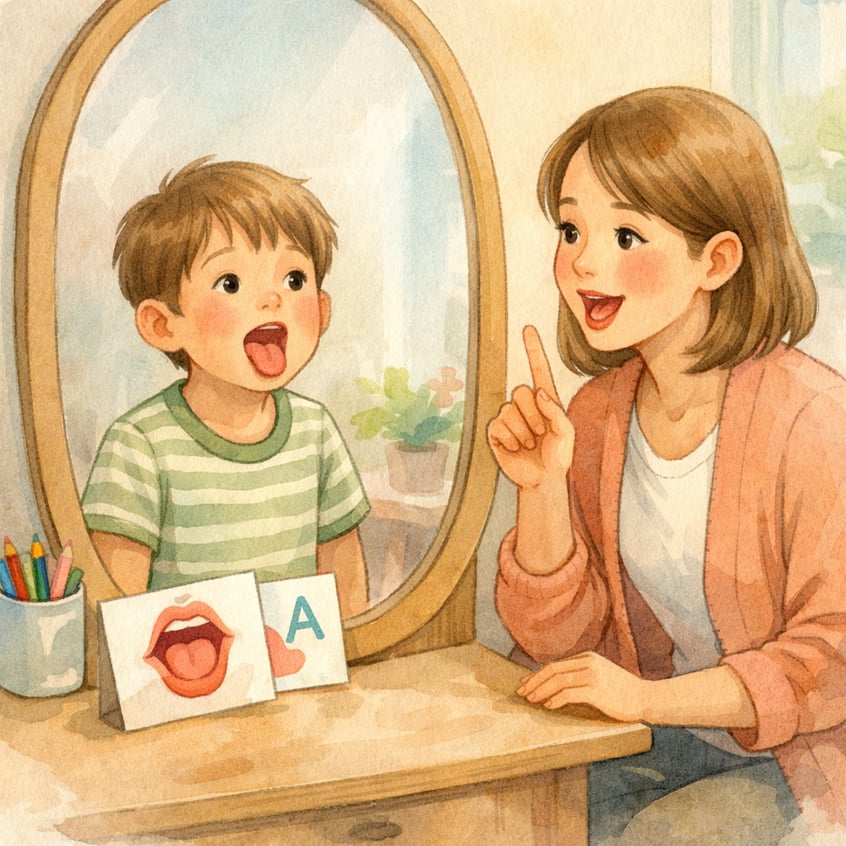
They will also assess oral-motor skills by observing lip, tongue, and jaw movements during both speech and non-speech activities. Your child may be asked to imitate various sounds and movements to gauge planning and execution.
You’ll be asked about your child’s developmental history and concerns. This comprehensive evaluation helps determine if the disorder is apraxia or another condition, guiding appropriate treatment.
The role of multidisciplinary teams in diagnosis
Diagnosing communication disorders like apraxia often requires more than just a speech pathologist. A multidisciplinary team—including your GP, pediatrician, occupational therapist, and psychologist—may be involved for a complete assessment.
Each professional offers unique insights. For example, an occupational therapist can identify motor issues, while a pediatrician checks for other medical conditions. This collaboration addresses all aspects of your child’s development since apraxia may co-occur with other challenges.
Together, the team confirms the diagnosis and creates a comprehensive support plan. The speech pathologist leads speech therapy while ensuring your child receives coordinated care.
Treatment Options for Children with Apraxia of Speech
Once a child receives a diagnosis of childhood apraxia of speech, the focus shifts to treatment. Speech therapy is the primary and most effective apraxia therapy. The goal is to help your child improve their ability to plan and coordinate the movements for speech, from simple sounds to complex words.
A speech pathologist will create an individualized treatment plan targeting your child’s specific needs. This plan will be intensive and focused, using evidence-based approaches designed for motor speech disorders. Let's explore some of the core methods and tools used in this specialized therapy.
The core approaches used in speech therapy
Apraxia therapy is grounded in the principles of motor learning. Because this is a motor speech disorder, treatment focuses on the actual movement of speech muscles during speech attempts. The goal is to help the brain learn new, correct motor plans for speech production. This is different from therapy for other speech issues.
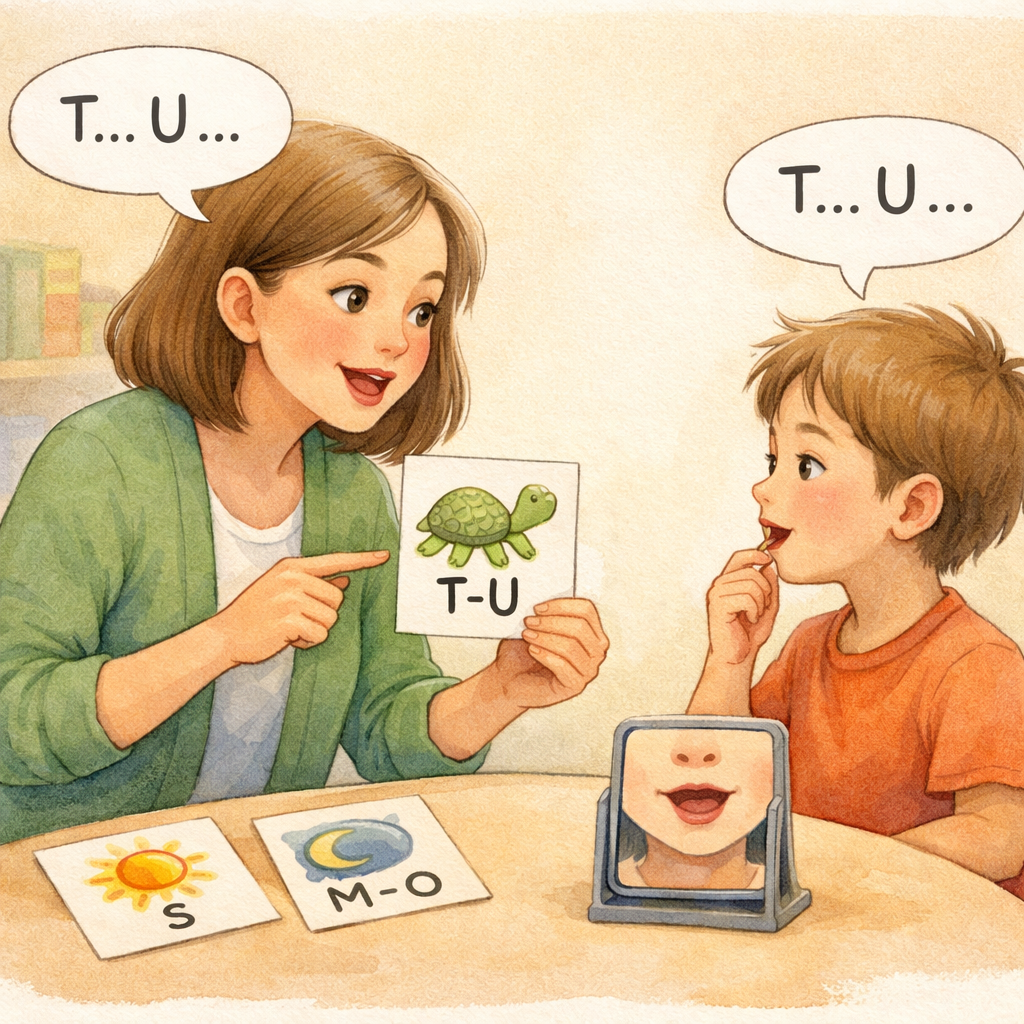
The therapy is highly structured and involves a great deal of repetition. Your child will practice sounds, syllables, and words many times in each session. The speech pathologist will provide cues and feedback to help shape their attempts and make them more accurate.
Effective speech therapy for apraxia often includes these features:
- Intensive Practice: Frequent and repetitive practice of speech targets is key.
- Sensory Cueing: Using visual, verbal, or tactile (touch) cues to help the child achieve the correct mouth position.
- Focus on Rhythm: Using rhythm and tapping to improve the natural flow and stress patterns of speech.
- Gradual Progression: Starting with simple sounds and words and slowly building up to more complex phrases and sentences.
Technology, tools, and home activities that support progress
In addition to speech therapy, various tools and technologies can support your child’s progress. These resources, often part of the treatment plan, enhance speech and communication skills. Your speech pathologist may recommend specific apps or devices to make practice more engaging.
For children with severe apraxia, alternative and augmentative communication (AAC) methods—such as picture boards or speech-generating devices—provide effective ways to communicate while developing verbal skills. AAC does not hinder speech development; it can actually reduce frustration and support language learning.
Parents play a vital role in treatment. Here’s how you can help at home:
- Practice target words and phrases assigned by the speech pathologist.
- Use speech practice apps on a tablet.
- Make communication part of daily routines in a fun, relaxed way.
- Celebrate every small success to keep your child motivated.
How Speech Therapy Is Tailored for Apraxia of Speech
Speech therapy for apraxia is not a one-size-fits-all solution. Because it's a motor speech disorder, the treatment plan must be specifically designed to address the core problem of motor planning. Standard approaches for a speech sound disorder often don't work for apraxia.
The apraxia therapy focuses on rebuilding the connection between the brain's intent and the mouth's movements. This requires a unique approach that emphasizes repetition, sensory feedback, and intensive practice. Let’s look at how this therapy differs from others and how progress is measured.
Differences from therapy for other speech disorders
The different approach used in speech therapy for apraxia of speech stems from its nature as a motor planning disorder. While therapy for an articulation disorder might focus on teaching a child how to make a single sound correctly, apraxia therapy focuses on the sequence of movements between sounds, syllables, and words.
The emphasis is on motor learning. Think of it like learning to play a musical instrument—it requires intense, repetitive practice of the physical movements until they become automatic. This is why apraxia therapy often involves many repetitions of target words and phrases within a single session. This high intensity is a key differentiator from other speech disorder therapies.
Here's how apraxia therapy compares to other approaches:
|
Therapy Focus |
Apraxia of Speech Therapy |
Other Speech Disorder Therapies |
|---|---|---|
|
Main Goal |
Improve motor planning and sequencing for speech. |
Correct specific sound errors or language rules. |
|
Key Technique |
High-repetition practice of motor movements. |
Teaching sound placement or linguistic patterns. |
|
Session Frequency |
Often intensive (3-5 times per week). |
Typically less frequent (e.g., once a week). |
|
Use of Cues |
Heavy reliance on tactile, visual, and verbal cues. |
Primarily uses auditory and verbal models. |
Scheduling therapy and measuring progress

Scheduling therapy for apraxia often requires a more intensive approach than other speech disorders. Research shows children with apraxia benefit most from frequent, consistent sessions—usually three to five individual appointments per week.
This intensity helps establish and reinforce new motor plans for speech. While group therapy can supplement treatment, individual sessions provide the focused, repetitive practice essential for progress. Your speech pathologist will tailor the schedule to your child's needs.
Progress is measured continuously and goes beyond simply learning new words. Improvements include:
- Greater consistency in correct word production
- Ability to say longer, more complex phrases
- Better rhythm and flow of speech
- Increased independence with less reliance on cues
Conclusion
In conclusion, understanding childhood apraxia of speech is essential for parents and caregivers. Early recognition, accurate diagnosis, and tailored treatment can greatly improve your child's communication skills. Speech therapy enhances articulation and gives children practical tools for daily communication. Remember, progress varies for each child—patience and encouragement are important.
For personalized support, consider scheduling a consultation or call daar at 02 9133 2500 to help your child overcome apraxia of speech.
Frequently Asked Questions
How long does it take for children to improve with speech therapy?
The timeline for improvement with speech therapy for apraxia of speech varies for each child. Progress depends on the severity of the condition, the intensity of the treatment plan, and consistent practice. While some children show progress quickly, others require years of therapy to improve their speech development and child's speech.
Can adults also develop apraxia of speech?
Yes, adults can develop apraxia of speech, which is called acquired apraxia. This speech disorder typically results from a brain injury, stroke, or tumor affecting the parts of the brain responsible for speech. It causes communication challenges similar to childhood apraxia, but it is a loss of a previously held ability.
Are there specialist resources or support groups for families in Australia?
Yes, there are excellent resources for families dealing with apraxia of speech. Organizations like Apraxia Kids and Speech Pathology Australia offer information, fact sheets, and connections to support groups. These resources can help you find specialists in communication disorders and connect with other families on a similar journey.
.svg)




.svg)