
.png?width=48&height=48&name=Group%201%20(3).png)























17 February, 2026

Telehealth Speech Therapy for Toddlers: Connecting Through the Screen
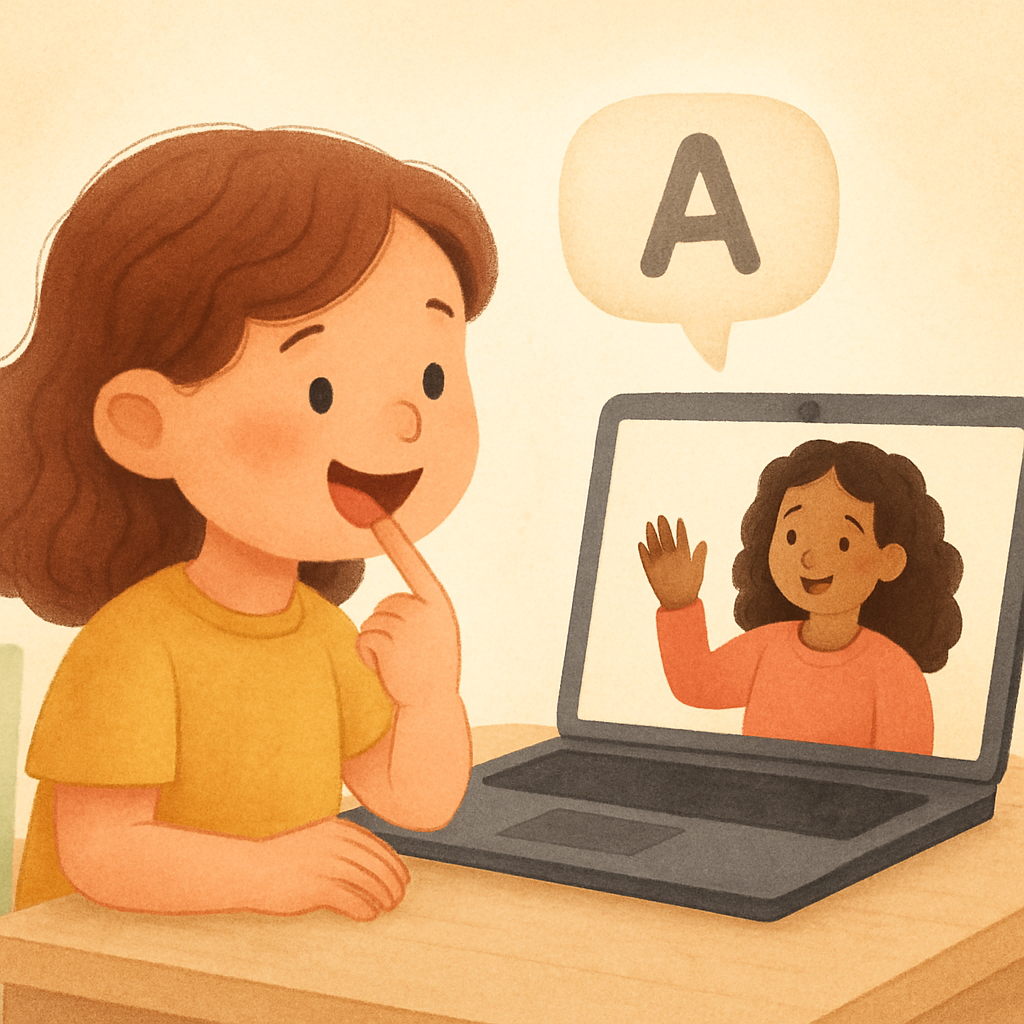
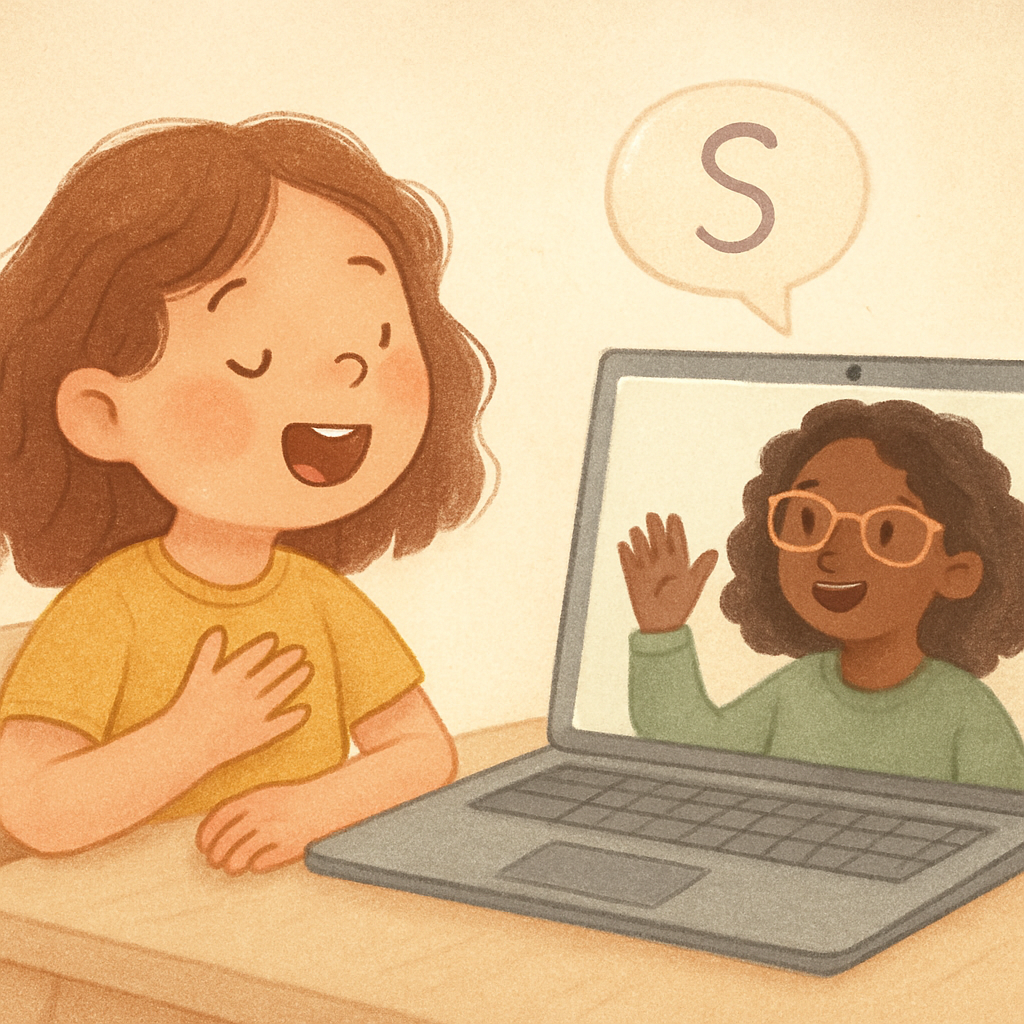
If you are a parent of a toddler with a speech delay, you are likely juggling a million things. Between work, daycare drop-offs, meal prep, and managing tantrums, the idea of adding a weekly therapy appointment to the mix can feel overwhelming.
The drive to the clinic, the battle to find parking, the waiting room anxiety—it adds up.
But what if the expert support your child needs could come directly into your living room?
Telehealth speech therapy has rapidly become a preferred choice for busy families. While many parents initially wonder, "How can a toddler sit still in front of a screen?", the reality is that online therapy is not about staring at a computer. It is about coaching you to be the expert in your child's world.
In this guide, we will explore how telehealth speech therapy for toddlers actually works, why it is often more effective than clinic visits, and how it can empower you to help your child find their voice from the comfort of home.
How Does Telehealth Speech Therapy Work for Toddlers?
The biggest misconception about telehealth speech therapy is that it requires a 2-year-old to sit in a chair and pay attention to a stranger on a Zoom call for 45 minutes. If that sounds impossible, you are right—it is!
Effective online therapy for toddlers uses a Parent Coaching Model.
Instead of the therapist trying to entertain your child through the screen, the therapist acts as a coach in your ear. You play with your child on the floor, just like you normally would, while the Speech Pathologist observes and guides you in real-time.
The "Live" Feedback Loop
Imagine you are playing with blocks.
- The Therapist sees: Your child is getting frustrated because the tower keeps falling.
- The Therapist says: "Okay, pause there. See how he’s looking at you? Wait 5 seconds before you fix it. Let’s see if he makes a sound to ask for help."
- The Result: You wait. Your child points and says "Uh-oh!" You celebrate.
This "in-the-moment" coaching is powerful. It teaches you exactly how to use speech therapy strategies during the activities your child already loves, making practice feel like play.
The Benefits of Home-Based Therapy
While convenience is a huge factor, telehealth speech therapy for toddlers offers distinct clinical advantages over traditional clinic visits.
1. The Comfort of Home
Clinics can be scary for little ones. There are new smells, bright lights, and strange toys. A toddler who is anxious or shy might shut down, spending the first 20 minutes of a session just warming up.
At home, your child is in their "safe space." They are wearing their comfortable clothes, playing with their own toys, and sitting on their own rug. This means they are ready to learn from the very first minute.
2. Using What You Have
In a clinic, a therapist might use a fancy toy barn to teach animal sounds. But you don't have that barn at home.
With telehealth speech therapy, the therapist uses your environment. They show you how to turn a laundry basket into a "boat," how to use snack time to teach "more" and "all done," or how to use the family dog to teach "sit" and "come."
This ensures that the skills learned in therapy are easily repeated every single day.
3. Empowering Parents
The most important person in a toddler's life is you. By being the "hands" of the therapy session, you gain incredible confidence. You stop feeling like you have to "outsource" your child's development and start realizing that you have the power to help them grow.
Is It Effective?
Yes. Research consistently shows that telehealth speech therapy is just as effective as in-person therapy for early intervention.
The key to success in early language development isn't the toy the therapist brings; it is the interaction between the adult and the child. Whether that advice comes from a person in the room or a person on a screen, the result—a parent who knows how to support their child—is the same.
Setting Up for Success
To get the most out of your telehealth speech therapy for toddlers sessions, a little preparation goes a long way.
- The Tech: You don't need a fancy setup. A laptop, tablet, or even a smartphone propped up on a shelf works fine. The goal is for the therapist to see you and your child interacting.
- The Space: Choose a quiet area where you usually play. Turn off the TV and minimize background noise.
- The Toys: Have 2 or 3 of your child’s favorite activities ready (e.g., bubbles, blocks, a ball, or a snack). Don't have too many, or they might get distracted jumping from one to the other!
- The Mindset: Be ready to play! You will be doing the heavy lifting (literally and figuratively). Wear comfy clothes and be prepared to get down on the floor.
Conclusion
In a digital world, healthcare is evolving to meet families where they are. Telehealth speech therapy for toddlers is not just a "Plan B"; for many families, it is the best way to access early intervention.
By bringing the expert into your home, you are bridging the gap between the clinic and real life. You are learning to turn bath time, meal time, and play time into language-rich learning opportunities.
Whether you are worried about a speech delay or just want to give your child a boost, online speech therapy offers a flexible, effective, and empowering path forward.
Don't let distance, waitlists, or a busy schedule stand in the way of your child’s progress. Our experienced team offers comprehensive telehealth speech therapy services tailored to toddlers and their families.
Contact us today to book your online consultation or call daar at 02 9133 2500 and start your journey to confident communication.
FAQ: Common Questions for Parents
What if my child has a meltdown during the session?
This is real life, and therapists expect it. In fact, seeing a meltdown can be helpful. It allows the therapist to see what triggers the frustration and coach you on how to use communication strategies to de-escalate the situation next time.
Is Telehealth cheaper than in-person Speech Therapy?
Typically, the hourly rate for the therapist is the same because they are providing the same clinical expertise. However, you save money on travel costs, parking, and time off work.
Can we switch to in-person later?
Many clinics offer a hybrid model. You might start with telehealth speech therapy to get immediate support (often skipping long waitlists) and then transition to in-person or a mix of both later on.
.svg)




.svg)