
.png?width=48&height=48&name=Group%201%20(3).png)























17 April, 2026

Effective Screen Time Limits at Night for Better Sleep
Every night, I stay up on my phone till 1:00 AM, how can I stop this?
To curb late-night phone usage, establish a consistent bedtime routine. Set a specific time to put your phone away, gradually reducing screen time each night. Consider using apps that limit access after a set hour and engage in relaxing activities like reading or meditation to promote better sleep.
For many Australian families, the evening routine is often the most chaotic part of the entire day. Between cooking dinner, managing homework, and trying to transition exhausted children into the bath, handing a child an iPad or turning on the television can feel like the only easy way to achieve a moment of peace. Evening screen time has rapidly become a deeply ingrained, extremely common part of modern children’s routines. However, an overwhelming mountain of paediatric research reveals that this late-day digital pacifier comes with a massive hidden cost: it significantly damages a child's sleep architecture and derails their daytime behaviour.
For families already navigating the complex world of paediatric allied health—particularly those with children needing dedicated behavioural support, emotional regulation strategies, or interventions for neurodivergent profiles like ADHD and Autism Spectrum Disorder (ASD)—establishing clear, non-negotiable screen time limits at night is one of the most powerful, life-changing interventions a parent can make.
When a child’s nervous system is allowed to naturally decompress without the intense artificial stimulation of a digital screen, their sleep quality dramatically improves. In turn, this profoundly restorative rest acts as the foundational building block for better emotional regulation, sharper daytime focus, and vastly improved overall well-being. In this extensive, parent-friendly guide, we will unpack the exact biological reasons why evening screens are so destructive, explore the crucial connection between digital curfews and childhood behaviour, and provide you with highly practical, realistic strategies to reclaim your family's peaceful evenings.
Why Screen Time at Night Severely Affects Kids
To understand why enforcing screen time limits at night is so critical, parents must look past the screen itself and understand what is happening inside their child's developing brain. Digital devices interact with a child’s biology and social life in three highly disruptive ways.
1. Completely Disrupts Vital Sleep Hormones (The Melatonin Blockade)
The human sleep-wake cycle, known as the circadian rhythm, is entirely governed by light. When the Australian sun goes down, a child's brain registers the fading evening light and signals the pineal gland to begin pumping out melatonin—the body's natural, heavy-duty sleep hormone. Research indicates that exposure to TV during the evening can also affect this process. Melatonin lowers the body temperature, relaxes the muscles, and chemically prepares the brain to effortlessly drift off to sleep.
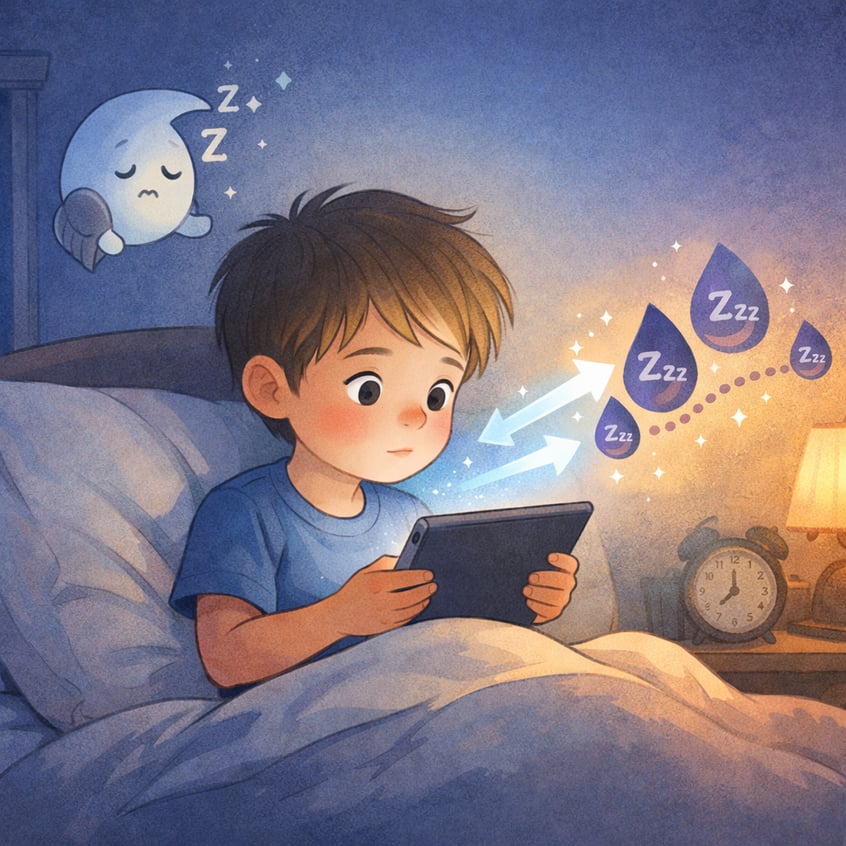
However, modern digital screens—including tablets, smartphones, televisions, and backlit e-readers—emit a highly concentrated, artificial "blue light" that perfectly mimics the bright intensity of midday sunlight. Recent studies indicate that when a child stares intimately at a screen in the hours leading up to bed, this blue light travels directly through their optic nerve and aggressively tricks the brain into believing it is still 2:00 PM. The brain instantly suppresses all melatonin production. Without this essential hormone, the child remains chemically wide awake, resulting in severe difficulty falling asleep, prolonged tossing and turning, and intensely frustrating bedtime battles.
2. Massively Increases Brain Stimulation and Hyperarousal
Beyond the physiological impact of the blue light, the actual content consumed on screens can significantly impair sleep health as it is fundamentally designed to hold a child's attention hostage. Fast-paced video games, rapidly cutting YouTube videos, and interactive tablet applications trigger massive, continuous releases of dopamine and adrenaline in the brain.
Instead of gently winding down for the night, the child’s central nervous system is pushed into a state of hyperarousal and mild "fight-or-flight" excitement. Research from the American Academy of Pediatrics indicates that for children who already require behavioural support or who naturally struggle with sensory processing and hyperactivity, this intense digital stimulation is utterly disastrous. Their brains become so highly engaged and chemically revved up that physically relaxing into a state of sleep becomes biologically impossible for hours after the device is finally turned off.
3. Profoundly Impacts Daytime Behaviour and Mood Regulation
There is an undeniable, cyclical link between late-night screen use, poor sleep, and explosive daytime behaviour, highlighting the negative effects of screen time. When a child's sleep is delayed or highly fragmented by screen-induced hyperarousal, they wake up carrying a massive "sleep debt."
Chronically exhausted children do not simply act tired; they act incredibly dysregulated. Poor sleep effectively shuts down the prefrontal cortex—the logical, reasoning part of the brain that handles impulse control. With the logical brain offline, the emotional centre (the amygdala) takes over. This directly leads to intense morning irritability, extreme hyperactivity (as the body pumps out adrenaline to fight the fatigue), a complete inability to manage complex emotions, and frequent, explosive meltdowns over minor inconveniences. The good news is, by enforcing strong screen time limits at night, you stop this toxic cycle at its root source.
Recommended Screen Time Limits at Night for Australian Families
Transitioning away from a tech-heavy evening can feel intimidating, but establishing firm, biologically sound boundaries is the key to success. Paediatricians, child psychologists, and sleep specialists widely recommend the following foundational rules, which even involve limits on communications from grandma, for evening device management:
Stop All Screen Use at Least 1–2 Hours Before Bedtime
This is the golden rule of paediatric sleep hygiene. It takes the average human brain roughly 90 to 120 minutes to naturally recover from blue light exposure and adequately ramp up melatonin production to the levels required for deep sleep. If your child's target bedtime is 8:00 PM, all devices must be definitively powered down by 6:00 PM (or 7:00 PM at the absolute latest) to ensure sufficient downtime.
Strictly Avoid Screens in Bedrooms
A child's bedroom must be carefully protected as a sanctuary strictly designated for rest and quiet, imaginative play. Televisions, computers, gaming consoles, and smartphones should never be allowed inside the sleeping environment, as excessive device usage can disrupt sleep. When screens are banished from the bedroom, the brain automatically begins to associate that specific room with sleep rather than high-octane digital entertainment.
Replace Screen Time with Deeply Calming Activities
You cannot simply take a highly addictive screen away from a child and expect them to sit quietly staring at the wall. The digital stimulation must be proactively replaced with high-value, deeply calming, low-tech alternatives such as playing board games that actively cue the parasympathetic nervous system to relax.
Healthy, Engaging Alternatives to Screens Before Bed
For children requiring behavioural support, transitions can be the hardest part of the day. To make the "screen-off" transition successful, implement these highly effective, sensory-friendly alternatives and consider these practical tips during your new one-to-two-hour digital curfew window:
Reading Physical Books
Reading is the ultimate neurological wind-down tool. Engaging in fun activities like reading a physical, printed paperback book (not an iPad or illuminated e-reader) naturally lowers the resting heart rate and distracts an anxious mind from the stressors of the school day. For younger children, sitting together and reading aloud fosters immense emotional connection and parental bonding.
Quiet Play, Drawing, or Colouring
Provide your child with activities that require gentle focus but absolutely zero urgency to promote social skills. Keep a dedicated "wind-down basket" in the living room filled with intricate colouring books, jigsaw puzzles, kinetic sand, or building blocks. These tactile, hands-on activities engage the brain's spatial reasoning without triggering sudden, massive dopamine spikes.
Listening to Calming Music or Audio Stories
If your child desperately craves evening entertainment, switch entirely from visual stimulation to auditory stimulation. Set up a screen-free audio player or use a Bluetooth speaker to play child-friendly podcasts, gentle audiobooks, classical music, or continuous brown noise. This satisfies their desire for a narrative without exposing their retinas to melatonin-destroying blue light, allowing you to ensure they don't spend too much time in front of screens.
Meaningful Family Bonding Conversations
Use the screen-free window to intentionally reconnect as a family unit, helping to reduce your child’s screen time. Children with behavioural challenges often carry significant anxiety from their daily interactions. Spend ten minutes engaged in the "Rose, Bud, and Thorn" exercise, where each family member shares the best part of their day, something they are looking forward to, and a challenge they faced. This verbally processes their emotions, ensuring they don't take unresolved anxiety into bed with them.
Deep Relaxation or Breathing Exercises
For children whose bodies run "hot" with hyperactivity, actively teach them how to manually calm their nervous system. Spend five minutes practicing mindful deep breathing, basic child-friendly yoga stretches on the living room rug, or engaging in "heavy work" (like pushing against a wall or receiving deep pressure from a tight hug) during family time, which provides the critical proprioceptive input needed to ground an overactive body.
5 Expert Tips for Parents to Set Screen Limits (Without the Meltdowns)
Knowing that you need to implement a digital curfew is easy; actually taking the tablet out of the hands of a dysregulated child is the true challenge. Use these highly proven, conflict-reducing strategies to establish your new evening routines that align with a family media plan:
1. Establish a Non-Negotiable “Screen-Off” Time
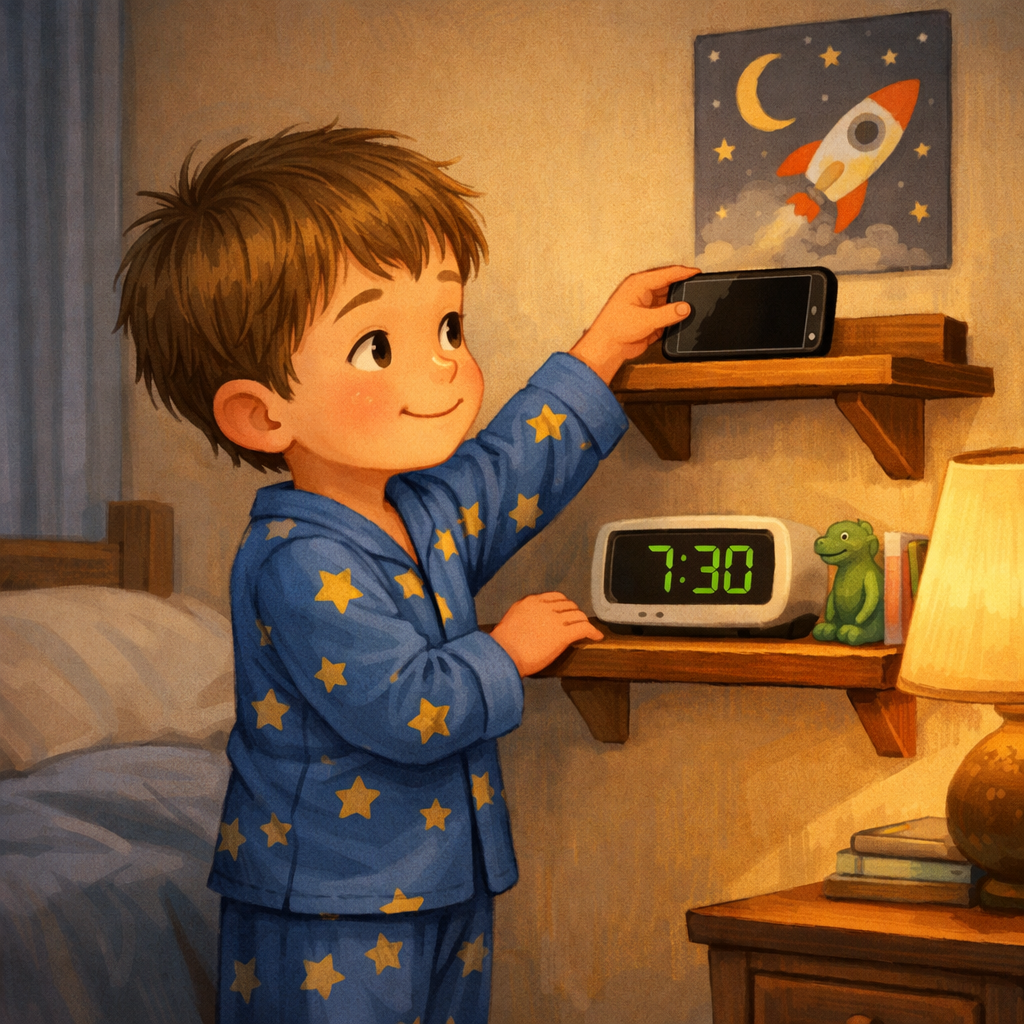
Children thrive on rigid predictability, especially those with ASD or ADHD. Pick an exact time for the screens to go off and stick to it fiercely every single day, including weekends. Use a physical, visual alarm clock to signal the transition. When the alarm rings, it is "screen-off time" for all devices, including phone calls. This brilliant tactic makes the clock the "bad guy" instead of the parent, significantly reducing direct power struggles.
2. Use Automated Parental Controls or Timers
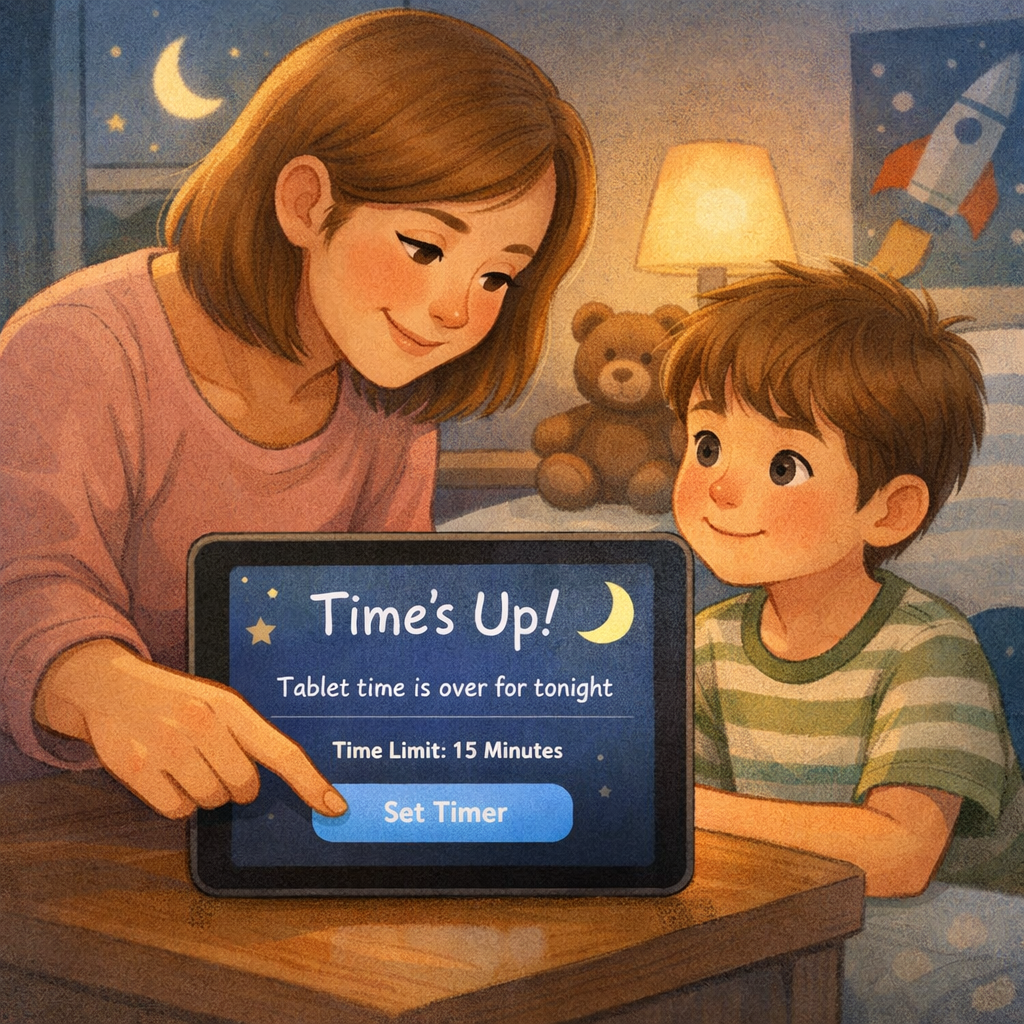
Do not rely on your own willpower or your child's compliance. Utilise built-in modern technology to enforce your rules. Use tools like Apple Screen Time, Google Family Link, or your home internet router's companion app to automatically disable internet access or lock the child’s device with a passcode at the exact time of the digital curfew. Removing the temptation entirely makes the transition infinitely easier.
3. Actively Model Healthy Screen Habits As Parents
The new routine will fail instantaneously if it is a rule "just for the kids." Children are exceptional observers of hypocrisy. You cannot expect a child with impulse control challenges to happily read a book if you are sitting next to them scrolling endlessly through social media. Parents must rigorously model the exact behavior they are enforcing by finding the right balance and putting their own personal devices on the charging station during the evening wind-down period.
4. Create a Highly Visual, Relaxing Bedtime Routine
Children needing behaviour support respond incredibly well to visual representations of their requirements. Create a clear, step-by-step visual chart showing the evening progression: 1) Screens Off, 2) Bath Time, 3) Pyjamas, 4) Read a Book, 5) Practice good sleep hygiene: Sleep. A predictable, highly structured routine trains the brain to subconsciously release sleep hormones the moment the very first step is initiated.
5. Be Immensely Consistent and Expect Initial Pushback
When you first implement strict screen time limits at night, your child will likely protest. Behavioural psychologists call this the "extinction burst"—behaviours, including chores, generally get slightly worse before they get significantly better. Hold your boundaries with calm, unwavering confidence. Once the child realizes the boundary is absolutely permanent, the complaining will stop, and their body will readily accept the new, healthier rhythm.
Limiting screen time at night
Are you looking for more actionable, expert-backed strategies to help your family manage complex behaviours and reduce passive screen time while building thriving routines? Many families set specific screen time rules for evenings, such as limiting device use to one hour after dinner, turning off screens at least 30 minutes before bedtime, or designating certain evenings as 'no screen' family activity nights.
Reach out for a consultation or call daar at 02 9133 2500 for expert guidance tailored to your child’s needs.
Frequently Asked Questions (FAQs)
1. Why exactly should kids fiercely avoid screens at night?
Children must intensely avoid screens at night because the digital devices emit a concentrated, artificial blue light that completely interferes with the brain's ability to produce melatonin (the master sleep hormone). Furthermore, the highly interactive notifications, fast-paced nature of digital games and videos severely overstimulates the developing brain, spiking stress hormones and making it biologically impossible for the child's nervous system to physically relax and fall asleep quickly.
2. How long before bed should evening screen time definitively stop?
Leading paediatricians, neurologists, and sleep hygiene experts universally recommend that all screen use, except for necessary schoolwork, should come to a complete stop at least 1 to 2 hours prior to a child's designated bedtime. This generous 60-to-120-minute vital buffer gives the brain the precise biological time it needs to clear away adrenaline, naturally ramp up its melatonin levels, and physically prepare the central nervous system for deep, uninterrupted rest.
3. What are the major, noticeable benefits of strictly limiting screen time at night for preschoolers?
The benefits are immediate and profound. Families who enforce a strict evening digital curfew rapidly notice vastly better sleep quality (falling asleep faster and staying asleep longer), significantly improved daytime behaviour with far fewer explosive tantrums, enhanced classroom focus, and much healthier emotional regulation, as the child's prefrontal cortex is finally receiving the deeply restorative rest it requires to function optimally.
.svg)




.svg)