
.png?width=48&height=48&name=Group%201%20(3).png)























16 April, 2026

Proven Tips on How to Get an ADHD Child to Sleep at Night

For many families, bedtime is a peaceful winding down of the day. But if you are raising a child with Attention-Deficit/Hyperactivity Disorder, you know that bedtime can often feel like an uphill battle. Just when the house should be getting quiet, your child might experience a sudden surge of physical energy, endless questions, racing thoughts, and a profound inability to simply lie still, which are clear indications that they may not be getting enough sleep.
Getting an ADHD child to sleep at night is one of the most common and exhausting challenges parents face. Restlessness, physical hyperactivity, and difficulty transitioning from daytime play to nighttime rest are hallmarks of the ADHD brain. However, you are not alone in this nightly marathon, and a peaceful evening is not out of reach. With the right understanding of how their brain works and the implementation of proven, sensory-friendly strategies—such as playing soothing nature sounds—better sleep is absolutely possible for both your child and your family.
Why ADHD Affects Sleep
If you have ever felt frustrated, wondering why your child simply cannot close their eyes and drift off like their peers, it helps to understand the biology behind the behaviour. Research shows that up to 70% of children with ADHD experience mild to severe sleep challenges that may affect their mental health. Their brains are wired differently, which directly impacts their nighttime rest.
Children with ADHD often experience heightened energy levels, sleep disturbances, and difficulty regulating their internal clock (the circadian rhythm). For many kids with ADHD, their natural melatonin production—the hormone that signals the body it is time to sleep—is delayed by an hour or more compared to neurotypical children.
Furthermore, ADHD involves a deficit in executive functioning, making it difficult to transition from highly stimulating tasks (like playing a video game) to low-stimulation tasks (like lying in a dark room). They also frequently experience "cognitive hyperarousal," meaning their mind is racing with a million thoughts just as their head hits the pillow. Add a potential "medication crash" or rebound effect from daytime ADHD treatments, and it becomes easy to see why bedtime routines become stressful and inconsistent, leading to delayed sleep and frequent wakeupse-ups, often linked with sleep difficulties.
7 Effective Tips to Help Your ADHD Child Sleep
While you cannot change your child's neurology, you can drastically change their environment and routine to support their unique needs, including playing soft instrumental music. Here are seven effective, parent-tested strategies to help your child wind down and drift off peacefully.
1. Create a Consistent Bedtime Routine
Consistency is key for any child, but it is an absolute lifeline for a child with ADHD. The ADHD brain struggles with sudden transitions, so a predictable step-by-step routine acts as a runway, gently guiding them toward sleep rather than forcing a sudden stop. Incorporating story time into their nightly routine can enhance this process.
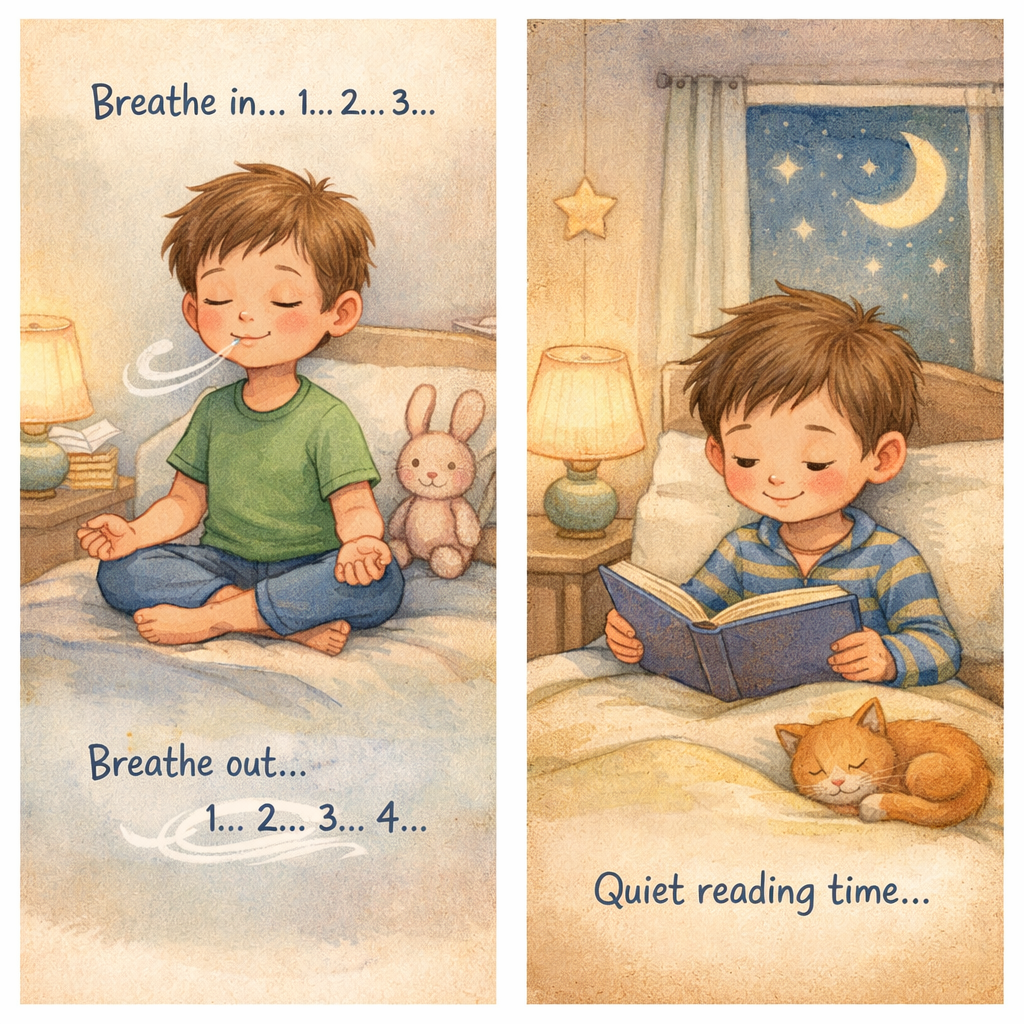
Set a fixed bedtime and follow the same calming activities each night—like having a light snack, taking a warm bath, putting on pajamas, and reading time a book. For children with ADHD, visual schedules work wonders. Create a chart with pictures of each step of the bedtime routine so they know exactly what is expected. Give them plenty of transition warnings (e.g., "In ten minutes, it is time for the bath") so they are not caught off guard. Doing this repeatedly signals to their dysregulated internal clock that it is time to sleep.
How do you get your AuDHD kiddos to sleep?
To help your ADHD child sleep, establish a consistent bedtime routine that includes calming activities like reading or gentle music. Limit screen time before bed and create a comfortable sleep environment. Additionally, consider incorporating relaxation techniques such as deep breathing or guided imagery to ease their transition to sleep.
2. Limit Screen Time Before Bed
For a child with ADHD, screens are highly addictive dopamine dispensers. Video games, flashy cartoons, and tablets provide a constant stream of stimulation that their racing mind craves. Taking this away right before bed can cause frustration, but it is necessary for sleep.
Avoid screens at least 1 hour before bedtime. Blue light from digital devices can severely interfere with natural melatonin production, which is often already delayed in younger children and kids with ADHD. Instead of screens, offer a "dopamine bridge"—a low-tech but highly engaging activity to keep their hands and mind busy without the blue light. Good alternatives include building with Lego, listening to a kid-friendly audiobook or podcast, or doing a complex puzzle.
3. Design a Calm Sleep Environment
Many children with ADHD also suffer from Sensory Processing Disorder (SPD), making them hyper-aware of environmental physical irritants that most people ignore. A slightly itchy tag on their pajamas or the hum of the refrigerator down the hall can feel like a siren to them, significantly impacting their overall quality of life.
Keep the bedroom cool (between 65°F and 68°F), dark, and quiet. If possible, consider having your child sleep in their own bedroom. Consider blackout curtains or a sleep mask to block out neighborhood lights. White noise machines or fans are excellent for minimizing sudden household distractions that might jolt them out of light sleep. Additionally, pay attention to tactile comfort: cut tags out of pajamas, use seamless socks, and consider investing in a weighted blanket, which provides Deep Pressure Therapy (DPT) to naturally calm their central nervous system.
4. Encourage Physical Activity During the Day
A tired body is much easier to put to sleep than a restless one. Regular exercise helps burn excess physical energy, channels hyperactivity constructively, and promotes better sleep at night by building up a natural "sleep debt". Incorporating effective sleep strategies can further enhance the quality of rest.
Encourage "heavy work" and green time (outdoor play in nature) during the daylight hours. Activities like swimming, climbing, riding a bike, or even doing jumping jacks in the living room are fantastic, but be mindful to avoid using electronic devices within two hours of their targeted bedtime, as the adrenaline spike can accidentally keep them awake.
5. Watch Diet and Sugar Intake
What your child eats in the afternoon directly impacts their ability to sleep at night. Reduce sugar and clear out any hidden caffeine, especially in the late afternoon and evening, as they can dramatically worsen hyperactivity and disrupt sleep on a smaller scale. Remember that caffeine hides in places you might not expect, like chocolate ice cream, certain sodas, and even some flavored waters.
Instead of sugary desserts, offer a high-protein bedtime snack about 45 minutes before sleep. A spoonful of peanut butter, a slice of cheese, or a handful of almonds can help stabilize their blood sugar throughout the night and complement strategies like the bedtime pass, preventing sudden middle-of-the-night hunger wake-ups.
6. Practice Relaxation Techniques
Because the ADHD brain struggles to naturally downshift, you have to actively teach your older children how to relax their body. Teach your child simple calming exercises like 'belly breathing' or the 4-7-8 breathing method to help their physical body wind down.
Progressive Muscle Relaxation is incredibly effective for kids who cannot stop squirming. Have them lie in bed in a lower level of illumination and pretend they are squeezing a lemon in their hands as tight as they can, and then completely let it go. Move through the body, having them tighten and release their toes, legs, stomach, and face. This builds body awareness and physically releases pent-up muscle tension.
7. Consider Professional Guidance

Sometimes, despite your most consistent, loving, and careful parenting, outside help is necessary. If sleep problems persist and are severely affecting your child’s mood, school performance, or family harmony, consult a paediatrician or a paediatric sleep specialist, especially if they have a specialty interest in sleep issues.
They can recommend behavioural strategies or evaluate if medication adjustments are needed. Often, daytime ADHD stimulant medications can cause a "rebound effect" as they wear off in the evening, leading to a sudden spike in hyperactivity right at bedtime when active play is still present. A doctor can adjust the timing or dosage of the medication to prevent this. They can also rule out underlying physical issues, such as paediatric sleep apnea or restless leg syndrome (RLS), both of which co-occur at highly elevated rates in children with ADHD.
Struggling with your teen patients’ sleep routine?
Start implementing these simple, sensory-friendly strategies tonight and see the difference a predictable evening can make. From limiting screen time to establishing a calming environment, you have the power to help your child rest.
For more expert parenting tips and specific ADHD support, reach out for a consultation or call daar at 02 9133 2500 for expert guidance tailored to your child’s needs.
Frequently Asked Questions (FAQs)
1. Why do children with ADHD have trouble sleeping?
Children with ADHD and ADHD symptoms often have difficulty calming their minds and bodies, which can significantly delay sleep onset and reduce overall sleep quality. Their brains may produce melatonin later in the evening than neurotypical children, and they frequently experience "cognitive hyperarousal," meaning they cannot shut off their racing thoughts. Additionally, side effects from daytime ADHD medications can also disrupt their normal sleep patterns.
2. What is the best bedtime routine for an ADHD child?
A predictable, calming, and visually guided routine is best for promoting healthy sleep habits. Because sudden transitions trigger ADHD stress, a step-by-step routine—such as having a light protein snack, bathing, brushing teeth, reading, and listening to a quiet audiobook—helps signal the brain that it’s time to sleep. Keeping the routine exactly the same every single night builds feelings of safety and biological predictability.
3. Should I use melatonin for my ADHD child who experiences ADHD sleep problems?
Melatonin may help some children, particularly those whose ADHD causes a delayed circadian rhythm, but it’s absolutely important to consult a healthcare professional before starting any supplement. A paediatrician can help you determine the correct, safe dosage and ensure the melatonin does not negatively interact with any other prescribed ADHD medications your child is currently taking.
.svg)




.svg)