
.png?width=48&height=48&name=Group%201%20(3).png)























19 August, 2026

The Importance of Pediatric Speech Therapy for Development
Key Highlights
- Pediatric speech therapy supports a child’s speech, language development, and everyday communication skills.
- Early intervention matters because children learn communication best during the early years.
- Speech pathologists assess concerns such as speech disorders, language delays, stuttering, and social communication needs.
- Therapy sessions are tailored to the needs of your child and may be play-based or more structured.
- Support can also include feeding and swallowing concerns, not just speaking.
- Families play an important role in helping progress continue at home.
Introduction
When you worry about your child’s communication, it can be hard to know what to do next. Speech therapy gives you a clearer path forward by helping build communication skills in ways that fit your child’s age and needs. Some children need help with sounds, while others need support with understanding language, social use of language, or fluency. With the right guidance, your child’s communication can improve through practical, engaging support that also helps you feel more confident.
Understanding Pediatric Speech Therapy and Its Role in Child Development
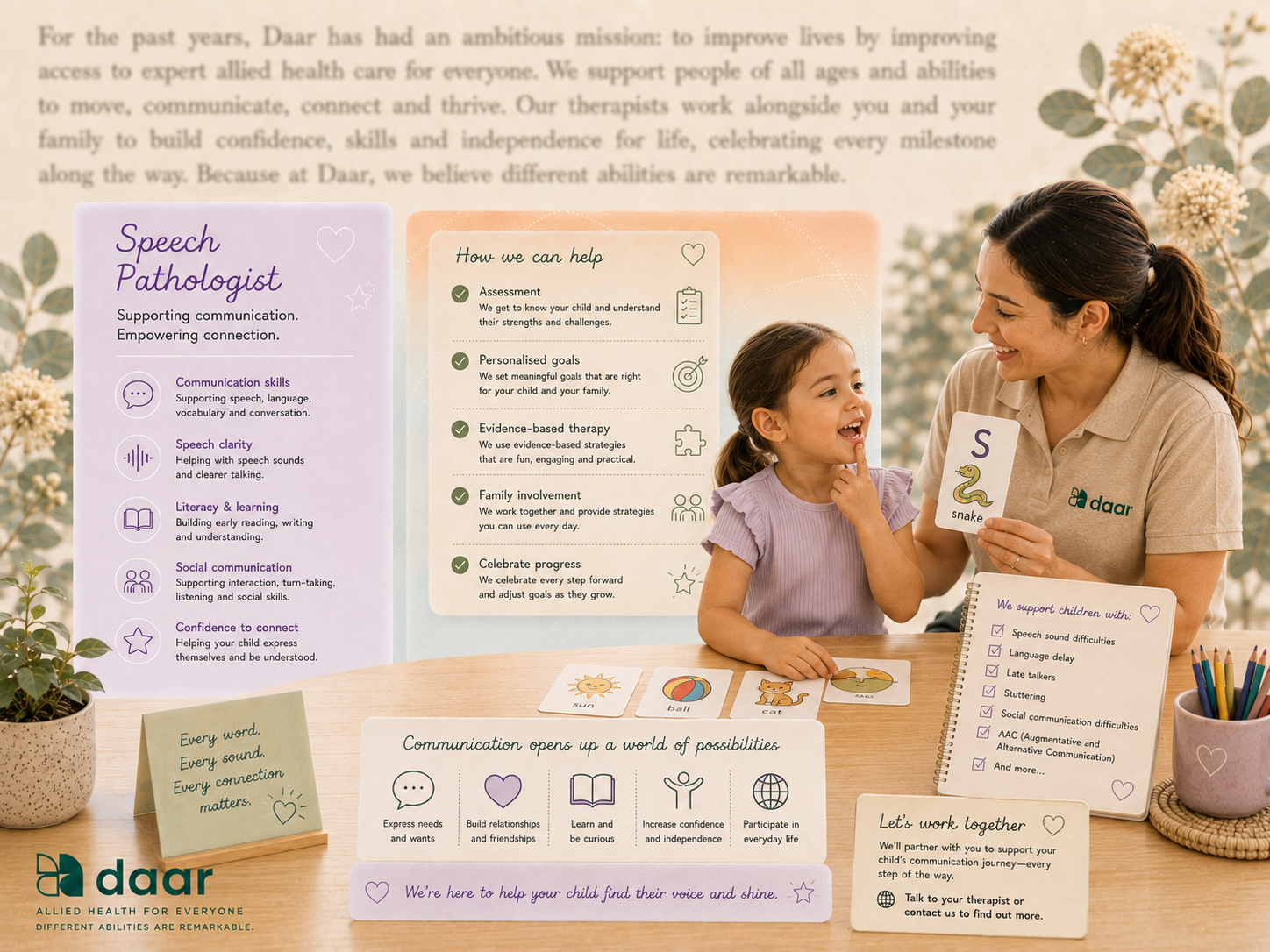
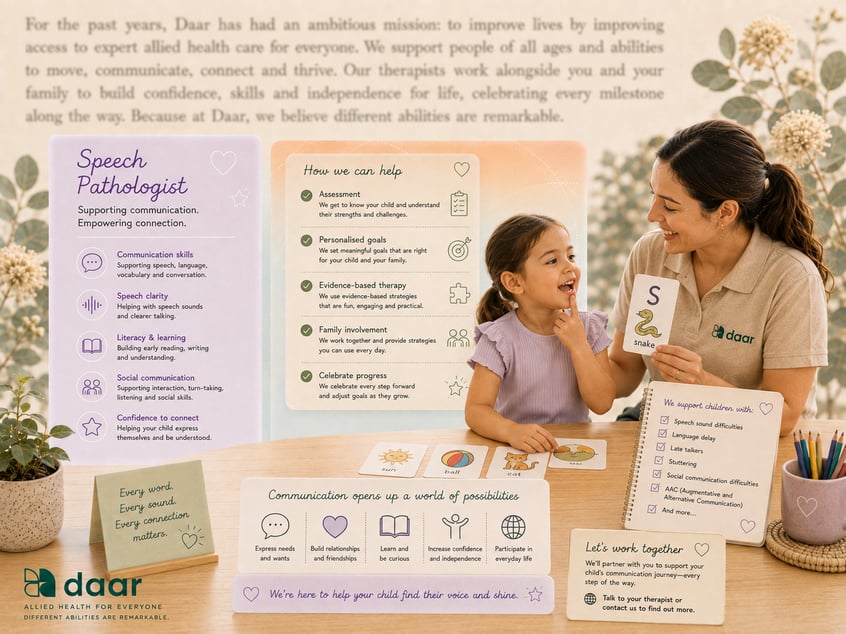
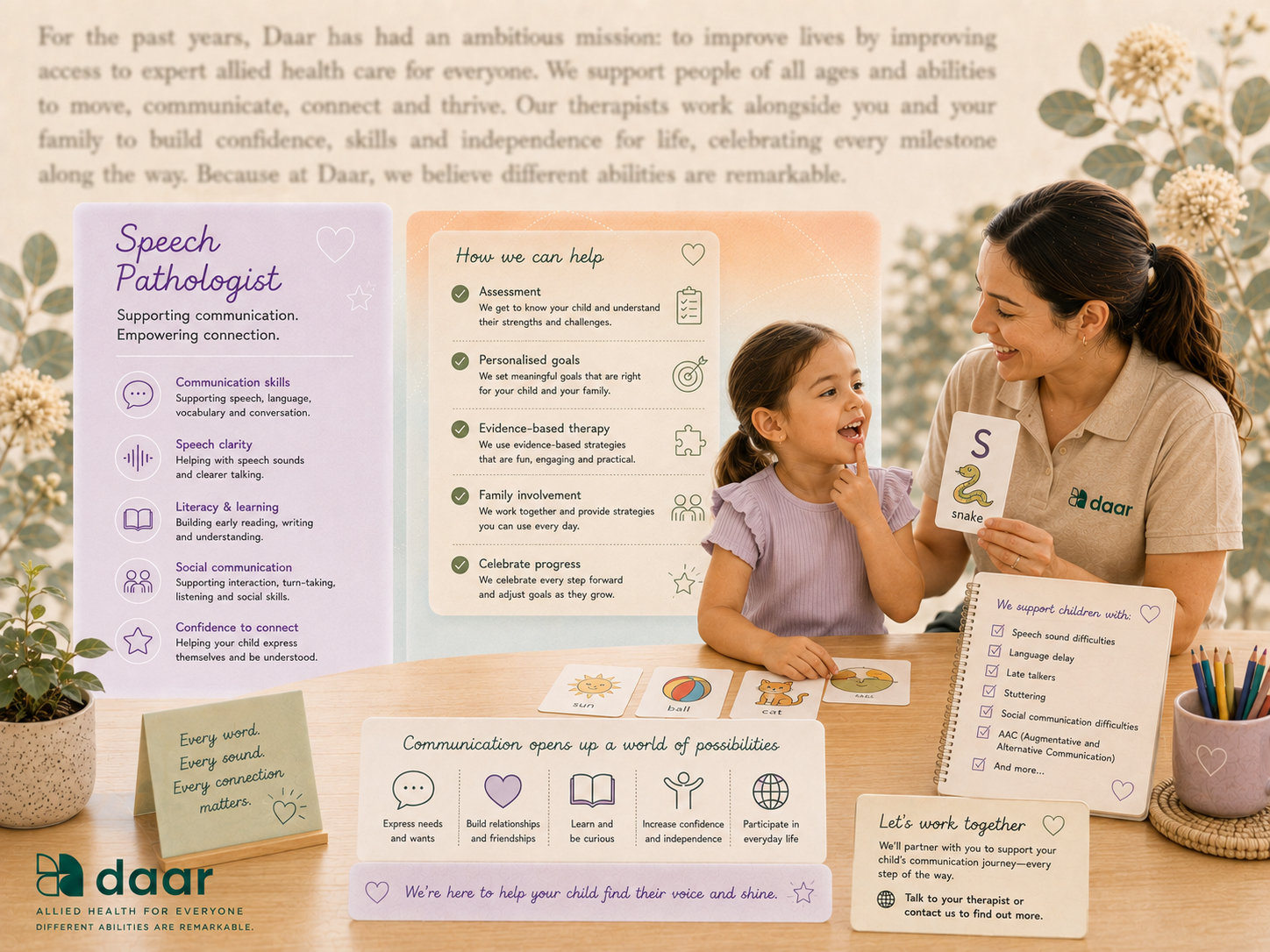
Pediatric speech therapy focuses on helping young children who have communication challenges in speech, language, literacy, social communication, or feeding and swallowing. Speech pathologists assess a child’s skills, identify areas of concern, and recommend therapy services based on individual needs.
This support matters because communication is closely tied to a child’s development across home, school, and social settings. Early intervention can strengthen progress during the early years. To understand why this care is so valuable, it helps to look at what therapy involves and how communication connects to broader growth.
What Is Pediatric Speech Therapy?
Pediatric speech therapy helps children with speech, language, literacy, social communication, voice, fluency, or feeding challenges. Speech pathologists assess, diagnose, and treat these difficulties, creating personalized plans to improve communication in a supportive way.
Therapy often starts with an assessment—using both formal and informal methods—which usually takes about 60 minutes. Families then receive recommendations for next steps.
Sessions are tailored to each child’s goals and may be play-based or structured. Activities are broken into short blocks with breaks. Parents also get strategies to support progress at home.
The Link Between Speech, Language, and Overall Development
Speech and language skills go beyond talking—they shape how your child understands others, expresses ideas, learns in school, and engages socially. When speech is unclear or language development is delayed, communication challenges can affect self-esteem, relationships, and participation.
Most children follow similar developmental milestones, so delays become more apparent over time. Early support is key if your child struggles to communicate or understand as expected; prompt intervention can close gaps before they grow wider. That’s why early intervention matters.
Speech therapy targets specific needs like vocabulary, grammar, articulation, or social language. As children improve their communication skills, connecting with family and peers becomes easier.
Common Signs a Child May Need Pediatric Speech Therapy
Sometimes the signs are clear, and sometimes they are easy to miss. A child may seem frustrated, hard to understand, or slower to reach speech and language milestones. In other cases, the concern may show up during play, learning, meals, or social interaction.
Because speech issues can look different from one child to another, it helps to know what to watch for. Speech therapy can support children with speech disorders, language challenges, or feeding concerns. The next sections cover common early signs in more detail so you can take a closer look.
Recognizing Delays in Speech and Language Milestones
Parents often notice concerns when their child’s speech doesn’t match expected milestones—such as saying fewer words, struggling to combine words, or being hard to understand. While these signs aren’t always long-term issues, they warrant attention.
Consider seeking professional help if you observe:
- delayed speech compared to peers
- limited vocabulary or difficulty using new words
- frequent speech errors or unclear sounds
- trouble following instructions or understanding language
- frustration during communication
A speech pathologist can assess your child’s abilities and recommend therapy based on their needs. Early intervention supports stronger language and speaking skills.
Identifying Difficulties in Social Interaction, Feeding, or Swallowing
Not every concern shows up as a speech issue. Some children have communication challenges that appear during social interaction, while others have trouble with feeding or swallowing. Speech language pathologists are trained to support these areas too, especially when they affect comfort, safety, or participation in daily routines.
Watch for patterns such as:
- difficulty joining conversations or using social communication skills
- reduced eye contact or trouble reading social cues
- coughing, gagging, or stress during feeding
- ongoing swallowing concerns during meals
These signs may call for therapy sessions that focus on more than spoken language. In some cases, speech language pathologists may also work alongside occupational therapy through multidisciplinary care. This team approach can better support the needs of your child when communication, regulation, and mealtime skills overlap.
How Pediatric Speech Therapy Supports Different Needs
No two children need the exact same support. Therapy services are designed around your child’s needs, goals, and current strengths. Speech therapists may use play, structured tasks, group work, school visits, telehealth, or parent programs depending on what will help most.
This flexible approach is important because communication challenges can affect children in different ways. Some need support with autism-related social communication, while others need help with feeding or swallowing. Looking at these needs separately shows how targeted care can strengthen your child’s communication skills and daily function.
Helping Children with Autism and Diverse Communication Needs
Children with autism or other communication disorders benefit from practical, individualized support in daily life. Speech therapists help with social communication, language understanding, meaningful word use, and social participation.
Pediatric speech therapy is tailored to each child’s needs. Some children need help with play and interaction; others may benefit from alternative communication methods or parent-led strategies.
Support can also include parent programs that provide families with tools to improve communication at home, ensuring progress extends beyond the clinic into everyday routines.
Addressing Feeding and Swallowing Challenges through Therapy
Speech pathology is not limited to talking. Speech pathologists also support children who have feeding and swallowing difficulties. If meals are stressful, unsafe, or hard for your child to manage, this kind of care can be an important part of overall support.
Speech language pathologists assess the issue and then plan therapy sessions around your child’s needs. The focus may be on making eating safer, improving comfort during mealtimes, or helping your child manage food and drink more effectively. As with communication work, the plan is tailored rather than one-size-fits-all.
In some settings, feeding support may sit alongside other services such as occupational therapy or mealtime management. That coordinated approach can be helpful when a child has overlapping developmental needs. For families, it also creates a clearer plan and more consistent support across daily routines.
Conclusion
In conclusion, pediatric speech therapy plays a crucial role in supporting a child's development by enhancing their communication skills and addressing various challenges they may face. By recognizing the signs that indicate a need for intervention, parents can take proactive steps to ensure their child receives the support necessary for their growth. The positive effects of speech therapy extend beyond communication, impacting social interactions and overall well-being. If you believe your child may benefit from speech therapy, don’t hesitate to explore your options.
Reach out today for a consultation or call daar at 02 9133 2500 to learn more about how we can help your child thrive.
Frequently Asked Questions (FAQ)
How long does pediatric speech therapy usually take to show progress?
Speech therapy progress varies because every child learns at their own pace. After assessment, the therapist recommends a plan based on your child’s skills and goals. Some children improve through short blocks of therapy sessions, while others need longer support. Early intervention often helps build stronger progress in child’s development.
Is pediatric speech therapy covered by Medicare or NDIS in Australia?
Yes, some speech therapy costs may be supported in Australia. Medicare rebates may be available through a Medicare-subsidized health care plan arranged by your General Practitioner, and NDIS funding can also be used in eligible cases. Coverage depends on your plan, provider, and approved therapy services or chronic disease management pathway.
Can speech therapy be effective for school-aged children?
Yes, speech therapy can still help school-aged children. Support may target language skills, literacy, stuttering, social communication, or ongoing speech issues. Improving these areas can boost classroom participation, confidence, and academic success, especially when therapy matches the child’s goals and is supported at home and school.
.svg)




.svg)