
.png?width=48&height=48&name=Group%201%20(3).png)























16 February, 2026

Pediatric Speech Therapy: Building Connection Beyond Words
"Mama." "Dada." "Look!"
For parents, hearing a child’s voice is one of the most profound joys of raising a family. It marks the beginning of a conversation that will last a lifetime. But for many families, that conversation hits a roadblock. Perhaps the words aren't coming, or they are jumbled, or the child struggles to connect with others on the Playground.
If you are worried about your child’s development, you are likely searching for answers. You might be reading about Speech Therapy, wondering if it is the right step, or trying to understand the difference between a "speech delay" and a "language disorder."
The good news is that you don't have to navigate this alone. Pediatric speech therapy is about more than just correcting a lisp; it is about giving your child the tools to navigate their world with confidence.
In this guide, we will explore the transformative role of Speech Pathology, dive into the critical skill of Social Communication, and show you how early support can change the trajectory of your child’s life.
What is Pediatric Speech Therapy?
Pediatric speech therapy is a specialized field of healthcare focused on diagnosing and treating communication and swallowing disorders in children.
While the term "Speech Therapy" is commonly used, the professionals who deliver this care are often called Speech-Language Pathologists (SLPs). This title is important because it highlights the two main pillars of their work:
- Speech: The physical production of sounds. This includes articulation (how we make sounds), voice (pitch and volume), and fluency (the flow of speech, e.g., stuttering).
- Language: The cognitive process of understanding and using words. This includes receptive language (understanding instructions) and expressive language (putting thoughts into sentences).
An SLP looks at the "whole child." They don't just fix a sound; they look at how that child interacts with their family, their peers, and their environment.
Beyond Articulation: The Role of Social Communication
One of the most overlooked but vital areas of Speech Pathology is Social Communication (also known as pragmatics).
Social Communication is the "invisible rulebook" of human interaction. It is not just about knowing the definition of a word; it is about knowing how, when, and why to use it.
A child with strong speech skills might still struggle if they have deficits in Social Communication. They might:
- Stand too close to others when talking.
- Struggle to take turns in a conversation.
- Interrupt frequently.
- Have trouble understanding sarcasm, jokes, or non-verbal cues like a frown.
For children with Autism Spectrum Disorder (ASD), ADHD, or Social Communication Disorder, the Playground can feel like a foreign country where everyone else speaks the language but them. Pediatric speech therapy bridges this gap. Through role-playing, social stories, and group activities, therapists teach children the "rules of the road" for making friends and keeping them.
Signs Your Child Might Need Support
"Wait and see" is common advice, but in the world of Speech, early intervention is the gold standard. The earlier a child receives support, the better their long-term outcomes.
You should consider an evaluation if your child:
- By 12 Months: Isn't babbling, pointing, or waving.
- By 18 Months: Prefers gestures over vocalizations or has trouble imitating sounds.
- By 2 Years: Has a vocabulary of fewer than 50 words or isn't putting two words together ("More juice").
- By 3 Years: Is difficult for strangers to understand (intelligibility issues).
- Any Age: Stutters consistently, gets frustrated when trying to talk, or seems socially isolated from peers.
What Happens in a Therapy Session?
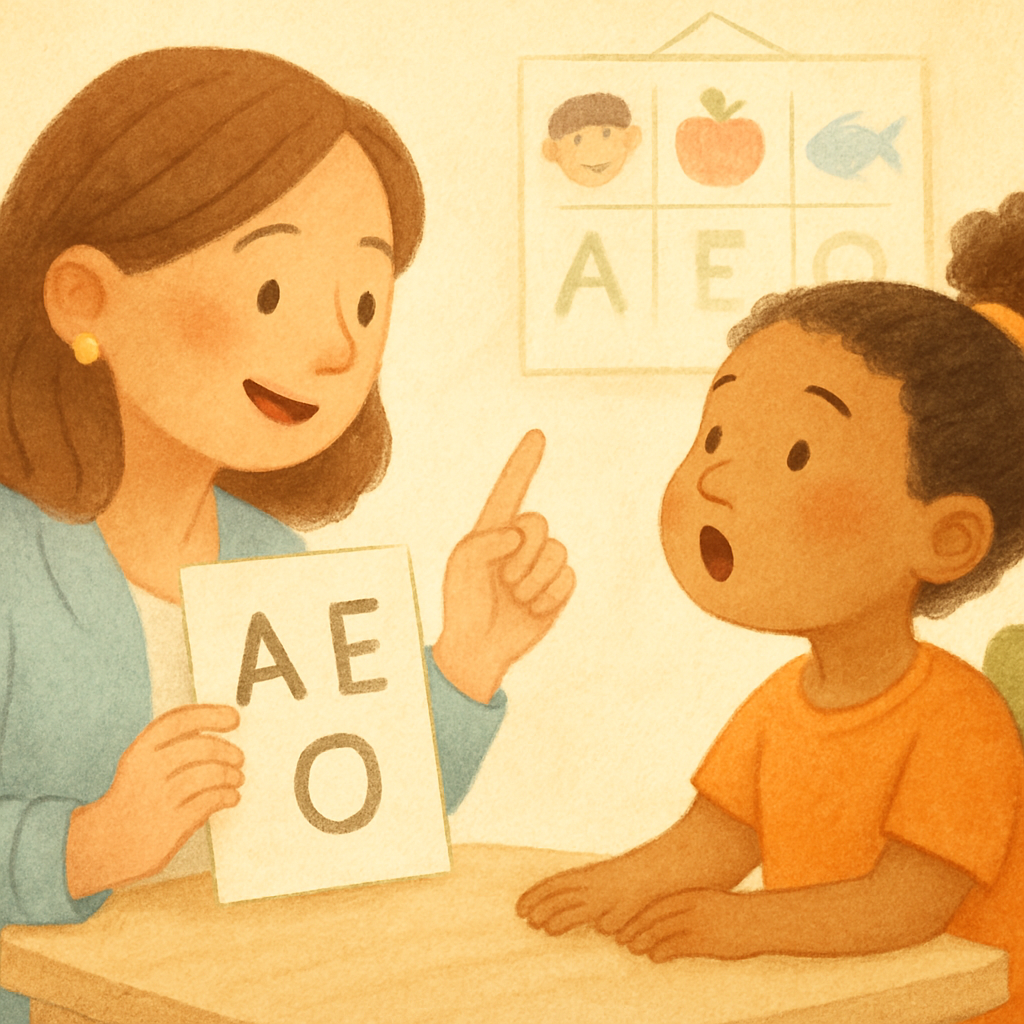
If you have never been to a Speech Therapy clinic, you might imagine a sterile medical room. In reality, pediatric speech therapy looks a lot like play!
Children learn best when they are engaged and having fun. An SLP uses toys, games, books, and movement to target specific goals.
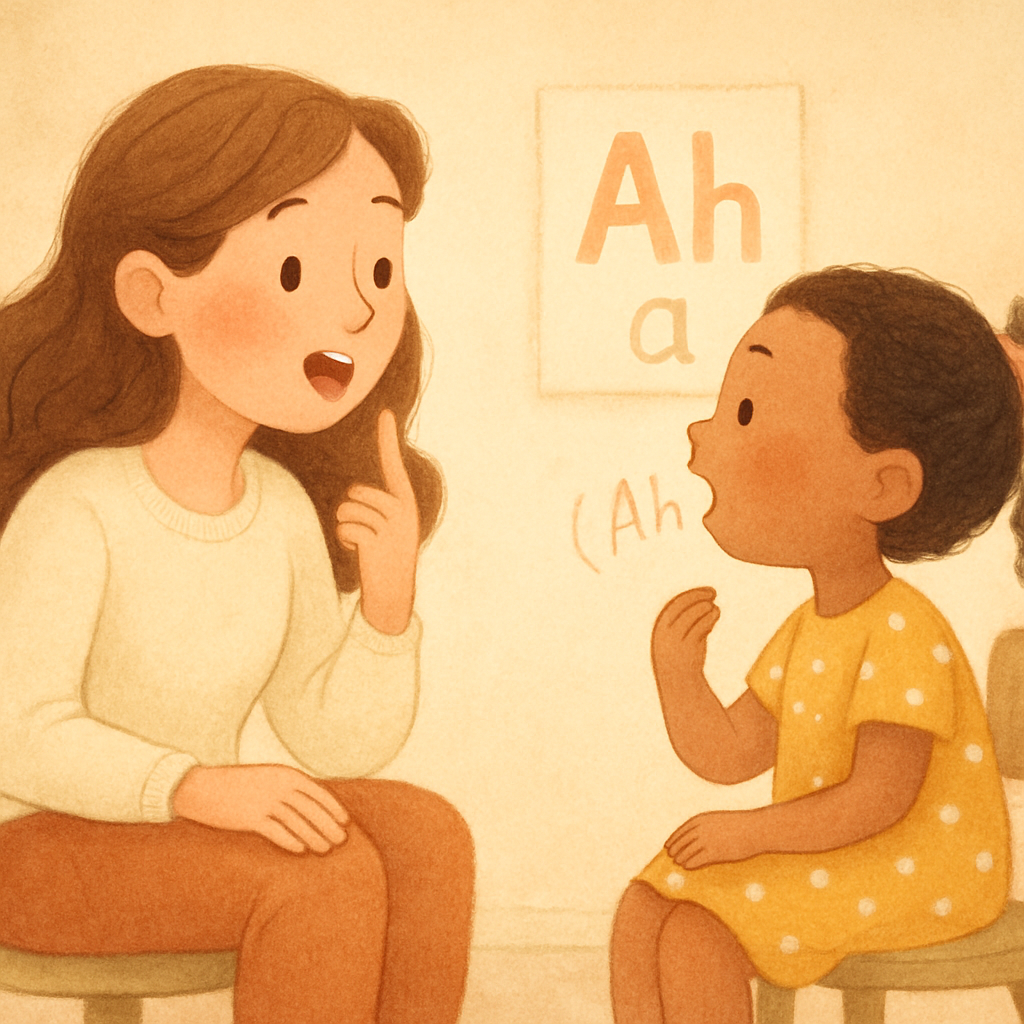
- For Speech Sounds: They might use a mirror to show the child where to put their tongue to make the "L" sound, or blow bubbles to strengthen mouth muscles.
- For Language: They might set up a pretend shop to practice vocabulary like "apple," "money," and "please."
- For Social Communication: They might play a board game to practice turn-taking and handling the emotions of winning and losing.
Crucially, the therapist also coaches you. Parents are the most important part of the team. By learning the strategies used in the clinic, you can turn bath time, mealtime, and car rides into powerful learning opportunities.
Conclusion
Your child has a unique voice, a unique personality, and a unique story to tell. Sometimes, they just need a little help finding the words to tell it.
Whether it is mastering the "R" sound, learning to ask for a turn on the swing, or understanding the nuances of a joke, pediatric speech therapy opens doors. By addressing Speech and Social Communication challenges early, you are not just fixing a problem; you are building a foundation for connection, education, and confidence that will last a lifetime.
If you have concerns about your child’s development, don't wait. Our team of compassionate, expert Speech-Language Pathologists is here to help.
Contact us today to schedule a consultation or call daar at 02 9133 2500 for an evaluation and start your child’s journey toward clear, confident communication.
FAQ: Common Questions for Parents
Do I need a referral?
In many places, you can self-refer to a private Speech Pathology clinic. However, if you are seeking insurance coverage or government funding, a referral from a pediatrician or GP is often required.
Can Speech Therapy help with reading?
Yes! Spoken language is the foundation of written language. SLPs often work on "phonological awareness"—the ability to hear and manipulate sounds in words—which is a critical precursor to reading and spelling.
Is my child too young?
Rarely. SLPs work with infants on feeding and pre-linguistic skills (like eye contact and joint attention). If you are concerned, an evaluation can provide peace of mind or a head start.
.svg)




.svg)