
.png?width=48&height=48&name=Group%201%20(3).png)























16 February, 2026

Behavioural Therapy for ADHD & Autism: A Parent’s Guide to NDIS Support
If you are raising a child with ADHD or Autism, you know that "standard" parenting advice often doesn't apply. You might be dealing with sensory meltdowns that seem to come out of nowhere, struggles with executive function that make getting out the door a daily battle, or social challenges that leave your child feeling isolated.
You want to help your child thrive, but the path forward isn't always clear. You’ve likely heard of behavioural therapy, but what does it actually look like in practice? Is it just about discipline? And crucially, how does it fit into your National Disability Insurance Scheme (NDIS) plan?
The good news is that modern behavioural therapy is not about changing who your child is. It is about giving them the tools to navigate a world that wasn't built for them, while empowering you with strategies to bring calm to the chaos.
In this guide, we will break down how behavioural therapy adhd and behavioural therapy autism work, how they differ, and how to maximize your behavioural therapy ndis funding to get the best support for your family.
What is Behavioural Therapy?
At its core, behavioural therapy is an evidence-based approach that focuses on the relationship between a child's environment, their thoughts, and their actions.
It operates on a simple premise: Behaviour is communication.
When a child hits, screams, withdraws, or refuses to participate, they are communicating an unmet need or a skill deficit. They might be saying, "I'm overwhelmed," "I don't understand," or "I need connection."
Therapy focuses on:
- Identifying the Function: Why is the behaviour happening?
- Skill Building: Teaching the child a safer, more effective way to get their needs met.
- Environmental Changes: Adjusting the surroundings to reduce stress and triggers.
Behavioural Therapy for ADHD: Building Executive Function
Attention Deficit Hyperactivity Disorder (ADHD) is primarily a disorder of executive function—the brain's management system. Children with ADHD often struggle with impulse control, working memory, emotional regulation, and planning.
Behavioural therapy adhd is often the first line of treatment recommended by paediatricians, especially for younger children.
Key Focus Areas
- Routine and Structure: Creating visual schedules and predictable routines to reduce the cognitive load on the child.
- Positive Reinforcement: ADHD brains crave dopamine. Therapy uses immediate, specific praise and reward systems to encourage positive behaviours (like finishing homework or getting dressed).
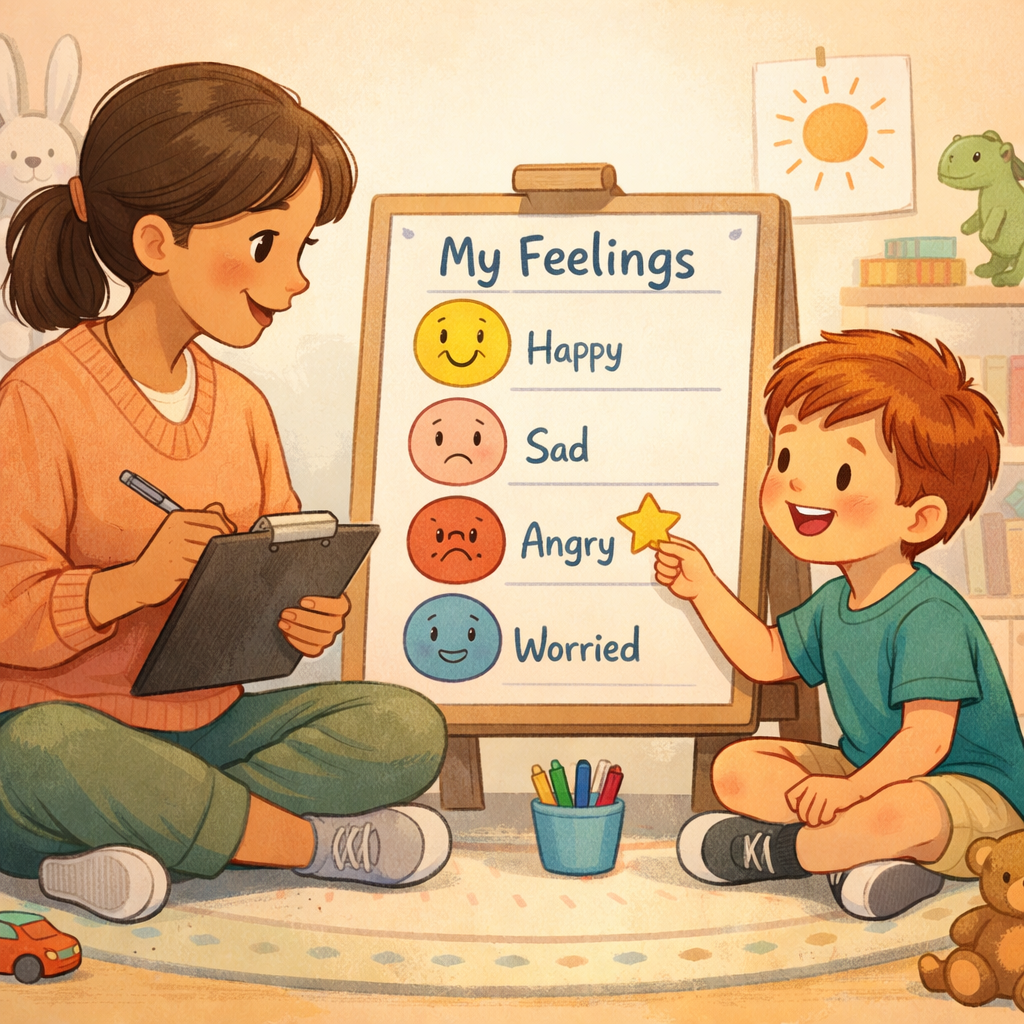
- Emotional Regulation: Teaching children to recognize the physical signs of frustration ("My heart is beating fast") and use coping strategies (deep breathing, fidget toys) before they explode.
- Social Skills: Coaching children on how to pause before interrupting, wait their turn, and read social cues.
Behavioural Therapy for Autism: Connection and Communication
While there is overlap, behavioural therapy autism often has a different focus. For autistic children, challenges often stem from sensory processing differences, communication barriers, and difficulty understanding social nuances.
Modern therapy for Autism is neuro-affirming. The goal isn't to make the child appear "neurotypical" (masking), but to help them achieve their own goals and advocate for themselves.
Key Focus Areas
- Functional Communication: If a child is non-verbal or has limited speech, therapy focuses on giving them a voice—whether through sign language, picture exchange systems (PECS), or speech-generating devices.
- Social Understanding: Using "Social Stories" to explain the hidden rules of social interaction (e.g., personal space, taking turns in conversation).
- Sensory Regulation: Identifying sensory triggers (loud noises, bright lights) and creating a "sensory diet" to help the child stay calm and focused.
- Flexibility: Helping children cope with changes in routine or unexpected events without severe anxiety.
Navigating Behavioural Therapy NDIS Funding
The NDIS can be a lifeline for families, but understanding the price guide can be confusing. Behavioural therapy ndis funding is typically found under the Capacity Building budget.
Here is how to identify and use your funding:
1. Improved Daily Living (CB Daily Activity)
This is the most common funding category for behavioural therapy. It covers:
- Assessment: Understanding your child's strengths and challenges.
- Therapy Sessions: Regular sessions with a Psychologist, Occupational Therapist, or Behaviour Support Practitioner.
- Parent Training: Coaching for you to implement strategies at home.
2. Improved Relationships (CB Relationships)
This category is specifically for Specialised Behaviour Support. You will need this funding if:
- Your child’s behaviour poses a risk of harm to themselves or others.
- Restrictive practices (like medication for behaviour, safety gates, or harnesses) are used.
- A formal Behaviour Support Plan (BSP) needs to be written and lodged with the NDIS Commission.
Tip: You can often use your "Core Supports" funding to pay for a support worker to help your child practice their therapy goals in the community (e.g., going to the park or shops), while "Capacity Building" pays for the therapist.
The Role of Parents in Therapy
Whether it is behavioural therapy adhd or behavioural therapy autism, the "secret sauce" to success is you.
A therapist might see your child for one hour a week. You are with them for the other 167 hours. Research consistently shows that parent-mediated intervention—where the therapist coaches the parent—leads to the best long-term outcomes.
Therapy isn't about dropping your child off to be "fixed." It is about partnering with a professional to learn how to:
- De-escalate a meltdown.
- Set up your home environment for success.
- Communicate in a way your child understands.
- Celebrate the small wins.
Conclusion
Raising a neurodivergent child is a journey filled with unique challenges and profound rewards. While the meltdowns and struggles are real, so is the potential for growth.
Behavioural therapy is not about changing your child’s personality. It is about removing the barriers that prevent their personality from shining. Whether you are navigating behavioural therapy adhd, seeking support for behavioural therapy autism, or maximizing your behavioural therapy ndis plan, the right support can transform your family life.
By focusing on understanding the "why" behind the behaviour and building skills with compassion, you can help your child navigate the world with confidence.
We specialize in providing neuro-affirming, evidence-based behavioural therapy for children with ADHD and Autism. Our NDIS-registered team is here to partner with you.
Contact us today for a consultation or call daar at 02 9133 2500 to discuss your NDIS goals and find the right therapist for your family.
FAQ: Common Questions for Parents
How do I know if my child needs therapy?
If your child’s behaviour is impacting their ability to learn, make friends, or participate in family life, it is worth seeking an assessment. Early intervention is key, but support can be effective at any age.
Can I use NDIS funding for school meetings?
Yes. Behavioural therapy ndis funding (Improved Daily Living) can be used for your therapist to attend school meetings, observe your child in the classroom, and collaborate with teachers to ensure consistency.
My child has both ADHD and Autism (AuDHD). How does therapy work?
This is very common! A skilled therapist will tailor the approach to address the unique mix of sensory needs (Autism) and executive function challenges (ADHD). They will often focus on regulation first, as a dysregulated child cannot learn new skills.
.svg)




.svg)