
.png?width=48&height=48&name=Group%201%20(3).png)























16 April, 2026

The Importance of a Consistent Bedtime Schedule for Kids

For many families, the hours between dinner and bedtime are the most chaotic part of the day. Between finishing homework, negotiating bath time, and dealing with the inevitable pleas for "just one more video" or "five more minutes on the tablet," getting a child to bed can feel like an uphill battle. However, establishing a predictable evening flow is more than just a way to save your own sanity; it is also essential for building healthy sleep habits.
A consistent bedtime schedule combined with a strict screen-free routine is one of the single most effective, scientifically proven ways to support a child’s profound physical growth and cognitive function and development. When children go to bed at the exact same time each night and actively avoid digital screens before sleep, their brains and bodies can fully benefit from the deep, restorative rest required to thrive.
In this comprehensive guide, we will explore the critical biology behind your child's internal clock, uncover how digital screens secretly sabotage nighttime growth, and provide you with actionable, step-by-step strategies to build a calming bedtime routine that genuinely supports your child’s lifelong health, including the development of healthy blood vessels. Parents can help their children create a consistent bedtime routine by setting a regular bedtime, establishing calming pre-bedtime activities like reading or gentle music, and limiting screen exposure before bed. Additionally, encouraging relaxing rituals and sticking to the same schedule even on weekends will reinforce healthy sleep habits for their child.
Why Consistency Matters for Growth
Human beings are biological creatures deeply governed by rhythm and routine. Children’s bodies, in particular, rely heavily on predictability to manage their internal chemistry and other important processes. At the core of this system is the circadian rhythm—a 24-hour internal clock that dictates when we feel awake and when we feel sleepy.
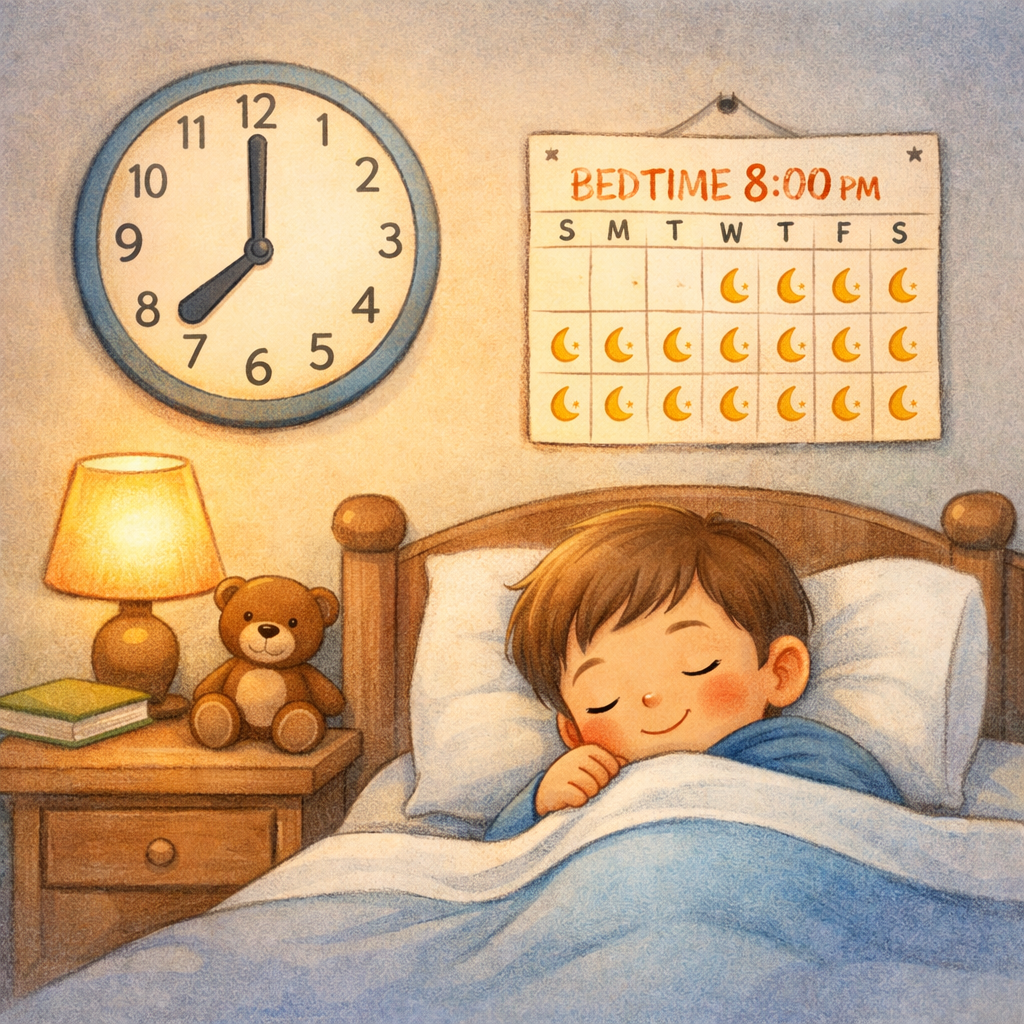
A regular, unwavering bedtime helps perfectly regulate this internal clock. When a child goes to bed at 8:00 PM every single night, their brain learns to anticipate sleep duration and sleep. About an hour before bedtime, their body naturally begins to lower its core temperature, decrease heart rate, and release sleep-inducing hormones. This makes it drastically easier for them to naturally fall asleep without a fight and actually stay asleep throughout the night.
If bedtimes wildly fluctuate—say, 8:00 PM on Tuesday but 10:30 PM on Friday—the child experiences "social jetlag." Their brain becomes confused, and they miss their natural window of tiredness, often catching a hyperactive "second wind." This consistency is absolutely paramount because it allows for good quality sleep, better quality, uninterrupted deep sleep—and deep sleep happens to be the exact biological phase when human growth hormone (HGH) is released in massive, concentrated pulses. In short, a consistent bedtime directly paves the way for your child to grow taller and stronger.
The Role of a Screen-Free Bedtime Routine
In today’s hyper-connected digital world, screens are the number one enemy of a healthy circadian rhythm and can exacerbate issues such as sleep apnea. Whether it is a smartphone, a tablet, a laptop, or a television, all digital screens emit a concentrated dose of artificial blue light.
To a child's highly sensitive eyes and developing brain, this bright blue light essentially mimics the midday sun. Staring at a screen tricks the brain's pineal gland into halting the production of melatonin, the hormone responsible for making us naturally tired. Without adequate melatonin, a child will lie in bed feeling physically wired and awake, leading to frustrating hours of tossing and turning, which can negatively affect their overall heart health.
Beyond the blue light, screens provide intense cognitive and emotional stimulation. Fast-paced video games and endless social media scrolling trigger the release of cortisol and adrenaline (the stress and wakefulness hormones). A screen-free bedtime routine acts as a necessary biological buffer. By putting away the devices, you eliminate this artificial stimulation, helping the brain relax naturally and improve the quality of your sleep. This makes it phenomenally easier for children to peacefully transition from the alertness of the day into the deep, slow-wave sleep where holistic growth and physical recovery actually happen.
4 Remarkable Benefits of a Consistent, Screen-Free Routine
When you combine the power of a strict schedule with the calming effects of a tech-free environment, including techniques like progressive muscle relaxation, the developmental benefits are staggering. Here are the four primary ways this powerful combination transforms your child's health:
1. Supports Physical Height and Muscle Growth
As mentioned earlier, the pituitary gland works its hardest during the deepest stages of nighttime sleep. By enforcing a consistent, screen-free bedtime, you ensure your child falls asleep quickly and reaches that deep-sleep stage much faster. This deep, uninterrupted sleep promotes the maximum release of growth hormone, which is absolutely essential for bone lengthening, tissue repair, and overall physical development.
2. Drastically Improves Sleep Quality
A predictable routine and reduced screen exposure naturally cure most minor childhood insomnia. When the brain isn't fighting against blue-light-induced cortisol spikes, children experience a shorter "sleep latency" (the amount of time it takes to fall asleep). They also experience far fewer nighttime awakenings, ensuring they stay asleep longer and cycle through all the necessary restorative sleep phases completely uninterrupted, which can also reduce the risk of high blood pressure.
3. Enhances Brain Development and Classroom Focus
While the body uses sleep to grow, the brain uses sleep to learn. Better sleep directly supports memory consolidation—the process where the brain takes what it learned during the day and securely saves it to long-term memory. A well-rested child wakes up with a refreshed prefrontal cortex, blessing them with sharper concentration, better impulse control, and an improved ability to enjoy a good night’s sleep and absorb new information at school.
4. Promotes Emotional Balance and Better Behaviour
Children crave boundaries, even if they protest them. Consistent routines help dramatically reduce nighttime anxiety and daily stress, leading to vastly improved mood and daytime behaviour. When a child knows exactly what to expect every evening, they feel safe and secure. Furthermore, because their brains aren't exhausted from insufficient sleep and sleep deprivation, they are far less prone to emotional meltdowns, irritability, and sudden tantrums.
Tips to Build a Consistent, Screen-Free Bedtime

Transitioning to a highly structured, tech-free evening may take a few days of adjustment, but the long-term payoff is invaluable. Here is how you can practically implement this routine in your home to prep for the next day:
- Set the exact same bedtime and wake-up time daily: Pick a bedtime that allows your child to get the recommended 9 to 12 hours of sleep based on their age. Enforce this consistent sleep schedule rigidly, seven days a week. Consistency is the secret ingredient to regulating their internal clock.
- Turn off all screens at least 1 hour before bed: Set a daily "digital alarm" one hour before your target sleep time. When the alarm goes off, all TVs, phones, tablets, and video games are immediately turned off for the night, regardless of the time of day.
- Keep devices entirely out of the bedroom: The bedroom must be a sanctuary optimized strictly for sleep, with comfortable bedding. Create a central "charging station" in the kitchen or living room where all family devices plug in overnight. This removes the temptation for late-night scrolling or texting under the covers.
- Replace screen time with reading or quiet activities for restful sleep: You have to replace the digital entertainment with something tangible. Encourage your child to read physical books, draw in a sketchbook, do a jigsaw puzzle, or build with blocks. These low-stimulation, tactile activities gently tire the brain out.
- Follow a calming, repetitive nightly routine: Create a 30-to-45-minute wind-down sequence that promotes good sleep hygiene. This might include taking a warm bath (which drops core body temperature to promote sleep), changing into comfortable pajamas, brushing teeth, and reading a story together in a dimly lit room. Do these steps in the exact same order every single night.
Start Protecting Their Growth Tonight!
Your child's body is performing incredible building and repair work every single night. Start building a consistent, screen-free bedtime routine tonight to support your child’s immense physical growth, emotional stability, and overall well-being, especially in preventing poor sleep, which can significantly impact their development. The simple act of turning off a tablet can change their entire tomorrow.
Want more actionable advice to help your family thrive when it comes to the amount of sleep they need? Some common mistakes that make it hard to maintain a consistent bedtime include excessive screen time before bed, irregular evening routines, consuming caffeine too late in the day, and not prioritizing a calm, wind-down period. Avoiding these pitfalls can help your family establish and stick to healthy sleep habits.
Reach out for a consultation or call daar at 02 9133 2500 for more expert tips on sleep hygiene, modern parenting strategies, and child development delivered straight to your inbox!
Frequently Asked Questions (FAQs)
1. Why is a consistently strict bedtime important for kids?
A consistent bedtime is crucial because it helps perfectly regulate the body’s internal biological clock (the circadian rhythm). By going to sleep at the same time every day, the brain learns to naturally release sleep-inducing hormones like melatonin on a schedule. This improves overall sleep quality and supports mental health, ensuring the child reaches the deep sleep stages required to support healthy physical growth.
2. How do digital screens actually affect a child’s sleep?
Screens negatively affect a child's sleep in two major ways. First, the concentrated blue light emitted by devices actively tricks the brain into thinking it is daytime, which severely interferes with melatonin production and makes it chemically harder for children to fall asleep, particularly if their work hours extend late into the night. Second, the fast-paced content of videos and games keeps the brain's nervous system highly stimulated and anxious, preventing the natural relaxation required for deep, restorative rest.
3. What is the best screen-free bedtime routine for children?
The most effective screen-free bedtime routines are highly predictable, repetitive, and deeply calming. Excellent activities include taking a warm shower or bath, doing light stretches or parent-guided deep breathing exercises to lower stress, listening to calm instrumental music, putting together a puzzle, or reading physical books. These activities provide gentle engagement while helping create a smooth, peaceful transition to sleep without any cognitive overstimulation.
.svg)




.svg)