
.png?width=48&height=48&name=Group%201%20(3).png)























16 April, 2026

Resources for getting started on healthy sleep habits with a newborn.

To establish healthy sleep habits with a newborn, consider utilizing resources like sleep training books, parenting blogs, and expert advice from paediatricians. Online forums can also provide community support. Start by creating a consistent bedtime routine to promote better sleep patterns for both you and your baby.
As a parent, keeping your child healthy and safe is your top priority. You diligently serve them vegetables, make sure they wash their hands after playing outside, and keep up with their paediatric check-ups. But there is one foundational pillar of health that is often overlooked in the hustle and bustle of daily family life: sleep, especially in those early weeks of life.
Recognizing normal versus problematic sleep patterns in babies can help you support their overall health. Normal sleep for babies typically includes frequent waking for feeding, varying sleep durations depending on age, and periods of lighter sleep or brief fussiness. However, consistently short naps, excessive fussiness during sleep, or difficulties falling and staying asleep may signal problematic sleep patterns. If you notice ongoing issues or changes in your baby's sleep, consulting your paediatrician is a good idea.
Building healthy infant sleep habits early in life is one of the most powerful, natural, and effective ways to support a child's long-term health. Sleep is not just a period of "doing nothing" or taking a break. It is an incredibly active, highly complex biological process that strengthens the immune system, supports physical growth, and improves overall brain development.
In this comprehensive guide, we will explore why healthy sleep habits start early, dive into the fascinating science of how sleep boosts immunity in children, and provide actionable tips to help your family build strong sleep routines for a lifetime of better health. Common sleep problems that babies face include difficulty falling asleep, frequent night wakings, short naps, and irregular sleep patterns. These issues can often be addressed by establishing a soothing bedtime routine, keeping a consistent sleep schedule, and encouraging babies to sleep for longer stretches. If problems persist, consulting your paediatrician is recommended to rule out underlying medical concerns.
Why Healthy Sleep Habits Should Start Early
Have you ever wondered why paediatricians, including the recommendations, emphasize sleep schedules starting from infancy? It is because children learn routines incredibly quickly, and establishing good sleep habits in early childhood helps set the biological and behavioural foundation for lifelong healthy sleep patterns.
A child’s internal body clock, known as the circadian rhythm, begins to mature and solidify within the first few months of life. By introducing a predictable sleep environment and consistent routines early on, particularly with room sharing, you are actively teaching their nervous system when it is time to be alert and when it is time to rest.
Furthermore, healthy sleep habits for a baby prevent severe sleep disruptions later down the road. Toddlers and preschoolers test boundaries as a normal part of their development. If a strong, non-negotiable foundation for baby’s sleep is already in place, you are far less likely to face hours of bedtime stalling or middle-of-the-night wanderings. Ultimately, consistent sleep schedules support better behaviour, improved learning, and stronger physical health as children grow from infants into teenagers.
How Sleep Boosts Immunity
Every parent knows the dread of the back-to-school season, which often brings a revolving door of sniffles, coughs, and stomach bugs. While you cannot shield your child from every germ on the Playground, you can equip their body to fight those germs off efficiently, especially when using gear like a portable crib for naptime safety.
During sleep, the body works tirelessly to repair itself and strengthen its immune defenses, which is crucial given that night feedings can disrupt this process. In children, this nightly process is especially important because their immune systems are still developing and learning how to recognize different viruses and bacteria.
When your child enters the deeper stages of sleep, their immune system ramps up the production of specific infection-fighting proteins called cytokines. Some cytokines help promote sleep, while others are specifically designed to target active inflammation and fight off infections. Without adequate sleep, the production of these protective cytokines drops significantly. In short, adequate sleep helps the body produce the exact cells needed to fight off illness, drastically reducing the risk of your child catching every bug that circulates through their classroom.
Key Benefits of Healthy Sleep for Kids
The magic of a good night's rest goes far beyond simply preventing a cold. When you prioritize your child's sleep, you are fueling their entire developmental journey while reducing a baby’s risk of complications. Here are the four key benefits of ensuring your child gets proper rest:
1. Strengthens the Immune System
As mentioned above, sleep is the immune system's best friend. Sleep helps the body produce cytokines and vital T-cells that actively fight viral infections and keep children healthier. Furthermore, if your child does get sick, a well-rested immune system, which is the best way to ensure recovery, works much faster, significantly shortening the duration of the illness and helping them bounce back to their energetic selves much sooner.
2. Supports Growth and Development
You might have heard the old wives' tale that children grow in their sleep—and science proves it is absolutely true! Deep sleep triggers the pituitary gland to release a surge of human growth hormone (HGH). There’s no such thing as a shortcut to growth; this crucial hormone is directly responsible for bone lengthening, muscle development, and overall tissue repair. Consistently missing out on deep sleep can actually inhibit this natural growth process over time.
3. Improves Focus and Learning
A child’s brain is like a sponge, soaking up new vocabulary, math skills, and social rules all day long. But it is during sleep that the brain actually files this information away, which is crucial for reducing the risk of sudden infant death syndrome (SIDS). REM (Rapid Eye Movement) sleep helps the brain consolidate memories, process new information, and clear out mental clutter. Well-rested children have longer attention spans, perform better in school, boast sharper memories, and retain complex information far more effectively than their sleep-deprived peers.
4. Enhances Emotional Stability
We have all seen the dramatic behavioural shift of an overtired toddler or a sleep-deprived preteen. Sleep restores the delicate balance between the brain's emotional center (the amygdala) and its logical decision-making center (the prefrontal cortex). Good sleep naturally reduces irritability, dramatically improves daily mood, and supports healthy emotional regulation, meaning fewer tantrums over minor frustrations for all children, including premature babies.
Tips to Build Healthy Sleep Habits Early
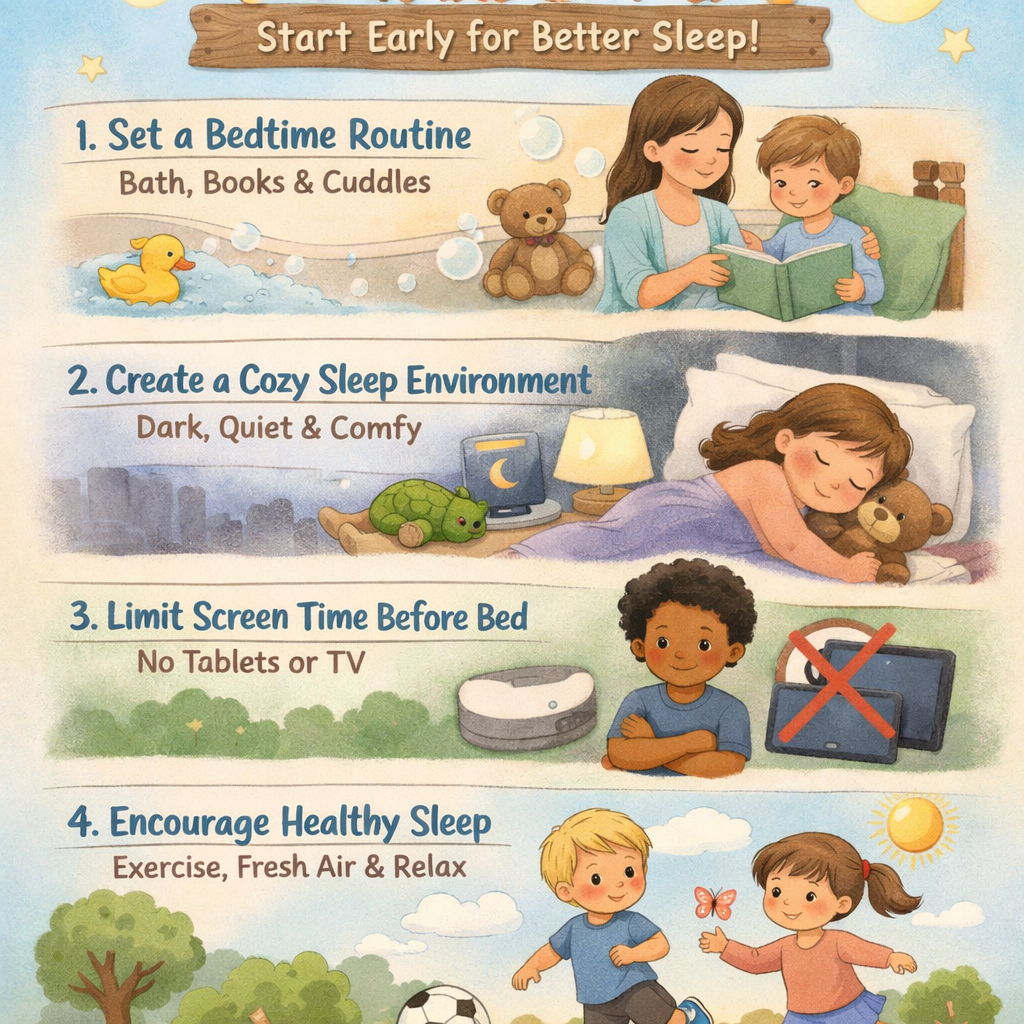
Creating a solid foundation for sleep during the first year of life doesn't happen overnight, but with consistency and patience, you can completely transform your family's evenings. Here are five proven tips to build those habits early:
- Set a consistent bedtime and wake-up time: Your child's biological clock thrives on predictability. Establish a set bedtime and a strict morning wake-up time, and stick to it every single day—even on weekends. Let your child hear everyday noises that are common in the house. This prevents "social jetlag" and ensures their body naturally feels tired at the same time each night.
- Create a calming bedtime routine: Try to implement a 30-to-45-minute wind-down routine that supports your newborn's sleep. A predictable sequence—like a warm bath, putting on cozy pajamas, brushing teeth, and reading a book together—signals to the nervous system that the busy day is over and rest is coming.
- Limit screen time before sleep: The artificial blue light from tablets, smartphones, and televisions suppresses the brain's natural production of melatonin (the sleep hormone). Turn off all screens at least one hour before bed to allow your child's brain to naturally wind down and give your baby time to settle down.
- Encourage daytime physical activity for your newborn babies: A physically tired body falls asleep much faster. Encourage your child to engage in at least 60 minutes of active, outdoor play during the day. Natural sunlight exposure also helps regulate their circadian rhythm.
- Keep the sleep environment quiet and comfortable: Transform their bedroom into a sanctuary optimized for rest. Ensure the crib or bassinet is a safe sleep space, keep the room temperature cool (around 65°F to 68°F), use blackout curtains to block distracting outside light, and utilize a high-quality white noise machine to gently drown out disruptive household chatter or neighborhood traffic.
Ready for Healthier Nights?
Start building healthy sleep habits today, including daytime naps, to protect your child’s immunity, support their physical growth, and improve their daily emotional well-being. A well-rested child is a healthy, happy, and thriving child!
Reach out for a consultation or call daar at 02 9133 2500 for more expert parenting advice, child health tips, and actionable strategies delivered straight to your inbox to support stronger, healthier growth for your whole family.
Frequently Asked Questions (FAQs)
1. Why is sleep important for a child’s immune system?
Sleep is the critical time when the body actively repairs itself. During deep sleep, the immune system produces targeted immune cells and specialized proteins (called cytokines) that fight viral and bacterial infections. Maintaining optimal sleep, particularly in settings where practices like bed sharing are considered, keeps this natural defense system strong and significantly lowers the chance of your child falling ill.
2. At what age should healthy newborn sleep habits start?
Healthy sleep habits should begin in infancy as soon as a baby starts to develop a day-night circadian rhythm (usually around 3 to 4 months of age). However, it is never too late to start! While starting early is ideal, implementing consistent, calming routines can be successfully reinforced throughout toddlerhood, middle childhood, and even the teenage years.
3. How many hours of sleep do young children need for strong immunity?
Sleep needs change as children grow, but general paediatric guidelines recommend the following for optimal immune function: Infants (4-12 months) need 12-16 hours; Toddlers (1-2 years) need 11-14 hours; Preschoolers (3-5 years) need 10-13 hours; and School-aged children (6-12 years) need 9-12 hours of sleep per 24-hour period.
.svg)




.svg)