
.png?width=48&height=48&name=Group%201%20(3).png)























31 August, 2026

Setting Screen Time Limits for Kids: Practical Strategies
Key Highlights
- Screen time limits work best when they match your child’s age group and daily needs.
- The American Academy of Pediatrics suggests a family media use plan to support healthy habits at home.
- Too much screen time and the issue of screen time has links to mental health concerns, sleep loss, obesity, anxiety, and behavioural issues.
- Parental controls can help manage media use across digital devices.
- Screen-free bedrooms and calmer bedtime routines protect sleep.
- Outdoor sports and face-to-face family time help replace passive screen use.
Introduction
Setting limits on screen use can feel hard when digital media is part of daily life. Phones, tablets, TVs, and video games are always nearby, and children’s screen time can rise fast without clear rules. The good news is that simple boundaries at home can support healthy development. When you set realistic limits, protect sleep, and make room for family time and offline play, you give your child a better balance between entertainment, learning, and real life.
Practical Strategies for Managing Screen Time at Home
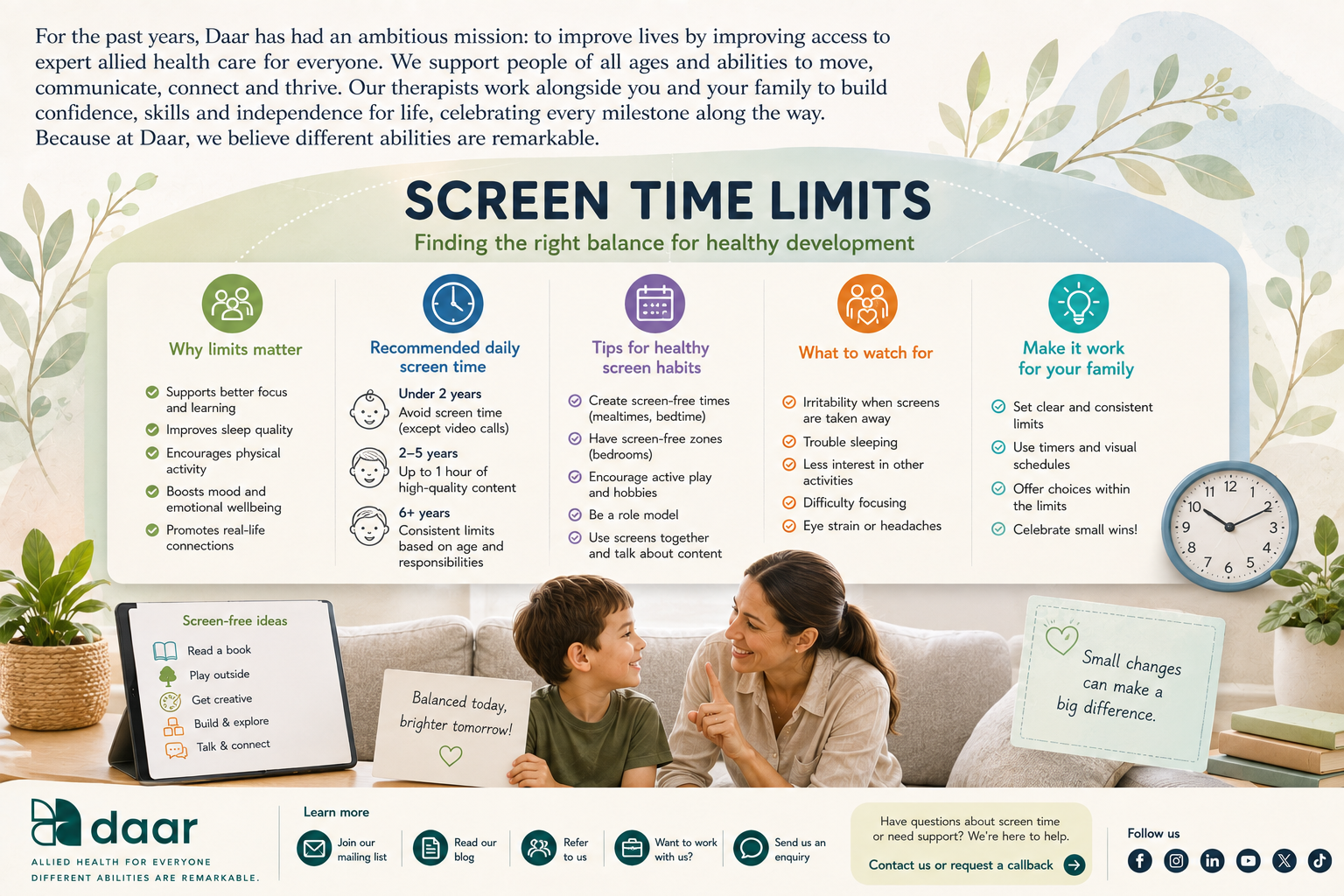
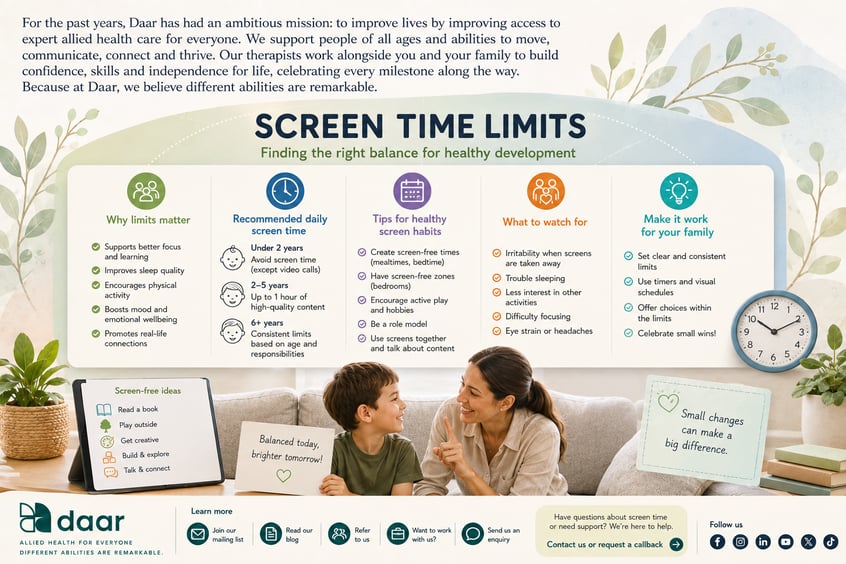
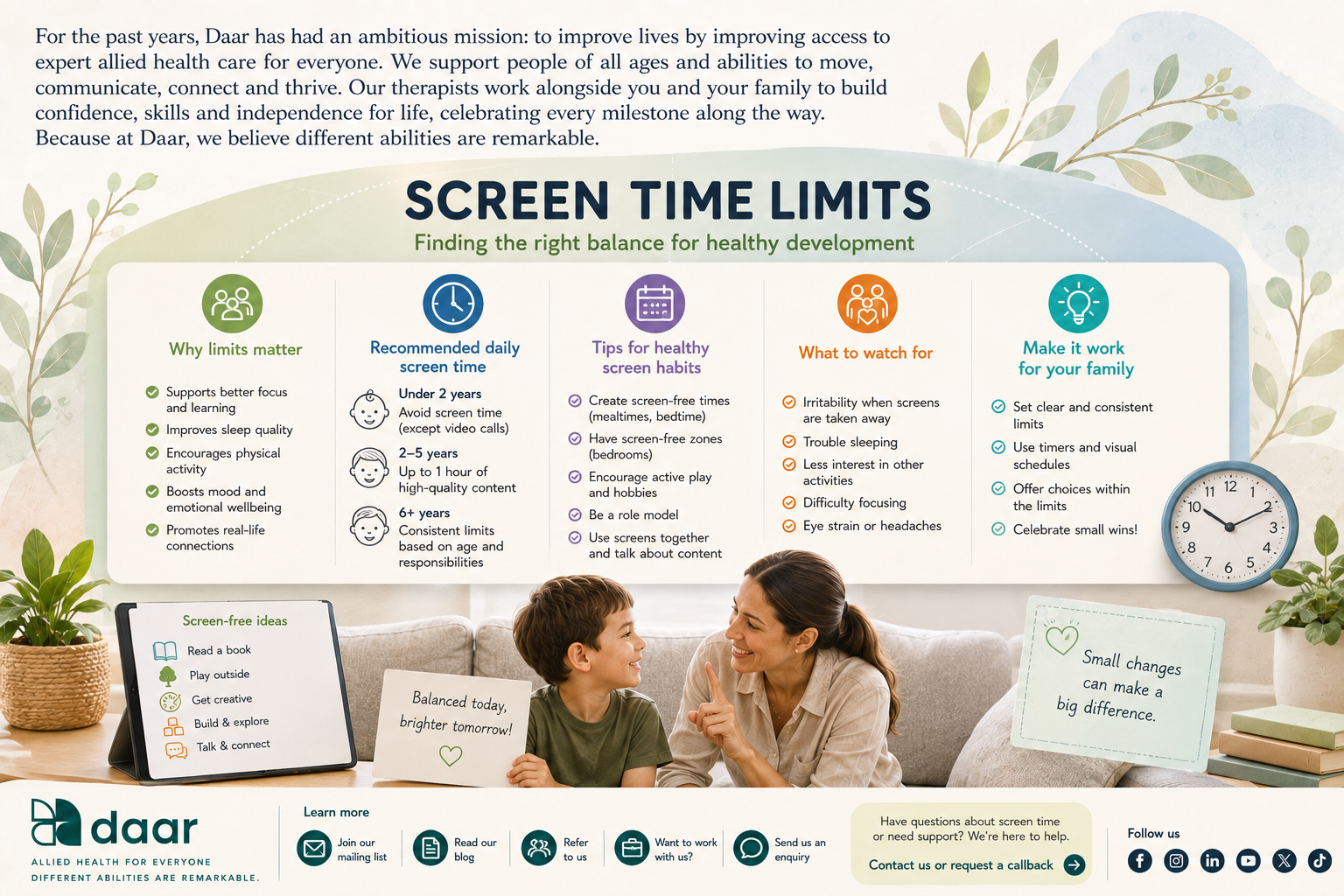
Start with clear screen time guidelines based on age. Pediatricians generally recommend zero screen time for children under 2, except for video chatting. For ages 2 to 5, keep it to no more than one hour per day with co-viewing of electronic devices. For ages 5 to 17, aim for no more than two hours daily, not counting homework.
You can make those screen time limits easier to follow with parental controls and other proactive steps. Keep bedrooms screen-free, avoid screens for two hours before bed, and plan what your child will do with free time instead.
Setting Healthy Boundaries and Daily Routines
A consistent routine makes managing a child’s screen time easier. Set regular times for media use so your child knows what to expect—this reduces arguments and encourages healthy habits, keeping screens from interfering with homework, meals, or family time. For extra support, parents can use checklists to help monitor healthy screen habits; these often include guidelines such as setting daily limits, choosing age-appropriate content, designating screen-free zones, and ensuring screens are turned off during meals and bedtime.
Create a family media plan to set clear rules about when, where, and what kind of media is allowed, including guidelines based on mass communication principles. The American Academy of Pediatrics offers tools for this. Clear boundaries help kids understand limits.
Protect sleep by keeping screens out of bedrooms and turning them off at least two hours before bedtime. This supports healthy sleep and helps kids wind down naturally.
Using Parental Controls and Family Agreements
Parental controls help set clear screen time limits, especially when your child uses multiple devices. Organisations such as Common Sense Media can guide you on setting these limits. They work best as a support tool, not the only solution.
Simple family agreements are just as important. Discuss with your child when and where screens can be used, and set routines for bedtime. Clear rules show that limits are part of daily life—not random punishments.
Keep agreements simple and consistent: bedrooms are screen-free, homework comes first, and leisure media is limited to certain hours. Consistent rules across all devices make expectations clear and reduce resistance.
Encouraging Healthy Alternatives to Screens
Cutting back works better when you replace screens with offline activities that support language development. If you simply remove a device, your child is left with empty free time and will likely ask for it back. Filling that gap with outdoor sports, reading, and play gives them a clear next step.
That shift matters because real-life experiences, particularly through human interaction, help build healthy relationships. Face-to-face time teaches patience, listening, and turn-taking in ways screens cannot. The next ideas can help you create that balance at home.
Ideas for Offline Activities
When reducing screen time, keep a short list of activity options on hand to help combat mental health issues. This makes free time feel open, not frustrating. The goal isn’t to keep your child busy every moment, but to offer choices that support healthy development and more human connection.
Try simple activities like:
- Reading before bed instead of watching TV
- Outdoor sports for movement and fresh air
- Games that involve taking turns and conversation
- Family talks during device-free time
- Hands-on play that encourages listening, touching, and exploring
These activities support physical health, language skills, and social growth. For planning help, the American Academy of Pediatrics offers a free family media use plan at healthychildren.org to guide routines, limits, and screen-free moments.
Promoting Family Engagement and Outdoor Play
Too much screen time often shows up in what gets neglected—less family interaction, shorter tempers in real life, and sleep problems, leading to diminished real-world interactions. Kids may become more irritable, anxious, struggle in class, or lose interest in socialising.
Outdoor play and family time help restore balance. A family media plan is a useful parenting tool because it encourages shared routines—not just rules. Try:
- Family walks or outdoor play after school
- Device-free meals with conversation
- Shared reading before bed
- Simple games that involve taking turns
These moments strengthen bonds and build social skills through real-life practice of patience and listening—skills screens can’t fully teach.
Tips for Managing Screen Time During Weekends and Holidays
Weekends and school breaks can make media use harder to manage because kids have more unplanned time. You may choose a little flexibility, but screen time limits still matter. Without them, hours can disappear into shows, online games, or video games.
A balanced approach helps you avoid the pull of instant gratification. If screens expand during breaks, pair that extra time with outdoor play, family interaction, and clear stop points, especially from a young age. That keeps special days from turning into unlimited screen use.
Balancing Flexibility with Consistent Limits
Rules can be more flexible on weekends or holidays, but children still need structure. Flexibility doesn’t mean no rules—managing the amount of time spent on screen can lead to less movement, fewer conversations, and poorer sleep.
Keep core boundaries consistent: bedrooms should remain screen-free, bedtime routines should protect rest, and family expectations must stay clear. This shows children that limits support health all week.
You can relax timing without losing control. For example, allow extra media use after outdoor activities or family plans. This keeps routines balanced while permitting a bit more fun on less structured days.
How to Adapt Screen Time Rules During Breaks
During breaks, it helps to return to age-based screen time guidelines for younger children before making any changes. That gives you a clear baseline. The general recommendations stay the same even when school is out, though homework may no longer take up part of the day.
Use this simple table as a guide for screen time recommendations and media use by age group:
|
Age group |
Recommended media use |
|---|---|
|
Under 2 years old |
Zero screen time, except for video chatting with family or friends |
|
2-5 years old |
No more than one hour per day, ideally co-viewing with a parent or sibling |
|
5-17 years old |
Generally no more than two hours per day, except for homework |
If you adapt rules during holidays, do it on purpose. Decide in advance when extra media use is allowed and what will balance it out, such as outdoor sports, reading, or family time. That keeps breaks enjoyable without losing healthy boundaries.
Conclusion
In conclusion, setting screen time limits for kids is essential in fostering a healthy balance between the digital world and real-life experiences. By implementing practical strategies like establishing daily routines, using parental controls, and encouraging engaging offline activities, you can create an environment that promotes well-being and development. Additionally, adapting your approach during weekends and holidays can help maintain consistency while allowing for flexibility. Remember, the goal is to ensure that screen time complements your child's life rather than dominates it.
Need screen time guidance? For more personalised advice on managing screen time, feel free to reach out for a consultation or call daar at 02 9133 2500.
Frequently Asked Questions
Should screen time limits change as kids get older?
Yes. Screen time limits should reflect your child’s age group, particularly considering the impact of social media. The general guidance is zero screen time under 2 except video chatting, up to one hour daily for ages 2 to 5, and about two hours for ages 5 to 17. The American Academy of Pediatrics supports age-based planning for healthy development.
What’s the best way to manage screen time across multiple devices?
Use parental controls to support the same screen time limits across all digital devices. Then pair those tools with simple family rules about when, where, and how media use happens for your young child. This balanced approach keeps children from moving from one device to another just to stretch their screen time.
Can screen time negatively affect my child’s school performance?
Yes. Excessive screen time can reduce sleep, cut into homework time, and affect school performance. It has also been linked to mental health concerns, behavioural issues, and weaker development of social skills. When screens replace the recommended amount of sleep and face-to-face interaction, learning and daily functioning can suffer.
.svg)




.svg)