
.png?width=48&height=48&name=Group%201%20(3).png)
























10 April, 2026

The Behavioural Effects of Too Much Screen Time on Kids: Parent’s Guide

Whether it is a scorcher of a summer afternoon during the January school holidays or a rainy winter weekend down south, Australian parents know the familiar pull of the screen. Handing over an iPad, firing up the PlayStation, or letting the kids scroll through YouTube can often feel like the only way to get a moment of peace to fold the laundry or drink a cup of tea before it goes cold.
However, as devices become increasingly integrated into Australian households and classrooms, parents are noticing a concerning shift. It is not just about the hours logged; it is about the dramatic changes in behaviour that follow. We are seeing kids who cannot handle a trip to Woolies without a device, children who melt down the second the Wi-Fi drops, and kids who have seemingly lost the ability to entertain themselves with physical toys.
But what is actually happening in your child's brain when they stare at a screen for hours? And more importantly, how do we fix it?
By looking at the effects of too much screen time through the lens of behaviour therapy, we can decode why screens cause such intense behavioural issues and, crucially, how Australian families can implement evidence-based strategies to restore peace and healthy play.
The Official Australian Screen Time Guidelines
Before diving into the behavioural science, it is important to know the baseline. The Australian Government Department of Health and Aged Care recommends the following limits for recreational screen time:
- Under 2 years: Zero screen time (excluding interactive video chatting).
- 2 to 5 years: Less than 1 hour per day.
- 5 to 12 years: Maximum of 2 hours of sedentary recreational screen time per day.
- 13 to 17 years: Maximum of 2 hours of recreational screen time per day.
For many Aussie families, keeping a ten-year-old under two hours of screen time on a weekend feels like an impossible battle. But understanding why screens are so addictive is the first step in winning that battle.
The Behavioural Science: Why Are Screens So Addictive?
To a behaviour therapist, a smartphone or gaming console is essentially a perfectly engineered reinforcement delivery system.
In behaviour therapy, we talk about schedules of reinforcement. When a child plays a video game like Roblox or Minecraft, or scrolls through TikTok, they are subjected to a "variable-ratio reinforcement schedule." This is the same psychological mechanism used in poker machines at the local pub. The child doesn't know when the next reward (a funny video, a level-up, a glowing treasure chest) is coming, only that it will come if they keep scrolling or playing. This creates a highly addictive behavioural loop.
Furthermore, screen media triggers the rapid release of dopamine—the brain's "feel-good" neurotransmitter. When your child is plugged in, their brain is flooded with artificial rewards without them having to exert any real-world physical or social effort.
Top 5 Behavioural Effects of Too Much Screen Time
When this high-stimulation digital environment clashes with the slow, demanding pace of the real world, significant behavioural fallout occurs. Here are the top five behavioural effects of excessive screen time.
1. Emotional Dysregulation (The "Screen Hangover")
Have you ever noticed that your child is incredibly grumpy, irritable, or prone to massive tantrums immediately after you turn off the TV or take away the iPad? This is often called the "screen hangover."
When the device is turned off, the artificial dopamine tap is suddenly shut off. The child's nervous system goes into a state of sudden withdrawal. Because their developing brains lack mature self-regulation skills, this chemical drop presents externally as screaming, aggression, or profound emotional meltdowns. The real world suddenly feels incredibly boring and under-stimulating compared to the high-definition, fast-paced world of the screen.
2. Reduced Frustration Tolerance
In the digital world, gratification is instant. If a YouTube video is boring, your child can swipe to a new one in a fraction of a second. If they make a mistake in a video game, they can hit "restart" and try again instantly.
The real world doesn't work like this. Building a complex Lego set takes time. Learning to ride a bike takes physical falling and getting back up. Waiting in line at the local bakery takes patience. Children with excessive screen time often display severely reduced frustration tolerance. When faced with a minor real-world obstacle—like a shoelace that won't tie or a sibling who won't share—they lack the resilience to problem-solve, resulting in explosive anger or quickly giving up.
3. Impaired Executive Functioning and Attention
Executive functioning refers to the brain's ability to plan, focus attention, remember instructions, and juggle multiple tasks safely. Fast-paced media (especially short-form content like YouTube Shorts or TikTok) trains the brain to expect constant novelty. The scene changes every three seconds, keeping the brain in a state of passive, hyper-aroused attention.
When that child goes to a typical Australian classroom and is asked to listen to a teacher explain a maths concept for fifteen minutes, their brain simply hasn't built the "muscle" for sustained, active attention. Behaviourally, this manifests as bouncing off the walls, inability to follow multi-step directions, and symptoms that mimic ADHD.
4. Sleep Disruption Leading to "Wired and Tired" Behaviours
It is a well-documented biological fact that the blue light emitted by screens suppresses melatonin, the hormone that induces sleep. However, the behavioural effect of this is profound.
When a child is chronically sleep-deprived due to evening screen time, they don't always look sleepy. Instead, overtired children often become hyperactive, impulsive, and emotionally volatile. They become "wired and tired," leading to major behavioural defiance the following day, difficulties waking up for school, and afternoon meltdowns that disrupt the whole household.
5. Increased Oppositional Defiance and Extinction Bursts
When parents inevitably attempt to set limits on screen time, they are often met with extreme defiance. In behaviour therapy, an extinction burst occurs when you remove a highly desired reinforcement (the screen). The child’s brain panics, and their negative behaviour temporarily escalates to intense levels (yelling, slamming doors, crying) in a desperate attempt to force you to give the screen back. If the parent caves in to stop the noise, the child learns a dangerous behavioural lesson: extreme defiance is the key to unlocking screen time.
Behaviour Therapy Strategies for Australian Parents
Understanding the behavioural impacts allows us to use proven behavioural therapy techniques to wind back the screen time and restore harmony in your Aussie home.
Strategy 1: Antecedent Control (Change the Environment)
In behaviour therapy, altering the "antecedent" means changing the environment before the challenging behaviour even has a chance to happen.
- Out of Sight, Out of Mind: Do not leave iPads sitting openly on the kitchen bench. Charge devices out of sight in a parent's bedroom.
- Screen-Free Zones: Declare specific zones in the house as strictly screen-free. The dining table, the car (for everyday local trips), and bedrooms should be completely device-free.
- Passcodes: Put parental locks and passcodes on all devices so that the antecedent of simply picking up a device no longer guarantees access. Access must be actively granted by an adult.
Strategy 2: Implement Visual "First/Then" Schedules
Children, especially younger ones and those who are neurodivergent, thrive on predictability. The "First/Then" strategy is a cornerstone of behaviour management. It uses a non-preferred task to build momentum toward a preferred task.
- “First you finish your homework and pack your school bag, Then you can have 30 minutes of Minecraft.”
- “First we walk the dog to the park, Then we can watch a movie after dinner.”
Make this highly visual. Stick a whiteboard on the fridge outlining the afternoon routine so the child knows exactly what behavioural expectations must be met before screens are an option.
Strategy 3: Manage Transitions with Visual Timers
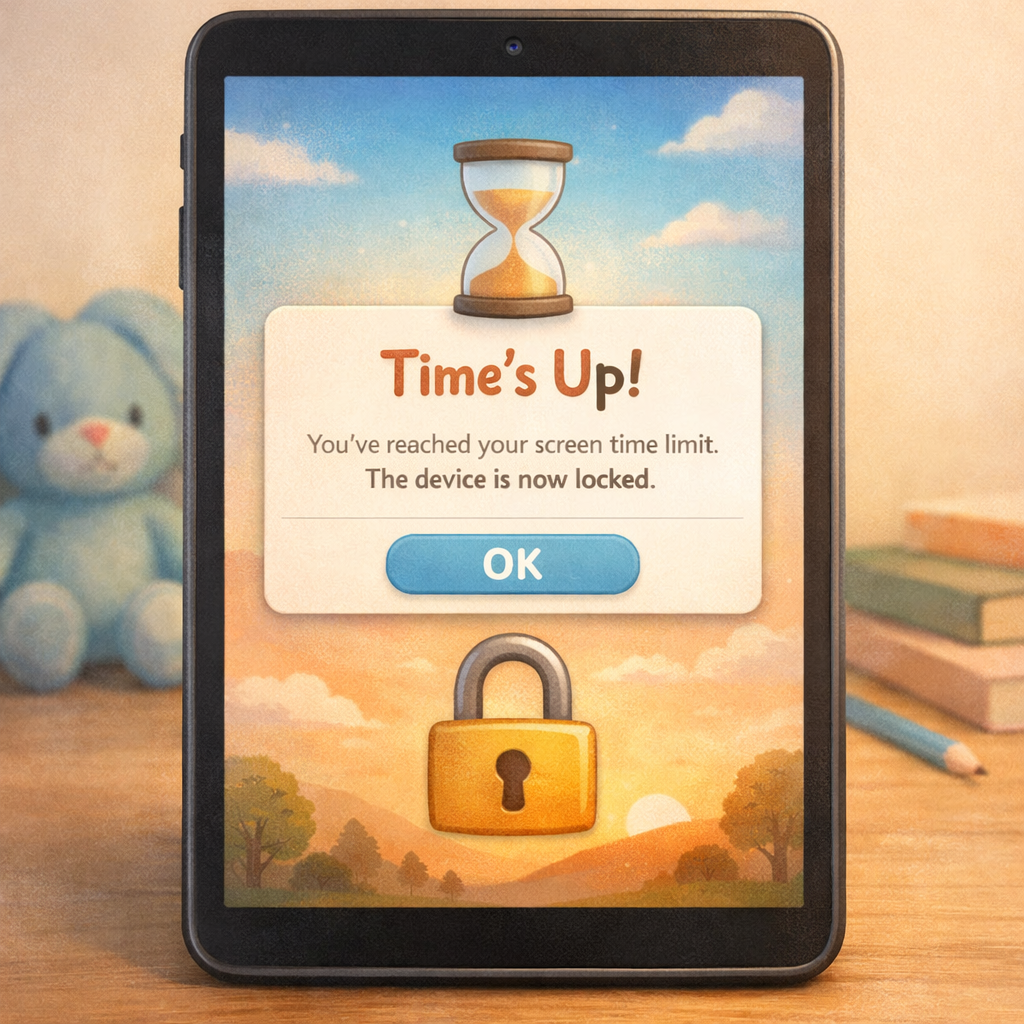
Terminating screen time is the most dangerous behavioural flashpoint. Never walk into a room and just turn the TV off. Give the child a predictable, visual warning.
Use a physical visual timer (like a Time Timer) or a smart speaker. Say, "You have ten minutes left. When the timer beeps, the iPad goes on the charger." When the timer goes off, follow through immediately. Do not safely negotiate for "five more minutes." Consistency is the bedrock of behaviour modification.
Strategy 4: Differential Reinforcement (Praise the Alternatives)
If you dramatically reduce screen time, you will inevitably end up with a child who complains that they are "bored." In behaviour therapy, we use differential reinforcement to actively reward alternative, positive behaviours.
When you see your child actively engaged in offline play—whether they are building a fort out of couch cushions, drawing, playing with Lego, or riding their scooter in the driveway—flood them with specific, positive praise. “I love seeing how creative your Lego spaceship is! You worked so hard on that.” Attention is a powerful reinforcer; ensure you are giving your attention to their real-world play, not just intervening when they are fighting over a device.
Strategy 5: Ride Out the Extinction Burst
When you set new, stricter limits, your child's behaviour will get worse before it gets better. This is the extinction burst. You must hold your ground. If you give in during an epic tantrum, you are teaching them that tantrums work. Validate their feelings calmly ("I know you are really frustrated that Xbox time is over today"), but do not yield the device. Usually, this intense behavioural pushback subsides within three to five days once the new boundary is firmly established.
Conclusion: Reclaiming Childhood in a Digital World
Navigating the digital age as a parent in Australia is a modern challenge that previous generations simply did not have to face. The behavioural effects of too much screen time on kids—ranging from epic meltdowns and reduced frustration tolerance to sleep deprivation and impaired attention—are real, profound, and exhausting for the whole family.
However, by understanding the foundational behaviour therapy principles behind screen addiction, you are empowered to make a change. By taking control of the antecedents, utilizing visual schedules, and firmly riding out those uncomfortable extinction bursts, you can help your child disconnect from the matrix and reconnect with the real world.
It takes effort to swap the console for cricket in the backyard, or the tablet for a family board game, but the reward is a significantly happier, vastly more resilient child who knows how to regulate their own emotions. Give yourself grace during the transition, hold your boundaries, and proudly watch your child rediscover the simple magic of offline play.
Are you feeling completely overwhelmed by your child's screen time habits and ready to confidently reclaim your family's peace? You do not have to tackle this massive behavioural shift alone!
Reach out for a consultation or call daar at 02 9133 2500 for expert guidance.
FAQ: Managing Screen Time and Child Behaviour
Can too much screen time mimic ADHD symptoms in kids?
Yes. Excessive, fast-paced screen time can result in "acquired attention deficit." Because their brains become accustomed to constant, high-speed dopamine hits, they struggle to sustain attention in low-stimulation environments (like a classroom). They may present as hyperactive, impulsive, and easily distracted, which closely mimics ADHD behaviours.
Should I use screen time as a reward for good behaviour or chores?
Using a "Token Economy" (earning screen time through chores or positive behaviour) is a highly effective behaviour therapy tool. It teaches children that screens are a privilege to be earned through real-world effort, rather than a fundamental human right. Earning 15 minutes of screen time for completing homework or helping with the dishes reinforces a healthy work ethic.
What should I do when my child refuses to hand the iPad back?
Do not engage in a tug-of-war. Stand firm and use a consequence related to the device. "If you choose not to hand the iPad over when the timer goes off, you are choosing to lose your iPad time for tomorrow." Follow through firmly the next day. They will learn that transitioning calmly is the only way to ensure future access.
.svg)




.svg)