
.png?width=48&height=48&name=Group%201%20(3).png)























7 August, 2026

How to Balance Managing Kids Screen Time at Home

Key Highlights
- Set time limits that fit your child’s age, daily needs, and school routine.
- Focus on a healthy balance between screen use, sleep, learning, family time, and physical activity.
- Choose quality content and use parental controls to block risky or distracting material.
- Create tech-free times, like meals and the hour before bed.
- Watch and talk about media together so your child learns healthy screen habits.
- Model the behaviour you want, because kids notice your screen use too.
Introduction
Managing children’s screen time at home can feel hard when digital devices are part of school, fun, and social life. Still, your goal does not have to be zero screens. It should be a healthy balance that supports healthy development. Some screen use can help children learn and connect, but too much can crowd out sleep, play, and real-life interaction. When you set simple routines and stay involved, you can make media use work better for your family.
Expert Recommendations and Australian Guidelines for Kids’ Screen Time
Experts agree that screen time limits should consider age, duration, and content quality. The Pediatrics advises no media for children under 18 months, except video chatting. For ages 18–24 months, only high-quality content with adult supervision is recommended.
Australian guidelines also emphasize balancing screens with sleep, physical activity, and offline play. Children under 2 should avoid screens except for video chats. For older children, focus on balance, supervision, and quality content.
Daily Limits by Age Group: Overlooking the benefits
Age matters because children at different ages learn, rest, and play in different ways. Screen time limits are strictest for babies and preschoolers, while older kids need guided routines rather than one fixed rule. The aim is to protect physical health and reduce sedentary behaviour without ignoring the useful side of screens.
|
Age group |
Recommended approach |
|---|---|
|
Under 18 months |
No media use except video chatting |
|
18-24 months |
Only high-quality content, with an adult |
|
2-5 years |
Limit screen use to 1 hour a day of high-quality programming |
|
6+ years |
Set clear daily or weekly limits based on sleep, school, activity, and family needs |
For school-aged children and teens, experts move away from one number for all. You should look at whether screens are replacing movement, homework, sleep, or social time. That approach helps you set limits that fit your child’s day and stage of development.
Why Are Screen Time Guidelines Important?
Screen time guidelines offer practical health advice, not just rules. They help you recognize when screens start replacing sleep, reading, play, or in-person interaction. Healthy screen use is about what gets displaced, not just duration.
Excessive screen time is linked to obesity, poor sleep, behaviour and attention problems, and less learning. For young children, it can hinder language development and social skills. Fast-paced, violent, or overly stimulating content is especially tough for them.
Guidelines also encourage healthy habits early on by highlighting the value of unstructured play and family time. Using screens thoughtfully supports learning and connection while helping prevent negative effects.
Healthiest Screen Time Habits for Families
Healthy screen habits start with balance, not fear. Your child needs time for sleep, schoolwork, reading, free play, and physical activity alongside screen use. It also helps to choose content that teaches, engages, or supports social connection instead of passive viewing.
Families do best when screen use is part of a broader routine that protects healthy development. Shared viewing, tech-free moments, and clear expectations make a big difference. Before getting into specific strategies, it helps to look at daily routines and digital behaviour side by side.
Creating Balanced Routines
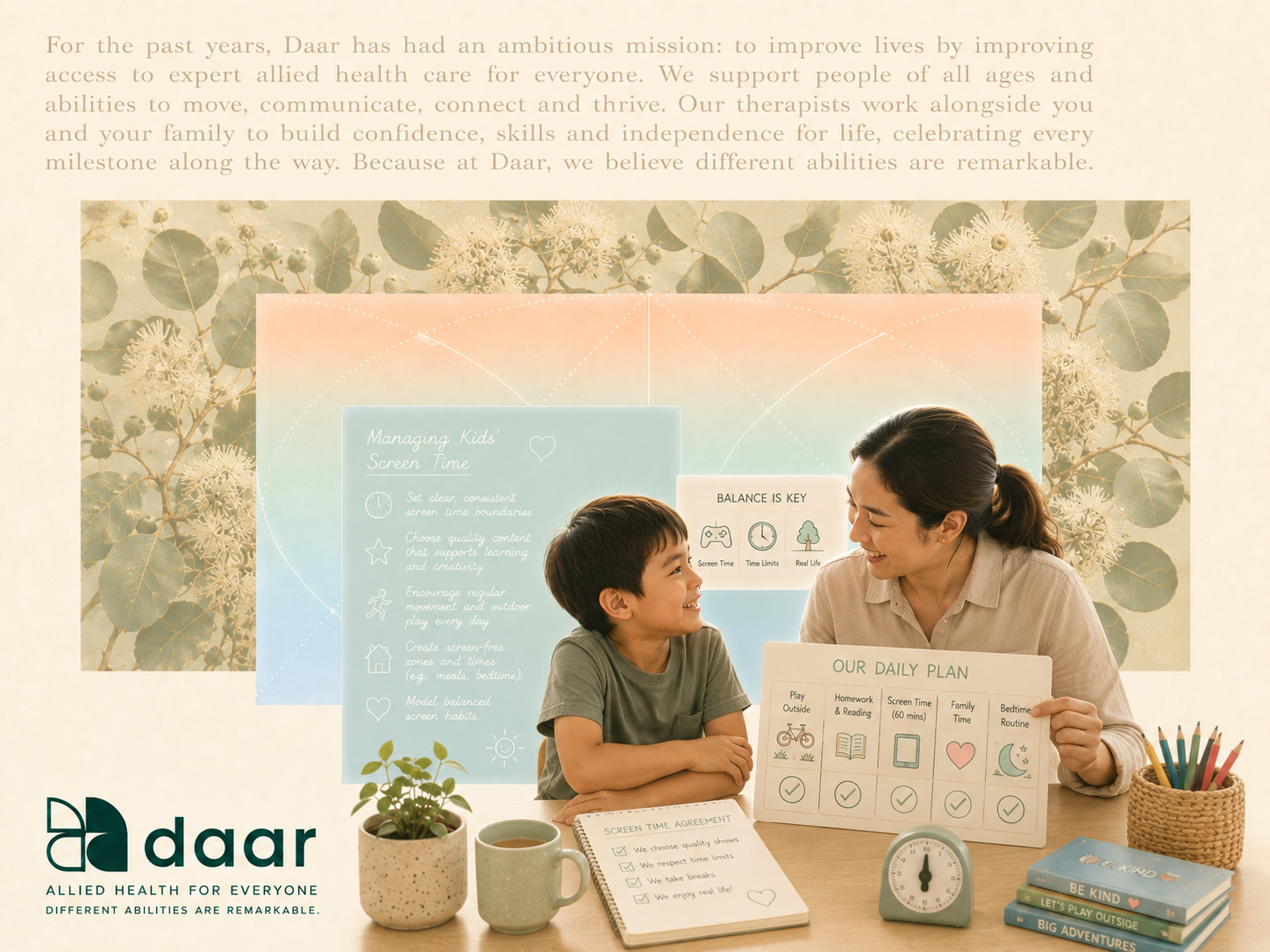
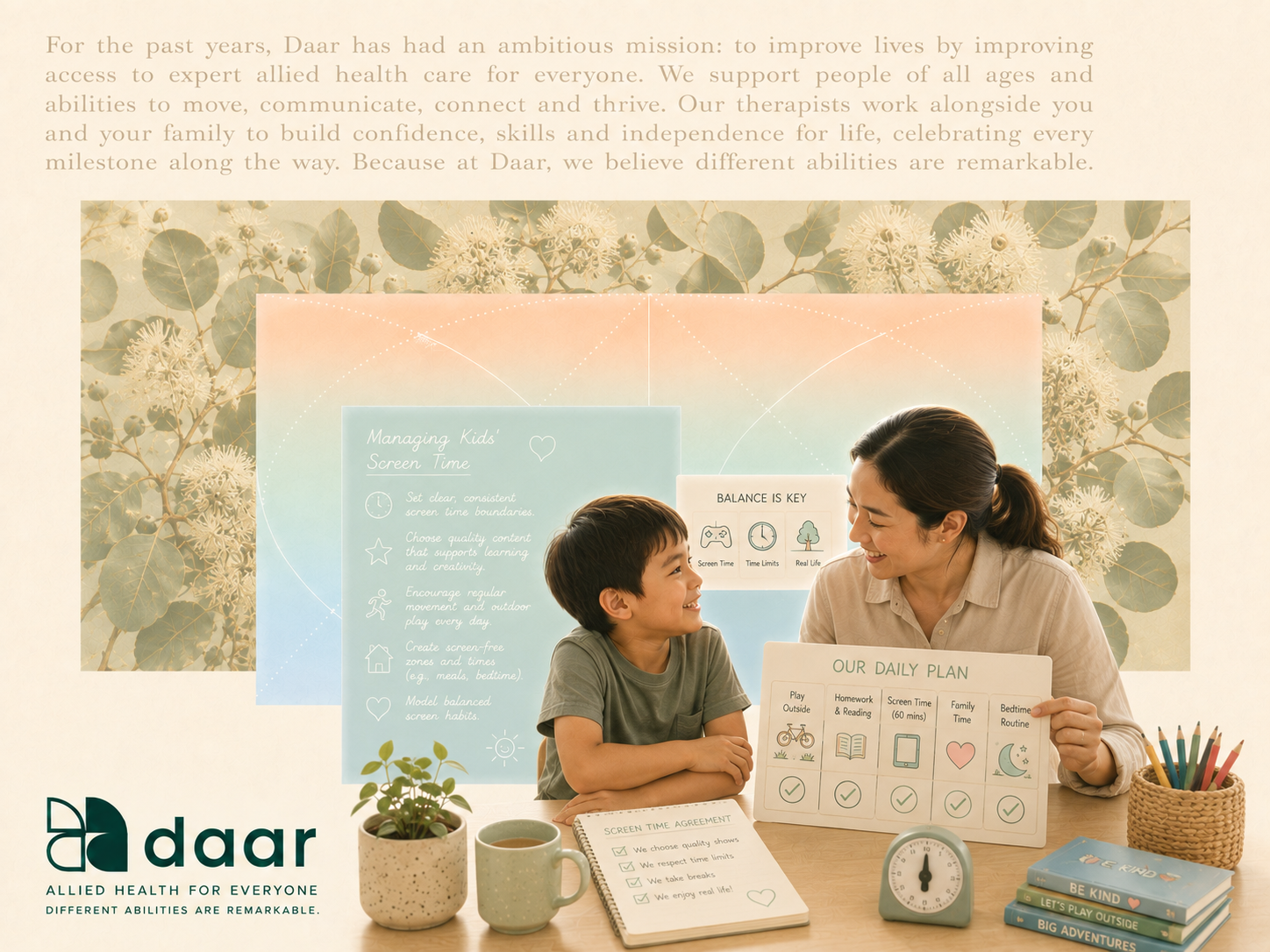
A balanced screen time routine should fit around your child’s daily priorities—sleep, school, meals, homework, and physical activity. Schedule screen use after these essentials to protect quality time and prevent screens from dominating the day.
Set clear rules everyone understands:
- Limit screens during meals, homework, and bedtime.
- Keep the hour before sleep screen-free.
- Encourage offline hobbies and unstructured play.
- Use daily or weekly entertainment screen limits.
- Keep devices out of bedrooms at night.
Adjust routines to suit each child. Aim for balance—not perfection—to support learning, fun, rest, and real-world engagement.
Teaching Responsible Digital Technology Use
Responsible digital technology use means teaching your child how to think critically online, not just what to click. Kids and teens need to recognize that online content reflects different viewpoints, and not everything is factual or trustworthy.
Help your child build good digital habits by:
- Discussing social media behaviour and protecting personal information.
- Setting expectations for email and online messaging.
- Reminding them never to share anything they wouldn’t want others to see.
- Talking about how ads, apps, and platforms collect data.
As children grow, digital spaces become a bigger part of their daily lives. Guide and supervise them by staying involved and modeling good judgment. Your engagement helps your child develop safer online habits.
Conclusion
In conclusion, managing kids' screen time is essential for fostering a healthier, more balanced lifestyle at home. By adhering to expert recommendations and guidelines, families can cultivate healthy screen habits that not only limit excessive use but also promote engaging offline activities. Emphasizing the importance of creating routines and teaching responsible technology use can significantly impact your child’s development and well-being. Remember, open communication with your children about their digital habits is key to encouraging mindful usage.
If you're looking for tailored advice or resources to manage your family's screen time effectively, feel free to reach out for a consultation or call daar at 02 9133 2500!
Frequently Asked Questions
How can I encourage my child to spend more time on offline activities?
Offer easy choices during free time, such as outdoor games, reading, crafts, or helping with simple tasks. Protect daily unstructured playtime and physical activity before screen use begins. When offline activities feel normal and enjoyable, your child is more likely to build healthy habits without constant conflict.
What practical tips help reduce excessive screen use at home?
Create screen time rules for the whole family, not just your child. Set boundaries around meals, homework, and bedtime, and keep devices out of bedrooms. Use parental controls, remove background TV, and make one or two tech-free times each week part of your routine.
Where can I find free resources for managing kids’ screen time?
You can look at free resources from Common Sense Media for age-based reviews of shows, games, and apps. Family health websites and child development resources also offer helpful information, factual information, and practical health information about routines, safety, and choosing better content for kids.
.svg)




.svg)