
.png?width=48&height=48&name=Group%201%20(3).png)























30 January, 2026

What is Applied Behaviour Analysis Therapy for Autism?
Introduction
If you have a child on the autism spectrum, you may have heard about different therapeutic approaches. One of the most discussed is Applied Behaviour Analysis. What exactly is it, and how does it work? This therapy is rooted in the science of learning and behaviour. The goal of ABA therapy is to help individuals acquire new skills and apply them in their daily lives. Understanding this approach can help you decide if it’s the right fit for your family and your child’s journey.
Key Highlights
- Applied Behaviour Analysis (ABA) is a therapy based on the science of learning and behaviour, designed to support individuals with autism spectrum disorder.
- The primary goal of ABA therapy is to increase helpful behaviours and decrease actions that are harmful or interfere with learning.
- A key technique is positive reinforcement, where a desired behaviour is rewarded to encourage the person to repeat it.
- ABA programs help improve communication, social skills, memory, and academics.
- Each plan is customized by a certified behaviour analyst to meet the unique needs and goals of the individual.
- Therapy can take place in various settings, including at home, school, or in the community.
What is Applied Behaviour Analysis
Applied Behaviour Analysis (ABA) is a therapy that explores how behaviour works, how it’s influenced by the environment, and how learning happens. It uses these insights to promote positive behaviours like communication and social interaction while reducing harmful ones. ABA has been studied for decades and has helped children with autism since the 1960s.
A key strength of ABA is its flexibility—it’s tailored to each individual’s needs. Therapy can be one-on-one or in groups, and takes place in settings like home, school, or the community, ensuring skills are practical for daily life.
The Principles Behind Applied Behaviour Analysis
This behaviour therapy is based on core ABA principles, with positive reinforcement as a key strategy. When a desired behaviour is followed by a meaningful reward—like praise or a favorite toy—the person is more likely to repeat it. A behaviour analyst sets a goal, and each successful use of the skill earns a reward.
Another principle is the "A-B-C" framework, which helps therapists understand and teach behaviours by examining:
- Antecedent: What happens right before the behaviour (e.g., a request or cue).
- Behaviour: The response to the antecedent.
- Consequence: What follows the behaviour, such as positive reinforcement.
Techniques like discrete trial training further break down complex skills into small, manageable steps to enhance learning.
How Applied Behaviour Analysis Therapy Supports Children with Autism
For children on the autism spectrum, ABA therapy offers a structured way to learn and grow. The therapy focuses on developing new skills that can significantly improve a child's ability to interact with the world around them. An ABA program is never generic; it is carefully tailored to your child’s needs, interests, and family situation. The emphasis is on encouraging positive behaviour in a supportive and enjoyable learning environment.
This personalized approach helps children learn everything from communication to self-care. Below, we'll explore how ABA therapy addresses specific areas of development, including social skills, adaptive behaviours, and challenging actions.
Addressing Communication and Social Skills
A key goal of behaviour analysis is to improve communication and social skills. Many children with autism struggle to interact, make eye contact, or understand social cues. ABA therapy breaks these challenges into smaller, teachable steps. For example, a therapist may use play-based activities to practice taking turns or starting conversations.
With structured and natural practice, your child can build essential skills for meaningful language and social connections. Over time, these abilities often carry over to school, the playground, and home. Communication goals include:
- Asking for items by name
- Greeting others with “hello”
- Making eye contact during conversations
- Having back-and-forth conversations
Improving Adaptive Behaviours
What are adaptive behaviours? These are the essential daily living skills that allow a person to live more independently. ABA therapy can effectively teach these skills by breaking them down into simple, concrete steps. A therapist will identify a target behaviour, such as brushing teeth, and create a plan to teach each part of the process until the child can do it on their own.
This focus on skill acquisition empowers your child to take care of themselves and participate more fully in daily routines. The instruction plan is designed to move from simple steps to more complex actions, ensuring your child experiences success along the way. Examples of adaptive behaviours that can be improved include:
- Self-care routines like showering and toileting
- Play and leisure skills
- Motor skills
- Learning and academic skills
Managing Challenging Actions
Some children with autism exhibit challenging behaviours, such as tantrums or self-injury. A critical part of ABA therapy is understanding and addressing these actions. Rather than simply trying to stop the behaviour, a behaviour analyst works to understand why it is happening. By identifying the antecedent, or trigger, the therapist can teach a more appropriate replacement behaviour.
The emphasis is always on positive reinforcement and promoting lasting behaviour change. For example, if a child yells when asked to clean up, a therapist might teach them to ask for "five more minutes" instead. When the child uses this new skill, they are rewarded with extra playtime. This approach improves mental health and safety without using punitive methods. ABA can help manage:
- Tantrums
- Attempts to escape a situation
- Self-injurious actions
- Aggressive behaviours
The Role of ABA Therapists in Sessions
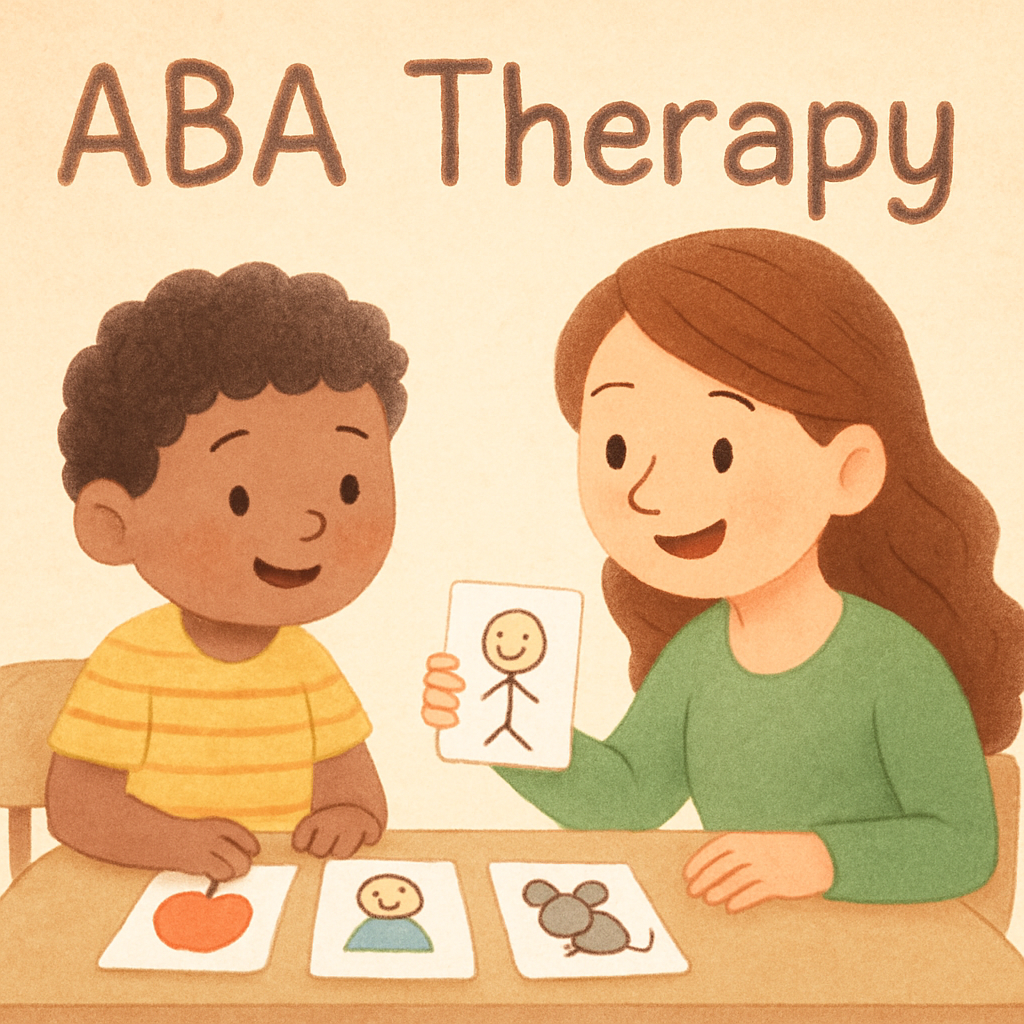
Who provides ABA services? ABA therapy is overseen by a Board-Certified Behaviour Analyst (BCBA), a professional with a master’s degree or PhD who has passed a national certification exam. These experts design and supervise the treatment plans. They work with a team of ABA therapists or registered behaviour technicians (RBTs) who work directly with your child.
Finding a team that builds a good relationship with your child is essential for success. When your child trusts their therapists and enjoys their time together, the therapy becomes more effective and fun. Next, we’ll look at how these professionals create and implement your child's program.
Assessment and Setting Goals
The first step in any ABA program is a thorough assessment. A qualified behaviour analyst will conduct a detailed evaluation of your child’s needs, current skills, interests, and preferences. They will also meet with you to discuss your family's goals and priorities. This information is used to create specific and measurable treatment goals that are appropriate for your child's age and ability level.
This collaborative approach ensures that the therapy is aligned with what is most important for your child's development and independence. Data collection begins at this stage and continues throughout the program to track progress toward these goals. The goals can cover a wide range of skill areas.
|
Skill Area |
Example Treatment Goal |
|---|---|
|
Communication and Language |
The child will learn to request a desired item using a full sentence. |
|
Social Skills |
The child will initiate a greeting with a peer in 3 out of 5 opportunities. |
|
Self-Care |
The child will independently wash and dry their hands after using the restroom. |
Implementing Individualized Plans
Once goals are set, the team implements individualized plans tailored to your child’s strengths and needs. ABA therapy is never "one size fits all"—it uses a range of procedures, with some activities directed by instructors and others guided by your child’s interests to keep learning enjoyable and motivating.
Therapists break down skills into small steps and teach them systematically. This approach ensures positive outcomes through:
- Many practice opportunities in both structured and natural settings
- Frequent positive reinforcement
- Parent and caregiver training for ongoing support
- A focus on making learning fun and interactive
ABA programs help individuals build useful skills for greater success and independence.
Tracking Progress and Adjusting Approaches
How do you know if therapy is working? ABA relies on data collection in every session to track progress toward goals. This allows behaviour analysts to see what’s effective and adjust strategies as needed—a key feature that sets ABA apart.
Behaviour analysts regularly meet with you and the therapy team to review progress, update teaching methods, and set new goals as your child advances. This keeps the program flexible and responsive to your child’s needs. Progress tracking includes:
- Collecting data on specific behaviours and skills
- Analyzing data over time
- Reviewing goals with the family
- Adjusting the treatment plan as needed
Conclusion
Applied Behaviour Analysis (ABA) therapy supports children with autism by building communication and social skills, improving adaptive behaviours, and managing challenges. ABA therapists tailor approaches to each child, set specific goals, and track progress through ongoing assessments. This individualized care helps children grow and equips families with effective support strategies.
To learn more about ABA therapy, contact us for a consultation today or call daar at 02 9133 2500!
Frequently Asked Questions
Is ABA Therapy Supported by Scientific Evidence?
Yes, ABA is considered an "evidence-based" best practice treatment by the US Surgeon General and the American Psychological Association. This means it has passed scientific tests for its effectiveness. Over 20 studies have shown that this effective therapy improves outcomes for many children with autism spectrum disorder.
How Long Does an ABA Program Typically Last?
The duration of ABA programs varies widely based on a child’s needs and treatment goals. Some studies on early intervention refer to intensive programs of 25 to 40 hours per week for one to three years. However, every program is customized, and the length of a session or the entire program is tailored to the individual.
Are There Any Controversies Around ABA Therapy?
Yes, there are some controversies. Critics argue that older forms of ABA were too repetitive and focused on making individuals "fit in." However, modern ABA therapy emphasizes ethical practices, builds on a child's strengths, and uses their interests to foster behaviour change, rather than trying to alter their personality or mental health.
.svg)




.svg)