
.png?width=48&height=48&name=Group%201%20(3).png)























17 February, 2026

Speech Delay vs. Language Disorder: Understanding Your Child’s Communication
"He’s just a late bloomer."
"She understands everything; she just doesn't want to talk."
"He plays by himself because he's independent."
As parents, we often use these phrases to comfort ourselves when our child’s development seems a little different from their peers. We watch other toddlers chatting in full sentences at the park while ours points and grunts. We see other preschoolers playing elaborate games together while ours stands on the sidelines.
Deep down, a question often lingers: Is this normal, or should I be worried?
The world of communication development is filled with confusing terms. You might hear Speech Delay, Language delay, Language disorder, and Social Communication thrown around, often interchangeably. But these terms mean very different things, and understanding the difference is the key to getting your child the right support.
In this guide, we will untangle the terminology, explain the red flags to watch for, and show you how Speech Therapy can bridge the gap between your child and the world around them.
Speech vs. Language: What is the Difference?
To understand your child's struggle, we first need to distinguish between "speech" and "language." They are like two sides of the same coin.
1. Speech (The "How")
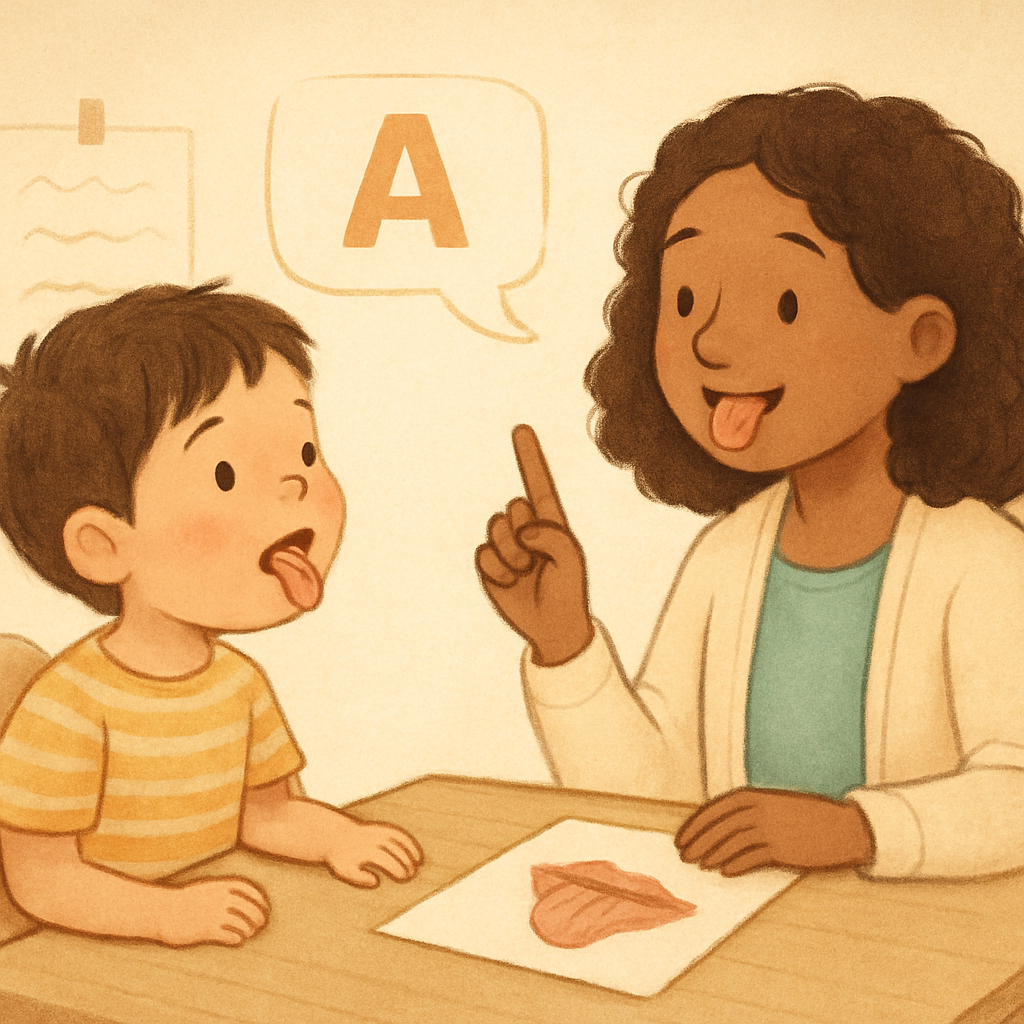
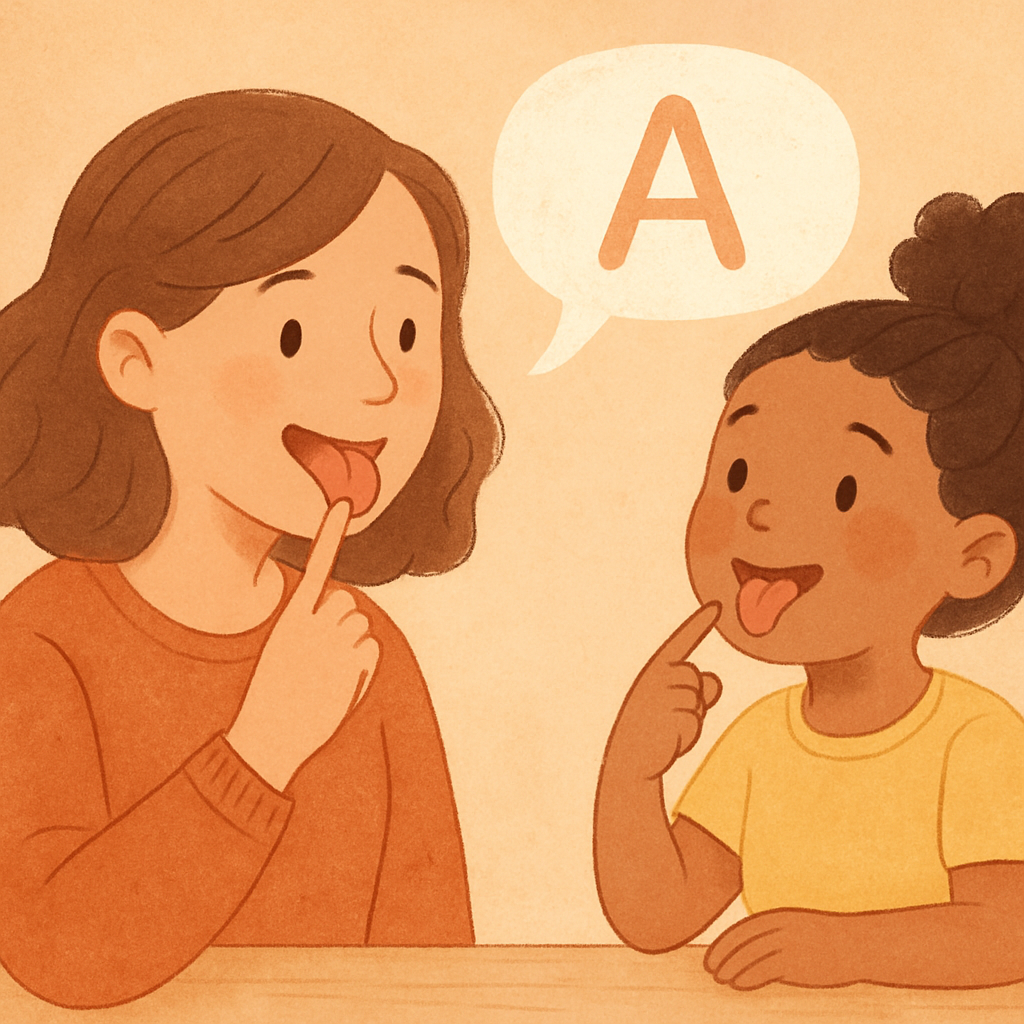
Speech refers to the physical act of producing sounds. It involves the coordination of the jaw, tongue, lips, and vocal cords.
- Speech Delay: A child with a speech delay might use words and sentences, but their articulation is unclear. They might say "wabbit" for "rabbit" or "nana" for "banana" past the age where those errors are typical.
2. Language (The "What")
Language refers to the system of words and symbols used to communicate meaning. It includes understanding what others say (Receptive Language) and using words to express thoughts (Expressive Language).
- Language delay: A child with a language delay might have perfect pronunciation but a very small vocabulary. They might struggle to put two words together or follow simple instructions.
It is very common for a child to have a Language delay without a Speech Delay, and vice versa.
Delay vs. Disorder: When to Worry
This is the most common question parents ask: Is it a delay that they will grow out of, or is it a disorder?
The Language Delay
A Language delay implies that the child is developing skills in the typical order, but at a slower rate. They are like a train on the right track, just running behind schedule.
- Example: A 2-year-old who only says 10 words (typical for a 15-month-old) but uses them meaningfully to ask for things.
- Prognosis: With early intervention and Speech Therapy, many children with delays catch up to their peers completely.
The Language Disorder
A Language disorder describes a development that is atypical. The child isn't just "behind"; they are struggling with the fundamental rules of language in a way that isn't seen in younger children.
- Example: A 3-year-old who has a large vocabulary but cannot form a sentence, or who echoes questions back instead of answering them (Echolalia).
- Prognosis: A disorder is often a lifelong difference in how the brain processes information. However, with therapy, children learn strategies to communicate effectively and succeed academically.
The Hidden Piece: Social Communication
Some children speak clearly and have vast vocabularies, yet they still struggle to connect. They might interrupt constantly, stand too close to others, or fail to understand sarcasm and jokes.
This is the domain of Social Communication (also known as Pragmatics).
Social Communication is the set of "unspoken rules" we use to interact. It involves:
- Using Language for Different Purposes: Greeting, informing, demanding, and promising.
- Changing Language: Talking differently to a baby than to an adult.
- Following Rules: Taking turns in conversation, staying on topic, and using facial expressions.
A deficit in Social Communication is often a hallmark of conditions like Autism Spectrum Disorder (ASD) or ADHD, but it can also exist on its own (Social Communication Disorder).
If your child seems to "miss the memo" on how to play with friends or struggles to maintain a conversation, Speech Therapy can help break down these abstract social rules into concrete, learnable steps.
How Speech Therapy Helps
Whether it is a Speech Delay, a language delay, or a struggle with Social Communication, the solution starts with a professional evaluation.
Speech Therapy is not a one-size-fits-all solution.
- For Delays: Therapy is often play-based. We create "communication temptations"—like putting a favorite toy in a clear, locked box—to motivate the child to use their words. We coach parents on how to expand their child's language during bath time, meal time, and play.
- For Disorders: Therapy might be more structured, using visual aids to teach sentence structure or specific exercises to improve auditory processing.
- For Social Skills: We use role-playing, social stories, and video modeling to teach the "rules" of interaction.
Conclusion
Navigating the alphabet soup of diagnoses—from Language delay to Social Communication disorder—can be overwhelming. But knowledge is power.
Understanding that your child’s struggle is a specific, treatable issue changes everything. It moves you from a place of worry to a place of action. It allows you to advocate for the specific type of Speech Therapy that will actually help.
Your child has a voice, a personality, and a unique perspective to share with the world. With the right support, you can help them build the bridge to share it.
If you are concerned about your child’s speech, language, or social development, don't wait. Our experienced team specializes in comprehensive evaluations for Speech Delay, Language disorder, and Social Communication challenges.
Contact us today to schedule a consultation or call daar at 02 9133 2500 for an assessment and start your child’s journey to confident connection.
FAQ: Common Questions for Parents
Will my child grow out of a language delay?
Some children are "late talkers" and catch up on their own, but it is impossible to predict which ones will without an assessment. Research shows that early intervention is far more effective than the "wait and see" approach. If it is a Language disorder, they will not grow out of it without specialized help.
Is a speech delay a sign of Autism?
It can be, but not always. While speech and language delays are core characteristics of Autism, many children have "isolated" delays with no other developmental issues. An evaluation looks at the whole child—including Social Communication skills like eye contact and joint attention—to differentiate between the two.
At what age can we start Speech Therapy?
You can start as early as 12 to 18 months. If a child isn't babbling, pointing, or responding to their name by 1 year, a Speech Pathologist can provide strategies to boost pre-linguistic skills. You do not need to wait until they are talking to seek help.
.svg)




.svg)