
.png?width=48&height=48&name=Group%201%20(3).png)























29 September, 2026

The Role of Speech Therapy in Child Development
Key Highlights
- Speech therapy supports child development by improving communication skills used at home, school, and in daily routines.
- A speech pathologist can help children with speech disorders, language disorders, and social communication challenges.
- Early intervention matters because support started sooner can build stronger language skills and confidence.
- Therapy may target speech sounds, expressive language, receptive language, and fluency.
- Sessions can be individual, group-based, or home-focused, depending on your child’s needs.
- Families play a big role by practicing strategies between appointments.
Introduction
Speech therapy plays an important part in child development because communication affects learning, play, relationships, and confidence. When a child has communication disorders, even simple daily interactions can feel harder than they should. Speech therapy helps children build clearer speech, stronger language, and better social connection through assessment and targeted support. With the right approach, children can make meaningful progress in ways that support both school participation and life at home.
Who Benefits from Speech Therapy
Many children benefit from support when communication skills are not developing as expected. This can include children with speech disorders, reduced language skills, or difficulty joining conversations and play with others.
Speech therapy can also help with broader communication challenges linked to developmental delays, autism spectrum disorder, hearing loss, or other health conditions. Some children need help with social communication, while others need support understanding language, expressing ideas, or speaking more clearly. The next sections explain these groups in more detail.
Children with Communication Difficulties
Some children understand only part of what is said to them, while others struggle to share needs, ideas, or feelings. These communication disorders can affect classroom learning, play, and relationships. You may notice trouble following directions, limited conversation, or difficulty joining group activities.
A speech-language pathologist supports these children through assessment and targeted intervention. They look at language skills, social communication, and how a child manages real-life interactions. Support may include building turn-taking, understanding nonverbal communication, and helping a child participate more confidently with family, teachers, and peers.
In many cases, therapy also strengthens social skills that matter every day. Children with autism spectrum disorder, developmental delays, or hearing loss may need this kind of support. The goal is practical progress that improves participation, not just performance in a session.
Children with Speech Disorders
Children with speech disorders may know exactly what they want to say but still find it hard to produce clear words. They might leave out sounds, substitute one sound for another, or say words in ways that are difficult for others to understand. These patterns are common in articulation disorders and other speech sound difficulties.
Some children also experience fluency disorders, including stuttering. In these cases, speech may sound interrupted, repeated, or blocked. These challenges can affect confidence, class participation, and social interaction, especially as children grow older.
You may hear both terms, speech pathology and speech therapy. In simple terms, speech pathology is the profession, while speech therapy is the service provided. A speech pathologist assesses the problem, identifies the pattern affecting speech sounds or fluency, and then delivers therapy to improve everyday communication.
Children with Language Delays
Language delays affect how a child understands and uses words. Some children have trouble with receptive language, which means understanding instructions, questions, or everyday talk. Others find expressive language harder, so they may struggle to put thoughts into words or build clear sentences.
Speech therapy helps language development by teaching these skills in manageable steps. A therapist may use play, structured activities, and daily routines to support vocabulary, sentence building, and comprehension. Therapy is matched to the child’s stage of development and their individual needs.
Over time, stronger language can support learning, behaviour, and connection with others. Children with developmental delay, autism spectrum disorder, or hearing loss may benefit from this support. When language delays are identified early, therapy can help children communicate more effectively across home, school, and community settings.
Common Conditions Treated by Speech Therapists
A speech therapist may support children with many communication disorders, not just late talking. Common areas include speech sound problems, stuttering, expressive and receptive language disorders, and social communication differences.
A speech pathologist may also work with children whose needs are linked to autism spectrum disorder, developmental delay, hearing loss, or childhood apraxia of speech. In some services, support can extend to feeding or swallowing concerns as well. Below are several common conditions that often bring families to speech therapy.
Articulation Disorders
Articulation disorders affect how children produce speech sounds—they may omit, substitute, or distort them, making speech difficult to understand at home, in child care, or school. Speech pathologists assess these issues to target specific sound patterns in therapy.
During sessions, therapists model sounds, demonstrate mouth movements, and guide practice through games or structured activities to keep children engaged while improving accuracy and confidence. Practice begins with individual sounds and progresses to words and conversation.
A session may include:
- Listening for correct and incorrect speech sounds
- Practicing target sounds in words, phrases, or sentences
- Home activities to reinforce progress
Stuttering and Fluency Challenges
Stuttering is a common fluency disorder where a child may repeat sounds, prolong them, or get stuck while speaking. These disruptions can impact communication and make classroom or social situations stressful.
Speech therapy is personalised by age and needs. For children, sessions build easier, more confident speech in daily interactions. Families also learn ways to reduce pressure and support social communication.
Therapy focuses on:
- Slower, smoother speech
- Confidence in conversation and play
- Strategies for different settings
The goal is not just fewer disruptions, but helping your child communicate easily and participate more fully.
Expressive and Receptive Language Disorders
Children with expressive language disorders know what they want to say but struggle to organize words. Those with receptive language issues may not fully understand directions, questions, or classroom language. Both types can affect learning, behaviour, and relationships.
Speech therapy helps expressive language by building vocabulary, sentence structure, and clarity. For receptive challenges, therapy focuses on listening, understanding key words, and following information—often using practical activities from daily life.
As communication improves, children participate more confidently in conversations, play, and school. Therapists assess current skills and build step by step, making progress achievable and relevant.
Types of Speech Therapy for Children
Speech therapy is not one-size-fits-all. The type of support depends on your child’s goals, age, and current language skills. Some children do best in one-on-one sessions, while others benefit from practicing with peers or at home with family involvement.
A treatment plan may also connect with other allied health support. In some cases, speech pathologists work alongside occupational therapists as part of a broader approach to child development. The following therapy formats show how support can be delivered in practical, flexible ways.
Individual Therapy Sessions
Individual sessions are designed around one child’s goals and pace. This format works well when a child needs focused help with speech sounds, language, fluency, or social communication. A speech pathologist can adjust tasks in real time, making the session responsive to the child’s strengths and challenges.
A typical speech therapy session often begins with a short check-in or review, followed by structured practice activities. These may include sound work, language games, conversation tasks, or play-based learning. The therapist watches closely, gives feedback, and builds skills step by step.
Because the support is tailored to individual needs, progress can be targeted and efficient. Personalized treatment also helps children feel successful, which matters for motivation. Families usually receive strategies or practice ideas to carry learning into home routines between sessions.
Group Therapy Sessions
Group therapy allows children to practice communication with peers in a supportive setting. It helps build confidence with conversation, turn-taking, and shared play.
Children develop social skills through activities that encourage interaction, such as listening, taking turns, starting conversations, and responding to others. These sessions offer real-life practice not found in one-on-one settings.
Seeing peers use similar strategies reduces pressure and boosts motivation. For many families, group sessions are a valuable part of a broader therapy plan and work best when tailored to the child’s goals and readiness.
Home-Based Interventions
Home-based support helps children practice new skills in familiar routines. That matters because communication does not happen only in a clinic. It happens at meals, during play, in the car, and while getting ready for school. Bringing therapy into daily life can make practice more natural and more consistent.
Family involvement is a key part of success. A therapist may show you how to model words, pause for responses, or create more opportunities for your child to communicate. These strategies are often simple, but they can have a strong impact, especially with early intervention.
Families can help by:
- Using therapy strategies during play and everyday routines
- Practicing targets for short, regular periods at home
- Sharing updates so the therapist can adjust support as needed
The Role of Speech-Language Pathologists
A speech pathologist is an allied health professional who works with children and people of all ages who have communication disorders or swallowing difficulties. In speech-language pathology, the focus is on assessment, diagnosis, and treatment that improves participation in daily life.
These professionals are part of broader health services and may work in clinics, homes, schools, community settings, or through telehealth. Their role is practical and goal-driven. They identify what is making communication harder, then build a plan that supports meaningful progress for the child and family.
Assessment of Communication Skills
Assessment is the starting point in speech pathology. It helps the therapist understand your child’s strengths, challenges, and how those difficulties show up in everyday life. A typical speech therapy assessment may include observation, parent input, informal tasks, and formal testing where needed.
The goal is a clear diagnosis and a practical picture of your child’s communication skills. The therapist may look at speech clarity, language understanding, spoken expression, fluency, and social communication. This information shapes what happens next and helps set realistic goals.
|
Area reviewed |
What the speech pathologist looks for |
|---|---|
|
Speech sounds |
Whether the child can produce specific sounds clearly |
|
Receptive language |
How well the child understands words, questions, and directions |
|
Expressive language |
How the child shares ideas, uses vocabulary, and builds sentences |
|
Social communication |
Turn-taking, conversation, play skills, and nonverbal communication |
|
Fluency |
Repetitions, blocks, or effort during speech |
Developing Personalised Treatment Plans
Once assessment is complete, the therapist develops a treatment plan based on your child’s needs, goals, and daily routines. This plan is not generic. It reflects the child’s current skills, areas of difficulty, and the outcomes that matter most to the family.
Personalised care may target speech clarity, language growth, fluency, social interaction, or feeding support, depending on the health condition or communication profile involved. The therapist chooses activities and strategies that fit the child’s age and stage, then adjusts them as progress is made.
During a typical speech therapy session, those goals are put into action through guided practice, feedback, and repetition. The plan may also include home activities, school collaboration, or support across settings. The result is therapy that stays relevant and useful, rather than fixed and rigid.
Supporting Families and Caregivers
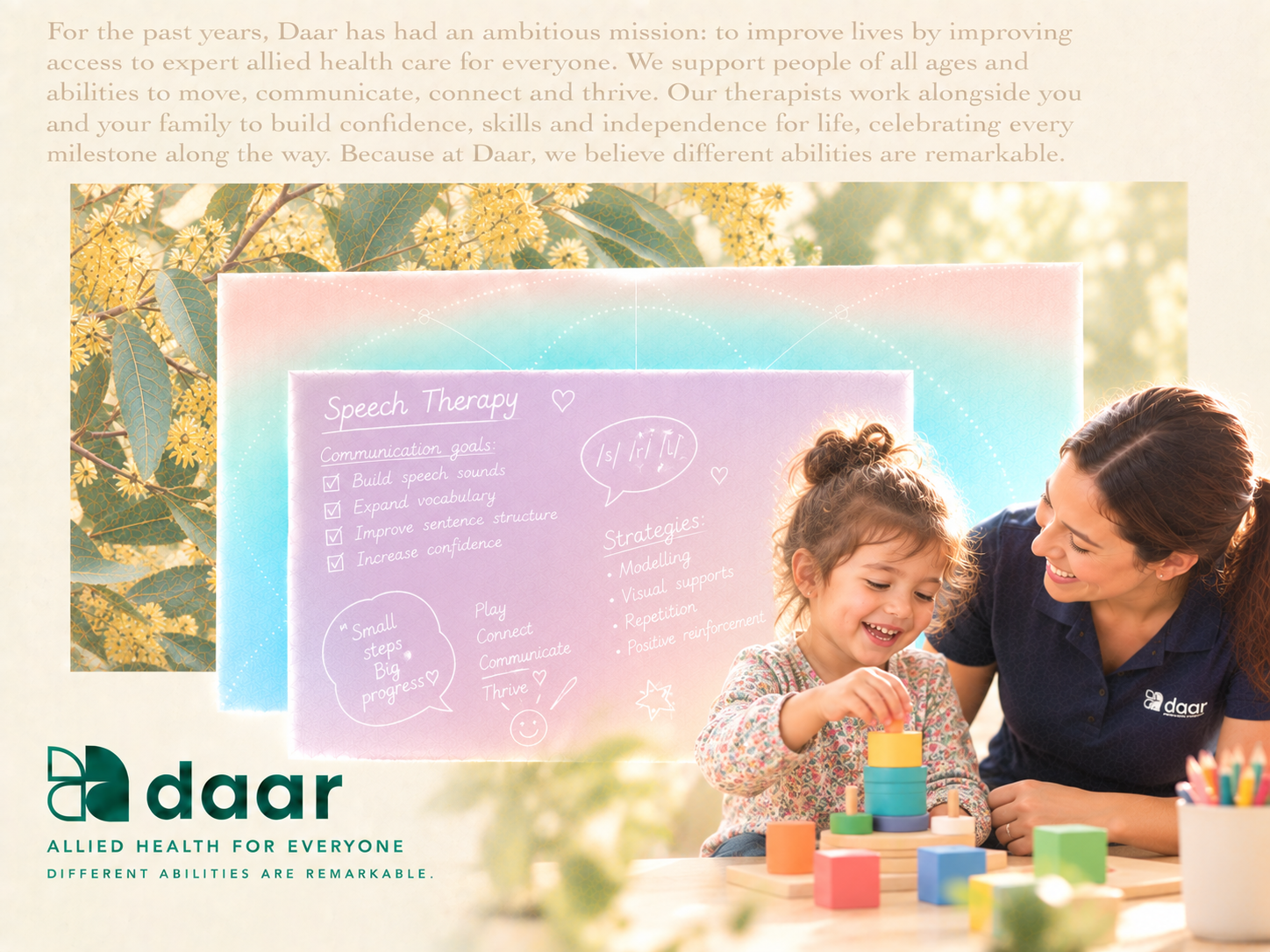
Family support is key to effective therapy. Since children spend most of their time with parents, caregivers, and teachers, progress improves when adults encourage communication in daily routines—especially in early intervention.
Caregiver involvement doesn’t mean acting as the therapist. Instead, it means learning simple ways to support communication at home. A speech pathologist can show you what to model, how to respond, and when to give your child extra time.
Helpful ways to support include:
- Using the therapist’s practice ideas during daily routines
- Encouraging communication without rushing or correcting too much
- Sharing what works well at home, school, or in the community
When families and therapists work together, children have more chances to practice meaningful skills.
Conclusion
In conclusion, speech therapy plays a crucial role in the developmental journey of children facing communication challenges. By addressing various speech and language disorders through tailored interventions, speech-language pathologists provide invaluable support to both children and their families. The diverse types of therapy available ensure that each child receives the most appropriate care based on their unique needs. A strong foundation in communication skills not only enhances a child's ability to express themselves but also boosts their confidence and social interactions.
If you believe your child could benefit from speech therapy, don’t hesitate to reach out for a consultation or call daar at 02 9133 2500 for guidance and support.
Frequently Asked Questions
At What Age Can a Child Begin Speech Therapy?
A child can begin speech therapy as soon as communication concerns are noticed. Early intervention is often helpful because it supports child development during important learning stages. A speech pathologist can assess your child’s communication skills and recommend whether support should start now or be monitored.
Is Speech Therapy Covered by the NDIS in Australia?
Yes, speech therapy may be covered by the NDIS in Australia when it relates to a participant’s goals and approved supports. Many speech pathology providers accept NDIS funding as part of their health services. Coverage depends on your plan, so it is worth checking your current funding arrangements.
How Long Does It Take to See Progress in Speech Therapy?
Progress in speech therapy depends on your child’s needs, goals, and how often strategies are practiced between sessions. Some children show changes quickly, while others need longer support. A clear treatment plan and regular practice can help build communication skills steadily over time, especially with speech disorders.
.svg)




.svg)