
.png?width=48&height=48&name=Group%201%20(3).png)























7 January, 2026

How Speech Therapy Can Address Language Delays in Children

Introduction
Watching your child grow is exciting, but it can be concerning if they seem to be falling behind in their ability to communicate. Language delays can be challenging for both children and parents, but there is effective help available. Speech therapy offers proven strategies to support children with communication disorders, helping them express their thoughts and understand the world around them. This guide will walk you through how speech therapy can make a significant difference in your child's journey to becoming a confident communicator.
Key Highlights
-
Speech therapy is an effective treatment for children experiencing language delays and various speech disorders.
-
Starting speech therapy early, known as early intervention, leads to the most successful outcomes for a child’s language development.
-
Therapy addresses both receptive language (understanding) and expressive language (speaking) difficulties.
-
A speech-language pathologist creates a personalized plan to help your child build confidence and improve communication.
-
Parental involvement, including practicing activities at home, significantly boosts the effectiveness of speech therapy.
-
Improving communication skills enhances a child's social skills and overall quality of life.
Understanding Language Delays in Children
Language delays occur when a child struggles to understand others or express their own thoughts and feelings. These challenges may result from developmental issues or brain development differences, but they do not reflect a child's intelligence.
Early identification is crucial for supporting your child’s communication needs. If you suspect difficulties, a professional evaluation can confirm a language disorder and guide treatment. The following sections outline types of delays and warning signs to watch for.
Types of Language Delays: Receptive vs. Expressive Language
Language skills fall into two main categories: receptive and expressive. Knowing the difference helps identify your child’s challenges. Receptive language is the ability to understand and process what you hear—a child with difficulties here may struggle to follow directions, answer questions, or identify objects.
Expressive language is the ability to use words to communicate needs and ideas. Children with expressive language disorders may have trouble asking questions, using gestures, or forming sentences. Typically, understanding language develops before using it.
Speech therapy focuses on producing sounds, while language therapy addresses meaning and structure—helping with both receptive and expressive skills.
Signs and Symptoms Parents Should Watch For
Wondering if your child needs speech therapy? Early recognition of developmental delays is key. While children develop at different rates, some communication issues may require professional help. Noticing these signs can improve your child's social skills and future well-being.
Your child may seem uninterested in conversations, struggle to keep up, or get frustrated when communicating. These challenges can impact friendships and school participation.
Watch for:
-
Difficulty following simple directions
-
Limited vocabulary compared to peers
-
Trouble asking questions or naming objects
-
Missing age-appropriate communication milestones
What Is Speech Therapy?
Speech therapy helps people of all ages improve communication skills. It’s led by a certified speech-language pathologist (SLP) who assesses and treats speech and communication disorders to enhance quality of life. Whether helping a child learn to talk or assisting an adult after injury, speech therapy provides essential tools for clearer communication.
An SLP begins with an assessment to identify the specific disorder and best treatment approach. Therapy uses personalized exercises—such as games for children or muscle-strengthening activities for adults—focused on building confidence and independence. The following sections will cover key techniques used in speech therapy.
How Speech Therapy Supports Language Development
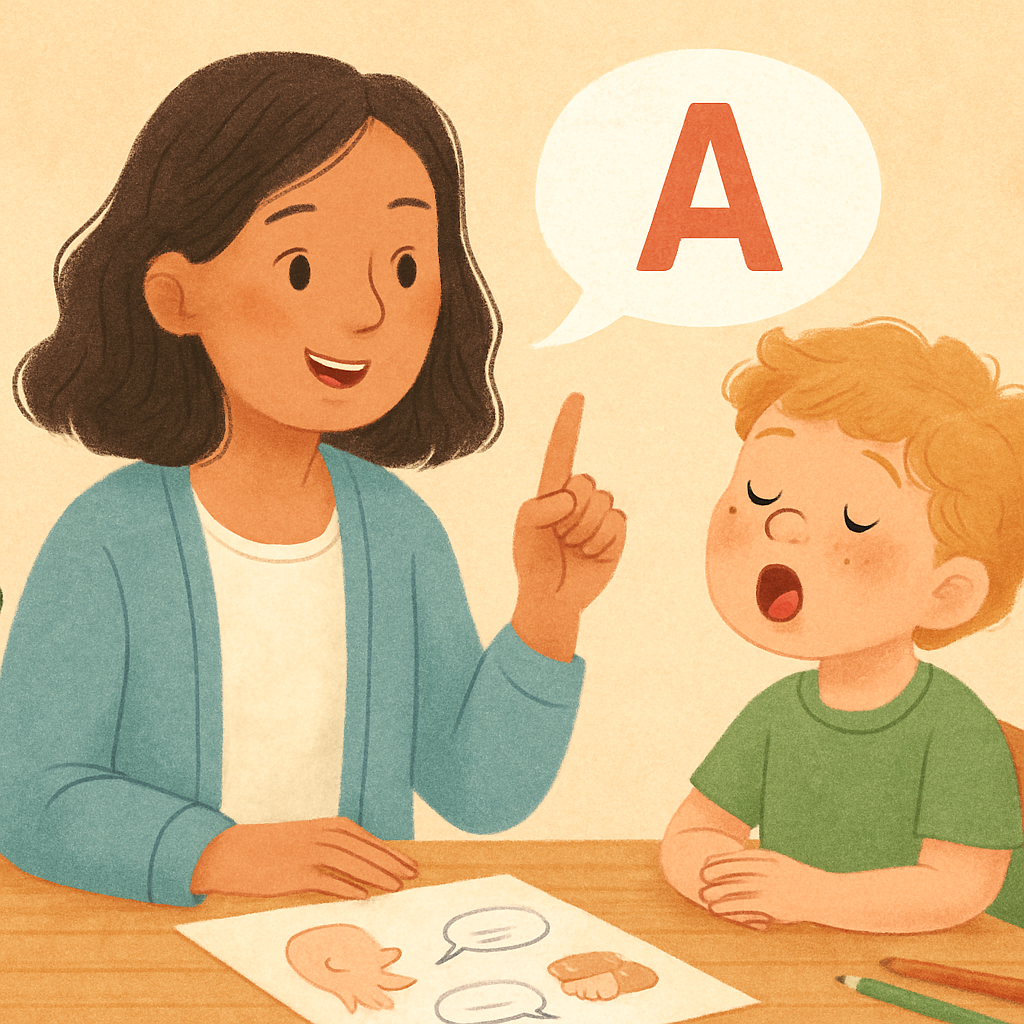
Speech therapists use engaging methods to promote language development. In sessions, they interact through play with books, pictures, and objects to encourage natural communication. Activities are designed to be fun and motivating.
A key strategy is modeling—therapists demonstrate correct sounds during play, helping children learn by watching and imitating. This approach is especially effective for early intervention.
Therapists also give strategies and homework to parents and caregivers. Consistent practice at home reinforces therapy skills and speeds up language development.
The Difference Between Speech Therapy and Language Therapy
While the terms "speech therapy" and "language therapy" are often used interchangeably, they can refer to different aspects of communication. Both are designed to improve communication skills, but they target distinct challenges based on a person's specific needs. Understanding this difference can help you better grasp your child's treatment plan.
Speech therapy typically focuses on the mechanics of producing sound. This includes articulation (how sounds are formed), fluency (the flow and rhythm of speech, like with stuttering), and voice (the quality of the sound). It’s about the physical act of talking.
Language therapy, on the other hand, deals with the meaning of communication. It's broken down into receptive language (understanding what others say) and expressive language (sharing thoughts and ideas). This involves vocabulary, grammar, and putting sentences together. A speech-language pathologist is trained to address both speech and language issues.
|
Aspect |
Speech Therapy |
Language Therapy |
|---|---|---|
|
Primary Focus |
The physical production of sounds, voice quality, and fluency. |
Understanding and using language to communicate meaning. |
|
Example Problem |
Difficulty pronouncing the "r" sound, saying "wed" instead of "red." |
Trouble following directions or forming complete sentences. |
|
Main Goal |
To improve clarity of speech and vocal quality. |
To build vocabulary, grammar, and comprehension skills. |
Effective Strategies Used in Speech Therapy
Speech therapists create personalized treatment plans for each child’s needs. Sessions may be one-on-one or in small groups, based on therapy goals. Core activities include language interventions and speech exercises to build skills in a structured, engaging way.
Therapists may use play-based methods like board games or targeted exercises such as tongue and mouth movements to strengthen oral muscles. These strategies keep learning natural and motivating. The next sections will detail approaches for specific communication challenges.
Approaches for Receptive and Expressive Language Needs
Speech therapy for receptive language disorders helps children better understand and process spoken language. Therapists use tools to make it easier for kids to follow directions, stories, and conversations, building a strong foundation for comprehension.
For expressive language disorders, therapy focuses on helping children clearly communicate thoughts and needs. Activities encourage using words, forming sentences, and telling stories in a supportive setting, boosting confidence in self-expression.
Effective strategies include:
-
Reading and Audiobooks: Build listening skills and vocabulary.
-
Pretend Play: Use props to inspire conversation and imagination.
-
Listening Games: Activities like "Simon Says" improve auditory processing.
-
Open-Ended Questions: Encourage detailed answers to develop expressive skills.
Supporting Social Communication Skills in Children
Speech therapy supports a child’s social development beyond just improving speech. For children with communication disorders, social situations can be challenging. Therapy teaches essential social skills—like starting conversations, taking turns, and reading nonverbal cues—through conversation practice and role-playing.
These activities help children build confidence in a safe setting, preparing them for real interactions at school or on the playground. Improved communication skills make it easier for children to form friendships and participate in groups, boosting self-esteem and supporting healthy emotional growth.
Conclusion
In conclusion, addressing language delays in children through speech therapy can significantly enhance their communication skills and overall development. By understanding the unique needs of each child and implementing effective strategies tailored to their specific challenges, parents can foster an environment that supports language growth. Whether it's through improving receptive or expressive language skills or enhancing social communication, speech therapy plays a vital role in helping children find their voice. If you’re concerned about your child's language development, consider reaching out to a qualified speech pathologist to explore the best options available for your child’s needs.
Reach out for a consultation or call daar at 02 9133 2500 today!
Frequently Asked Questions
How long does speech therapy take to show results in children?
The time it takes to see results from speech therapy varies for each child. Progress depends on factors like age, the severity of the speech challenges, the frequency of therapy, and consistency with the treatment plan. While some children show improvement quickly, others may need long-term support to build their language skills.
What qualifications does a speech pathologist have in Australia?
In Australia, a speech pathologist is a highly trained professional. They are required to hold a university degree, often a master's or doctorate, in speech pathology. Additionally, they are typically registered with professional bodies like Speech Pathology Australia, ensuring they meet high standards for improving communication skills in private practices and other settings.
Is speech therapy beneficial for adults as well as children?
Yes, speech therapy is highly beneficial for adults. Many adults seek therapy to address communication disorders caused by a stroke, brain injury, or a medical condition like Parkinson's disease. It helps them recover language skills, manage speech problems, and improve their overall quality of life by restoring confidence in communication.
.svg)




.svg)