
.png?width=48&height=48&name=Group%201%20(3).png)
























10 April, 2026

Beyond the Block: Pairing Screen Time Apps with Behaviour Therapy in Australia
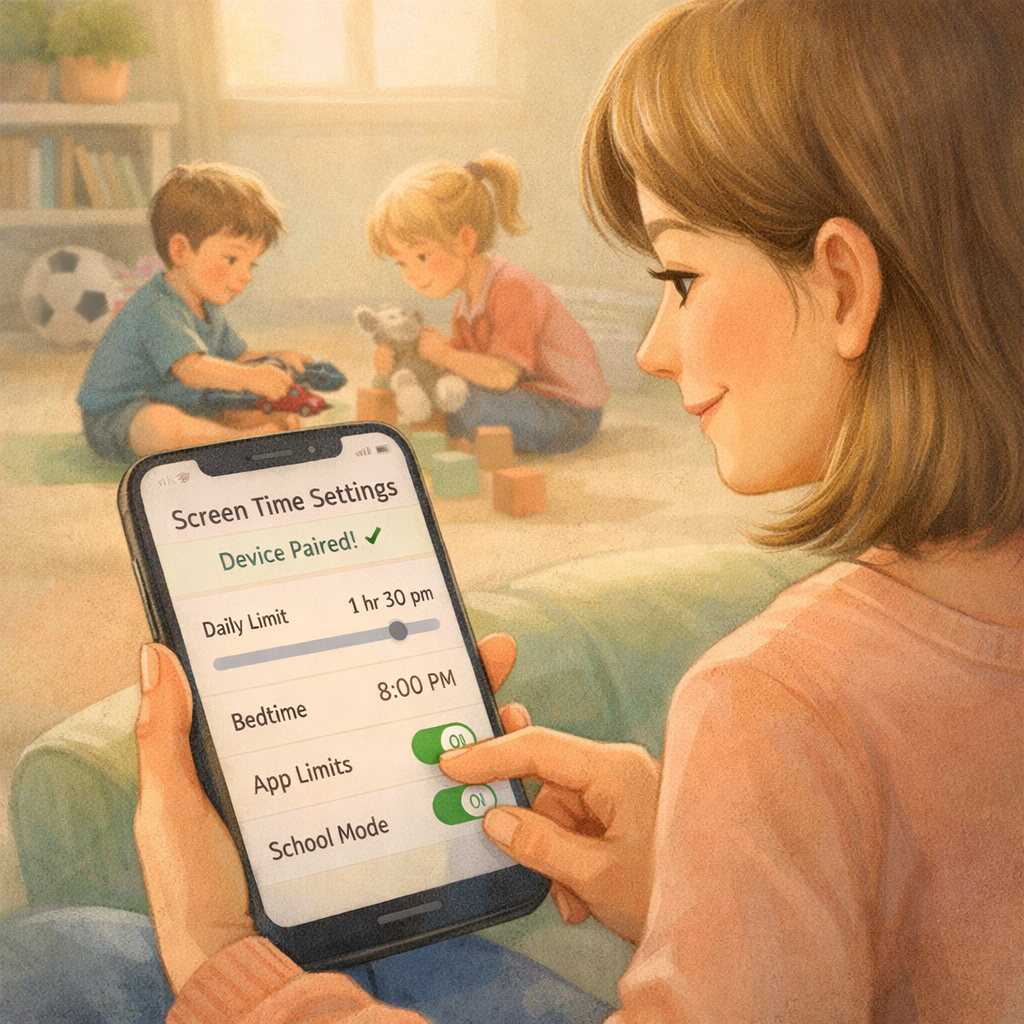
For many Australian families, managing children’s screen time has become a daily challenge. With the rise of smartphones, tablets, gaming platforms, and streaming services, screens are no longer occasional—they are constant. In response, parents often turn to screen time control apps to limit usage. While these tools can be helpful, they rarely solve the problem on their own.
Blocking access without addressing underlying behaviours can lead to frustration, resistance, and even increased screen-seeking behaviour. That’s where behaviour therapy comes in.
By combining screen time apps with behaviour therapy strategies, families can move beyond restriction and create lasting, healthy digital habits—without constant conflict.
Why Screen Time Apps Alone Aren’t Enough
Screen time apps are designed to:
- Limit daily usage
- Block specific apps or websites
- Set schedules for device access
- Monitor online activity
While these features are useful, they focus primarily on control, not behaviour change.
Children may:
- Find ways around restrictions
- Become more fixated on screens
- React with frustration or tantrums
- Fail to develop self-regulation skills
In behaviour therapy terms, apps manage the environment—but not the underlying habits, triggers, or emotional responses.
The Role of Behaviour Therapy
Behaviour therapy focuses on understanding and changing patterns of behaviour through structured, evidence-based strategies.
Instead of asking, “How do we stop screen use?” it asks:
- Why is the child using screens excessively?
- What triggers the behaviour?
- What reinforces it?
- What skills are missing?
When paired with apps, behaviour therapy transforms screen limits into opportunities for learning and growth.
The Power of Combining Both Approaches
When used together, screen time apps and behaviour therapy create a balanced system:
| Screen Time Apps | Behaviour Therapy |
|---|---|
| Set limits | Teach self-control |
| Block access | Build habits |
| Provide structure | Address emotions |
| Enforce rules | Reinforce behaviour |
This combination ensures that children not only follow rules but also understand and internalise them.
Step 1: Choose the Right Screen Time App
Not all apps are created equal. Look for features that support—not replace—parenting.
Key features to prioritise:
- Customisable time limits
- Scheduled downtime
- App-specific controls
- Usage reports
- Remote management
In Australia, many families use built-in tools like Apple Screen Time or Google Family Link, as well as third-party apps.
However, the app should act as a support tool, not the primary solution.
Step 2: Set Clear Behavioural Goals
Before activating app restrictions, define what success looks like.
Examples of behavioural goals:
- Turning off devices without arguments
- Limiting screen use to agreed times
- Engaging in offline activities daily
- Completing responsibilities before screen time
Behaviour therapy emphasises measurable and achievable goals, which can then be reinforced.
Step 3: Introduce the System Collaboratively
Children are more likely to cooperate when they feel involved.
Instead of imposing rules:
- Explain why screen limits are important
- Discuss expectations together
- Allow input where appropriate
- Agree on consequences and rewards
Example:
“We’re going to use this app to help manage screen time, and we’ll also work together on making transitions easier.”
This reduces resistance and builds trust.
Step 4: Use Apps to Support Consistency
One of the biggest challenges in parenting is consistency.
Apps help by:
- Automatically enforcing limits
- Reducing the need for repeated reminders
- Minimising parent-child conflict
From a behaviour therapy perspective, consistency is critical in shaping behaviour. When limits are predictable, children are less likely to test boundaries.
Step 5: Pair Limits with Positive Reinforcement
Restrictions alone often lead to frustration. Pair them with rewards for positive behaviour.
Examples:
- Earning extra playtime for following rules
- Praise for turning off devices calmly
- Rewards for engaging in offline activities
Example:
“I noticed you stopped your game when the timer ended—that was really responsible.”
This shifts the focus from punishment to encouragement.
Step 6: Teach Transition Skills
One of the most difficult moments is transitioning away from screens.
Behaviour therapy strategies include:
- Giving advance warnings (5–10 minutes)
- Using visual timers
- Creating predictable routines
- Practising transitions regularly
Apps can signal the end of screen time, but children still need the skills to manage that transition.
Step 7: Address Emotional Triggers
Excessive screen use is often linked to emotional needs, such as:
- Boredom
- Stress or anxiety
- Social challenges
- Need for stimulation
Behaviour therapy helps identify these triggers and replace screen use with healthier coping strategies.
For example:
- Teaching relaxation techniques
- Encouraging physical activity
- Building social skills
Without addressing these factors, app restrictions may only treat the symptom—not the cause.
Step 8: Create Meaningful Offline Alternatives
Children are more likely to accept reduced screen time when they have engaging alternatives.
In Australia, families can take advantage of:
- Outdoor play (parks, beaches, sports)
- Creative activities (art, music, building)
- Community programs and clubs
- Family-based activities
Behaviour therapy encourages replacing behaviours rather than simply removing them.
Step 9: Monitor and Adjust the Plan
No system works perfectly from the start.
Regularly review:
- Screen time reports from apps
- Behavioural progress
- Challenges and resistance points
Adjust limits, rewards, or strategies as needed.
Flexibility ensures the plan remains realistic and effective.
Step 10: Model Healthy Digital Habits
Children learn more from what parents do than what they say.
If parents frequently use devices, children may struggle to understand limits.
Model:
- Balanced screen use
- Device-free family time
- Healthy routines
Behaviour therapy highlights modelling as a powerful influence on behaviour change.
Common Mistakes to Avoid
When combining apps and behaviour therapy, watch out for these pitfalls:
- Relying entirely on apps without teaching skills
- Using restrictions as punishment
- Inconsistent enforcement
- Ignoring emotional triggers
- Setting unrealistic expectations
Avoiding these mistakes increases the chances of long-term success.
Benefits of a Combined Approach
Families who integrate screen time apps with behaviour therapy often experience:
- Fewer tantrums and conflicts
- Improved self-regulation in children
- Better family communication
- More balanced daily routines
- Reduced dependence on screens
Most importantly, children develop lifelong skills—not just temporary compliance.
Adapting for Australian Families
Australia offers unique advantages for reducing screen time:
- Access to outdoor environments
- Strong sports culture
- Community-focused activities
- Emphasis on wellbeing and balance
By combining these lifestyle factors with structured strategies, families can create sustainable habits that extend beyond the home.
Conclusion: Moving Beyond Control to Lasting Change
Screen time apps are a powerful tool—but they are only part of the solution. True change happens when children learn the skills to manage their own behaviour, emotions, and habits.
By pairing digital tools with behaviour therapy strategies, Australian families can move beyond constant restriction and build a healthier, more balanced relationship with technology.
The goal isn’t just to limit screen use—it’s to empower children with the skills they need for life in a digital world.
Ready to take control of screen time in a way that actually works? Start by combining one screen time app with a simple behaviour strategy—like positive reinforcement or structured routines—today.
If you’re struggling to manage screen use at home, consider speaking with a child psychologist or behaviour specialist in your area. Professional guidance can help you create a personalised plan that works for your family.
Reach out for a consultation or call daar at 02 9133 2500 for expert guidance tailored to your child’s needs.
FAQ: Screen Time Apps and Behaviour Therapy
1. Are screen time apps effective on their own?
They can help enforce limits, but they are most effective when combined with behaviour therapy strategies that address underlying habits.
2. At what age should I start using screen time controls?
It depends on the child, but many families begin introducing structured limits in early primary school years.
3. What if my child becomes more upset after installing an app?
Initial resistance is normal. Stay consistent, use positive reinforcement, and focus on teaching transition skills.
.svg)




.svg)